 Andy Toth
I don’t think most people need a huge stack of calisthenics books. They need one good book that matches their current level and actually helps them train better.
If you want the short version, Overcoming Gravity is still my top overall recommendation because it teaches the training principles behind bodyweight strength, progressions, and long-term progress. But it is not the easiest place to start. If you’re completely new to calisthenics, Hybrid Calisthenics is the better first buy.
Below, I break down the best calisthenics books by use case, who each one is best for, what each one does well, where each one falls short, and which one I would buy depending on your goal.
Best overall: Overcoming Gravity
Best for complete beginners: Hybrid Calisthenics
Best all-rounder: Complete Calisthenics
Best for anatomy and exercise understanding: Bodyweight Strength Training Anatomy
Best for no-equipment workout variety: 100 No-Equipment Workouts
Overview of the best calisthenics books
How I Picked These Books
I didn’t put this list together by looking at which books are the most popular on Amazon. That doesn’t tell you much. A book can have a lot of reviews and still not be that useful once you actually start training.
What I cared about was whether the book would genuinely help someone make progress. Is it easy to follow? Does it explain progressions in a way that actually makes sense? Can you use it to build a proper training plan, or is it mostly just inspiration and nice-looking ideas? And once the initial motivation wears off, is it still the kind of book you’ll come back to?
That mattered to me because not all calisthenics books are useful in the same way. Some are good when you’re brand new and just need a clear starting point. Others are much better once you already know the basics and want to understand programming, structure your training better, or work toward more advanced skills.
So I didn’t try to rank these books from “best” to “worst” in some absolute way. I looked at who each one is actually best for, where it’s genuinely helpful, and where it falls short. That felt like a much more honest way to do it.
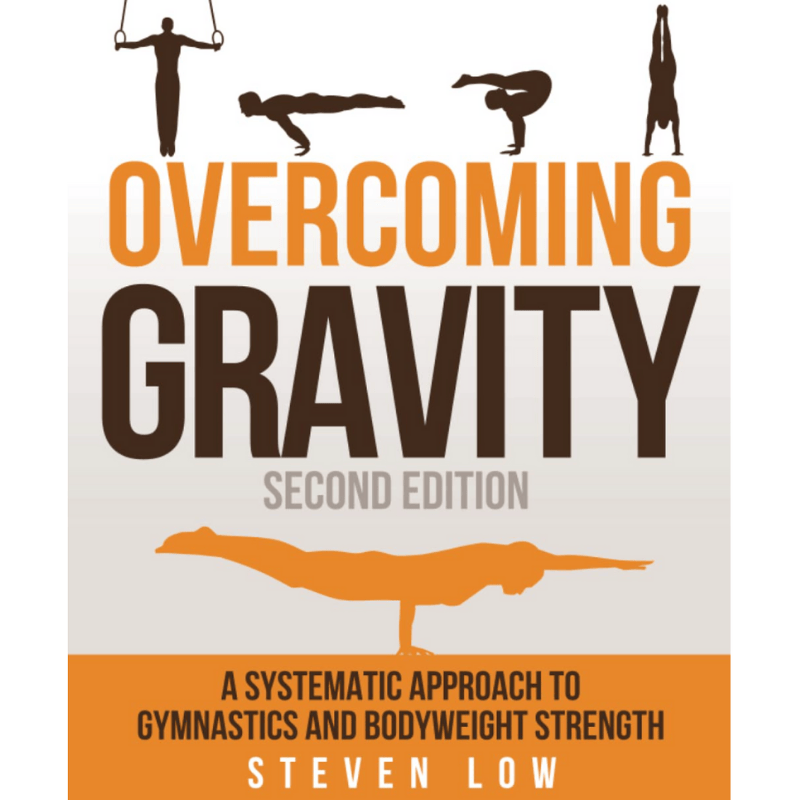
Overcoming Gravity: A Systematic Approach to Gymnastics and Bodyweight Strength
Average Rating: 4.7
Also available on:
👉 Amazon.co.uk in the UK 🇬🇧
👉 Amazon.ca in Canada 🇨🇦
👉 Amazon.de in Germany 🇩🇪
*we're an Amazon Associate, when you make a purchase we earn a commission at no extra cost to you
- High quality writing and structure
- Thorough and thoughtful
- Customizable programs
- Solid progressions system
- Not ideal for beginners
Pros & Cons
Pros
- This book is highly detailed, covering everything needed for bodyweight and gymnastics-based strength training, including program construction, movement progressions, and exercise descriptions with illustrations.
- Instead of providing a set workout plan, the book teaches readers how to create their own progressive workout programs, tailored to their specific goals, fitness levels, and preferences. It encourages self-sufficiency in designing programs.
- The book explains how to progress from basic to advanced exercises (e.g., achieving ring muscle-ups), with plenty of illustrations and descriptions to support this process.
- The author delves deep into programming, training principles, and goal-setting, offering guidance that can be applied to various fitness goals.
- The book is well-organized, with no fluff, providing precise, systematic advice that is applicable to both exercise and life.
Cons
- Some of the starting exercises are difficult for complete beginners, and the book may be overwhelming without prior experience in calisthenics or basic fitness.
- The book demands time and mental investment to read, understand, and apply the principles; it’s not a quick-and-easy guide.
Bottom Line
Even after extensive testing, I return to "Overcoming Gravity: Systematic Bodyweight Strength" time and again. After all these years I think this might be my favorite calisthenics book of all time. If you want to dive deeper into it, I wrote a more detailed review of "Overcoming Gravity". This comprehensive guide dives deep into the mechanics and strategies behind bodyweight training, offering insight that resonates regardless of your starting level. The detailed progressions and systematic approach empower you to set achievable goals and track your success over time.
Bodyweight training enthusiasts will appreciate the meticulous explanations of muscle engagement and joint mechanics. The illustrations and workout routines are crafted to cater to both beginners and seasoned athletes, making the learning process engaging and thorough. I particularly love the focus on understanding movement patterns, which has helped me refine my technique significantly.
Some may find the book a bit overwhelming due to its depth and technical language. While the information is invaluable, I wish it could simplify some concepts for quicker understanding and application, especially for newcomers to calisthenics.
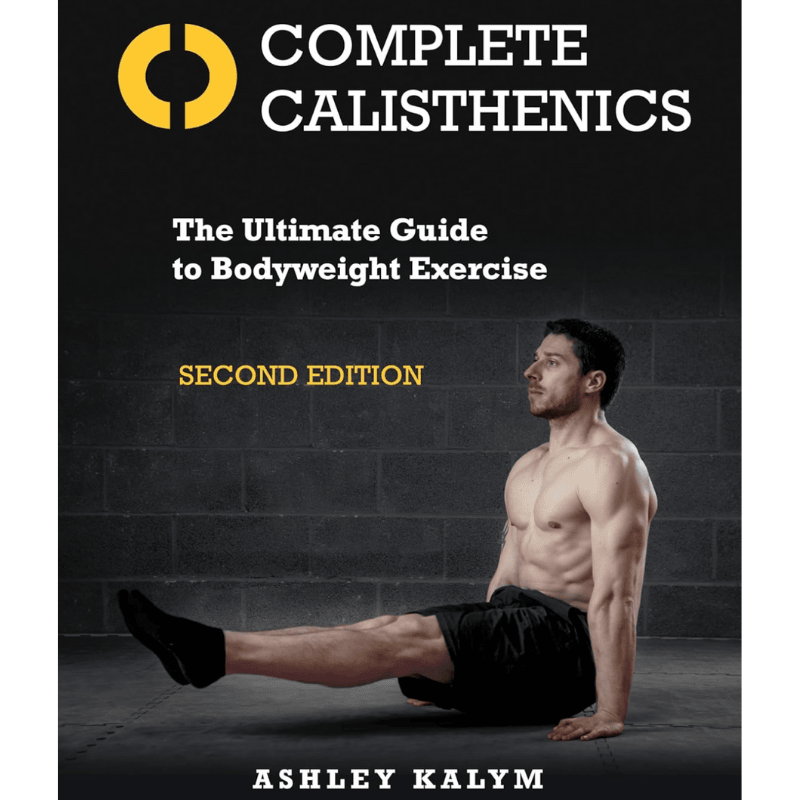
Complete Calisthenics: The Ultimate Guide to Bodyweight Exercise
Average Rating: 4.7
Also available on:
👉 Amazon.co.uk in the UK 🇬🇧
👉 Amazon.ca in Canada 🇨🇦
👉 Amazon.de in Germany 🇩🇪
*we're an Amazon Associate, when you make a purchase we earn a commission at no extra cost to you
- Covers everything from the fundamentals to highly advanced movements
- Great progression guidance
- Emphasis on "The Fundamental Five" exercises
- Lots of illustrations
- Includes a nutritional guide
Pros & Cons
Pros
- The author provides detailed, well-written exercise descriptions with accompanying pictures, making the instructions clear and accessible.
- The book covers various aspects of fitness, including nutrition, recovery, and flexibility, offering more than just exercise advice.
- Exercises are presented with variations, making it suitable for a range of fitness levels—from those just starting out to advanced athletes.
- The book lays out realistic goals and emphasizes the importance of perfect form and gradual improvement.
- The book is divided into chapters that progressively introduce more challenging exercises, ensuring readers don’t jump ahead prematurely.
Cons
- While there are simplified modifications, some beginners, especially those out of shape, may struggle with the exercises and the lack of more detailed capacity-building content.
- While it touches on the need for rest and recovery, the book doesn’t provide much information on long-term periodization or lighter workout cycles.
- Although there are exercise programs, the book offers little in terms of detailed daily or weekly workout plans
- The book doesn’t delve into interval training or timed work/rest periods, which could be a useful addition to the program.
- Doesn't include ring exercises
Bottom Line
"Complete Calisthenics: Ultimate Bodyweight Guide." provides a pretty good intro into calisthenics for total beginners. It offers clear instructions on bodyweight exercises, making it great for people wanting to switch from gym to home workouts. I was particularly impressed with the wide range of routines that cater to various fitness levels, ensuring you can progressively challenge yourself.
To enhance your training experience, the book includes detailed progressions and modifications, allowing you to steadily develop strength and skill. The accompanying illustrations and photos are particularly helpful for visual learners like myself, ensuring each movement's execution is easy to grasp.
With over 300 pages of content, some readers, including myself, might find the dense layout slightly overwhelming. Additionally, the lack of digital resources may be a drawback if you're accustomed to video tutorials for demonstration.
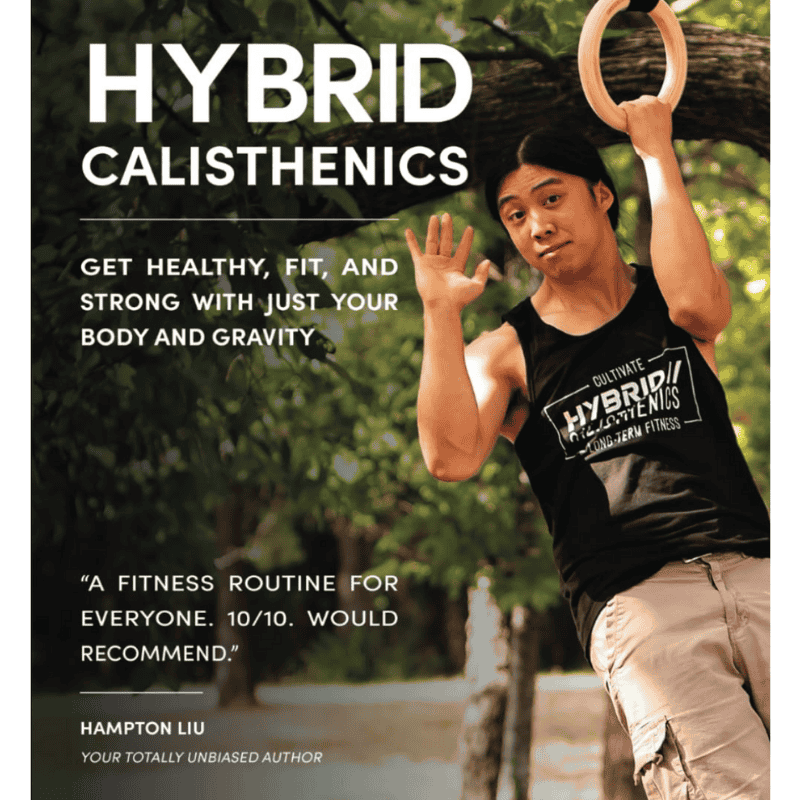
Hybrid Calisthenics: Get Healthy, Fit, and Strong with Just Your Body and Gravity
Average Rating: 4.8
Also available on:
👉 Amazon.co.uk in the UK 🇬🇧
👉 Amazon.ca in Canada 🇨🇦
👉 Amazon.de in Germany 🇩🇪
*we're an Amazon Associate, when you make a purchase we earn a commission at no extra cost to you
- Great for complete beginners
- Empathetic approach
- Focus on the 6 core bodyweight exercises
Pros & Cons
Pros
- The book emphasizes a kind and relaxed approach to fitness, allowing readers to progress at their own pace without pressure or time-based goals.
- The progressions are realistic, offering achievable goals for everyday people, especially those new to fitness.
- The book introduces six core bodyweight exercises (pushups, leg raises, pullups, squats, bridges, and twists) with 10-12 variations per category, offering a structured way to build strength gradually.
- While the book mirrors content from Liu’s YouTube channel, it provides a more convenient and organized resource for those who prefer a written guide.
Cons
- There’s no specific focus on areas like grip strength, calves, or cardio, so those may need to be supplemented.
- The book only offers six primary exercises, which might feel restrictive to those looking for a more comprehensive routine.
- The content is largely the same as what Hampton Liu shares on his YouTube channel, so regular viewers might not find new material.
Bottom Line
While browsing calisthenics videos on YouTube, I came across Hapton's YT channel. I found his friendly and genuine style refreshing and after he came out with "Hybrid Calisthenics", I had to buy a copy for myself. This book seamlessly blends foundational bodyweight exercises with innovative movements that challenge strength and balance, ultimately building an impressive level of physical fitness.
Cool illustrations and step-by-step guidance empower even beginners to grasp each concept quickly. My favorite aspect of this book is its clear progression system, allowing me to track my advancement without feeling overwhelmed. The various training plans cater to different fitness levels, which is incredibly helpful.
Plus, while I appreciate its comprehensive nature, I found some sections a bit lengthy. It could benefit from more concise explanations for those who prefer a straight-to-the-point style. Despite this minor drawback, "Hybrid Calisthenics" has significantly enriched my training routine and overall fitness understanding.
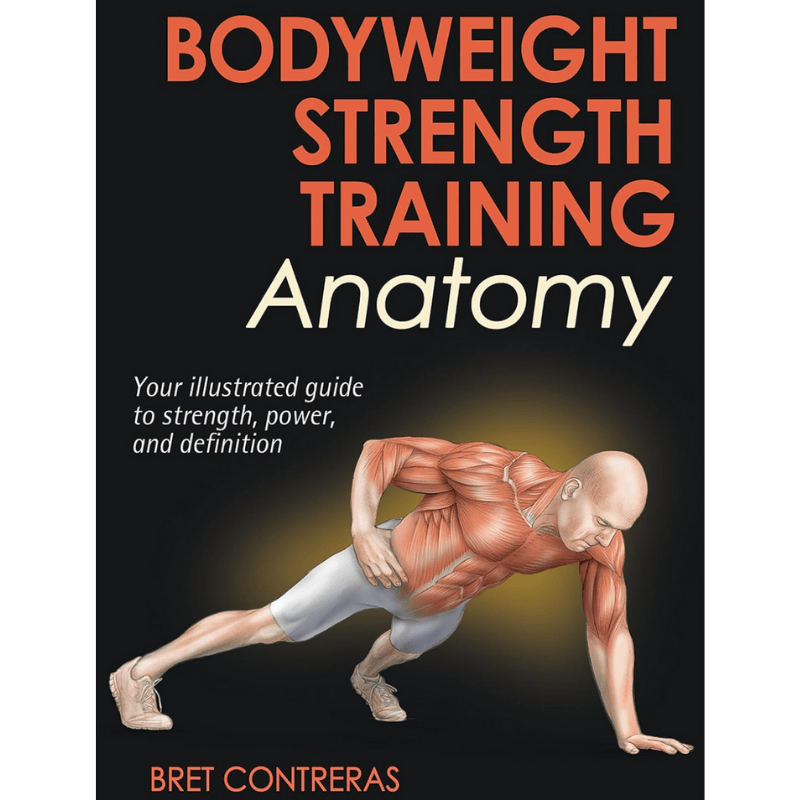
Bodyweight Strength Training Anatomy
Average Rating: 4.6
Also available on:
👉 Amazon.co.uk in the UK 🇬🇧
👉 Amazon.ca in Canada 🇨🇦
👉 Amazon.de in Germany 🇩🇪
*we're an Amazon Associate, when you make a purchase we earn a commission at no extra cost to you
- Contains 156 bodyweight exercises
- Covers the training fundamentals well
- Detailed anatomy diagrams
- Includes some pre-designed routines as examples
Pros & Cons
Pros
- The book offers a wide range of bodyweight exercises that target every part of the body, with a special emphasis on lower-body exercises, core training, and whole-body metabolic conditioning exercises.
- It includes a thorough overview of training principles like periodization, volume, and exercise selection, helping readers understand the reasoning behind workout routines.
- The book features well-designed diagrams showing how muscles work during each exercise, offering clear insights into human anatomy in action.
- Contreras doesn’t position bodyweight training as superior to other forms of training but encourages using it as one of many tools in a fitness program.
- There are sample routines provided at the end, making it easier for beginners to follow structured plans.
Cons
- The book doesn’t provide enough guidance on when to progress to harder exercises (e.g., how many reps to aim for before moving to a more advanced version).
- Some exercise descriptions lack the nuance needed for proper form and safety, which could lead to inefficiency or injury if done incorrectly.
- There’s little guidance on nutrition.
Bottom Line
The 'Bodyweight Strength Training Anatomy' book is a comprehensive guide that has truly transformed my approach to calisthenics. This expertly detailed resource not only explains the mechanics of bodyweight exercises but also illustrates the anatomy involved, making it easy to understand how each movement affects your muscles. The illustrations are superb, and I find myself referring to them regularly for both training ideas and corrections.
Bodyweight exercises can often feel repetitive, but this book offers a multitude of variations that keep my workouts fresh and challenging. The progressions outlined allow you to steadily build strength, ensuring you never plateau. Additionally, the tips for proper form have been invaluable in preventing injuries during my training sessions.
These thorough explanations and unique exercise recommendations are what I love most about this book. However, I wish it included more advanced routines for seasoned athletes; while it's perfect for beginners and intermediates, some advanced athletes might seek further challenges.
100 No-Equipment Workouts for All Levels
Average Rating: 4.6
Also available on:
👉 Amazon.co.uk in the UK 🇬🇧
👉 Amazon.ca in Canada 🇨🇦
👉 Amazon.de in Germany 🇩🇪
*we're an Amazon Associate, when you make a purchase we earn a commission at no extra cost to you
- Includes 100 varied workout sets
- Visual, easy-to-follow posters
- Beginner and advanced options
Pros & Cons
Pros
- The book offers 100 unique bodyweight workouts, each designed with a specific focus like fat burning (High Burn), strength and toning, or targeting a specific muscle group (Focus workouts like Abs). These workouts are easy to follow and require no equipment.
- Each workout is presented as a visual “poster,” showing exercises with images and three intensity levels, making it accessible for all fitness levels.
- With a wide variety of workout sets, users can easily customize their routines to keep things fresh and avoid boredom, making it perfect for home workouts or on-the-go fitness without the need for a gym.
- While the book assumes basic familiarity with exercises, it provides enough visual guidance for most users, and offers modifications to increase or decrease difficulty.
- Despite the content being available for free on the Darebee website, the book serves as a convenient, compact resource that can travel with you.
- The workout names and visual style bring an engaging, “superhero” feel, making it fun for users who want a little extra motivation.
Cons
- The book doesn’t provide in-depth explanations for how to perform each exercise, which might require beginners to look up some exercises online.
- The table of contents lists the workouts by name but doesn’t indicate their specific focus (e.g., High Burn, Strength & Toning), making it harder to quickly find a targeted workout.
- If you have specific body transformation goals (e.g., targeting specific muscle groups), this book may require additional planning or knowledge to achieve those.
- The Kindle version lacks internal links, which makes it difficult to quickly navigate to specific workouts, especially if you’re short on time.
Bottom Line
Now, after extensively testing "100 No-Equipment Workouts for All Levels," I can confidently say it’s an important resource for anyone looking to boost their fitness without gym access. The workouts are diverse and categorized by difficulty, making it easy to find something suitable for my skill level. I appreciated the clear instructions and visuals, which made it straightforward to follow along.
Plus, the book provides ample progression suggestions, so I feel encouraged to push myself as I grow stronger. Each workout can be done anywhere at any time, which is a game changer for my busy schedule.
Levels vary greatly, catering to beginners and experienced athletes alike, which is a significant advantage for someone like me who sometimes trains with friends of different fitness levels. However, I noted a lack of variation in workout types; a few routines felt repetitive after a while.
Cell Workout by L. J. Flanders

Average Rating: 4.5
Also available on:
👉 Amazon.co.uk in the UK 🇬🇧
👉 Amazon.ca in Canada 🇨🇦
👉 Amazon.de in Germany 🇩🇪
*we're an Amazon Associate, when you make a purchase we earn a commission at no extra cost to you
- Minimalist workouts for any small space
- Progressive exercises for all fitness levels
- Structured 10-week training program included
- Focus on mental and physical resilience
- Creative bodyweight moves, no equipment needed
Pros & Cons
Pros
- Ideal for small spaces with no equipment required.
- Clear progressions for beginners to advanced levels
- Comprehensive focus on strength, cardio, flexibility, and recovery.
- Encourages physical and mental resilience through disciplined routines.
- Simple, well-structured workouts with clear instructions and photos.
Cons
- Advanced athletes may find exercise variety somewhat limited.
- Does not cover weighted calisthenics or external resistance options.
- Repetitive routines may bore those seeking diverse challenges.
- Less suitable for those with access to full gyms.
- Lacks detailed guidance on nutrition and diet planning.
Bottom Line
If you value resourcefulness and a no-excuses mindset, Cell Workout is worth adding to your training arsenal.
In my review of Cell Workout by L.J. Flanders I describe it as one of the most unique calisthenics books I’ve come across, and it’s definitely worth talking about.
Unlike books like Steven Low’s Overcoming Gravity or Al Kavadlo’s Raising the Bar, which focus on advanced progressions and skill development, Cell Workout is all about keeping things simple. It’s based on Flanders’ own experience working out in a tiny prison cell with no equipment—just his body and the determination to make it work. If you’re looking for a practical, no-excuses approach to training, this book really delivers.
What I love about this book is how adaptable it is. While a lot of calisthenics guides assume you have access to pull-up bars, rings, or a decent amount of space, Cell Workout strips everything down to the basics. The exercises and routines are built for small spaces and don’t require anything but your own bodyweight. Beginners will appreciate how straightforward the progressions are, while more experienced athletes can challenge themselves with advanced variations. Compared to something like Ashley Kalym’s Complete Calisthenics, which assumes you have a bit more gear, this book is perfect if you’re working with very limited resources.
Another thing that sets Cell Workout apart is how much it focuses on mental resilience and discipline. It’s not just about the exercises—it’s about the mindset. Flanders really leans into the idea of making the most of what you’ve got, which is a message I think resonates far beyond fitness. It reminds me a bit of Erwan Le Corre’s The Practice of Natural Movement, but instead of connecting with nature, this is about overcoming limitations in any environment, even a 6x8 cell.
If you’re someone who loves simplicity or needs a workout solution that fits into a small space, this book is a great pick. It’s also a fantastic complement to more advanced calisthenics books—think of it as a practical, back-to-basics guide that helps you focus on what really matters. Whether you’re new to bodyweight training or just looking for a fresh perspective, Cell Workout is a solid addition to your library. It proves that fitness isn’t about having the perfect setup—it’s about showing up and making it happen.
Bigger Leaner Stronger: The Simple Science of Building the Ultimate Male Body
Average Rating: 4.6
Also available on:
👉 Amazon.co.uk in the UK 🇬🇧
👉 Amazon.ca in Canada 🇨🇦
👉 Amazon.de in Germany 🇩🇪
*we're an Amazon Associate, when you make a purchase we earn a commission at no extra cost to you
- Not purely about calisthenics
- Motivational and easy to follow
- Emphasis on long-term changes
- Not for total beginners
Pros & Cons
Pros
- The book offers a straightforward, research-backed weightlifting program focused on heavy compound lifts combined with a flexible diet plan that promotes fat loss and muscle gain.
- Emphasizes the importance of tracking macronutrients (protein, fats, and carbs) and provides an easy-to-follow approach to achieving the right balance for cutting fat or bulking up.
- Matthews excels at breaking down complex concepts into simple, digestible information, making the book highly motivating and practical for beginners.
- Though the author is critical of the supplement industry, he provides clear recommendations for clinically proven supplements that can enhance results, but are not essential.
- The book stresses the importance of consistency, proper nutrition, and lifestyle changes (like tracking progress), making it a long-term approach rather than a quick fix.
- The program is easy to follow, requiring only basic lifts and common foods, making it accessible for those with busy lifestyles.
Cons
- The book lacks depth in a few areas, like more comprehensive guidance on weight loss plateaus and the “reverse diet,” which are covered on the author’s website and in his more advanced book.
- Although the author offers solid advice on supplements, his own product line is promoted, which may come across as a conflict of interest to some readers.
- The workout plan includes compound lifts and isolation exercises, which might be overwhelming for those without prior lifting experience. Beginners may benefit from starting with a simpler strength-training program first.
- While the diet advice is helpful, those seeking in-depth nutritional science or guidance might find it lacking in comparison to other resources.
Bottom Line
There's a reason why "Bigger Leaner Stronger: Build Your Ideal Body" remains a go-to resource for fitness enthusiasts. I found its straightforward approach to building muscle and losing fat incredibly refreshing. The book offers practical workout plans and detailed nutritional guidance that fits seamlessly into your daily routine. It demystifies the science behind exercise and nutrition, which empowers you to take control of your fitness journey.
Cool aspect of this book is its no-nonsense style. You won’t get lost in convoluted jargon or overwhelmed by fluff—just clear, actionable steps that yield results. The emphasis on calisthenics and bodyweight exercises was a big draw for me, as it allowed for versatility in training without requiring a home gym full of equipment.
Plus, the layout and visuals are excellent, making it easy to follow along whether you're a beginner or more advanced. The only drawback I found was that some of the meal plans could be more diverse to cater to different dietary preferences. Nevertheless, I appreciate the straightforward, stripped-back approach.
Conclusion
Hence, I believe that exploring the top 6 best calisthenics books of 2024 can immensely enrich your fitness journey. Each book offers unique insights and practical guidance that can help you master bodyweight training effectively. Whether you're a beginner or looking to enhance your skills, these resources will provide you with the knowledge and motivation needed to achieve your fitness goals. By incorporating the techniques and strategies discussed within these pages, you can develop strength, flexibility, and endurance, transforming your workout routine into a lifestyle.