
Tuck L-Sit on Parallettes
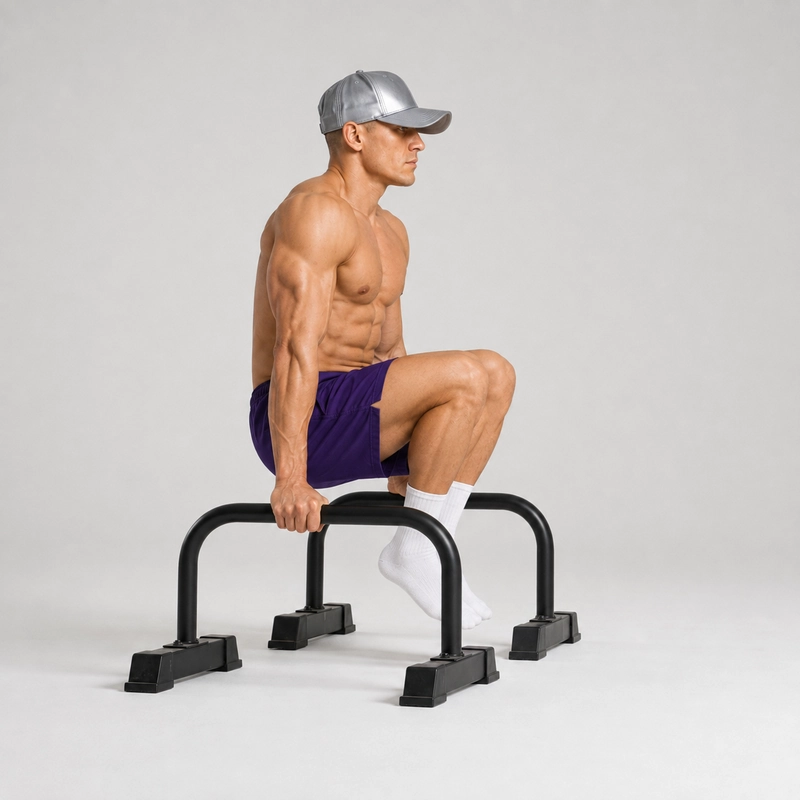
How to do Tuck L-Sit on Parallettes?
The Tuck L-Sit on Parallettes is an introductory L-sit progression in which you support your body on straight arms while holding both knees toward your chest and keeping your feet completely off the floor. Bending the knees shortens the lever, making the position more accessible than a full straight-leg L-sit.
Parallettes provide additional ground clearance and keep the wrists in a neutral position. This allows you to focus on the essential elements of the skill: pushing firmly into the handles, keeping the elbows locked, lifting the hips and maintaining the knees above the floor without swinging.
The exercise develops straight-arm support strength alongside abdominal and hip-flexor control. The Tuck Hollow Body Hold can help you learn the required abdominal bracing, while Hanging Knee Raises develop related hip-flexion strength through a dynamic movement.
The Tuck L-Sit should not be confused with a tuck planche. During a tuck L-sit, the torso stays relatively upright, the knees remain in front of the body and the hips stay approximately between or slightly behind the hands. A tuck planche requires a much larger forward shoulder lean with the hips and knees moving behind the hands.
Tips for the proper execution of Tuck L-Sit on Parallettes
Place the parallettes parallel and approximately shoulder-width apart.
Check that both parallettes remain stable before lifting your body.
Position your hands beside your hips rather than far in front of you.
Wrap your thumbs around the handles for a secure grip.
Lock your elbows before attempting to lift your hips.
Push the handles down and keep your shoulders away from your ears.
Draw your knees toward your chest to create enough foot clearance.
Keep your feet together throughout the hold.
Do not rest your knees or thighs on your arms.
Keep your torso relatively upright instead of leaning into a tuck planche.
Use short, controlled breaths without relaxing your core.
Lower your feet and hips gently before releasing the parallettes.
Muscles worked when doing Tuck L-Sit on Parallettes
The Tuck L-Sit combines isometric straight-arm support with a compact hip-flexion position. The upper body presses into the parallettes to lift the hips, while the abdominals and hip flexors keep the knees elevated in front of the torso.
Primary Muscles
- Abdominals: Stabilize the torso, control the pelvis and help maintain the compact tucked position.
- Hip flexors: Draw the thighs toward the torso and keep the feet elevated. The shortened tuck position makes this demand more manageable than in a full L-sit.
- Triceps: Maintain full elbow extension while the arms support your bodyweight.
- Lower trapezius and scapular stabilizers: Maintain shoulder depression and prevent the upper body from collapsing between the arms.
Secondary Muscles
- Anterior deltoids: Stabilize the shoulders during straight-arm support.
- Obliques and deep core muscles: Keep the body centered and prevent rotation toward one side.
- Forearms and grip muscles: Maintain a secure hold on the parallettes.
- Upper chest: Assists with stability in the support position.
- Inner thighs: Help keep the knees and feet together.
- Quadriceps: Assist with controlling the lower legs and become progressively more involved as the knees extend toward a full L-sit.
Once you can hold the tuck position without resting on your arms, gradually move the knees farther from the chest or extend one leg. These progressions increase the lever length and prepare you for the full L-sit.
Primary Muscle(s):
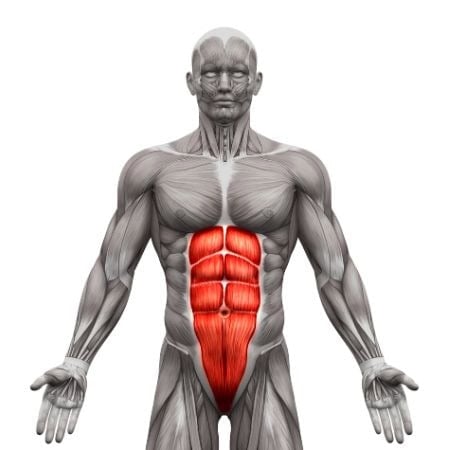
Abdominal
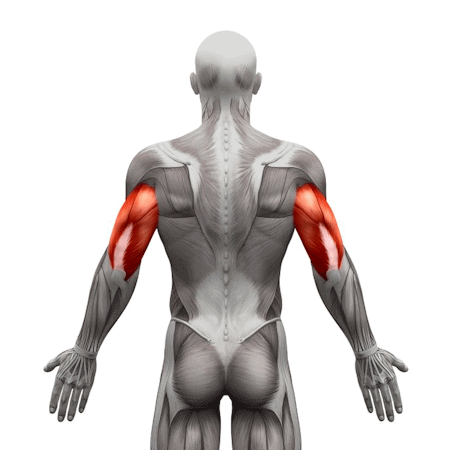
Triceps
Secondary Muscle(s):
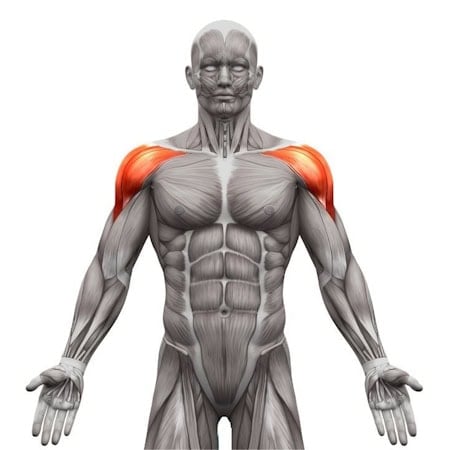
Anterior delt
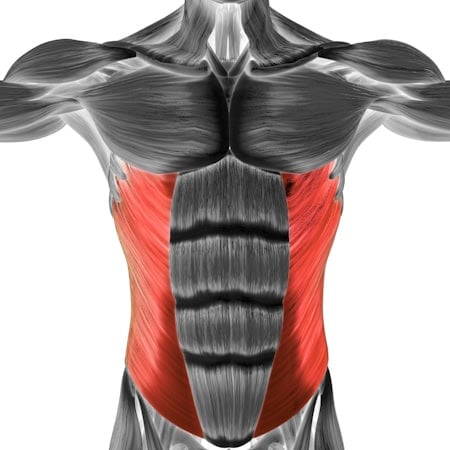
Oblique
Equipment needed for Tuck L-Sit on Parallettes
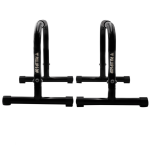
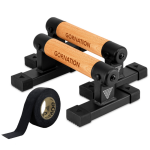
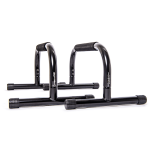
Adjust the difficulty of Tuck L-Sit on Parallettes
How to make Tuck L-Sit on Parallettes harder?
How to make Tuck L-Sit on Parallettes easier?
How to make Tuck L-Sit on Parallettes harder?
To make Tuck L-Sit on Parallettes harder:
-
Longer Tuck L-Sit: Gradually increase the hold while maintaining locked elbows, active shoulders and complete foot clearance.
-
Open Tuck L-Sit: Move the knees farther away from the chest while keeping them bent and elevated.
-
Single-Leg L-Sit: Extend one leg horizontally while keeping the other knee tucked toward the chest.
-
Alternating Single-Leg L-Sit: Switch the extended leg without allowing the hips or feet to touch down.
-
Tuck-to-L-Sit Extensions: Extend both legs forward from the tuck and return without lowering the hips.
-
Full L-Sit on Parallettes: Hold both legs straight and horizontal in front of the body.
-
Tuck L-Sit on the Floor: Perform the same tucked position with the palms flat on the ground and no extra clearance from the parallettes.
-
High Tuck L-Sit: Pull the knees higher toward the chest while keeping the torso upright and the shoulders depressed.
-
Tuck L-Sit to Tuck Planche: Shift the shoulders forward and move the tucked legs behind the hands before returning to the L-sit position.
-
Tuck L-Sit on Gymnastics Rings: Perform the hold on freely moving rings for a greater stability challenge.
How to make Tuck L-Sit on Parallettes easier?
To make Tuck L-Sit on Parallettes easier:
-
Parallette Support Hold with Feet Down: Press through straight arms to lift only the hips while keeping both feet on the floor.
-
Alternating Foot Lift: Keep one foot on the floor while briefly lifting the other, then switch sides.
-
Single-Foot-Assisted Tuck Hold: Hold both knees toward the chest while keeping one toe lightly on the floor.
-
Feet-Assisted Tuck L-Sit: Keep both toes lightly touching the floor while supporting as much bodyweight as possible through the arms.
-
Higher Parallettes: Use taller parallettes to provide more clearance and make the foot-assisted setup easier.
-
Short Tuck L-Sit Attempts: Perform repeated 3–5-second holds instead of forcing a longer set.
-
Support Hold Knee Raises: Begin in straight-arm support and repeatedly lift both bent knees without holding the top position.
-
Seated Tuck Compression: Sit between the parallettes and repeatedly lift the bent feet while leaving the hips on the floor.