 Andy Toth
Yes, calisthenics can help you lose body fat. A bodyweight workout uses energy, and sufficiently challenging exercises can provide the resistance your muscles need while you lose weight. Because calisthenics can be performed at home with little or no equipment, it may also make regular training easier to sustain.
But calisthenics is not a special fat-burning loophole. Fat loss occurs when, over time, your body uses more energy than it receives from food and drink. Physical activity can contribute to that energy deficit, but the amount you eat still matters. The CDC's guidance on physical activity and weight notes that activity and reduced calorie intake work together, and that most weight loss comes from reducing calorie intake.
The useful question is therefore not, “Which calisthenics exercise burns the most fat?” It is: How can you use calisthenics as part of a fat-loss system that you can continue long enough to work?
This guide answers that question without relying on calorie-burn estimates, “belly-fat” exercises, or exhausting daily circuits.
Fat loss and weight loss are not the same thing
Body weight includes fat, muscle, bone, organs, water, and the food moving through your digestive system. Losing weight simply means that the number on the scale has decreased. Losing fat means reducing stored body fat.
That distinction matters because a successful fat-loss phase should ideally retain as much useful lean tissue as possible. It also explains why your daily scale weight can rise or fall even when you have not gained or lost meaningful body fat. Hydration, sodium intake, stored carbohydrate, digestion, and—in people who menstruate—the menstrual cycle can all affect short-term weight.
For that reason, judge progress from trends over several weeks rather than from a single weigh-in.
The three jobs calisthenics can perform during fat loss
Calisthenics becomes easier to program when you stop expecting every workout to do everything. During fat loss, bodyweight training can perform three different jobs.
Job 1: Give your muscles a reason to stay
Push-ups, rows, squats, lunges, hinges, and other calisthenics movements can function as resistance training when the variation is challenging enough for you. This is different from merely moving through easy repetitions until you become out of breath.
Resistance training matters during weight loss because dieting without an adequate training stimulus can reduce both fat mass and lean mass. A systematic review of adults with overweight or obesity found that combining caloric restriction with resistance training was especially effective for reducing body fat while maintaining lean mass. The authors also found that resistance training alone reduced body-fat percentage and fat mass, although average body weight did not necessarily change substantially. (Obesity Reviews systematic review)
A separate systematic review and meta-analysis in healthy adults also found modest reductions in body-fat percentage, fat mass, and visceral fat after resistance training. (Sports Medicine systematic review)
These findings do not mean that a few push-ups automatically cause weight loss. They mean that progressive resistance training is a valuable part of improving body composition—even when the scale is not the only outcome that changes.
Job 2: Add activity and improve fitness
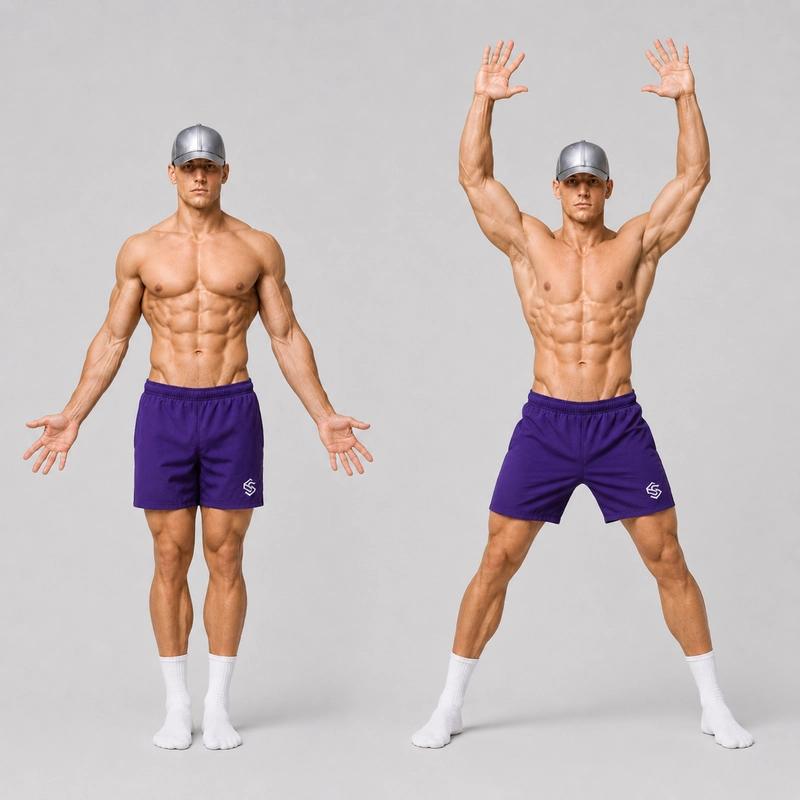
Calisthenics can also be organized as conditioning. Faster combinations of exercises, shorter rests, and movements such as jumping jacks or mountain climbers increase the cardiovascular demand of a session.
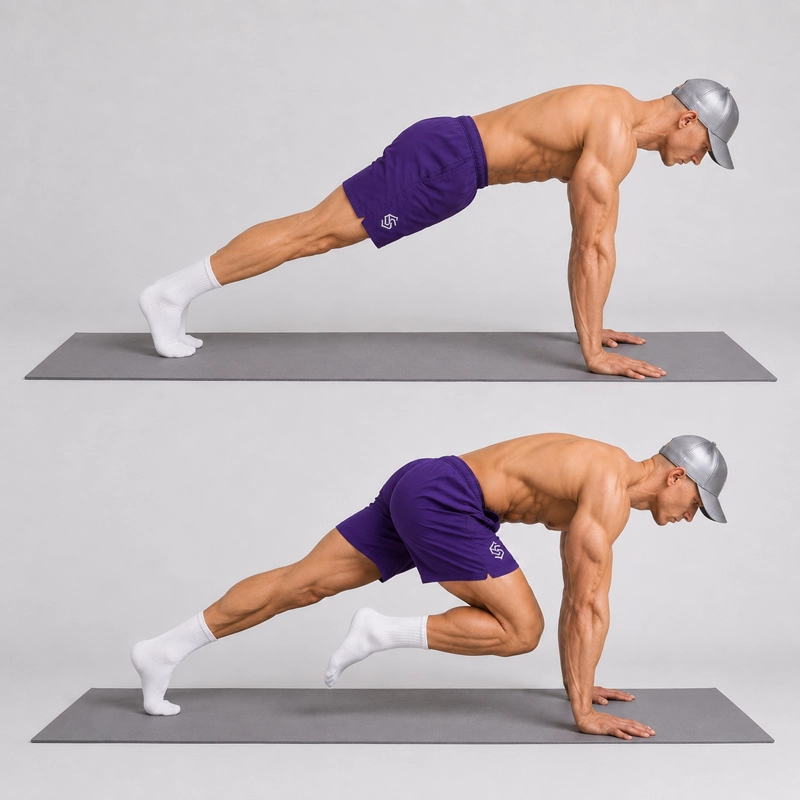
Research on simple bodyweight interval training has found improvements in cardiorespiratory fitness in inactive adults, showing that bodyweight exercise can train more than muscular strength. However, that does not make high-intensity intervals mandatory for losing fat. (International Journal of Exercise Science study)
Walking, cycling, swimming, and other aerobic activities may be easier to recover from and accumulate in larger amounts. Current U.S. physical-activity guidance recommends 150–300 minutes of moderate aerobic activity—or 75–150 minutes of vigorous activity—per week for substantial health benefits, plus muscle-strengthening activity on at least two days. These are general health guidelines, not a promise of a particular amount of weight loss. (Physical Activity Guidelines for Americans)
Job 3: Make consistency less complicated
This benefit is practical rather than metabolic. A plan that requires no commute, membership, or complicated setup is easier to fit into a busy day. Calisthenics can be performed at home, outdoors, or while travelling, and many movements can be scaled to the trainee.
Convenience does not guarantee adherence, but it removes several common barriers. A moderately effective routine completed consistently will usually be more useful than an “optimal” routine you repeatedly skip.
What calisthenics cannot do
Calisthenics is useful, but its limitations are just as important as its benefits.
It cannot choose where you lose fat
Ab exercises can strengthen your abdominal muscles, but they cannot instruct your body to remove fat specifically from your stomach. The same applies to arm, hip, or thigh exercises. A systematic review and meta-analysis found no evidence that localized muscle training produces localized fat loss. (Human Movement systematic review)
Where fat comes off first or last varies between individuals. Train every major movement pattern and measure overall progress rather than chasing exercises for one “problem area.”
It cannot compensate reliably for unlimited food intake
A workout may increase the energy you use, but exercise-calorie estimates are imprecise and individual responses vary. Treat training as a way to become stronger, fitter, and more active—not as permission to ignore everything you eat or as punishment for a meal.
It does not need to feel brutal to be effective
Sweat and breathlessness show that your body is responding to heat and exertion; they do not directly measure fat loss. A controlled set of challenging rows may provide a valuable muscular stimulus without resembling cardio. Conversely, an easy movement performed quickly may raise your heart rate without being difficult enough to preserve or build much strength.
Both can be useful. They simply perform different jobs.
Strength work, conditioning, and daily movement: use each for its proper job
The following framework is more useful than searching for one perfect “fat-burning” workout:
| Part of the plan | Primary job | What it should feel like | Examples |
|---|---|---|---|
| Strength-focused calisthenics | Challenge and retain muscle | Controlled repetitions; the last few reps are demanding but technically sound | Push-ups, rows, squats, split squats, hip hinges, planks |
| Calisthenics conditioning | Add vigorous activity and improve work capacity | Faster breathing; repeatable efforts rather than immediate exhaustion | Jumping jacks, mountain climbers, low-impact step variations, carefully scaled circuits |
| Low-to-moderate-intensity movement | Accumulate activity with less fatigue | Sustainable; you can usually speak in sentences | Brisk walking, easy cycling, swimming, active commuting |
| Recovery | Support your next useful session | Fatigue gradually settles; sleep and normal movement feel manageable | Rest days, light walking, consistent sleep routine |
You do not need to turn strength exercises into cardio by rushing every set or eliminating all rest. If the goal of a set is muscular strength, rest long enough to perform the next set with control. Add conditioning separately when that makes the session clearer and safer.
How to build a calisthenics week for fat loss
For a true beginner, two or three balanced full-body sessions per week are a sensible starting structure. Place at least one recovery or lighter-activity day between demanding full-body workouts.
Here is one example—not a universal prescription:
| Day | Main activity | Purpose |
| Monday | Full-body calisthenics | Resistance and skill practice |
| Tuesday | Brisk walk or easy cycling | Accumulate moderate activity |
| Wednesday | Rest or light movement | Recovery |
| Thursday | Full-body calisthenics | Resistance and progression |
| Friday | Brisk walk or another enjoyable aerobic activity | Fitness and energy expenditure |
| Saturday | Optional short circuit or recreational activity | Additional activity if recovered |
| Sunday | Rest or easy walk | Recovery |
If you currently do very little exercise, begin below this amount and add activity gradually. If you already cycle, run, play sport, or have a physically demanding job, you may need less additional conditioning than the table suggests.
The schedule is successful only if you can recover from it and repeat it.
Choose exercises that cover the whole body
A useful full-body session needs movement balance—not the longest possible list of high-calorie exercises. Build around these categories:
| Movement | Beginner example | How to adjust it |
| Push | Wall push-up or incline push-up | Use a higher surface to make the push-up easier; lower it gradually as you improve |
| Pull | Doorway row or Australian pull-up | Use a more upright body position or a higher bar for less resistance |
| Squat or lunge | Straight-arm squat or split squat | Reduce the depth or use stable hand support when needed |
| Hip hinge | Bodyweight good morning | Use a comfortable range while learning to move from the hips |
| Trunk stability | Knee plank | Shorten the hold before alignment breaks down |
| Optional conditioning | Jumping jack or mountain climber | Slow the movement, shorten the interval, or choose a low-impact alternative |
You do not need to include every example in one session. The purpose of the table is to help you avoid a common mistake: performing only pressing movements, abdominal exercises, and burpees while neglecting pulling, the legs, and the posterior chain.
For a complete progression with exercise demonstrations and scheduled sessions, follow our free four-week full-body home workout plan for beginners.
Progress the exercises instead of only adding more sweat
For calisthenics to continue acting as resistance training, the exercises must remain appropriately challenging as you improve. More repetitions are one form of progression, but they are not the only one.
You can progress by:
- Performing more technically sound repetitions within the recommended range
- Increasing the range of motion
- Slowing the lowering phase
- Adding a controlled pause at the hardest position
- Moving to a more difficult exercise variation
- Adding a set when you can recover from the additional work
- Eventually using a resistance band, weighted vest, or other external resistance
Change one variable at a time. If you simultaneously choose harder variations, add sets, shorten every rest period, and increase conditioning, you will not know which change caused excessive fatigue.
As a practical coaching guideline, finish most strength sets while you could still perform approximately two or three clean repetitions. This is not a medical threshold or a universal rule; it is a simple way for beginners to avoid turning every set into a form breakdown test.
Nutrition remains part of the system
You do not need a special “calisthenics diet,” but fat loss still requires an eating pattern that creates a sustainable energy deficit over time. Training can contribute to the deficit; it usually should not carry the entire burden.
Aim for an approach that you could continue beyond a few highly motivated days. Build meals around nutrient-dense foods, include protein-rich foods, and avoid cutting intake so aggressively that normal life and training become difficult. Our guide to diet and calisthenics provides broader food guidance.
Weight management can also be affected by sleep, stress, medications, medical conditions, age, and other individual factors. If you have an eating-disorder history, are pregnant, take medication that affects weight or appetite, or have a health condition that changes how you should exercise or eat, seek individualized guidance from an appropriately qualified health professional.
Measure whether the system is working
Do not judge the plan only by how tired you feel after a workout. Use a small set of repeatable measures:
1. Body-weight trend
If weighing yourself is appropriate for you, compare averages taken under similar conditions rather than reacting to individual days. A weekly average is more informative than the difference between yesterday and today.
2. Waist measurement
Measure at the same anatomical location, at a similar time of day, and under similar conditions every two to four weeks. Consistency in the method matters more than frequent measuring.
3. Strength or exercise performance
Track the variation, repetitions, sets, and hold times you complete with good form. If your waist measurement is trending down while your strength is broadly stable, that can be a more useful sign than scale weight alone.
4. Weekly completion
Record whether you completed the sessions and activity you planned. A program cannot work as designed if it exists only on paper.
5. Recovery
Notice persistent joint discomfort, unusual exhaustion, declining performance, sleep disruption, or a growing reluctance to train. These do not prove that the plan is wrong, but they are reasons to review its difficulty and your recovery.
Review trends after several consistent weeks. If nothing is changing, adjust one lever—food intake, daily movement, conditioning volume, or training consistency—rather than redesigning everything at once.
Common calisthenics fat-loss mistakes
Doing only burpees and abdominal exercises
Burpees can be useful conditioning, but they are not a complete training program. They also are not required for fat loss. Include balanced strength work and choose lower-impact conditioning if repeated jumping is inappropriate for you.
Making every workout high intensity
More intensity creates more fatigue. Combining demanding circuits with a large calorie deficit and little recovery may make consistency harder, not easier.
Choosing exercises that are too difficult
An exercise that allows only partial, painful, or uncontrolled repetitions is not automatically more effective. Use a regression that lets you train the intended muscles through a controlled range.
Never progressing the strength work
Repeating the same easy workout may continue to use some energy, but it provides less reason for your muscles to adapt. Track performance and progress gradually.
Treating exercise as punishment for eating
Training should build capacity and support health. Using exhausting workouts to “erase” meals encourages an unhelpful relationship with both exercise and food.
Quitting because the scale fluctuates
Short-term weight changes are noisy. Use consistent measurements and allow enough time to see a trend before deciding whether the plan needs adjustment.
Frequently asked questions
Is calisthenics better than cardio for losing fat?
Neither is universally better. Calisthenics can provide resistance training that helps maintain muscle, while aerobic exercise can often be accumulated for longer with less local muscular fatigue. A strong fat-loss plan can combine progressive calisthenics, an eating pattern that creates a sustainable energy deficit, and aerobic activity you enjoy.
Can calisthenics reduce belly fat?
Calisthenics can contribute to overall fat loss, which may eventually reduce abdominal fat, but abdominal exercises cannot target fat specifically from the stomach. Your genetics and physiology influence where you lose fat first.
How often should I do calisthenics for weight loss?
Two or three balanced full-body sessions per week are a practical starting point for many beginners. Your appropriate frequency depends on the difficulty of the sessions, your other activity, training history, health, and recovery. More sessions are not automatically better.
Do I need HIIT or burpees to lose fat?
No. HIIT and burpees are optional ways to add vigorous conditioning. Progressive strength work, moderate aerobic activity such as brisk walking, and nutrition can support fat loss without high-impact intervals.
Can a beginner lose fat with bodyweight exercises?
Yes, provided the overall approach creates a sustainable energy deficit. Beginners can use wall push-ups, supported squats, doorway rows, knee planks, and other scaled exercises to develop strength while increasing their activity.
Will calisthenics turn fat into muscle?
No. Fat and muscle are different tissues; one does not transform into the other. You can lose fat while maintaining or gaining some muscle, causing your body composition to change even if scale weight moves slowly.
Start with a plan you can repeat
Calisthenics can support fat loss in three valuable ways: it can challenge your muscles, add physical activity, and reduce the friction involved in exercising consistently. It works best when these benefits are combined with appropriate nutrition, everyday movement, and recovery.
You do not need the most exhausting workout. You need a plan that trains the whole body, progresses at your current level, and fits your life well enough to repeat.
If you are new to calisthenics, start with our free four-week full-body home workout plan. It organizes beginner-friendly exercises into scheduled sessions so you can begin training instead of trying to design everything yourself.
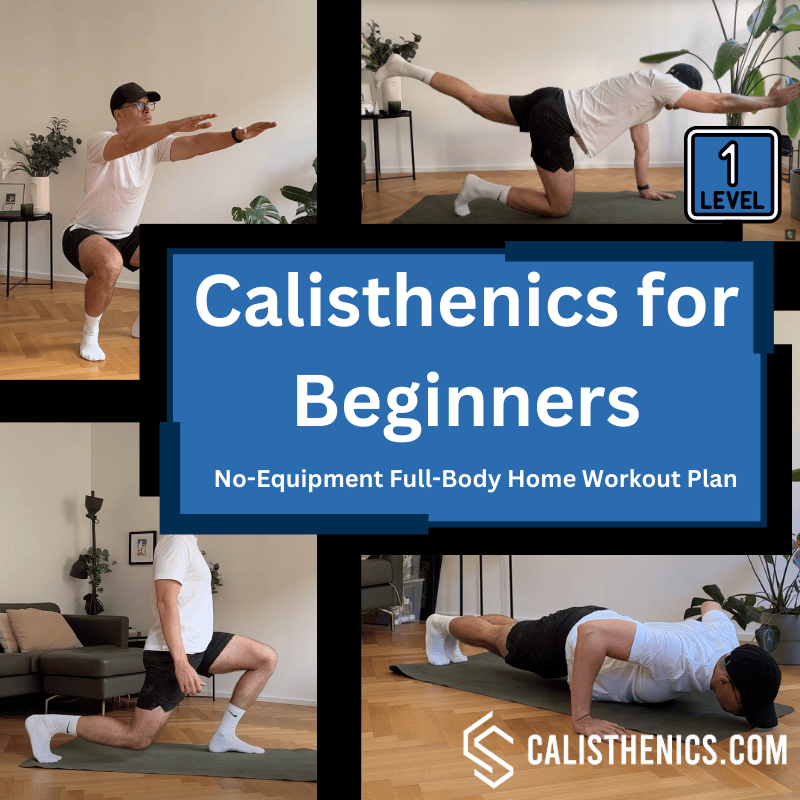
- Designed for total beginners
- Short and efficient workouts (30-40min)
- All exercises doable at home with no equipment
- 4-week program with 12 workout sessions
- Great variety of 40+ exercises
- Exercise videos and detailed guides included
How we created this guide: We reviewed current public-health guidance, peer-reviewed systematic reviews on resistance training and body composition, and research on bodyweight exercise. Scientific findings are linked beside the claims they support. The weekly schedule and exercise-selection framework are practical programming guidance, not a claim that one routine is suitable for every person.