
One-Leg Hollow Hold
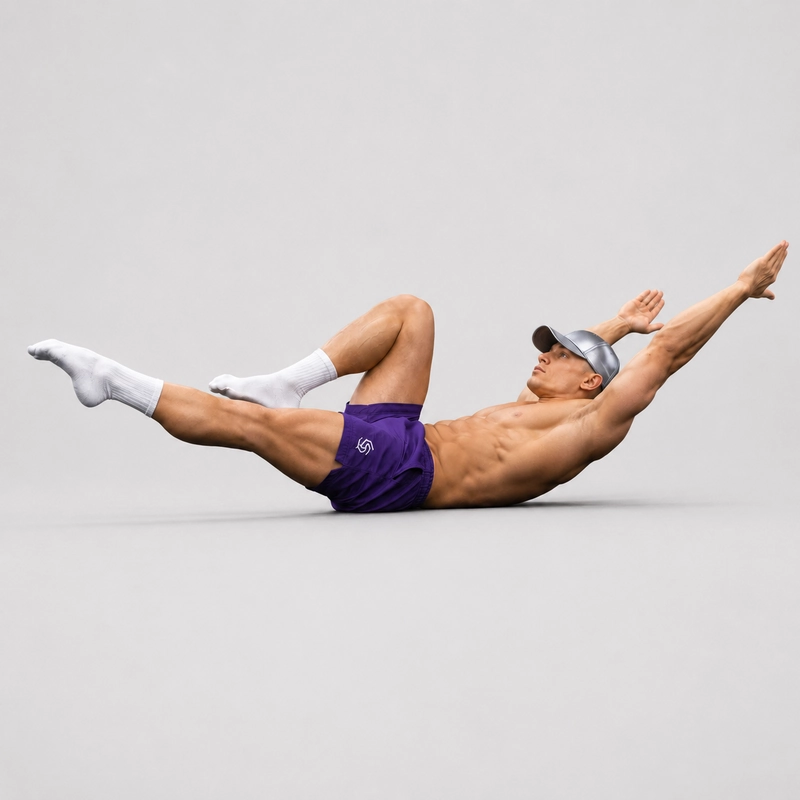
How to do One-Leg Hollow Hold?
The one-leg hollow hold is an isometric core exercise performed on your back with one leg extended and the other leg tucked toward the body. Throughout the hold, the shoulders and both feet remain above the floor while the abdominal muscles prevent the lower back from arching.
This variation forms a useful bridge between the easier tuck hollow body hold and the full hollow body hold. Extending only one leg increases the leverage acting on the core without imposing the full demand of extending both legs simultaneously.
The asymmetrical leg position also requires the obliques to help keep the pelvis level and prevent the torso from rotating. If maintaining lower-back contact is still difficult in the tucked position, begin with the dead bug. Once the full hollow shape is secure, you can add movement with hollow body rocks.
The key action is not simply lifting the legs: it is maintaining abdominal tension and controlling the position of the pelvis as the leg moves farther from the torso. Research comparing abdominal bracing with a posterior pelvic tilt found that the pelvic-tilt condition produced greater rectus abdominis activation than bracing alone. This supports the use of controlled lower-back contact as an important technique standard for this exercise. View the study on PubMed.
Tips for the proper execution of One-Leg Hollow Hold
Press your lower back into the floor before extending either leg.
Lower the straight leg only as far as you can without allowing your lower back to arch.
Keep the extended knee straight and raise the entire leg if the position becomes too difficult.
Keep the tucked foot above the floor instead of using it for support.
Reach your arms forward without holding the tucked leg.
Lift your shoulder blades slightly while keeping your chin gently tucked.
Keep both sides of the pelvis level and avoid rotating toward the tucked leg.
Take small, controlled breaths rather than holding your breath.
Switch legs before your form deteriorates and use the same hold time on both sides.
Muscles worked when doing One-Leg Hollow Hold
The one-leg hollow hold primarily trains the rectus abdominis, transverse abdominis and obliques. Together, these muscles maintain the hollow shape, control the position of the pelvis and resist the tendency of the extended leg to pull the lower back away from the floor.
The asymmetrical leg position places a slightly different stabilization demand on each side of the torso. The obliques help prevent the pelvis and rib cage from rotating as one leg extends farther from the body. For balanced practice, the exercise should be performed with each leg extended for the same amount of time.
The hip flexors hold both thighs above the floor and work harder on the extended side because of the longer lever. The quadriceps keep the extended knee straight, while the anterior shoulder muscles help hold the arms above the floor. These muscles support the position, but the primary objective remains maintaining abdominal control.
Primary muscles
- Rectus abdominis: Helps maintain the posterior pelvic position and prevents the lower back from arching.
- Transverse abdominis: Contributes to abdominal tension and stabilization of the trunk.
- Internal and external obliques: Stabilize the pelvis and rib cage while resisting rotation caused by the asymmetrical leg position.
Secondary muscles
- Hip flexors: Hold the tucked and extended thighs above the floor.
- Quadriceps: Maintain knee extension in the straight leg.
- Anterior deltoids: Help keep the arms elevated and reaching forward.
- Neck flexors: Assist in supporting the head, although the neck should not become the limiting factor.
Primary Muscle(s):
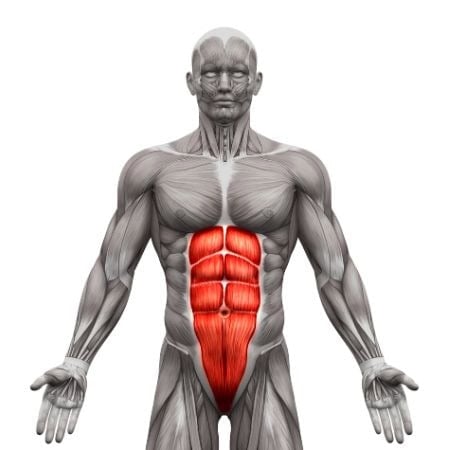
Abdominal
Secondary Muscle(s):
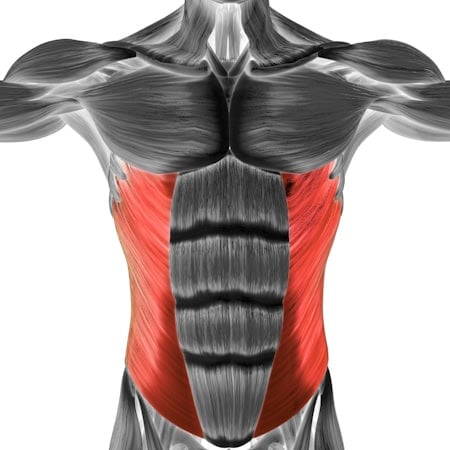
Oblique
Equipment needed for One-Leg Hollow Hold
No equipment needed for this exercise.
Adjust the difficulty of One-Leg Hollow Hold
How to make One-Leg Hollow Hold harder?
How to make One-Leg Hollow Hold easier?
How to make One-Leg Hollow Hold harder?
To make One-Leg Hollow Hold harder:
-
Lower the extended leg closer to the floor while maintaining lower-back contact.
-
Extend both arms overhead with the upper arms close to the ears.
-
Hold the position for longer without allowing the shoulders or legs to drop.
-
Switch legs slowly without resting in the fully tucked position.
-
Perform controlled alternating leg extensions while maintaining the hollow body shape.
-
Straighten the tucked leg gradually until both legs are extended in a full Hollow Body Hold.
-
Perform one-leg hollow body rocks while preserving the same body shape.
-
Add a light ankle weight to the extended leg only after you can maintain symmetrical pelvic control.
How to make One-Leg Hollow Hold easier?
To make One-Leg Hollow Hold easier:
-
Raise the extended leg farther away from the floor to reduce the leverage on the core.
-
Keep a slight bend in the extended knee while learning to control the position.
-
Bring the tucked knee closer to your chest.
-
Keep your arms reaching forward alongside your body instead of extending them overhead.
-
Lift your shoulders only slightly while maintaining comfortable neck alignment.
-
Use shorter holds and rest before your lower back begins to lift.
-
Return both legs to the tucked position between sides.
-
Practise the Tuck Hollow Body Hold before extending either leg.
-
Practise the Dead Bug if you cannot yet keep the lower back controlled while the legs move.