
Box Jump
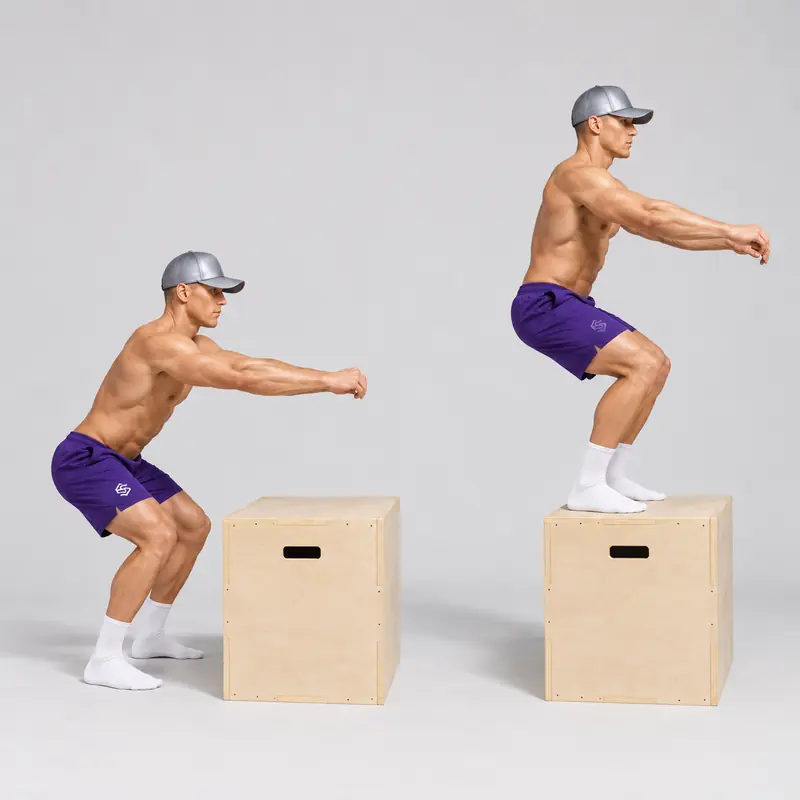
How to do Box Jump?
The box jump is a lower-body plyometric exercise in which you jump from the floor onto a stable raised platform. The movement combines a rapid countermovement, explosive extension of the hips, knees and ankles, and a controlled two-foot landing on the box. It primarily develops lower-body power, coordination and confidence producing force quickly.
Box jumps share their takeoff mechanics with jumping squats, but landing on a raised surface shortens the distance the body falls after reaching the top of the jump. In a study involving 20 recreationally trained men and a 50-centimeter box, box jumps produced similar measured propulsive characteristics to countermovement and hurdle jumps while resulting in approximately 51% lower peak landing impact force. This finding applies to the tested setup and does not mean box jumps are universally low-impact or risk-free. Read the original box-jump study.
The height of the box should match your current jumping and landing ability. A higher box is not automatically evidence of greater explosive power because you can reach a higher platform by pulling your knees farther toward your chest and landing in a deeper squat. For productive training, choose a height that allows both feet to clear the edge and land fully on the box without excessive knee tucking or loss of balance.
Use a purpose-built, stable platform such as a soft foam plyo box. The standard version uses one jump followed by a controlled step down and complete reset. Jumping back off the box changes the landing demands and is not required for this exercise.
Equipment and setup
Use a stable plyometric box with a flat, nonslip landing surface. Check that the box cannot slide, rotate, tip or compress excessively when you land on it. Do not substitute an unstable chair, narrow bench or stack of loose weight plates.
Place the box on level ground and make sure the takeoff area, landing surface, ceiling clearance and step-down area are unobstructed. Beginners should select a box below knee height. The correct starting height is one you can clear comfortably while landing in a controlled partial squat rather than an extremely deep crouch.
Complete a general preparation such as the joint warm-up routine, followed by bodyweight squats, several easy jumps and one or more submaximal practice sets on a low box. Research comparing box jumps with other jump variations also used progressively specific lower-body preparation before maximal trials. See the full research protocol.
Starting position
- Stand facing the box approximately one short step away.
- Place your feet around hip- to shoulder-width apart.
- Distribute your weight across the heel, base of the big toe and base of the little toe of each foot.
- Stand tall with your arms relaxed and your eyes directed toward the landing surface.
- Check the box position and commit to the jump before beginning your countermovement.
Step-by-step execution
- Load the jump: Swing your arms behind you while bending your hips and knees into a quick, controlled countermovement.
- Maintain alignment: Keep the knees tracking in approximately the same direction as the toes. Avoid allowing them to collapse inward.
- Drive from the floor: Reverse the countermovement forcefully and swing your arms forward and upward.
- Complete the takeoff: Extend through the hips, knees and ankles as you jump upward and slightly forward. Both feet should leave the ground together.
- Clear the edge: After leaving the floor, bend your hips and knees enough to bring both feet above the front edge of the box. Do not replace a strong takeoff with an exaggerated knee tuck.
- Land on the box: Place both feet fully on top of the box at approximately the same time. Aim for the center rather than the front edge.
- Absorb the landing: Bend your hips, knees and ankles and maintain pressure across the whole foot. Keep your knees aligned with your toes and your torso controlled.
- Stabilize: Pause until you are balanced, then stand fully upright on the box.
- Step down: Step down one foot at a time, turn only after reaching the floor and reset before the next repetition.
Breathing and rhythm
Take a breath as you prepare, brace your trunk gently and exhale during or immediately after the explosive takeoff. Breathe normally as you stabilize and step down. Each repetition should begin from a deliberate reset rather than becoming a rushed series of rebounds.
What counts as a complete repetition?
A complete repetition uses a simultaneous two-foot takeoff, clears the front edge without contact, and finishes with both feet fully supported on the box. You should control the landing without the knees collapsing inward, the heels hanging off the edge, the hands touching the box or an immediate step being required to regain balance. Stand upright before stepping down under control.
Common Mistakes
- Choosing a box that is too high: If you must pull your knees tightly to your chest, land in an extreme squat or place your hands on the box, reduce the height.
- Standing too far away: This turns the movement into a broad jump and increases the chance of landing near the front edge. Move closer and focus on jumping primarily upward.
- Standing too close: Being almost against the box can prevent natural forward clearance and increase hesitation. Leave enough room for a slight forward movement.
- Cutting the takeoff short: Tucking the knees before completing hip, knee and ankle extension can reduce the quality of the propulsive phase.
- Landing on the edge: Both feet should land fully on the box. Landing on the toes with the heels unsupported is an unsuccessful repetition.
- Knees collapsing inward: Maintain foot pressure and guide the knees in the same general direction as the toes during takeoff and landing.
- Landing with stiff legs: Allow the hips, knees and ankles to bend so that you can decelerate and stabilize.
- Landing in an excessively deep squat: This commonly indicates that the box is too high for the intended power exercise.
- Jumping down after every repetition: The additional floor landing increases total impact and fatigue. Step down during the standard version.
- Continuing after jump quality decreases: End the set when takeoff speed, clearance, alignment or landing control noticeably deteriorates.
Benefits
- Develops lower-body power: The exercise trains rapid force production through the hips, knees and ankles.
- Practises explosive triple extension: The glutes, quadriceps and calves contribute to extending the lower body during takeoff.
- Challenges coordination: The arm swing, countermovement, takeoff, obstacle clearance and landing must be timed together.
- Provides a scalable target: Box height can be adjusted to match the athlete’s current ability and the purpose of the session.
- Allows an elevated landing: Landing on the box shortens the post-jump descent compared with returning to the takeoff surface, although the exercise still requires appropriate landing control.
- Builds confidence clearing an obstacle: Progressive box heights can help athletes become more comfortable jumping onto raised surfaces.
- Requires little loading equipment: A suitable plyometric box and clear training area are sufficient.
Readiness and Safety
Before attempting a box jump, you should be able to perform controlled bodyweight squats and low jumping squats with a balanced two-foot landing. Practise landing on the floor before adding an obstacle.
Begin with a low box even if you expect to jump higher. Increase the height only after repeated successful landings with both feet fully supported and without a much deeper landing position. Hesitation, repeated aborted attempts or catching the toes against the edge are signals to reduce the height.
Keep the box dry, stable and clear of surrounding equipment. Avoid maximal-height attempts when fatigued, and do not hold dumbbells during ordinary box jumps. Added external load increases the consequences of a missed landing and is unnecessary for most athletes.
Stop if you experience sharp ankle, Achilles tendon, knee, hip or lower-back pain, dizziness or a feeling of instability. Anyone returning from a recent lower-body injury should obtain individualized clearance and progression advice from an appropriately qualified professional.
Progression Path
- Bodyweight squat
- Snap-down and landing practice
- Low countermovement jump
- Jumping squat
- Low box jump
- Standard box jump
- Paused box jump
- No-arm-swing box jump
- Gradually higher box jump with the same landing standard
Programming Recommendations
- Technique practice: 3–4 sets of 2–4 controlled repetitions.
- Power development: 3–5 sets of 3–5 high-quality repetitions.
- Rest: Rest approximately 90–180 seconds between demanding power sets.
- Intensity: Use a height that can be cleared confidently without an exaggerated knee tuck or deep landing.
- Frequency: One to three sessions per week may be appropriate depending on experience, total jump volume and recovery.
Perform box jumps after warming up and before fatiguing high-repetition leg work. Pair them with strength exercises such as Bulgarian split squats and supportive lower-leg work such as standing calf raises.
Stop a power-focused set when jump speed or height clearly decreases, you begin landing near the edge, or your landings become unstable. Adding more tired repetitions does not necessarily provide a better power stimulus.
Frequently Asked Questions
What box height should a beginner use?
Begin with a box below knee height that you can clear without hesitation. The exact height depends on your jumping ability, limb proportions and landing control. Progress based on movement quality rather than a universal number.
Does a higher box mean I jumped higher?
Not necessarily. You can reach a higher box by pulling your knees farther upward and landing in a deeper squat. Box height therefore reflects obstacle-clearance ability as well as takeoff height.
How deeply should I land?
A controlled partial squat is appropriate. Your landing position should be reasonably similar to your countermovement depth. If your thighs are compressed against your torso, the box is probably too high.
Should I jump or step down from the box?
Step down one foot at a time for the standard box jump. Jumping down adds another landing and changes the exercise’s total plyometric and impact demands.
Should every repetition be continuous?
No. For power training, step down and reset before each jump. Continuous repetitions create more fatigue and shift the exercise toward conditioning.
Are soft boxes better than wooden boxes?
Both can work when appropriately sized and stable. A soft box may make accidental shin contact less severe, but it must not compress, slide or tip during takeoff, landing or stepping down.
Do box jumps build muscle?
They train explosive force production but are not usually the main exercise for muscular hypertrophy. Combine them with progressively loaded or challenging squat, lunge and hinge exercises when building muscle is the goal.
Tips for the proper execution of Box Jump
Use a low box until you can consistently land with both feet fully supported and your balance under control.
Stand close enough to jump mainly upward, with only the forward movement needed to reach the box.
Swing your arms behind you during the countermovement and drive them forward and upward during takeoff.
Complete the extension of your hips, knees and ankles before pulling your knees upward to clear the box.
Aim to land near the center of the box rather than reaching for its front edge.
Keep your knees tracking in approximately the same direction as your toes during takeoff and landing.
Land with the whole foot supported and absorb the landing through your hips, knees and ankles.
Pause until balanced, stand upright and step down before beginning the next repetition.
Muscles worked when doing Box Jump
Primary muscles
- Quadriceps: Extend the knees during takeoff and help control knee flexion during landing.
- Glutes: Extend the hips to propel the body upward and help control the hips and knees during landing.
- Calves: Contribute to ankle plantar flexion during the final part of takeoff and assist with landing control.
Secondary muscles
- Hamstrings: Assist hip extension and help control the hips and knees during the countermovement and landing.
- Core: Stabilizes the trunk as the arms and legs generate force and the body moves onto the box.
- Hip adductors and abductors: Help control the position of the thighs and knees.
- Lower back: The spinal extensors assist in maintaining the torso position during takeoff and landing.
- Shoulders and upper back: Contribute to the arm swing used to generate momentum.
Primary Muscle(s):
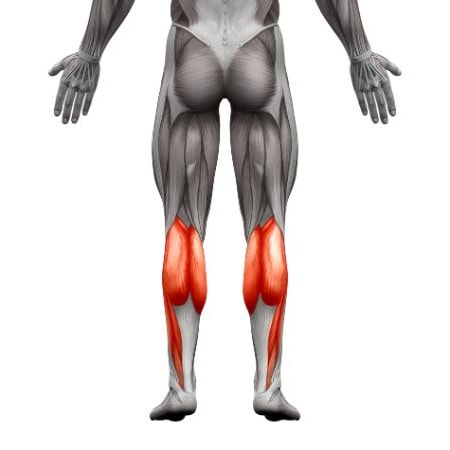
Calf
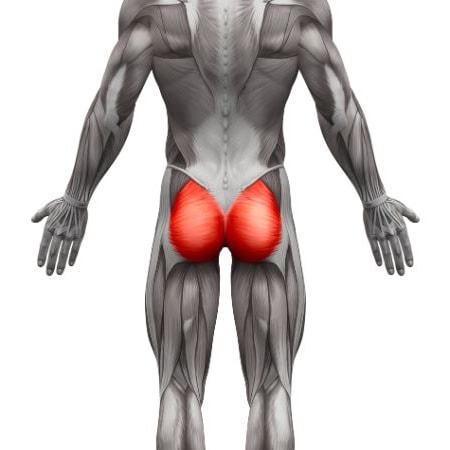
Glutes
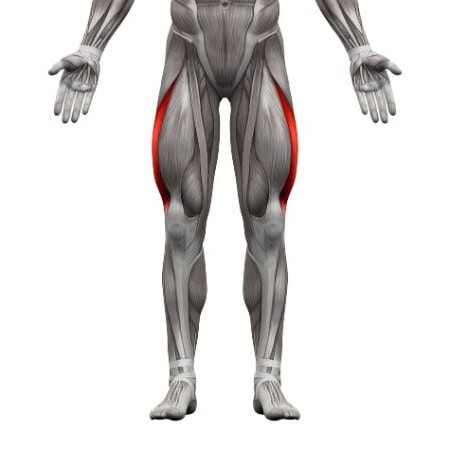
Quads
Secondary Muscle(s):
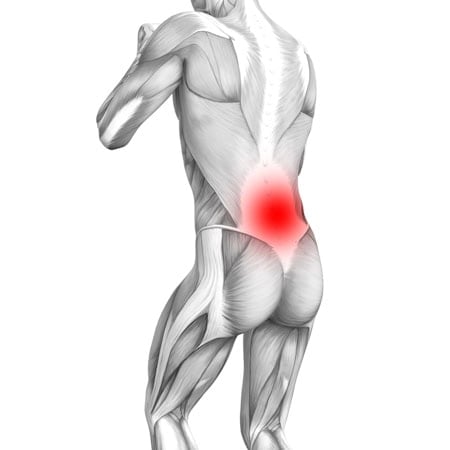
Lower back
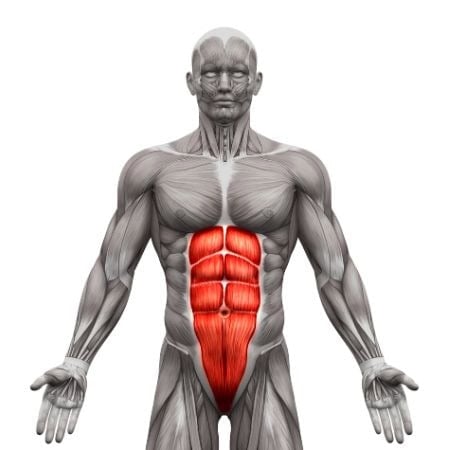
Abdominal
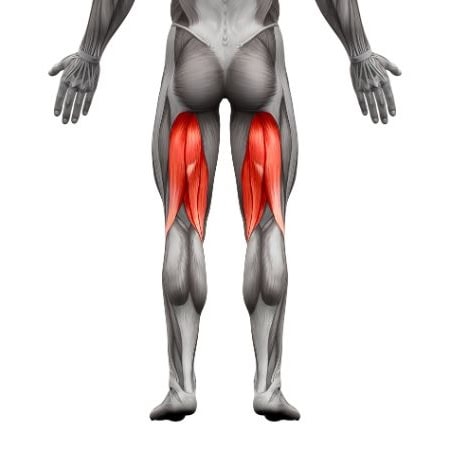
Hamstring
Equipment needed for Box Jump
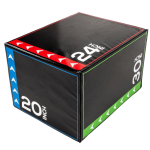
Adjust the difficulty of Box Jump
How to make Box Jump harder?
How to make Box Jump easier?
How to make Box Jump harder?
To make Box Jump harder:
-
Paused Box Jump: Hold the countermovement position for two to three seconds before jumping onto the box.
-
No-Arm-Swing Box Jump: Keep your hands on your hips so the lower body must produce the jump without assistance from the arm swing.
-
Higher Box Jump: Increase the box height gradually while preserving the same takeoff and controlled partial-squat landing standard.
-
Approach Box Jump: Add one or two controlled approach steps before the jump after mastering the standing version.
How to make Box Jump easier?
To make Box Jump easier:
-
Bodyweight Squat: Build the lower-body strength and squat control required for the countermovement and landing positions.
-
Snap-Down Landing Drill: Rise onto your toes and quickly drop into a balanced partial squat without leaving the floor.
-
Low Jump and Stick: Perform a small vertical jump and hold the floor landing before adding a box.
-
Jumping Squat: Practise a two-foot takeoff and landing without having to clear an obstacle.
-
Low Box Jump: Use the lowest stable box available and focus on landing in the center with both feet fully supported.