
Dead hang
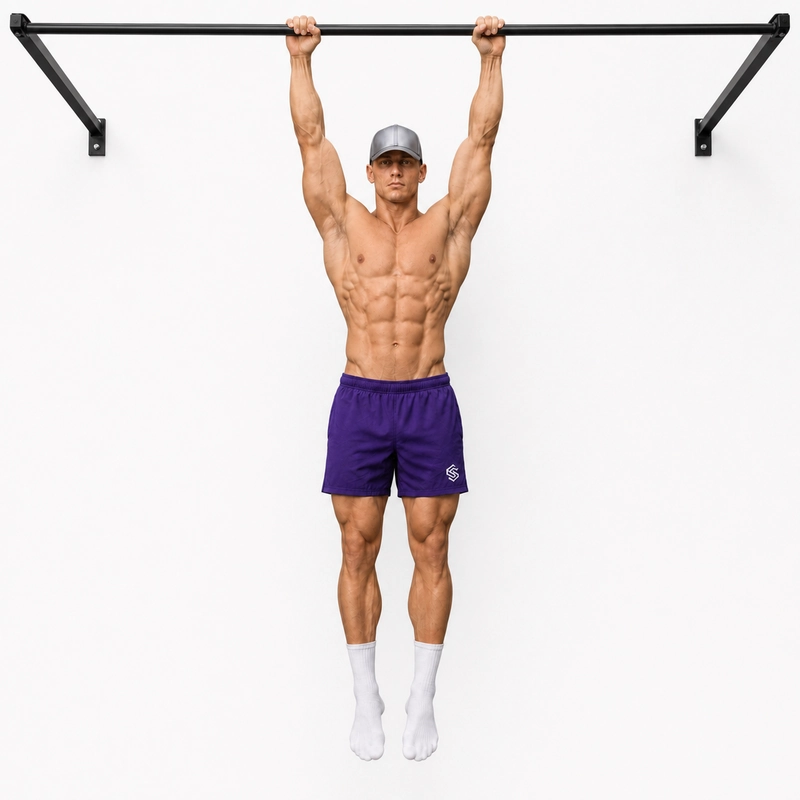
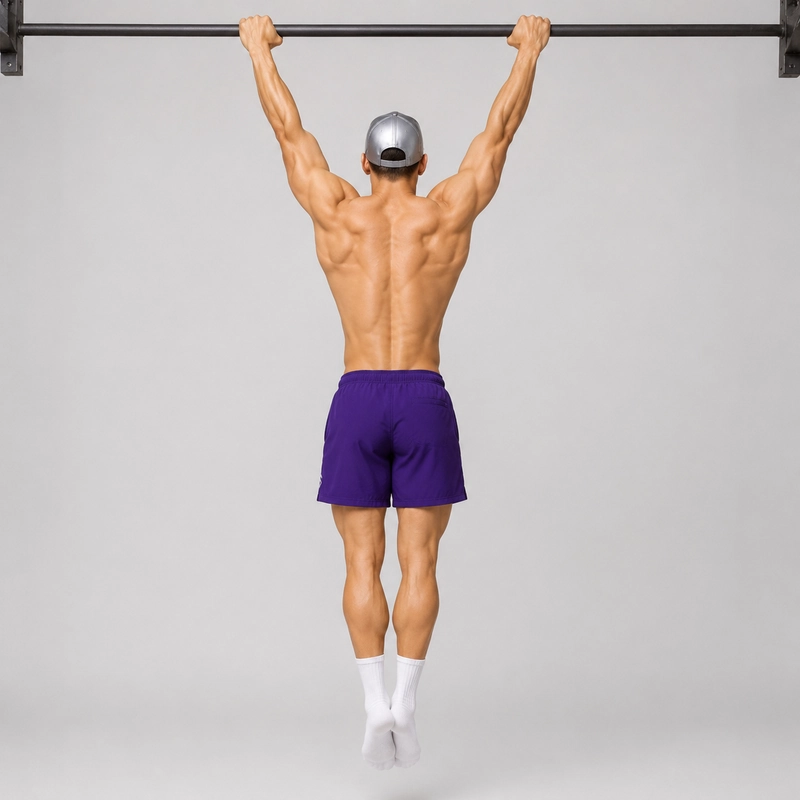
How to do Dead hang?
Tips for the proper execution of Dead hang
Use a box or step to reach the bar. Do not jump into the hang.
Wrap your thumbs around the bar and keep both hands in the same position.
Keep your elbows fully straight throughout the hold.
Let your shoulders elevate only as far as feels comfortable; do not force a deeper stretch.
Keep your head neutral and your body directly below the bar.
Keep your legs quiet and avoid kipping, twisting, or swinging.
Breathe normally instead of holding your breath.
End the set while you can still return your feet to the support safely.
Use the same bar, grip, and technique whenever you compare hang times.
Muscles worked when doing Dead hang
The dead hang is primarily a grip-endurance exercise. Because the shoulders remain passive rather than being pulled down into an active hang, it should not be described as a full lat-strengthening repetition.
Primary muscles
- Forearm finger flexors: Contract isometrically to keep the fingers closed around the bar and support your bodyweight.
- Intrinsic hand muscles: Assist the grip and help maintain contact with the bar.
Secondary muscles and supporting structures
- Rotator cuff and shoulder-girdle muscles: Provide varying levels of stabilization as the arms support the body overhead.
- Latissimus dorsi and other shoulder extensors: Are placed in a lengthened position during a passive hang and become more active if you turn the movement into an active hang.
- Core and hip muscles: Provide low-level tension to limit swinging and keep the body aligned beneath the bar.
Primary Muscle(s):
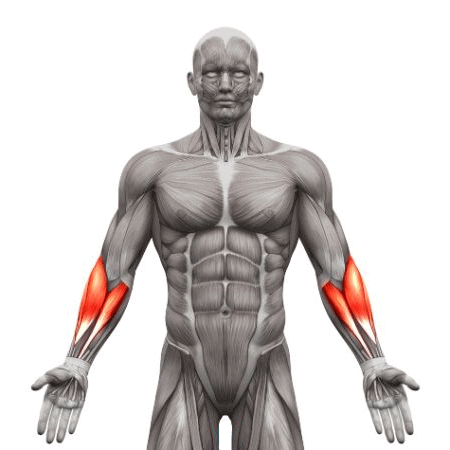
Forearm
Secondary Muscle(s):
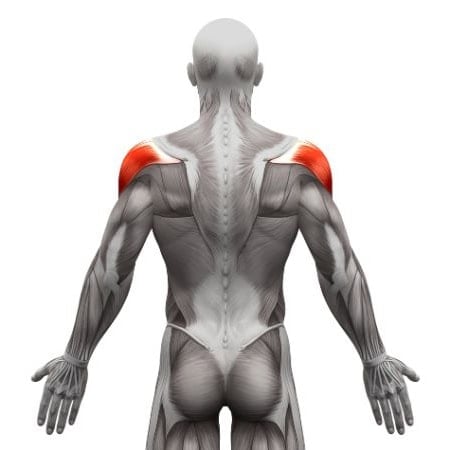
Rear delt
Equipment needed for Dead hang
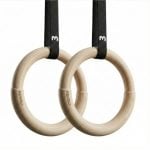
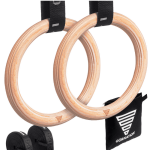
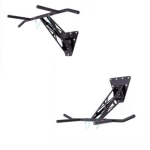
Adjust the difficulty of Dead hang
How to make Dead hang harder?
How to make Dead hang easier?
How to make Dead hang harder?
To make Dead hang harder:
-
Increase the hold time: Add 5–10 seconds while preserving the same grip and completion standard.
-
Add another set: Increase total hanging time before moving to a more demanding grip.
-
Use a thicker bar or fat-grip attachment: The larger diameter increases the grip demand and usually shortens the hold.
-
Perform a towel dead hang: Loop two secure towels over the bar and hold one in each hand to increase the demand on the fingers and forearms.
-
Add external load: Use a small amount of weight on a secure dip belt or weighted vest only after bodyweight hangs are comfortable and consistent.
-
Use an assisted one-arm hang: Keep one hand firmly on the bar while the other hand provides reduced assistance from a strap, towel, or nearby support. Progress gradually before considering a full one-arm hang.
How to make Dead hang easier?
To make Dead hang easier:
-
Use a foot-assisted dead hang: Keep both feet on a box or the floor and bend your knees to place only part of your bodyweight through your hands.
-
Use one foot for assistance: Keep one foot lightly supported and gradually reduce how much weight it carries.
-
Perform shorter holds: Begin with repeatable 5–10-second hangs and accumulate several controlled sets.
-
Use low rings with foot support: Hold the rings with palms facing each other while keeping your feet on the floor. This permits a self-selected wrist and shoulder position, but it should still be pain-free.