
Floor L-Sit
How to do Floor L-Sit?
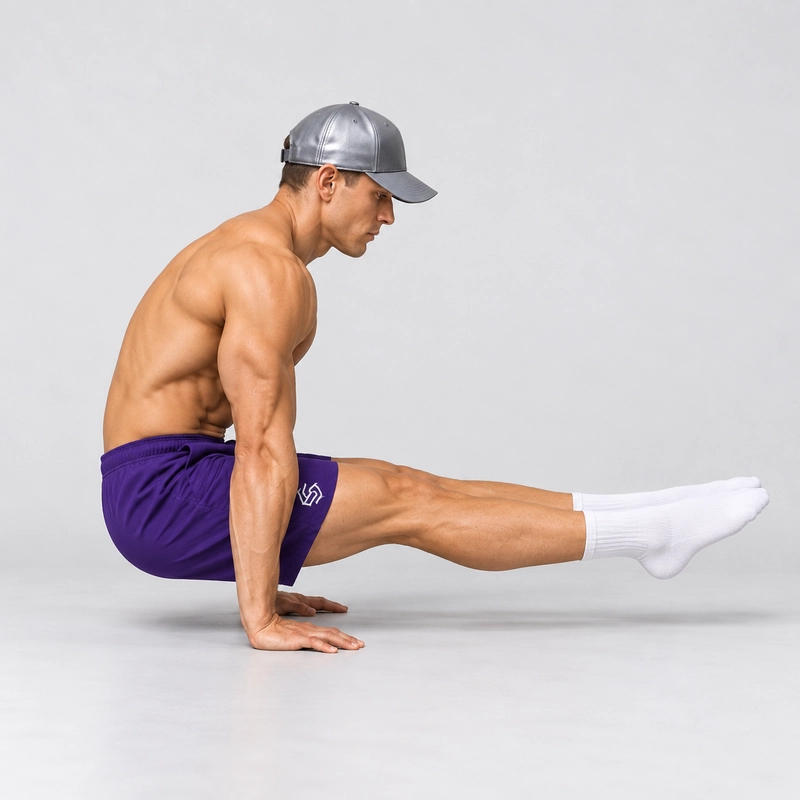
The Floor L-Sit is a static calisthenics exercise in which you support your body on straight arms while holding your hips and extended legs completely above the ground. It develops core compression, straight-arm pushing strength and total-body control without requiring any equipment.
The floor variation is generally more demanding than an L-sit performed on parallettes or parallel bars. Because the floor provides no additional clearance, you must actively push through your hands, lift your hips and compress your thighs toward your torso at the same time.
A complete Floor L-Sit has locked elbows, elevated hips, straight knees and both heels clear of the ground. If you cannot yet create enough clearance, begin with a tucked or single-leg variation instead of bending both knees during the full hold.
Warm up your hands and forearms with the Wrist Warm-Up Routine before placing significant bodyweight through extended wrists. The Hollow Body Hold can also help you develop the bracing and pelvic control required for this exercise.
Tips for the proper execution of Floor L-Sit
Press the floor away continuously instead of merely balancing on your hands.
Lock your elbows before attempting to lift your hips.
Keep your shoulders pressed down and away from your ears.
Place your hands close to your hips to improve leverage and body clearance.
Actively pull your thighs toward your torso rather than swinging your legs upward.
Squeeze your quadriceps to keep both knees completely straight.
Keep your legs together and point your toes throughout the hold.
Use short, controlled breaths without releasing abdominal tension.
End the set as soon as your heels touch down or your elbows begin to bend.
Practice on a firm, non-slip surface that allows stable hand contact.
Muscles worked when doing Floor L-Sit
The Floor L-Sit combines isometric core compression with straight-arm support. The abdominals and hip flexors hold the legs in front of the torso, while the triceps, shoulders and scapular muscles keep the body elevated above the floor.
Primary Muscles
- Abdominals: Brace the torso, control the pelvis and help prevent the lower back from excessively arching during the hold.
- Hip flexors: Produce the strong hip flexion needed to hold the straight legs in front of the body. The iliopsoas and rectus femoris are especially active.
- Triceps: Maintain elbow extension while the arms support your bodyweight.
Secondary Muscles
- Quadriceps: Keep the knees extended and create a clean, straight-leg position.
- Anterior deltoids: Help stabilize the shoulders while you press into the floor.
- Lower trapezius and other scapular stabilizers: Support active shoulder depression and prevent shrugging.
- Obliques and deep core muscles: Stabilize the pelvis and prevent rotation or side-to-side shifting.
- Forearms and hand muscles: Stabilize the wrists and distribute pressure through the palms and fingers.
- Adductors: Help keep the legs squeezed together throughout the hold.
The Floor L-Sit requires greater active compression and ground clearance than most elevated L-sit variations. Exercises such as Hanging Leg Raises and the L-Hang can develop related straight-leg and core strength, although their upper-body support positions are different.
Primary Muscle(s):
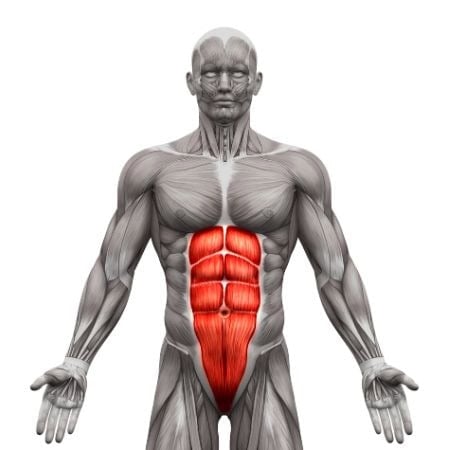
Abdominal
Secondary Muscle(s):
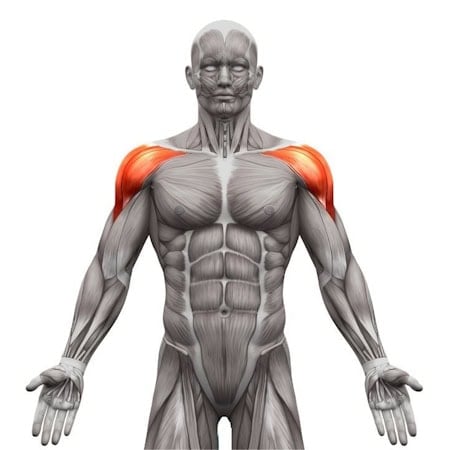
Anterior delt
Equipment needed for Floor L-Sit
No equipment needed for this exercise.
Adjust the difficulty of Floor L-Sit
How to make Floor L-Sit harder?
How to make Floor L-Sit easier?
How to make Floor L-Sit harder?
To make Floor L-Sit harder:
-
Longer Floor L-Sit: Gradually increase the hold while preserving locked elbows, straight knees and clear heels.
-
High Floor L-Sit: Lift your heels above hip height while keeping your knees completely straight.
-
Floor L-Sit Leg Lifts: Raise and lower the straight legs slightly without allowing the hips to touch down.
-
Floor L-Sit Hand Walk: Take small controlled steps with the hands while keeping the legs elevated.
-
Floor L-Sit to Tuck Planche: Move the legs backward into a tuck planche and return without sitting down.
-
V-Sit Progression: Increase the compression until the legs rise above horizontal toward the torso.
-
L-Sit Press to Handstand: Transition from the L-sit through a controlled press into a handstand.
How to make Floor L-Sit easier?
To make Floor L-Sit easier:
-
Floor Support Hold with Heels Down: Keep your legs straight and heels on the floor while pressing through locked arms to lift only your hips.
-
Tuck Floor L-Sit: Bend both knees toward your chest to shorten the lever and create more ground clearance.
-
Single-Leg Floor L-Sit: Hold one leg straight above the floor while keeping the other knee tucked toward your chest.
-
Alternating Single-Leg L-Sit: Switch which leg is extended during each short hold.
-
Assisted Floor L-Sit: Keep one or both heels lightly supported while using your hands to lift as much bodyweight as possible.
-
Elevated L-Sit: Use stable parallettes, yoga blocks or dip bars to provide additional clearance for your hips and heels.
-
Seated Compression Lifts: Keep your hands beside your thighs and repeatedly lift your straight heels without attempting to raise your hips.