
Seated Double-Leg Pike Lifts

How to do Seated Double-Leg Pike Lifts?
Seated Double-Leg Pike Lifts are an L-sit progression in which you sit on the floor and lift both straight legs simultaneously. Your hips remain grounded while your hip flexors raise the legs and your abdominals stabilize your trunk and pelvis.
This exercise develops the bilateral compression strength needed to hold both legs in front of you during a full L-sit. It is more demanding than Seated Single-Leg Pike Lifts because both legs must move together and the nonworking leg can no longer help anchor your position.
The movement is commonly called a Seated Pike Leg Lift, Double-Leg Compression Lift or Pike Compression Lift. These names should be treated as synonyms for this canonical exercise rather than published as separate pages.
Seated Double-Leg Pike Lifts train only one part of the L-sit. They develop active compression, but they do not train the complete straight-arm support position because your hips remain on the floor. Combine them with support exercises such as the Parallel Bar Support Hold, L-Sit Hip Lift With Sliders and Tuck L-Sit.
| Difficulty | Moderate |
|---|---|
| Primary goal | Develop bilateral active compression for the L-sit |
| Equipment | None, with an exercise mat optional |
| Exercise type | Dynamic compression drill |
| Previous compression progression | Seated Single-Leg Pike Lifts |
| Related support progression | Tuck L-Sit |
Where this exercise fits in the L-sit progression
A complete L-sit requires two abilities: enough active compression to keep the legs raised and enough straight-arm support strength to suspend the hips above the floor. These qualities can be developed through two related training branches.
Compression-strength branch
- Seated Single-Leg Pike Lifts: Lift one straight leg at a time while the opposite leg remains grounded.
- Seated Double-Leg Pike Lifts: Lift both straight legs simultaneously while keeping the hips seated.
- Seated Double-Leg Pike Lift Holds: Maintain both legs above the floor for progressively longer controlled periods.
Straight-arm support branch
- Parallel Bar Support Hold: Learn to support your body on straight arms with the legs hanging below you.
- L-Sit Hip Lift With Sliders: Lift the hips while the heels remain supported and able to glide.
- Tuck L-Sit: Support the entire body with both knees bent and both feet off the floor.
- Single-Leg L-Sit: Maintain straight-arm support with one leg extended and the other knee tucked.
- Full L-Sit: Support the body with both legs straight and approximately horizontal.
These steps do not have to be completed as one rigid sequence. Most trainees benefit from practising compression and straight-arm support in parallel before combining them in the Single-Leg L-Sit and Full L-Sit.
Benefits of Seated Double-Leg Pike Lifts
- Develops bilateral hip-flexion strength for holding both legs in front of the body.
- Strengthens active compression without requiring the arms to support your bodyweight.
- Builds quadriceps endurance for maintaining straight knees.
- Teaches both legs to rise and lower together without swinging.
- Exposes differences between passive pike flexibility and active control.
- Provides a direct progression from Seated Single-Leg Pike Lifts.
- Complements support exercises such as the Tuck L-Sit and L-Sit Hip Lift With Sliders.
What does active compression mean?
Active compression is your ability to use muscular effort to close the angle between your torso and legs. During this exercise, the hip flexors lift both legs while the abdominals stabilize the pelvis and prevent the torso from rocking backward.
Passive hamstring flexibility can help you sit farther forward, but flexibility alone cannot lift your legs. Seated Double-Leg Pike Lifts train you to produce strength in the compressed position.
Starting position
- Sit on the floor with both legs extended directly in front of you.
- Bring your heels, knees and inner thighs together.
- Straighten your knees by firmly contracting your quadriceps.
- Point your toes away from you while keeping the ankles comfortable.
- Sit tall on both sitting bones without leaning backward.
- Place your fingertips or palms on the floor outside your thighs.
- Position your hands between your hips and knees according to your current compression strength.
- Brace your abdomen and lean slightly forward from the hips without forcing a painful stretch.
Placing the hands closer to your hips makes the exercise more accessible. Moving them closer to your knees or ankles creates a more compressed starting position and increases the difficulty.
How to perform Seated Double-Leg Pike Lifts
- Create full-leg tension. Squeeze your legs together, contract your quadriceps and point your toes before attempting to lift.
- Stabilize your torso. Brace your abdomen and keep your chest over or slightly forward of your hips.
- Lift from the hips. Exhale and raise both straight legs simultaneously without bending the knees.
- Keep the hips grounded. Maintain contact between both sitting bones and the floor instead of pushing your hips upward with your hands.
- Pause at the top. Hold the highest controlled position for approximately one second while keeping the heels level.
- Lower slowly. Return both heels toward the floor over approximately two seconds.
- Finish quietly. Touch both heels down together without bouncing or losing your seated position.
- Reset your tension. Re-establish straight knees, pointed toes and a stable torso before beginning the next repetition.
Breathing: Inhale before the repetition, exhale as you lift both legs and inhale as you lower them. Avoid holding your breath for the entire set.
What counts as a proper repetition?
A repetition is complete when both heels clearly leave the floor at the same time and return under control. Throughout the repetition:
- Both knees remain straight.
- The legs remain together.
- The toes remain pointed.
- Both heels rise to approximately the same height.
- Both sitting bones remain on the floor.
- The torso does not rock backward.
- The hands remain in the same position.
- The hips do not lift into a supported L-sit.
- Both heels return to the floor simultaneously and quietly.
The legs may initially clear the floor by only a few centimeters. This is a valid repetition when the knees remain straight and the movement is produced without momentum.
How high should you lift your legs?
Lift both legs to the highest position you can reach without leaning backward, bending your knees or pushing your hips off the floor. The quality of the compressed position is more important than the absolute height of your heels.
If your feet rise higher only when you throw your torso backward, reduce the range of motion. Rocking backward opens the hip angle and removes much of the compression demand that the exercise is intended to train.
How much should you use your hands?
Your hands provide balance and help you maintain your torso position, but they should not lift your pelvis. Keep both sitting bones grounded and avoid turning the movement into an L-sit hip lift.
Hand placement can also regulate difficulty. Hands closer to the hips permit a more upright or slightly reclined position, while hands farther forward require greater compression.
Why keep the knees straight and toes pointed?
Bending the knees shortens the legs and substantially reduces the hip-flexion demand. Contracting the quadriceps before every repetition helps maintain the straight-leg position.
Pointing the toes encourages continuous tension through the legs and reproduces the clean shape used in an L-sit. Straight knees remain the priority, so do not force the ankle position if it causes cramping.
Common mistakes and corrections
| Mistake | Correction |
|---|---|
| Rocking the torso backward | Reduce the lifting height and keep your chest over or slightly forward of your hips. |
| Bending the knees | Contract the quadriceps before lifting and use a smaller range of motion. |
| Lifting one heel before the other | Squeeze the legs together and initiate the movement from both hips simultaneously. |
| Allowing the legs to separate | Keep the inner thighs lightly squeezed throughout the repetition. |
| Using a bounce to leave the floor | Begin each repetition from a motionless position and pause briefly at the top. |
| Pushing the hips upward with the hands | Use the hands only for balance and keep both sitting bones on the floor. |
| Placing the hands too far behind the hips | Move the hands beside your thighs to maintain a more useful compression position. |
| Dropping the heels | Lower both legs over approximately two seconds and finish the repetition quietly. |
| Forcing an excessive forward fold | Use a comfortable torso angle that allows muscular effort without sharp hamstring or back discomfort. |
| Holding the breath | Exhale during the lift and inhale during the controlled lowering phase. |
Sets, repetitions and tempo
Perform Seated Double-Leg Pike Lifts near the beginning of your L-sit training, before your hip flexors and abdominals become heavily fatigued.
- Sets: 2–4
- Repetitions: 5–10
- Tempo: Lift for 1 second, pause for 1 second and lower for 2–3 seconds
- Rest: 60–90 seconds between sets
- Frequency: 2–3 sessions per week when recovery is comfortable
End the set when your knees begin to bend, one leg rises before the other or you must rock backward to create clearance. A small controlled lift is more valuable than a higher repetition produced with momentum.
A practical but nonmandatory advancement benchmark is three sets of eight controlled repetitions with both heels leaving and returning to the floor together. Your actual progression should depend on movement quality rather than one universal repetition target.
Safety and discomfort
Muscular effort in the front of the hips, thighs and abdomen is expected. You may also feel a moderate hamstring stretch while sitting in the pike position.
Stop if you experience sharp pain or pinching at the front of the hip, lower-back pain, numbness or tingling. Reduce the range, move your hands closer to your hips or return to the single-leg version if you cannot maintain a comfortable position.
Hip-flexor, quadriceps or foot cramping can occur when you are not accustomed to the exercise. End the set, relax the legs and continue only after the cramp has fully settled.
Frequently asked questions
Are Seated Double-Leg Pike Lifts harder than the single-leg version?
Yes. The double-leg version requires both legs to be lifted simultaneously and removes the stabilizing effect of leaving one leg on the floor.
What is the difference between this exercise and an L-sit?
Your hips remain on the floor during Seated Double-Leg Pike Lifts. During an L-sit, your arms support your entire body while both straight legs remain elevated in front of you.
Are these an abdominal or hip-flexor exercise?
The hip flexors produce most of the leg movement, while the abdominals stabilize the trunk and pelvis. The quadriceps keep the knees straight throughout each repetition.
Why can I lift one leg but not both?
Lifting both legs creates a much greater hip-flexion and compression demand while removing the grounded leg that helps stabilize the pelvis during the single-leg version.
Do both heels need to leave the floor together?
Yes. Simultaneous heel clearance is part of the standard double-leg variation. If one heel consistently rises first, continue training the single-leg version and give the weaker side additional technical attention without adding excessive volume.
Is a small amount of heel clearance enough?
Yes. A few centimeters of controlled clearance is useful when the knees remain straight, the legs stay together and the torso does not rock backward.
Should I do this before or after Tuck L-Sits?
Perform the exercise that addresses your main weakness first. Start with pike lifts if compression is your priority, or begin with Tuck L-Sits if straight-arm support is the main skill you are practising.
Will this exercise alone give me an L-sit?
No. It develops compression strength, but you must also train straight-arm support, shoulder depression and the ability to lift your hips between your hands.
When should I progress toward the full L-sit?
Begin combining compression work with Tuck L-Sits and Single-Leg L-Sits once you can lift both straight legs without bending your knees, rocking backward or separating your heels.
Tips for the proper execution of Seated Double-Leg Pike Lifts
Bring your heels, knees and inner thighs together before beginning the set.
Contract your quadriceps firmly to keep both knees straight.
Point your toes while maintaining a comfortable ankle position.
Keep both sitting bones in contact with the floor.
Brace your abdomen and avoid rocking your torso backward.
Lift both legs from the hips at exactly the same time.
Keep both heels level throughout the movement.
Pause briefly at the highest position you can control.
Lower both legs slowly and touch the floor quietly.
Stop the set when your knees bend or one leg begins moving before the other.
Muscles worked when doing Seated Double-Leg Pike Lifts
The primary movers during Seated Double-Leg Pike Lifts are the hip flexors, including the iliopsoas and rectus femoris, which raise both straight legs toward the torso.
The abdominals stabilize the trunk and pelvis so that the legs can rise without the torso rocking backward or the lower back excessively arching.
The quadriceps maintain knee extension, while the obliques and deeper trunk muscles prevent unwanted pelvic rotation. The inner-thigh muscles help keep the legs together, and the muscles of the lower legs maintain the pointed-foot position.
Primary Muscle(s):
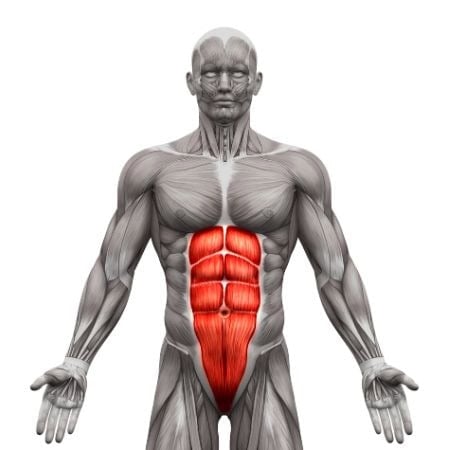
Abdominal
Secondary Muscle(s):
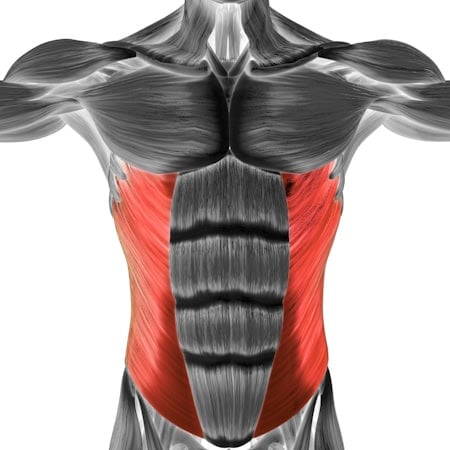
Oblique
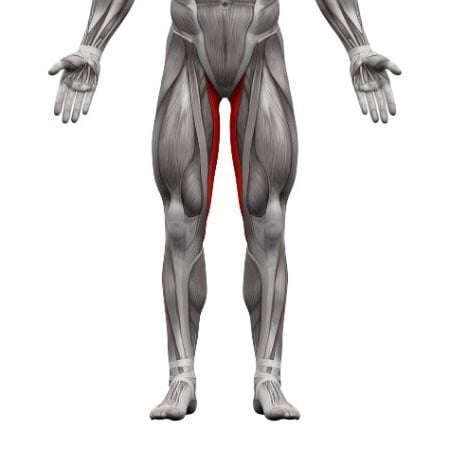
Inner Thigh
Equipment needed for Seated Double-Leg Pike Lifts
No equipment needed for this exercise.
Adjust the difficulty of Seated Double-Leg Pike Lifts
How to make Seated Double-Leg Pike Lifts harder?
How to make Seated Double-Leg Pike Lifts easier?
How to make Seated Double-Leg Pike Lifts harder?
To make Seated Double-Leg Pike Lifts harder:
-
Move your hands farther forward toward your knees or ankles without leaning backward.
-
Lift both legs higher while keeping your hips and torso stationary.
-
Hold the highest controlled position for two to three seconds.
-
Lower both legs over three to five seconds without separating them.
-
Keep both heels hovering above the floor between repetitions.
-
Lift both straight legs over a low target without bending your knees.
-
Combine your compression strength with straight-arm support in a Full L-Sit.
How to make Seated Double-Leg Pike Lifts easier?
To make Seated Double-Leg Pike Lifts easier:
-
Return to Seated Single-Leg Pike Lifts and develop each side independently.
-
Place your hands closer to your hips to reduce the amount of compression required.
-
Lift your heels only a few centimeters while keeping both knees straight.
-
Allow a slight bend in the knees until you can control the movement with straight legs.
-
Sit on a low, firm pad so that your heels begin slightly below the level of your hips.
-
Perform one controlled repetition at a time and reset your position completely between attempts.