
Low-Bar Muscle-Up Transition
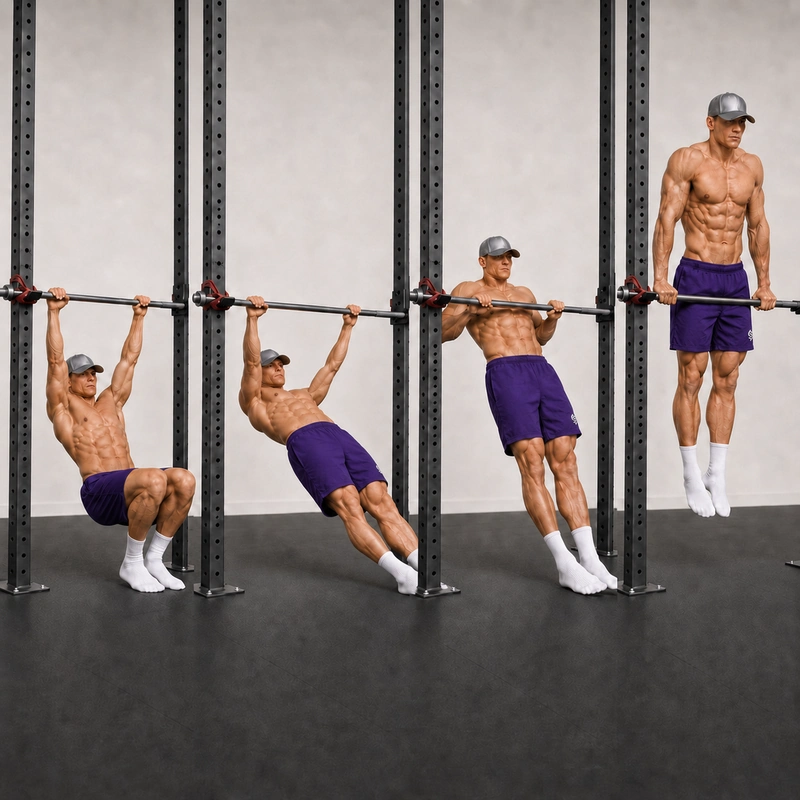
How to do Low-Bar Muscle-Up Transition?
What Is the Low-Bar Muscle-Up Transition?
The low-bar muscle-up transition is a feet-assisted practice exercise that teaches the turnover between the pulling and pushing phases of a bar muscle-up. It is sometimes called a baby muscle-up or feet-assisted muscle-up transition. Because your feet remain on the floor, you can control how much assistance your legs provide and concentrate on keeping the bar close, moving your chest over it, and bringing both elbows above the bar together.
A complete bar muscle-up combines a high pull, the transition, and a dip. This drill connects the pulling strength developed with the chest-to-bar pull-up to the support and pressing position of the straight bar dip. For the complete skill pathway, see our muscle-up guide. The low-bar drill reduces the load while you learn the movement, but it does not replace the pulling and dipping strength needed for an unassisted muscle-up.
Use a secure fixed bar at approximately hip height and adjust your stance so both feet can stay in contact with the floor throughout the repetition. This setup is also used in CrossFit Affiliate Programming's low-bar transition drill, which uses the legs to assist the movement over the bar. The exact amount of assistance should match your current strength and coordination.
Tips for the proper execution of Low-Bar Muscle-Up Transition
Start with the bar at approximately hip height, then adjust your stance so both feet remain securely on the floor.
Wrap your thumbs around the bar and use a slight overgrip so your wrists can roll over more smoothly.
Brace your trunk before you pull and keep your ribs and pelvis controlled throughout the repetition.
Use your legs to assist the skill, not to launch yourself past the transition with an uncontrolled jump.
Pull the bar toward your lower chest or upper abdomen rather than stopping when your chin clears it.
Keep the bar close to your torso; a large gap makes the turnover slower and more difficult.
Shift your chest forward as your wrists roll and your elbows travel above the bar.
Turn both elbows over at the same time instead of using a one-arm chicken-wing transition.
Own the bottom dip position before pressing to support or stepping down.
Practice low-repetition, high-quality sets and stop when your movement path becomes inconsistent.
Film a side view occasionally to check whether the bar stays close and both elbows turn over together.
Reduce the range or assistance level if you feel sharp pain in the wrists, elbows, or shoulders.
Muscles worked when doing Low-Bar Muscle-Up Transition
The low-bar muscle-up transition is a compound upper-body drill. The amount of muscular loading depends on how much assistance you take from your legs, but the exercise rehearses the same pull-to-press sequence used in a bar muscle-up.
- Latissimus dorsi and upper back: Pull the torso toward the bar and help keep the bar close during the turnover.
- Biceps, brachialis, and brachioradialis: Flex the elbows during the pulling phase.
- Pectoralis major, anterior deltoids, and triceps: Become increasingly involved as the chest moves over the bar and the body enters the dip position.
- Forearms and grip muscles: Maintain the overhand grip and control the change in wrist position around the bar.
- Serratus anterior, rotator cuff, and other scapular stabilizers: Help control the shoulder blades and shoulders through the transition and support.
- Abdominals, obliques, spinal erectors, and glutes: Brace the trunk so the upper and lower body move as one coordinated unit.
Your quadriceps, hamstrings, glutes, and calves assist when you push through the floor. Their contribution should gradually decrease as your upper-body strength and transition technique improve; they are helpers in this drill rather than its main training target.
Primary Muscle(s):
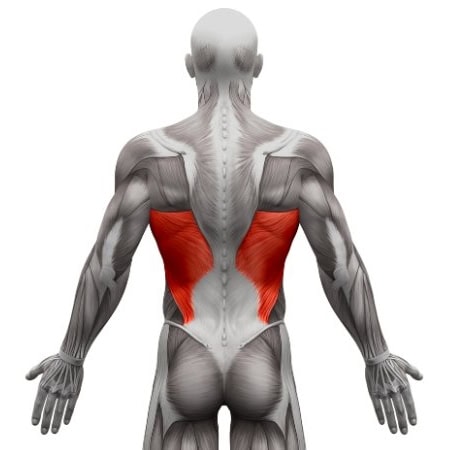
Lats
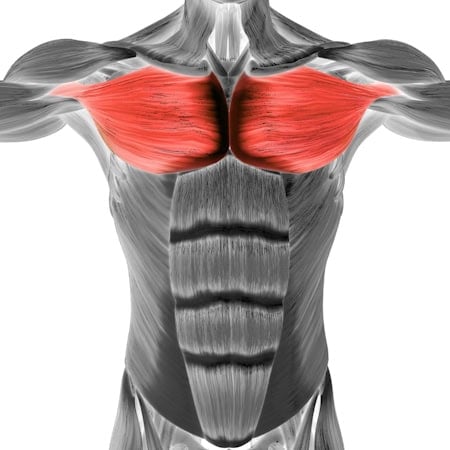
Lower chest
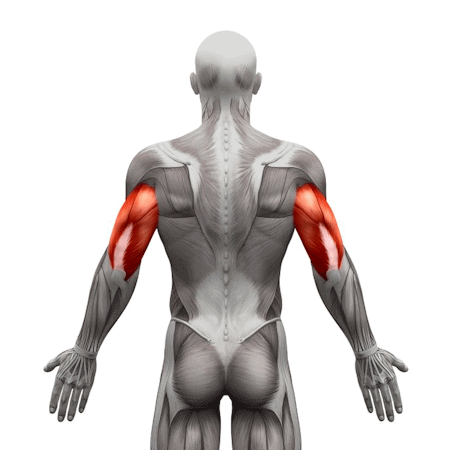
Triceps
Secondary Muscle(s):
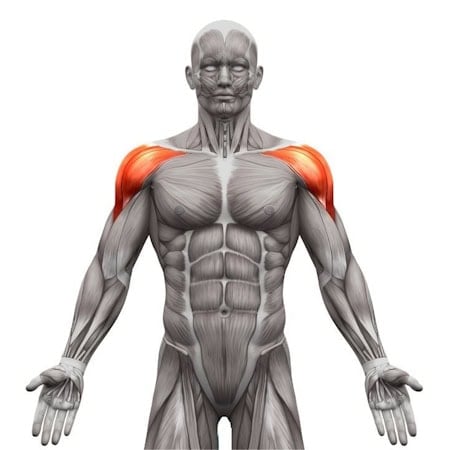
Anterior delt
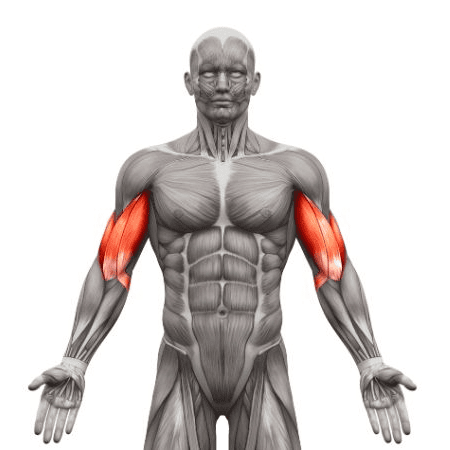
Biceps
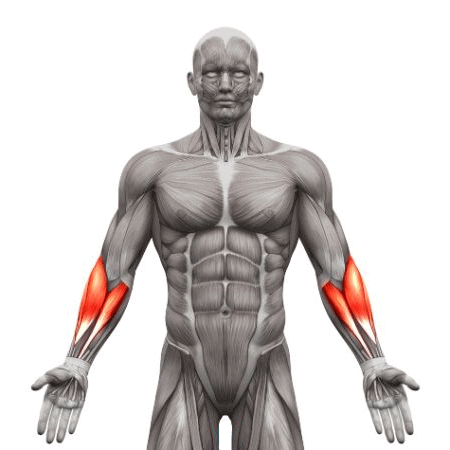
Forearm
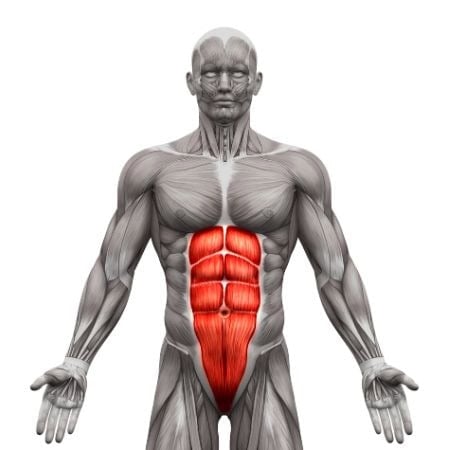
Abdominal
Equipment needed for Low-Bar Muscle-Up Transition
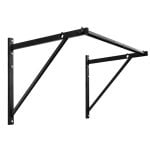
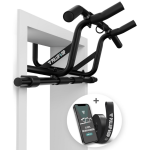
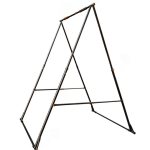
Adjust the difficulty of Low-Bar Muscle-Up Transition
How to make Low-Bar Muscle-Up Transition harder?
How to make Low-Bar Muscle-Up Transition easier?
How to make Low-Bar Muscle-Up Transition harder?
To make Low-Bar Muscle-Up Transition harder:
-
Use progressively less leg drive while keeping the same smooth movement path.
-
Move your feet slightly farther in front of the bar and straighten your legs to reduce their mechanical advantage.
-
Keep only one foot lightly supported while the other leg remains off the floor.
-
Pause briefly with your chest over the bar and both elbows just above it before entering the dip.
-
Reverse the transition for three to five seconds instead of stepping down immediately.
-
Complete a full straight bar dip after every assisted transition.
-
Perform several controlled repetitions without changing your hand or foot position.
-
Progress to a lightly jumping or band-assisted muscle-up on a higher bar once the turnover remains symmetrical.
-
Attempt an unassisted bar muscle-up only after you have developed sufficient high-pull and straight bar dip strength.
How to make Low-Bar Muscle-Up Transition easier?
To make Low-Bar Muscle-Up Transition easier:
-
Keep both feet flat and use more leg drive to guide your chest over the bar.
-
Stand closer to the bar and bend your knees more so your legs can provide greater assistance.
-
Begin with your lower chest already close to the bar and practice only the elbow turnover.
-
Use a shorter range of motion and increase it gradually as the transition becomes more comfortable.
-
Finish in the bottom dip position without pressing to full support.
-
Practice the reverse transition from a feet-supported dip position to learn the path slowly.
-
Use a secure platform under your feet if the available bar is too high to maintain support from the floor.
-
Train chest-to-bar pull-ups and feet-assisted straight bar dips separately before combining them.
-
Ask a qualified coach to guide your torso lightly through the turnover while you keep both hands on the bar.