
Nordic Hamstring Curl
How to do Nordic Hamstring Curl?
What Is a Nordic Hamstring Curl?
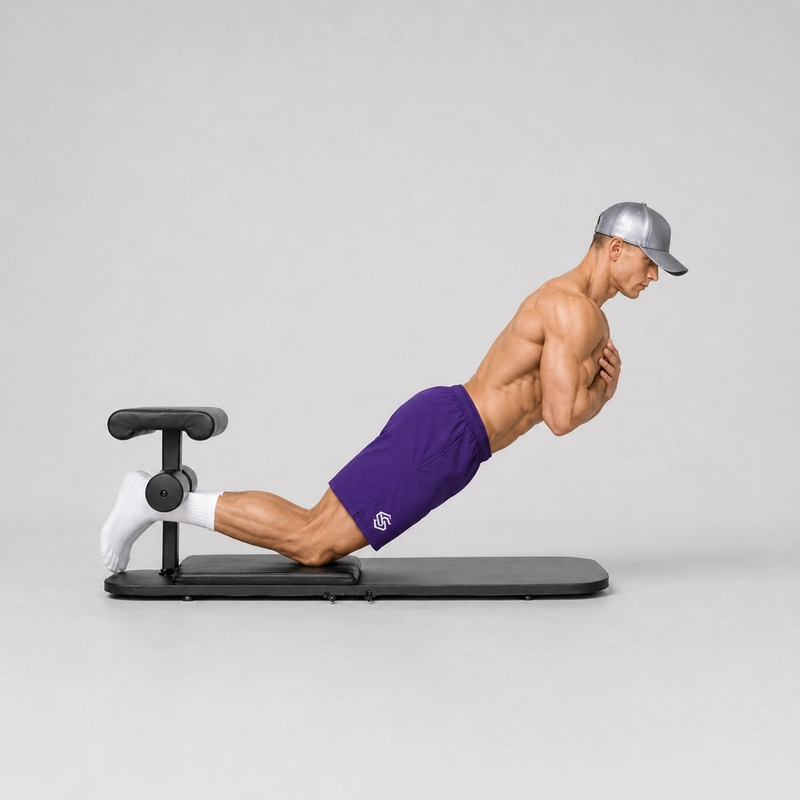
The Nordic hamstring curl, also called the Nordic curl or Nordic hamstring exercise, is an advanced bodyweight exercise for the muscles at the back of the thighs. You kneel with your ankles held securely and lower your body forward by gradually extending your knees. The hamstrings work hard to resist gravity, making the lowering phase the main training focus for most athletes.
Unlike a hip-hinge exercise such as the good morning, the Nordic curl creates movement primarily at the knee while the hips remain extended. Your shoulders, hips, and knees should travel forward as one line. Bending at the hips makes the exercise easier, but reduces the intended loading pattern.
Full-range Nordic curls are demanding, and many strong athletes initially perform only the controlled lowering phase before catching themselves with their hands. If you are not ready for that load, begin with lying hamstring curls with a resistance band or build general posterior-chain strength with elevated glute bridges. You can then progress through partial-range or band-assisted Nordic curls.
Nordic curls are commonly included in sports strength and injury-reduction programs. A systematic review published in the British Journal of Sports Medicine found lower hamstring injury rates in programs that included the Nordic hamstring exercise. This evidence concerns structured training programs and does not mean that one exercise can prevent every injury or that Nordic curls are appropriate during an acute hamstring injury.
Tips for the proper execution of Nordic Hamstring Curl
Use a thick mat or folded pad to protect your knees from pressure against the floor.
Check that the ankle anchor is stable and padded before committing your body weight to it.
Ask a partner to hold directly above your heels rather than pressing unpredictably on your calves.
Squeeze your glutes and brace your abdominals before beginning each repetition.
Maintain one straight line from your shoulders through your hips to your knees.
Initiate the movement by extending your knees rather than pushing your hips backward.
Lower only as far as you can control without folding at the hips or dropping suddenly.
Keep your hands ready in front of your chest so you can catch the floor safely.
Bend your elbows when catching yourself instead of landing on locked arms.
Use only as much push-up assistance as needed to return to the kneeling position.
Reset your hips and trunk before every repetition instead of rushing into the next descent.
Begin with low-volume sets because the eccentric loading can cause substantial soreness.
Distinguish normal muscular effort from sharp pain or a sudden pulling sensation.
Muscles worked when doing Nordic Hamstring Curl
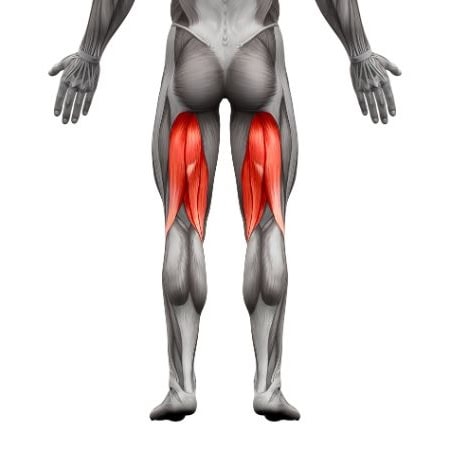
The Nordic hamstring curl primarily trains the hamstrings as they lengthen under tension during the lowering phase. The hamstrings also shorten to help return the body toward kneeling when you perform some or all of the upward phase without assistance.
- Biceps femoris: Both heads contribute to knee flexion, while the long head also helps maintain hip extension.
- Semitendinosus: Works strongly to control knee extension and assist the return toward the starting position.
- Semimembranosus: Supports knee flexion and control along the inner portion of the posterior thigh.
- Gastrocnemius: Assists knee flexion and helps stabilize the lower leg while the ankles are anchored.
- Gluteus maximus: Contracts isometrically to keep the hips extended and prevent the body from folding at the waist.
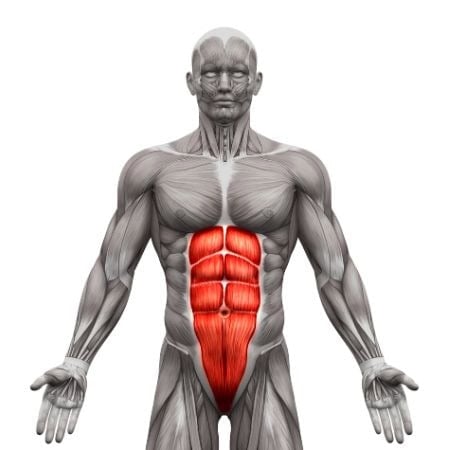
- Abdominals and obliques: Brace the trunk and help keep the ribs and pelvis aligned.
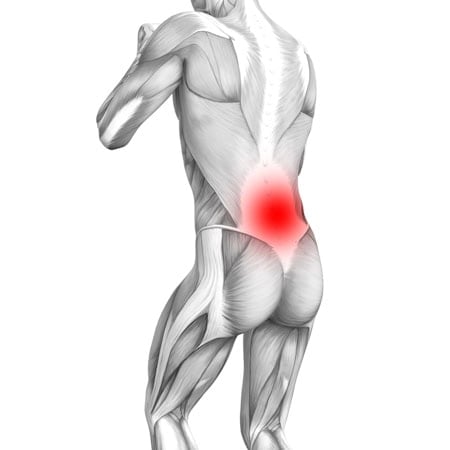
- Erector spinae: Help maintain a stable, neutral torso throughout the forward lean.
Your chest, shoulders, and triceps also contribute when your hands catch the floor or assist the return, but they are not the primary target of the exercise.
Primary Muscle(s):
Hamstring
Secondary Muscle(s):
Lower back
Abdominal
Equipment needed for Nordic Hamstring Curl
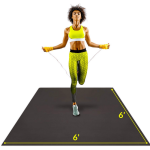
Adjust the difficulty of Nordic Hamstring Curl
How to make Nordic Hamstring Curl harder?
How to make Nordic Hamstring Curl easier?
How to make Nordic Hamstring Curl harder?
To make Nordic Hamstring Curl harder:
-
Increase the forward range gradually while maintaining a straight line from shoulders to knees.
-
Lower for five to eight seconds before catching yourself with your hands.
-
Pause for one to three seconds at the lowest position you can control.
-
Use progressively less assistance from your hands during the return to kneeling.
-
Pull yourself back to kneeling using only the hamstrings for a full concentric Nordic curl.
-
Extend your arms overhead to move more mass farther from the knees and increase the leverage challenge.
-
Perform deficit Nordic curls with the knees securely elevated so the torso can travel below the original floor level.
-
Add a light weighted vest only after you can perform full-range repetitions with consistent control.
-
Progress toward a carefully assisted single-leg Nordic curl only after mastering the bilateral version.
How to make Nordic Hamstring Curl easier?
To make Nordic Hamstring Curl easier:
-
Perform partial repetitions and stop the descent well before you lose control.
-
Place an elevated pad or stable platform in front of you to shorten the lowering distance.
-
Use your hands to catch yourself earlier and provide more push-up assistance on the return.
-
Loop a resistance band securely around your upper torso below the armpits and anchor it behind you for assistance.
-
Ask a partner or coach to support your upper torso lightly during the descent and return.
-
Perform eccentric-only repetitions and reset to kneeling instead of pulling yourself back up.
-
Practise Nordic curl isometric holds at a shallow forward angle before increasing the range.
-
Use hamstring walkouts to develop knee-flexion control with less body weight.
-
Practise lying hamstring curls with a resistance band before progressing to bodyweight Nordic curls.
-
Build posterior-chain strength with elevated or single-leg glute bridges before retrying the Nordic curl.