
Middle Split Hold
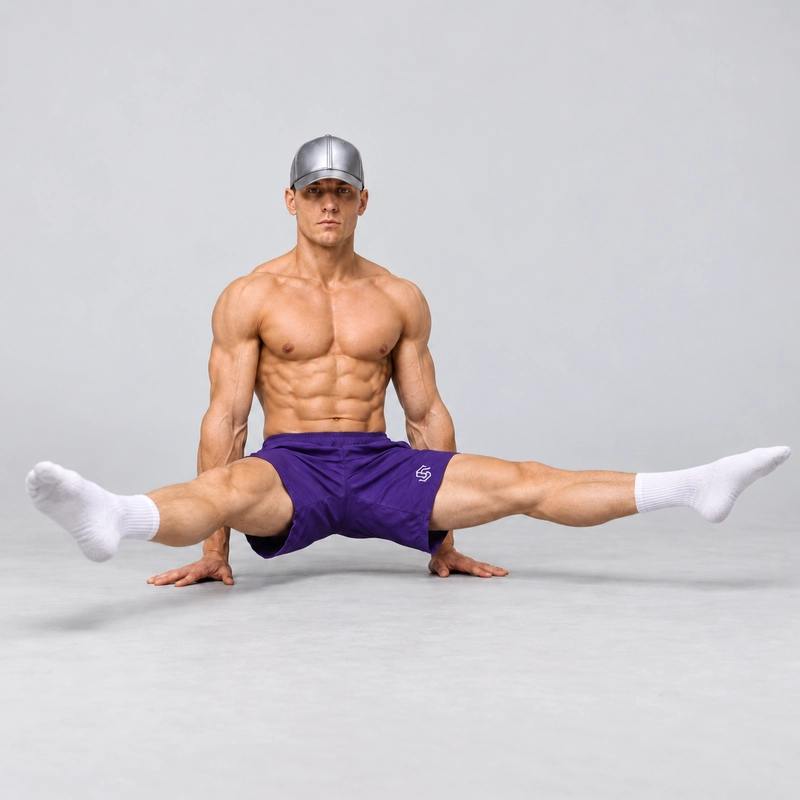
How to do Middle Split Hold?
The Middle Split Hold is an advanced straight-arm support exercise used to progress from the Advanced L-Sit toward the Manna. You sit in a wide straddle, place your hands beside or slightly behind your hips, and press your hips and both legs off the floor while keeping your elbows and knees straight.
Despite its name, this is not a passive middle-split stretch. The objective is to support your entire body on your hands while actively holding the legs apart and approximately parallel to the floor. You do not need a full 180-degree middle split, although adequate active straddle mobility makes the position easier to clear.
The Middle Split Hold develops the straight-arm shoulder-extension strength, upper-back control, active flexibility and compression needed for the Manna. It also teaches you to press the hips forward rather than simply lifting the legs in front of the body as you would in an L-Sit or V-Sit.
Equipment and setup
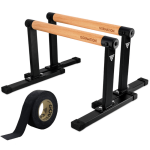
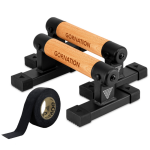
The full version is performed on the floor and requires no equipment. Stable parallettes or parallel bars can be used for the elevated bent-leg and straight-leg regressions because the extra clearance makes it easier to lift the hips and legs.
- Use a flat, non-slip surface with enough room for a wide straddle.
- Warm up your wrists, elbows, shoulders, hips and hamstrings before loading the position.
- Use the Bulletproof Wrist Warm-Up Routine if floor support positions are demanding on your wrists.
- Choose a straddle width that you can hold actively without forcing your adductors.
How to do the Middle Split Hold
- Sit upright on the floor with both legs straight and spread into a wide but comfortable straddle.
- Lock your knees, point your toes and actively reach both legs away from your hips.
- Place your palms flat beside or slightly behind your hips with your fingers pointing backward or slightly outward.
- Straighten your elbows and press your hands firmly into the floor.
- Draw your shoulders back and down enough to keep your chest open and prevent your upper back from collapsing.
- Brace your abdominals and actively pull your legs farther apart without forcing the range of motion.
- Press down and slightly backward through your hands as you lift your hips and both feet from the floor at the same time.
- Push your hips forward so your glutes do not rest on your hands or wrists.
- Keep your elbows and knees locked while holding your hips and legs approximately parallel to the floor.
- Maintain the position without resting your thighs on your arms, kicking your legs or holding your breath.
- Lower your hips and feet together under control before your shoulder or elbow position begins to break down.
Middle Split Hold form standard
A repetition counts as a clean Middle Split Hold when all of the following standards are met:
- Your hands are the only part of your body touching the floor.
- Both elbows remain completely straight.
- Your hips and both feet are visibly clear of the floor.
- Your legs remain straight in an active straddle with locked knees and pointed toes.
- Your hips and feet lift together and remain at approximately the same height.
- Your hips are pressed forward rather than resting on your hands or wrists.
- Your thighs do not rest on your forearms or upper arms.
- Your chest remains open and your shoulders stay controlled throughout the hold.
- You enter, hold and leave the position without momentum or an uncontrolled drop.
Breathing and body tension
Take a breath before lifting, brace your trunk and then use short, controlled breaths throughout the hold. Continue pressing through your hands, spreading your legs and reaching through your pointed toes rather than treating the position as a passive balance.
Common Middle Split Hold mistakes
Lifting the feet before the hips
This turns the exercise into a straddle compression drill and usually leaves the glutes on the floor, so concentrate on pressing down through the hands and lifting the hips and feet together.
Resting the glutes on the wrists
Press your hips forward and create space between your pelvis and hands instead of using the wrists as a seat.
Bending the elbows
Regress to an elevated or bent-leg version if you cannot maintain a fully locked straight-arm position.
Bending the knees
Actively tighten your quadriceps and reach through your toes, or use the bent-leg regression intentionally rather than allowing the knees to bend unpredictably.
Collapsing through the shoulders
Keep your chest open and your upper back active instead of letting the shoulders roll forward and the torso sink between the arms.
Forcing the widest possible straddle
Use the widest position you can control actively because forcing passive range can irritate the inner thighs without improving the hold.
Resting the thighs on the arms
Keep space between your legs and arms so the shoulders, trunk and hips support the position rather than creating an artificial shelf.
Kicking into the position
Begin with an easier variation that you can lift smoothly because momentum hides weaknesses and makes the entry difficult to reproduce.
Programming the Middle Split Hold
Practice the Middle Split Hold near the beginning of a skill or strength session while your wrists and shoulders are fresh. Complete three to five sets of a variation you can hold cleanly for approximately two to eight seconds, resting two to four minutes between demanding attempts.
Use several short, technically consistent holds instead of repeatedly attempting one maximum-duration hold. Two or three weekly sessions are usually sufficient when your wrists, elbows and shoulders recover normally between sessions.
Exercises such as the Seated Double-Leg Pike Lift can strengthen compression, while the Parallel Bar Support Hold can build the straight-arm support foundation required to train this skill safely.
When are you ready to progress?
Progress when you can repeatedly lift your hips and both feet together, hold the position with straight elbows and knees, keep your glutes clear of your hands, and lower under control. Once you can perform several clean floor holds, begin working on an elevated Middle Split Hold in which the hips and legs rise progressively higher.
The Manna-specific sequence is: Advanced L-Sit → Elevated Bent-Leg Middle Split Hold → Elevated Straight-Leg Middle Split Hold → Floor Middle Split Hold → Elevated Middle Split Hold → Straddle Manna → Manna.
Safety considerations
The Middle Split Hold places substantial load on the wrists and requires considerable shoulder extension. Build these positions progressively and stop if you experience sharp or pinching pain, numbness, tingling or pain that persists after training.
Do not force your fingers into one fixed direction, bounce deeper into the straddle or continue after losing elbow control. Parallettes can reduce wrist extension while you develop the strength and mobility required for the floor version.
Frequently asked questions
Is the Middle Split Hold the same as a middle-split stretch?
No, the Middle Split Hold is an active straight-arm support exercise in which your hips and legs are suspended above the floor, whereas a middle-split stretch keeps the body supported by the floor.
Do I need a full middle split?
No, you need a wide straddle that you can produce and control actively, but a passive 180-degree split is not required.
Is it the same as a straddle L-Sit?
No, a straddle L-Sit keeps the legs primarily in front of the torso, while the Middle Split Hold places the hands beside or behind the hips and demands considerably more shoulder extension and forward hip movement.
Should I learn the V-Sit first?
No, the V-Sit develops useful compression and support strength, but the Advanced L-Sit is the more direct prerequisite for the Middle Split Hold and Manna branch.
Should I train it on the floor or parallettes?
Use parallettes or parallel bars for elevated regressions, but treat the unsupported floor version as the primary standard for this exercise page.
How long should I hold it?
Begin with clean two-to-five-second holds and gradually build toward repeated holds of eight to fifteen seconds without losing the required body position.
What comes after the Middle Split Hold?
Progress toward an elevated Middle Split Hold, then a Straddle Manna and finally the full Manna.
Tips for the proper execution of Middle Split Hold
Press down and slightly backward through your hands to help your hips travel forward and upward.
Think about lifting your hips and both feet as one connected unit.
Lock your elbows before leaving the floor and keep them locked throughout the hold.
Contract your quadriceps hard to maintain straight knees and pointed toes.
Actively spread your legs instead of relying on passive middle-split flexibility.
Keep your chest open and your upper back engaged as your shoulders move behind your torso.
Use several short, clean holds instead of one long hold with deteriorating form.
Film the exercise from the front or a slight diagonal angle to check whether both feet and the hips lift together.
Use parallettes if wrist extension prevents you from loading the correct shoulder position.
Finish each attempt by lowering under control rather than dropping onto the floor.
Muscles worked when doing Middle Split Hold
The Middle Split Hold is a full-body isometric skill that combines straight-arm pushing strength, shoulder extension, upper-back stabilization and active straddle compression.
- Rear deltoids: Help hold the shoulders behind the torso and support the forward movement of the hips.
- Triceps: Maintain the locked-elbow support position.
- Abdominals: Brace the trunk and help control the relationship between the pelvis and legs.
- Rhomboids and trapezius: Stabilize the shoulder blades and prevent the chest from collapsing.
- Latissimus dorsi: Assist with shoulder extension and downward pressure through the hands.
- Hip flexors: Help suspend and position the legs relative to the pelvis.
- Quadriceps: Keep the knees straight throughout the hold.
- Hip abductors and glutes: Actively maintain the wide straddle position.
- Forearm and hand muscles: Stabilize the wrists while transferring force into the floor.
Primary Muscle(s):
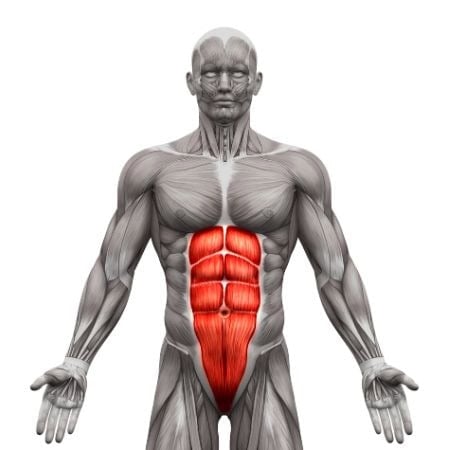
Abdominal
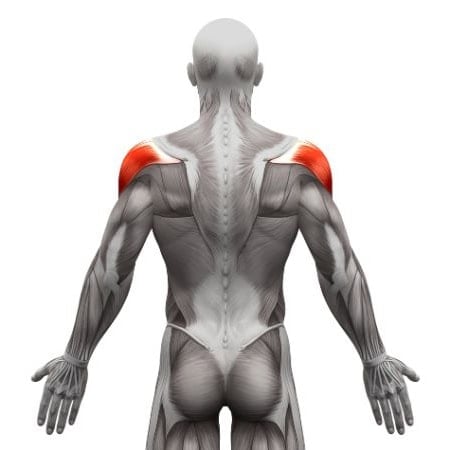
Rear delt
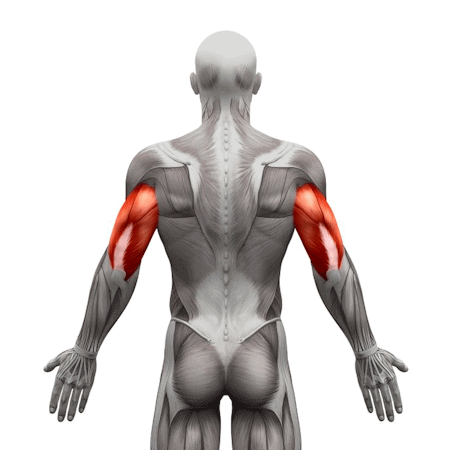
Triceps
Secondary Muscle(s):
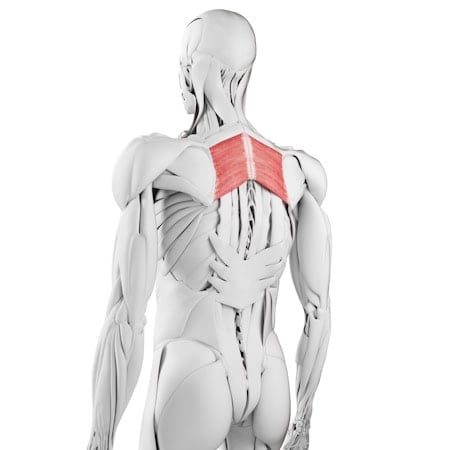
Rhomboid
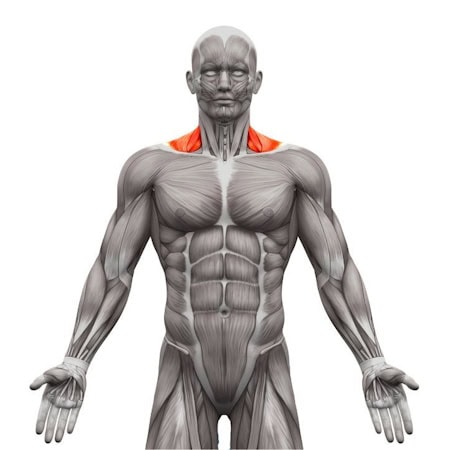
Trapezius
Equipment needed for Middle Split Hold
Adjust the difficulty of Middle Split Hold
How to make Middle Split Hold harder?
How to make Middle Split Hold easier?
How to make Middle Split Hold harder?
To make Middle Split Hold harder:
-
Increase the duration while maintaining every part of the full form standard.
-
Press your hips progressively farther forward without resting them on your hands.
-
Raise your hips and legs above horizontal to begin developing an Elevated Middle Split Hold.
-
Perform controlled lifts into and out of the hold without touching down between repetitions.
-
Pause at progressively higher positions during each controlled lift.
-
Reduce the width of your straddle only after you can maintain sufficient hip height.
-
Progress from the floor Middle Split Hold to a Straddle Manna.
-
Bring the legs together gradually as your Straddle Manna becomes higher and more controlled.
-
Perform the hold after a slow Advanced L-Sit-to-Middle-Split transition.
-
Progress toward the full Manna once you can elevate the hips without bending your elbows or knees.
How to make Middle Split Hold easier?
To make Middle Split Hold easier:
-
Perform an elevated bent-leg Middle Split Hold on stable parallettes or parallel bars.
-
Straighten your legs gradually while continuing to train on elevated handles.
-
Allow your legs to remain below handle height before attempting to hold them horizontally.
-
Use a wider comfortable straddle to shorten the effective lever without forcing your flexibility.
-
Practice controlled attempts in which you lift only slightly off the support surface.
-
Build straight-arm support strength with the Parallel Bar Support Hold.
-
Strengthen active compression with Seated Single-Leg and Double-Leg Pike Lifts.
-
Use parallettes to reduce wrist extension if your wrists limit your floor practice.
-
Accumulate multiple two-to-three-second holds before trying to extend the duration.
-
Return to the Advanced L-Sit if you cannot keep your elbows locked or lift the hips cleanly.