
Bodyweight Single-Leg Romanian Deadlift
How to do Bodyweight Single-Leg Romanian Deadlift?
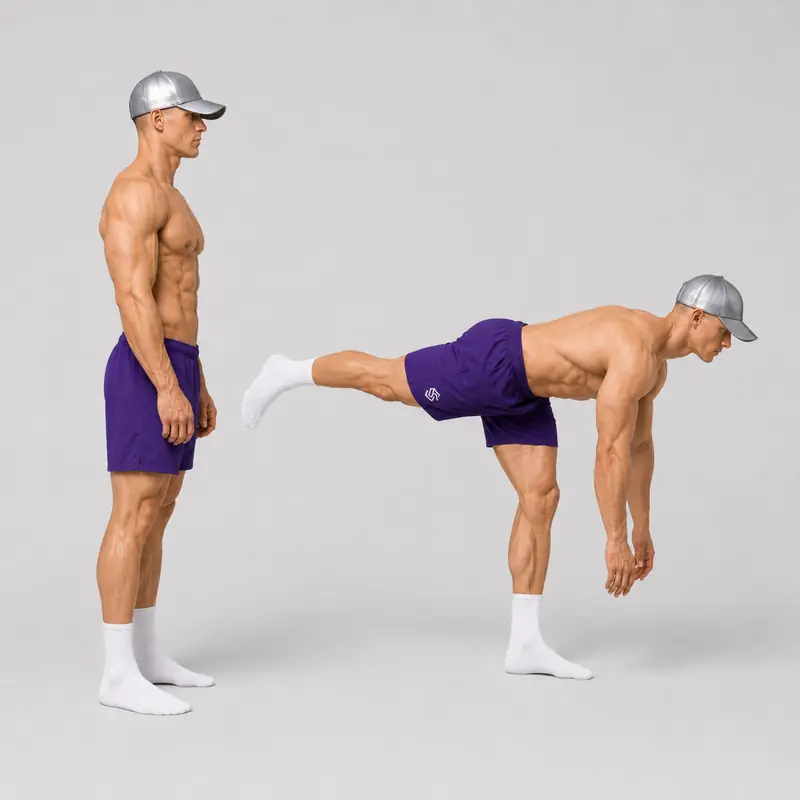
The bodyweight single-leg Romanian deadlift, commonly shortened to the single-leg RDL, is an equipment-free unilateral hip-hinge exercise. You balance on one leg while moving your hips backward, lowering your torso and extending the other leg behind you. The movement primarily trains the hamstrings and glutes of the supporting leg while challenging control at the foot, ankle, hip and trunk.
Research using loaded single-leg RDL variations has measured substantial involvement from the biceps femoris, gluteal muscles, spinal extensors and pelvic stabilizers. The bodyweight version uses the same fundamental movement pattern with less resistance, making it especially useful for learning the hinge and developing single-leg control before adding load. See Mo et al. (2023) for the original electromyography study.
If you are still learning how to move from your hips without rounding your back, begin with bodyweight good mornings. Once you can complete controlled repetitions on both legs, progress to single-leg RDLs with a resistance band.
This exercise is not a single-leg squat. The supporting knee remains softly bent, but most of the movement should come from the hip. You also do not need to touch the floor or raise your rear foot as high as possible. Your range ends when you can no longer keep your spine neutral, supporting foot planted and pelvis approximately square to the floor.
How to Do the Bodyweight Single-Leg Romanian Deadlift
Equipment and setup
No equipment is required. Perform the exercise on a flat, nonslip surface with enough space to extend one leg behind you. Beginners should stand beside a wall, post or sturdy chair so that fingertip support is available if needed.
Prepare your ankles, knees and hips before training. The joint warm-up routine can be used before your working sets.
Starting position
- Stand upright with your feet approximately hip-width apart.
- Choose your supporting leg and spread your weight across its heel, the base of the big toe and the base of the little toe.
- Lift the opposite foot slightly behind you without shifting your torso sideways.
- Keep a small, stable bend in the supporting knee.
- Brace your midsection and keep your ribs stacked over your pelvis.
- Let your arms hang toward the floor or extend them slightly in front of you.
Step-by-step execution
- Establish your balance: Transfer your weight onto the working leg. Keep the supporting foot fully planted and point its knee in the same general direction as the toes.
- Set the supporting knee: Maintain a soft bend rather than locking the knee or continuing to bend it as if performing a squat.
- Initiate the hip hinge: Inhale and push the hips backward. Allow your torso to tip forward as your free leg extends behind you.
- Move as one unit: Let the torso and rear leg move in opposite directions around the supporting hip. Keep your neck aligned with your spine rather than lifting the head.
- Keep the pelvis controlled: Point the rear toes generally toward the floor and avoid opening the raised hip toward the side.
- Reach your controlled bottom position: Lower until you feel tension through the hamstrings of the supporting leg or until maintaining a neutral spine and square pelvis becomes difficult. A research protocol for loaded single-leg RDLs used approximately 15 degrees of supporting-knee flexion and a near-parallel torso at the bottom, but these are reference points rather than mandatory targets for every athlete. See the study protocol.
- Return to standing: Press through the whole supporting foot, drive the hip forward and exhale as you stand tall.
- Finish under control: Fully extend the hip without leaning backward or arching the lower back. Complete the planned repetitions before changing legs.
Breathing and tempo
Inhale before and during the lowering phase. Maintain gentle abdominal tension as you hinge, then exhale as you drive the hip forward and return to standing. A useful starting tempo is three seconds down, a brief controlled pause and one to two seconds up.
What counts as a complete repetition?
Count the repetition when the supporting foot remains planted, the knee stays softly bent, the pelvis remains controlled and you return to a stable upright position without pushing off the rear foot. The hands do not have to touch the floor, and the torso does not have to become perfectly parallel to it.
Common Mistakes
- Turning the exercise into a squat: Excessive knee bending moves the hips downward instead of backward. Maintain a small knee bend and hinge primarily from the hip.
- Locking the supporting knee: A completely rigid knee can make the position uncomfortable and harder to control. Keep it softly bent.
- Opening the raised hip: Rotating the pelvis toward the ceiling reduces the anti-rotation challenge. Point the rear toes more toward the floor and imagine both hip bones facing downward.
- Rounding the back to reach lower: End the descent when your available hip range ends. Touching the floor is not a requirement.
- Shifting onto the toes: Keep pressure through the entire supporting foot rather than allowing the heel to lift.
- Reaching the rear leg upward: The rear leg is a counterbalance. Its height should result from the hip hinge rather than an attempt to kick as high as possible.
- Moving too quickly: Rushing often causes wobbling, hip rotation and loss of foot pressure. Slow the descent and reset between repetitions.
- Leaning backward at the top: Finish with the hip extended and ribs stacked rather than hyperextending the lower back.
Benefits
- Develops the unilateral hip hinge: Teaches you to produce and control hip extension while standing on one leg.
- Trains the posterior chain: The supporting-leg hamstrings and glutes control the descent and return the body to standing.
- Challenges balance: The moving torso and rear leg continually change your center of mass over a small base of support.
- Builds pelvic control: The lateral glutes and trunk muscles work to limit unwanted rotation and side-to-side movement.
- Helps identify side-to-side differences: Training each leg independently can reveal differences in balance, range of motion or control without diagnosing their cause.
- Requires no equipment: The exercise can be included in home workouts, warm-ups and travel training.
- Prepares you for added resistance: Good bodyweight technique provides a foundation for band, kettlebell and dumbbell single-leg RDLs.
Readiness and Safety
You should be able to stand comfortably on one leg and perform a basic two-leg hip hinge before attempting the unsupported version. If balance prevents you from controlling the hinge, use light fingertip support rather than repeatedly stepping or twisting to save the repetition.
A dead bug can help you practise maintaining trunk position separately, while single-leg glute bridges train unilateral hip extension without the standing balance requirement.
Stop if you experience sharp pain, numbness, dizziness or a feeling that the supporting knee is giving way. People returning from a recent ankle, knee, hip, hamstring or lower-back injury should obtain individualized guidance from an appropriately qualified professional.
Progression Path
- Bodyweight good morning
- Kickstand Romanian deadlift
- Supported bodyweight single-leg Romanian deadlift
- Bodyweight single-leg Romanian deadlift
- Tempo or paused bodyweight single-leg Romanian deadlift
- Single-leg RDL with resistance band
- Loaded single-leg Romanian deadlift
Programming Recommendations
- Technique and balance: 2–3 sets of 5–8 controlled repetitions per leg.
- Muscular endurance: 3–4 sets of 8–15 repetitions per leg.
- Tempo emphasis: Use a three- to five-second lowering phase for 6–10 repetitions per leg.
- Rest: Rest for 45–90 seconds between sets or sides.
- Frequency: Practise the exercise two or three times per week, allowing recovery if the hamstrings remain sore.
When using the movement as a balance or hinge drill, perform it near the beginning of the session. When using it as a posterior-chain accessory, place it after your primary leg exercise. It pairs well with a knee-dominant unilateral movement such as Bulgarian split squats.
Frequently Asked Questions
Does my torso have to become parallel to the floor?
No. Descend only as far as you can while keeping the supporting foot planted, spine neutral and pelvis controlled. Parallel is a possible endpoint, not a requirement.
Should the supporting leg be completely straight?
Keep a small, stable bend in the supporting knee. Avoid locking it, but do not continue bending it throughout the descent as you would during a squat.
Should I touch the floor?
No. Reaching for the floor often encourages spinal rounding or hip rotation. The movement is defined by the controlled hip hinge, not by how low your hands travel.
Where should I feel the exercise?
You should mainly feel the hamstrings and glutes of the supporting leg. The foot, calf, lateral hip and trunk may also work to maintain balance. Sharp joint or lower-back pain is not an intended training sensation.
Can I hold a wall for balance?
Yes. Light fingertip support is a useful regression because it allows you to practise the hip hinge without balance becoming the limiting factor. Gradually reduce the amount of assistance.
Is the bodyweight version enough to build muscle?
It can provide a useful stimulus for beginners, particularly with slow repetitions and pauses. Once you can perform high-quality repetitions easily, additional resistance will usually be needed for continued strength or hypertrophy progression.
Tips for the proper execution of Bodyweight Single-Leg Romanian Deadlift
Maintain three points of contact through the supporting foot: the heel, the base of the big toe and the base of the little toe.
Keep a small, stable bend in the supporting knee instead of locking it or turning the movement into a squat.
Imagine pushing the wall behind you with your hips as your torso moves forward.
Point the rear toes generally toward the floor to help prevent the raised hip from opening.
Stop the descent when your hamstring range ends; touching the floor is not required.
Move slowly enough that you could pause at any point without stepping down.
Drive through the whole supporting foot and finish tall without leaning backward.
Muscles worked when doing Bodyweight Single-Leg Romanian Deadlift
Primary muscles
- Hamstrings: Control hip flexion during the descent and assist with extending the hip as you return to standing.
- Glutes: The gluteus maximus extends the supporting hip, while the lateral gluteal muscles help control the pelvis during the single-leg stance.
Secondary muscles
- Core: The abdominals and obliques resist unwanted trunk extension, rotation and lateral movement.
- Lower back: The spinal extensors work primarily isometrically to maintain the position of the torso.
- Calves and foot stabilizers: Help maintain the supporting foot and ankle position as your center of mass moves.
- Quadriceps: Maintain the small, stable bend in the supporting knee.
- Hip adductors: Assist with controlling the supporting hip and femur.
Primary Muscle(s):
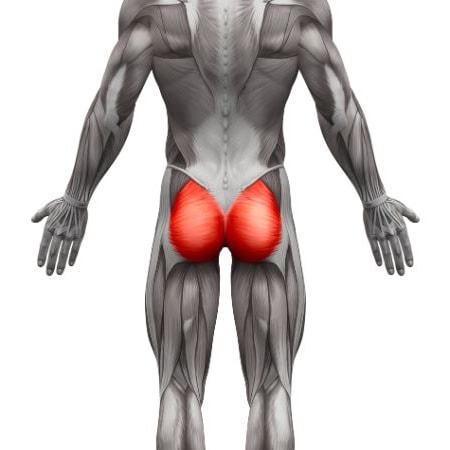
Glutes
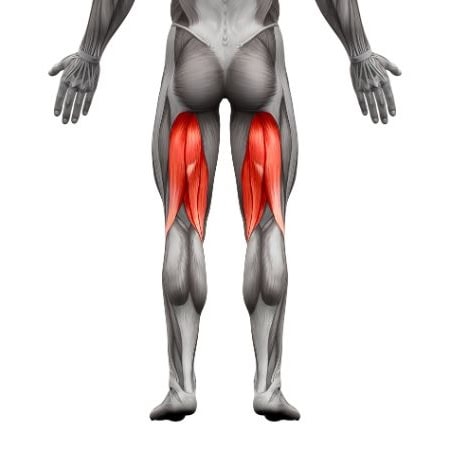
Hamstring
Secondary Muscle(s):
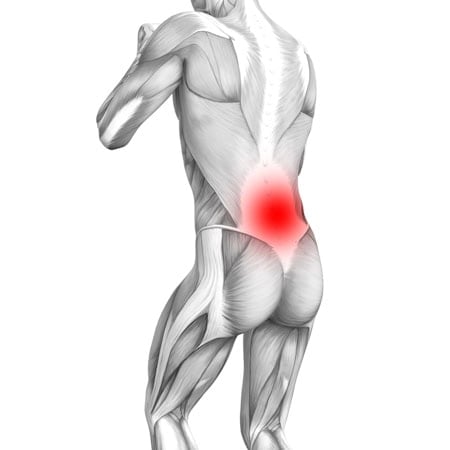
Lower back
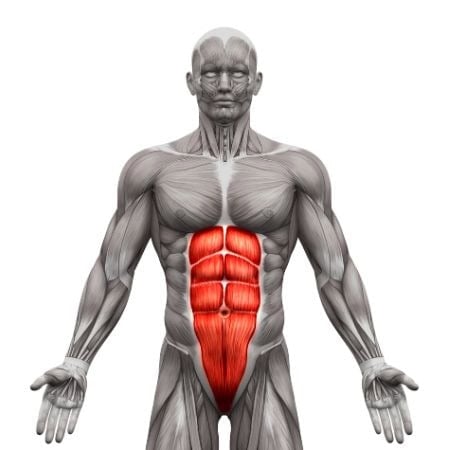
Abdominal
Equipment needed for Bodyweight Single-Leg Romanian Deadlift
No equipment needed for this exercise.
Adjust the difficulty of Bodyweight Single-Leg Romanian Deadlift
How to make Bodyweight Single-Leg Romanian Deadlift harder?
How to make Bodyweight Single-Leg Romanian Deadlift easier?
How to make Bodyweight Single-Leg Romanian Deadlift harder?
To make Bodyweight Single-Leg Romanian Deadlift harder:
-
Slow-Eccentric Single-Leg Romanian Deadlift: Take four to six seconds to lower into each repetition.
-
Paused Single-Leg Romanian Deadlift: Hold the lowest controlled position for two to three seconds before standing.
-
Overhead Single-Leg Romanian Deadlift: Extend the arms overhead to create a longer lever and increase the trunk-control demand.
-
Resistance-Band Single-Leg Romanian Deadlift: Stand on a resistance band and use it to add progressive resistance to the hip extension.
-
Loaded Single-Leg Romanian Deadlift: Hold a kettlebell or dumbbell after bodyweight repetitions are consistently stable and symmetrical.
How to make Bodyweight Single-Leg Romanian Deadlift easier?
To make Bodyweight Single-Leg Romanian Deadlift easier:
-
Supported Single-Leg Romanian Deadlift: Use light fingertip support on a wall, post or sturdy chair to reduce the balance demand.
-
Kickstand Romanian Deadlift: Keep the toes of the rear foot on the floor and place most of your weight on the front leg.
-
Reduced-Range Single-Leg Romanian Deadlift: Hinge through a shorter range and increase the depth only while your pelvis and spine remain controlled.
-
Bodyweight Good Morning: Practise the hip hinge with both feet planted before progressing to single-leg repetitions.