
Counterweight Pistol Squat
How to do Counterweight Pistol Squat?
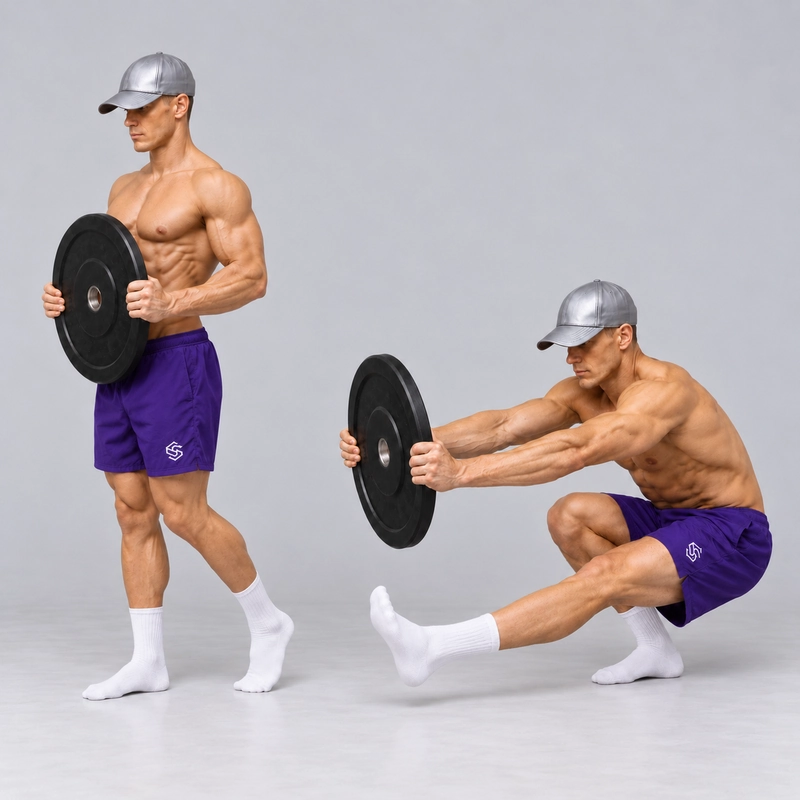
The Counterweight Pistol Squat is a deep single-leg squat performed while holding a modest weight forward in both hands. Keep the working foot planted, extend the free leg in front without touching the floor, lower under control and stand using the same leg. The forward-held weight provides a counterbalance while you practise the movement.
This can be useful if you are close to a bodyweight pistol squat but tend to tip backward. Holding some mass forward changes the balance of the combined body-and-weight system. The CrossFit Gymnastics Training Guide includes a counterbalancing weight among its pistol-squat scaling options. It is coaching guidance, not proof that the variation suits every athlete.
Counterweight Pistol Squat vs Weighted Pistol Squat
The distinction is the load position and progression goal. Here, hold a manageable weight away from the torso to help balance, then work toward less reliance on that forward counterbalance. A Weighted Pistol Squat focuses on increasing resistance once the movement is established, using a defined setup such as a weighted vest or a weight held close to the chest.
Both versions involve added weight. A forward counterweight does not remove the need for the working leg to support and lift you, and a chest-held weight can also affect balance. There is no exact weight at which one exercise automatically becomes the other.
This page focuses on finding a useful forward reach, keeping the weight steady and reducing the counterbalance without losing squat quality. The weighted version focuses on controlled overload. A heavy forward-held pistol can combine both effects, so record the actual mass and placement rather than classifying it by weight alone.
How It Differs From Other Pistol Progressions
A hand-assisted pistol squat uses a fixed support that you can pull against. A counterweight provides no such hand support: you remain freestanding throughout the repetition.
The single-leg box squat sets depth with a supported seated pause. Here, there is no seat contact at the bottom. Bench-assisted single-leg squat negatives let you lower on one leg and rise with both; this counterweight version requires the working leg to complete both phases.
Those alternatives remain useful if the counterweight does not solve your limiting task. It cannot substitute for the leg strength needed to stand or guarantee enough ankle movement and free-leg clearance for a deep pistol.
Readiness and Preparation
Start with a comfortable two-leg squat and reliable balance on each foot. The narrow-stance squat is a useful bilateral preparation exercise. Then practise an assisted single-leg descent and return at a range you can control.
You should be able to hold the chosen weight securely in front without shoulder pain or rapidly fatiguing arms. Rehearse a shallow single-leg squat before attempting the bottom position. Completing an unweighted pistol first is not required for this progression, but you do need a manageable same-leg ascent at the selected range.
If the working heel rises, the free heel cannot clear the floor or the bottom position feels forced, use the squat mobility guide to explore relevant preparation. Keep practice within a controllable range. The counterweight changes the balance problem; it does not permanently fix a mobility restriction.
Use the joint warm-up routine, then rehearse easy squats and a few shallow counterbalanced repetitions. Stop for sharp pain or repeated loss of control. Persistent pain needs individual assessment rather than a larger counterweight.
Choose the Counterweight and Set Up
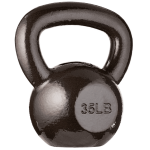
A small weight plate with a secure two-handed grip is a practical option. A dumbbell, kettlebell or firm medicine ball can also work if you can hold it securely and keep it clear of the extended leg. Check the handles, collars or grip points before starting.
Choose the smallest practical load that gives a useful balance benefit while remaining easy to hold steadily. There is no universal starting weight or bodyweight percentage. For reference, 2.5 kg is about 5.5 lb and 5 kg is about 11 lb; these are equipment examples, not a recommended range for every athlete.
Too little counterweight may provide little balance help. Too much can make the squat or arm hold harder than you can control. Do not keep increasing the load to compensate for insufficient same-leg strength.
Stand on a level, non-slip surface with room in front for the weight and free leg. Use footwear with reliable grip and a stable sole, or a suitable barefoot setup. Keep the same footwear when comparing sessions. A heel wedge or elevated platform changes the setup and should be recorded separately.
Hold the weight around chest height with the arms comfortably close to straight. Use a small elbow bend if needed and keep that angle generally consistent. The weight should remain clearly forward of the torso without resting against the chest, thigh or free leg. Do not force elbow hyperextension or shrug the shoulders to maintain the reach.
How to Do a Counterweight Pistol Squat
- Set the grip and stance. Stand upright with the weight held securely in both hands. Place the working foot in a comfortable orientation and keep the heel and forefoot connected to the floor.
- Establish the forward reach. Hold the weight steadily in front of the torso with approximately straight arms. Choose a reach you can maintain through the squat without arm strain.
- Lift the free leg. Extend it forward with the knee approximately straight and heel clear of the floor. It does not need to start at hip height; raise it enough to preserve clearance as you descend.
- Lower on the working leg. Bend the knee and hip smoothly. Let the knee travel forward as needed, generally following the direction of the toes. Allow a natural torso lean while keeping the weight under control.
- Reach the controlled bottom. For a full repetition, lower until the working hip crease is below the top of the knee while the heel stays planted and the free foot remains clear. Use a shallower recorded range if you cannot yet reach that depth comfortably.
- Reverse without a bounce. Maintain the forward counterweight and press through the whole working foot. Extend the working knee and hip together without swinging the arms or placing the free heel down.
- Finish standing. Return to comfortable hip and knee extension on the same leg, regain balance and keep the free foot clear until the repetition is complete.
- Reset safely. Between repetitions, restore the same reach and stance. At the end of the set, plant both feet before lowering or putting down the weight.
A two-to-three-second descent can help you practise control, followed by a smooth ascent. An inhale while lowering and gentle exhale as you stand provides a simple breathing rhythm. The tempo is a coaching option, not a required test or a reason to grind through a failing repetition.
Keep the counterweight steady relative to the torso. It may change height naturally as the body lowers, but it should not be thrust forward to launch the ascent or pulled against the chest halfway through the repetition. If you cannot maintain the chosen reach, stop and adjust the setup.
Heel Contact, Knee Travel and Torso Position
Keep the working heel, base of the big toe and base of the little toe in contact. Avoid rocking entirely onto the heel or the ball of the foot. The forward weight should help you organize balance over the foot rather than pull you onto the toes.
The working knee may travel beyond the toes during a deep pistol. Trying to keep the shin vertical can make the movement impossible for your proportions. Allow a comfortable amount of forward knee travel and guide the thigh and knee in the same general direction as the foot.
A biomechanical review of squatting explains that trunk position, shin position and depth interact to change muscular demands and joint loading. It is not a direct test of this counterweight variation; it supports avoiding one prescribed body angle for every athlete.
Some torso inclination and pelvic movement are normal in a deep pistol. Keep the descent organized rather than forcing a perfectly vertical torso or rigidly copying a two-leg barbell squat posture. Reduce depth if you collapse abruptly, twist away from the working leg or cannot reverse under control.
What Counts as a Complete Repetition?
- The working foot stays planted, including the heel.
- The free leg remains forward, approximately straight and clear of the floor.
- The weight stays securely held forward with a generally consistent reach and elbow angle.
- The athlete reaches the selected depth without sitting on a support or resting the weight on the body.
- The same leg completes the ascent without hand support, free-foot assistance or a forceful weight swing.
- The repetition ends standing with controlled hip and knee extension.
One standing-to-squat-to-standing cycle counts as one repetition. Label a shallower range as partial. If you plant the free foot to recover, finish safely and record the attempt as assisted rather than a completed counterweight pistol.
Before working sets, practise placing the free foot down during a shallow attempt. If balance fails, use that two-foot recovery rather than trying to save the repetition by throwing the weight. Regain stable support before putting the weight down.
Practice Volume and Reducing the Counterweight
A practical starting option is two sets of three to five controlled repetitions per leg, with about two minutes between demanding sets. Use controlled singles or a simpler variation if that volume compromises the ascent or arm hold. Start with the side that needs more attention and initially match its clean count on the other side.
Two nonconsecutive practice days can fit alongside other leg training. Adjust the volume to your recovery and existing squat work. These are coaching starting points, not a researched prescription for this exact variation.
First make the chosen depth and forward reach repeatable. Then try a smaller counterweight while preserving the same technique. For example, changing from 5 kg (11 lb) to 4 kg (8.8 lb) changes both the balance effect and total supported weight. It can make balance harder while making the load lighter; it is not a guaranteed increase in leg-strength demand.
Alternatively, keep the same weight and test a slightly shorter reach as a separate progression. Moving the weight closer changes its counterbalancing effect and shoulder demand. Change one variable at a time and return to the previous setup if depth or control deteriorates.
When ready, test an unweighted pistol through the same range, with the hands free and reaching forward as needed. If you still tip backward, retain some counterbalance and continue targeted practice. Once the unweighted movement is established, the Weighted Pistol Squat offers a separate route for increasing resistance.
Common Mistakes and Corrections
- Choosing a heavy weight to force the movement: use a manageable load and an assisted or box variation if same-leg strength is the limitation.
- Swinging the weight to stand: shorten the set or range so the arms remain steady and the working leg completes the rise.
- Pulling the weight against the chest: keep the planned reach consistent; a chest-held repetition changes the loading configuration.
- Lifting the working heel: reduce depth and examine the balance and mobility setup instead of forcing the bottom.
- Planting the free heel: use a range that preserves clearance, or record the assistance and choose another progression.
- Dropping into the bottom: slow the descent and stop higher until the reversal is controlled.
- Judging progress only by kilograms: compare depth, reach, assistance and repetition quality as well as mass.
Frequently Asked Questions
Can adding weight make a pistol squat easier?
A modest forward-held weight can make balance more manageable for some athletes. It also adds load, so easier balance does not mean lower muscular demand everywhere or an easier exercise for everyone.
How much counterweight should I use?
Use a load you can hold steadily that helps you complete the chosen range. Test conservatively. Your proportions, reach, mobility and strength matter more than copying someone else's weight.
Does this count as a weighted pistol squat?
It is physically a pistol performed with external weight. In this exercise library, the forward-counterbalance version has its own setup and learning goal, while the weighted version focuses on added resistance with a defined load placement. Record the actual setup rather than assuming the names describe identical difficulty.
Should I add more weight as I improve?
If your goal is an unweighted pistol, practise reducing reliance on the counterbalance. If your goal is greater loaded strength, use the weighted variation's standard and build resistance gradually. More forward-held weight is not a universal progression for this learning exercise.
Tips for the proper execution of Counterweight Pistol Squat
Choose a manageable counterweight that helps balance without overwhelming the squat or the arm hold. More weight is not automatically better.
Use a secure two-handed grip and hold the weight clearly forward of the torso with approximately straight arms.
Keep the working heel and forefoot connected to the floor. Avoid rocking entirely onto the heel or toes.
Hold the free leg forward with the knee approximately straight and the heel clear throughout the repetition.
Allow comfortable forward knee travel while guiding the knee generally in the same direction as the toes.
Use a natural torso lean and controlled pelvic movement. Do not force a perfectly vertical chest or collapse abruptly into the bottom.
Keep the weight steady instead of swinging it forward to launch the ascent or resting it against the chest.
Lower only as far as you can rise on the same leg with control. Label a shallower range as partial rather than claiming a full-depth pistol.
Practise planting the free foot for a two-foot recovery. Regain balance before putting down the weight if an attempt fails.
Record mass, reach, depth and footwear. Reduce counterbalance gradually for an unweighted goal; use a defined weighted setup for resistance progression.
Muscles worked when doing Counterweight Pistol Squat
Primary muscles of the working leg
- Quadriceps: control knee flexion during the descent and extend the knee as you stand.
- Gluteus maximus: contributes to controlling the hip during lowering and producing hip extension during the ascent.
Lower-body stabilizers and free-leg support
The lateral glutes and other hip muscles help organize the pelvis and thigh over the working foot. The hamstrings, adductors, calves and foot muscles contribute to coordinated control, with demands changing across the range and setup.
The hip flexors and quadriceps of the free leg keep it forward and clear of the floor. That active clearance remains part of the exercise even when a counterweight makes balance more manageable.
Trunk, arms and grip
The abdominal wall, obliques and spinal stabilizers help control the torso. The anterior shoulder muscles, elbow stabilizers and forearm and hand muscles maintain the forward hold. The shoulder demand depends on both the weight and its distance from the body.
The leg muscles perform dynamic lowering and rising while the trunk, free leg and arms maintain approximately steady positions. The counterweight changes balance and loading together; it does not isolate one muscle group or remove the strength requirement from the working leg.
Primary Muscle(s):
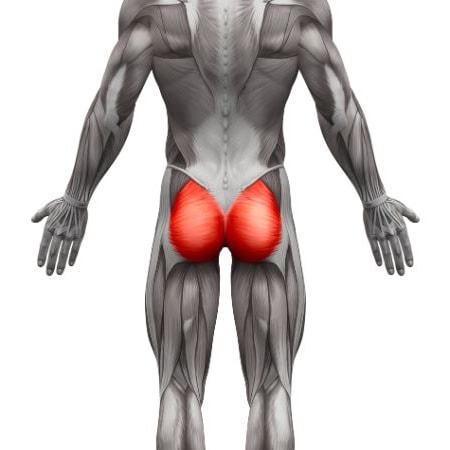
Glutes
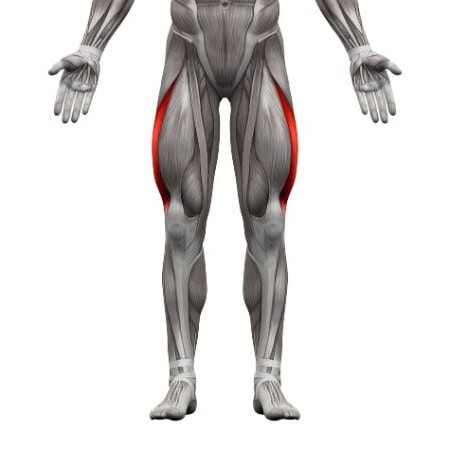
Quads
Secondary Muscle(s):
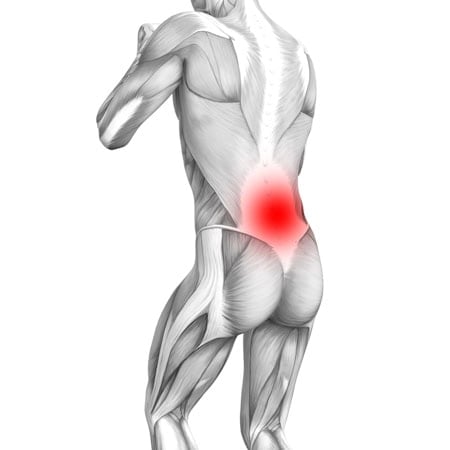
Lower back
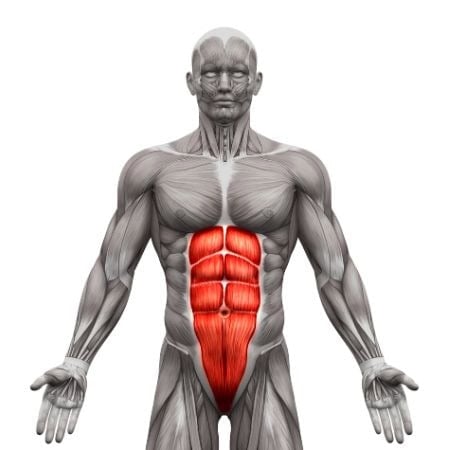
Abdominal
Equipment needed for Counterweight Pistol Squat
Adjust the difficulty of Counterweight Pistol Squat
Adjust depth and the forward counterbalance to find a repetition you can lower into and rise from cleanly. A modest forward-held weight may help balance while also adding resistance. For an unweighted pistol goal, gradually reduce reliance on the weight at comparable depth. For loaded strength, use a defined weighted-pistol setup and increase resistance separately. Keep mass, reach, footwear and assistance identifiable.
How to make Counterweight Pistol Squat harder?
How to make Counterweight Pistol Squat easier?
How to make Counterweight Pistol Squat harder?
To make Counterweight Pistol Squat harder:
-
Increase controlled depth slightly while preserving working-heel contact, free-foot clearance and the same forward counterweight position.
-
Reduce the counterweight in a small practical step at the same depth and reach. This can make balance harder while reducing total load, so evaluate control rather than kilograms alone.
-
Keep the same counterweight and practise a slower descent or a brief controlled bottom pause without resting, bouncing or swinging the arms.
-
Progress to an unweighted pistol through the same range. Once that is established, use a defined weighted-pistol setup for gradual resistance increases rather than simply adding more forward counterweight.
How to make Counterweight Pistol Squat easier?
To make Counterweight Pistol Squat easier:
-
Use a shallower recorded range while keeping the working heel planted and the same-leg return controlled. Build depth gradually without dropping into the bottom.
-
If backward tipping is the main limitation, test a modestly different counterweight or forward reach. Keep the load easy to hold and remember that increasing mass also increases resistance.
-
Switch to a hand-assisted pistol or a suitable single-leg box squat if the counterweight cannot provide a controlled descent and ascent. Record those support changes as separate variations.