
Dragon Flag Negative
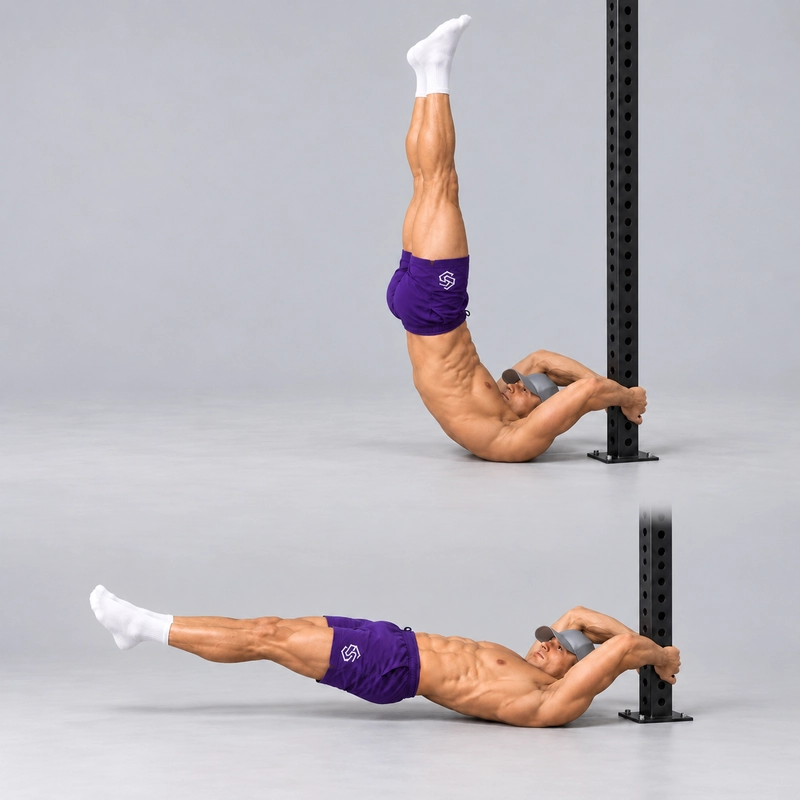
How to do Dragon Flag Negative?
The Dragon Flag Negative is the lowering-only version of a dragon flag. From a raised position, keep the legs straight and together while the trunk, hips and legs descend as one controlled lever. The shoulders and upper back stay supported, and both hands hold a secure anchor behind the head. At your chosen endpoint, bend the knees and reset.
The distinction from a full dragon flag is the return: this exercise does not require you to lift the straight body back up. That makes it useful for practising a descent you can control before you can complete both phases. It still demands substantial trunk tension, grip and upper-body support, especially as the body approaches horizontal.
Unlike hanging leg raises, the aim is not to fold at the hips while moving only the legs. The hips remain extended during the measured lowering phase. Bending the knees belongs to the reset or to a deliberately easier variation.
Lowering work is commonly called eccentric training. A research review of eccentric contractions explains its distinctive loading demands and the importance of gradual introduction. Here, the abdominal wall also braces approximately isometrically to preserve body shape; a descending body does not mean every working muscle is lengthening. General eccentric-training research does not establish a specific dragon flag dose or guarantee a full repetition.
Prepare the Brace and Practise the Reset
Use the tuck hollow body hold to rehearse rib-and-pelvis control with a short lever. The hollow body hold adds longer-leg bracing, while the dead bug offers a supported way to practise limb movement without losing trunk position.
An elbow plank provides another bracing option. These exercises can help preparation, but no particular hold time proves you are ready for a straight-leg dragon flag negative. You also need a comfortable overhead grip and the ability to enter and leave the shoulder-supported position smoothly.
Prepare the shoulders, elbows and wrists with the joint warm-up routine. Then rehearse a tucked entry, a small supported descent and a tucked exit before attempting a longer lever. If you cannot control that sequence, stay with simpler bracing work or get hands-on coaching.
Choose a Bench and Secure Anchor
Use a firm, stable workout bench with a grip point you can hold securely behind the head. Check that the bench cannot slide, tip or lift when you pull against it. A bench intended to support lying bodyweight is not automatically suitable for strong pulling against its end; use equipment appropriate to the actual setup.
Grip a fixed frame or suitable handle with both hands. Keep the thumbs wrapped where the grip allows and choose a comfortable elbow position. Avoid balancing the movement on fingertips around a slippery edge. Loose furniture, movable plates used as anchors and unstable attachments are unsuitable.
A floor setup can work with a secure fixed anchor behind the head and suitable firm padding. Keep enough space for the legs to lower without striking anything. Use the same support and grip when comparing sessions because a different hand position changes the configuration.
The load-bearing contact is across the shoulders and upper back. The head may rest lightly if comfortable, but do not push through the skull, roll onto the neck or turn the exercise into a headstand. If the setup forces uncomfortable neck pressure, stop and change it.
How to Do a Dragon Flag Negative
- Check the anchor and plan the range. Confirm the support is stable and choose a conservative endpoint. Rehearse how you will bend the knees and return to lying before the working descent.
- Lie down and grip. Place the shoulders and upper back securely on the bench or mat. Hold the anchor behind the head with both hands and keep the neck comfortable, looking generally upward.
- Enter with bent knees. Draw the knees toward the torso and lift the pelvis under control. Use a compact lever to reach a raised shoulder-supported position without kicking or rolling backward onto the neck.
- Build the straight lever. Once stable, extend the hips and knees with the legs together. Brace the abdomen and engage the glutes and thighs. Choose a high starting angle that retains shoulder and upper-back support; forcing a perfectly vertical position is unnecessary.
- Lower the whole body smoothly. Let the hips and feet descend together while preserving the relationship between shoulders, pelvis and legs. Maintain the grip and steady elbow position. Avoid a hips-first fold or an increasing lower-back arch.
- Stop before control deteriorates. Finish at the chosen body angle while still able to control the exit. Do not wait for the hips to collapse or the body to drop onto the bench.
- Tuck and exit. Keep holding the anchor, bend the knees toward the torso to shorten the lever, then lower the pelvis and back gently onto the support. The knees may bend during this reset; the measured straight-leg descent has already ended.
- Reset completely. Re-establish the lying position, breathing and grip. Use another controlled tucked entry for the next descent. Do not bounce directly into the next attempt.
Keep the abdominal wall braced without forcing an exaggerated spinal curve. A small hollow-body shape is useful; a sharp bend at the hips changes the task. The hands and upper body help anchor the movement, so do not deliberately relax the grip or shoulder support to make it feel more abdominal.
A smooth descent of roughly three to five seconds is a practical starting target when the selected range allows it. It is not a mandatory readiness test. If timing makes you lose shape or rush the reset, shorten the range or the lever. Keep breathing as you brace rather than using a prolonged breath hold to survive the repetition.
Choose Depth Before Chasing the Floor
As the straight body moves closer to horizontal, gravity creates a greater turning demand around the supported upper body. Stop higher if you cannot preserve the lever. A controlled partial negative is useful practice when its endpoint is recorded honestly.
For a deeper negative, approach horizontal while the hips and legs remain clear of the support. Do not lower below your controllable range just because a demonstration shows a lower position. Contact with the bench, floor or another object is not a required finish.
Record the starting and finishing body angles from a consistent side view, along with lowering time. For example, three seconds from a high start to a clearly recorded diagonal endpoint is different from three seconds to near horizontal. These are recording examples, not universal target angles.
If the exit feels uncertain, stop higher or practise a bent-knee descent. A competent spotter can help you learn entry and exit, but assistance must be recorded. Do not use an uncontrolled straight-body drop as the final part of a negative.
What Counts as One Negative?
- The same secure hand grip and shoulder/upper-back support are maintained.
- The legs remain straight and together during the measured descent.
- The trunk, hips and legs lower together without a large hip fold, twist or lower-back sag.
- The athlete reaches the chosen endpoint under control rather than falling through the final part.
- The descent ends before the knees bend for the reset.
- The athlete completes a controlled tucked exit before beginning another attempt.
Count one controlled descent as one negative repetition. Do not count the tucked entry as a full dragon flag ascent. Label shorter-lever, assisted and partial-range work so improvements can be compared under similar conditions.
Sets, Recovery and Progression
For an athlete who can already control the setup, a practical starting session is two sets of two or three descents, with about two minutes between sets. If this loading is unfamiliar, begin with one or two small sets and assess how well you recover. End a set when the descent accelerates unexpectedly, the lever breaks or the exit becomes uncertain.
Practise on two nonconsecutive days if it fits your existing training, adjusting for other demanding core and pulling work. The ACSM resistance-training guidance supports tailoring load and volume to the athlete's goals and capacity. These dragon flag numbers are coaching starting points, not a protocol validated by that guidance.
Progress one variable at a time: use a slightly lower endpoint, improve control at the same range, or add a controlled repetition. A longer timer at a much higher endpoint is not automatically a harder performance. Keep setup, lever and depth comparable when judging improvement.
When straight-leg negatives are repeatable, practise an upward phase with a shorter lever or through a manageable range. Progress toward complete dragon flags only when you can also raise the body with control. Better lowering does not guarantee that the concentric phase is ready.
Common Mistakes
- Loading the neck: avoid rolling backward or pushing through the head; maintain broad shoulder and upper-back support.
- Lowering only the legs: if the pelvis stays down while the hips fold, shorten the lever and rebuild a coordinated descent.
- Arching to reach deeper: choose a higher endpoint before the ribs flare or the lower back sags.
- Counting a fast fall: reduce range or bend the knees deliberately for an easier variation if you cannot brake the descent.
- Improvising the exit: rehearse the tucked reset before working repetitions and keep the grip until the back is supported again.
- Mixing standards in the log: note straight versus bent knees, assistance, depth and time rather than recording every attempt as the same negative.
Frequently Asked Questions
Are dragon flag negatives easier than full dragon flags?
They remove the requirement to raise the straight body again. The lowering phase at the same lever and depth remains demanding, so start with a range you can control and a reliable reset.
Should I bend my knees?
Bend them for the entry and reset. Keep them straight during the standard working descent. Keeping them bent while lowering is a useful shorter-lever regression, which should be labelled separately.
Do I have to lower all the way to horizontal?
No. Use a repeatable partial range first if needed. Lower farther only while body shape, upper-back support and the tucked exit remain controlled.
Should my head lift off the bench?
There is no requirement to lift it. Let it rest lightly if that is comfortable, without bearing the body's load through the head or forcing the chin into the chest. Stop if neck pressure or pain develops.
Tips for the proper execution of Dragon Flag Negative
Test the bench and overhead grip before the set. The support must resist sliding, tipping and lifting under your actual pulling direction.
Rehearse a tucked entry and exit before attempting a straight-leg descent. Know how you will return to a supported lying position.
Keep the load across the shoulders and upper back. Do not push through the skull or roll onto the neck.
Straighten the hips and knees only after the raised position is stable. Avoid kicking into the start.
Keep the legs together and lower the hips and feet as one lever instead of folding at the hips.
Maintain abdominal, glute and thigh tension without forcing an exaggerated spinal curve or lower-back arch.
Choose a higher endpoint when necessary. Stop before the body shape changes or the descent becomes an uncontrolled fall.
Use a smooth descent you can repeat. A three-to-five-second target can guide practice, but range and control matter more than forcing the timer.
Bend the knees after the measured descent, then lower the back onto the support under control. Keep holding the anchor throughout the reset.
Log lever, starting angle, endpoint, assistance and descent time. Count the lowering as one negative, not a complete upward-and-downward dragon flag.
Muscles worked when doing Dragon Flag Negative
Primary trunk muscles
- Rectus abdominis: contributes to maintaining the relationship between the ribs and pelvis and resisting excessive trunk extension during the descent.
- Internal and external obliques: help brace the trunk and resist unwanted twisting or side bending.
- Deeper abdominal wall: contributes to coordinated trunk stabilization, including the transverse abdominis.
Upper-body anchor and support
The latissimus dorsi and other muscles acting around the shoulders help maintain the connection to the anchor. Shoulder-blade stabilizers, arm muscles and the forearm and hand muscles support the chosen grip and elbow position. Their demands vary with the anchor, hand position and body angle.
Lower-body tension
The glutes help maintain hip extension, while the quadriceps keep the knees straight. Other hip and spinal stabilizers contribute to preserving the body shape. The neck is not intended to act as the load-bearing support.
The repetition lowers the body under gravity while the trunk maintains an approximately fixed shape. Calling it a negative describes the lowering task; it does not establish that every abdominal muscle contracts eccentrically. The tucked entry and reset involve additional movements but are not the measured strict descent.
Primary Muscle(s):
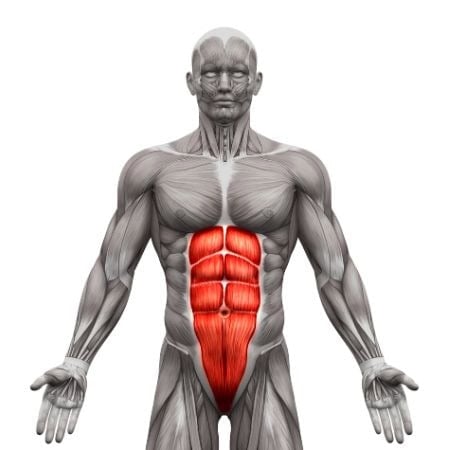
Abdominal
Secondary Muscle(s):
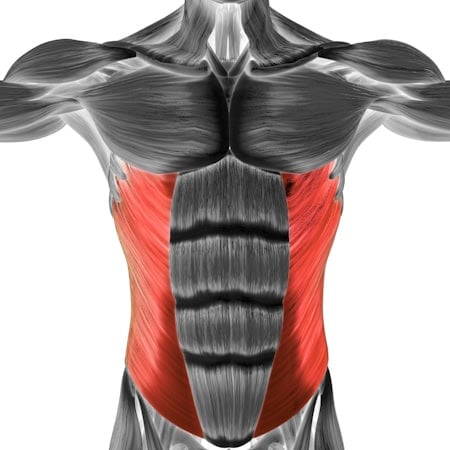
Oblique
Equipment needed for Dragon Flag Negative
No equipment needed for this exercise.
Adjust the difficulty of Dragon Flag Negative
Scale the negative through lever length and controlled depth. Bend the knees or stop higher when learning, then work toward straight-leg descents through a greater recorded range. Improve timing or volume only while the same body shape and controlled reset remain repeatable. Keep assisted descents and full upward-and-downward dragon flags distinct in your training log.
How to make Dragon Flag Negative harder?
How to make Dragon Flag Negative easier?
How to make Dragon Flag Negative harder?
To make Dragon Flag Negative harder:
-
Lower to a slightly deeper endpoint with the legs straight and together, preserving the same start, body shape and controlled tucked reset.
-
Increase descent time modestly at the same recorded range. Keep the movement smooth rather than pausing high and then falling through the final portion.
-
Add a brief controlled pause at the chosen endpoint before bending the knees to exit. Use a depth from which the reset remains manageable.
-
Add one controlled descent or another small set at the same range and tempo. Progress toward a full dragon flag separately by developing the upward phase through a manageable lever and range.
How to make Dragon Flag Negative easier?
To make Dragon Flag Negative easier:
-
Lower with the knees bent to shorten the lever. Keep the trunk controlled and record this as a bent-knee or tucked negative rather than a straight-leg repetition.
-
Stop at a higher, repeatable body angle while retaining control of the straight-leg descent and tucked exit. Increase depth gradually instead of aiming immediately for horizontal.
-
Use controlled singles with more recovery, or have a competent spotter provide recorded assistance. If entry and exit remain uncertain, practise simpler supported bracing exercises first.