
Weighted Dip
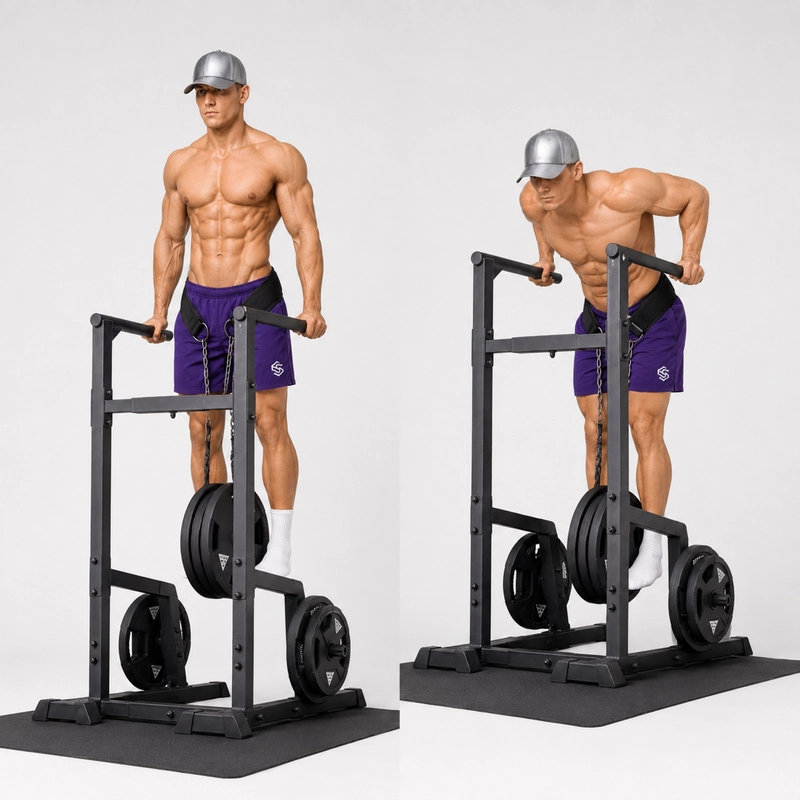
How to do Weighted Dip?
What Is a Weighted Dip?
The Weighted Dip is an advanced upper-body pushing exercise performed on a dip station, dip bars or parallel bars. It builds on the standard bodyweight dip by adding external resistance, usually with a dip belt and weight plate. A weighted vest can also be used when you want the resistance to remain closer to your body.
Before adding weight, you should be able to perform controlled bodyweight dips through a consistent range of motion. If you are still developing your first unassisted repetitions, follow our 6-week dip workout plan. You can also use the resistance band dip progression workout to build strength while gradually reducing assistance.
A stable station is especially important once external weight is added. Our guide to the best dip bars for home workouts explains the main stability, height and loading considerations when choosing equipment for dips.
Weighted dips are particularly effective for developing the triceps, chest and anterior shoulders. Compared with Ring Dips, the fixed parallel bars provide a more stable platform, allowing you to focus on progressive overload. If full dips are currently too demanding, the Bench Dip is a more accessible exercise for developing foundational pressing strength.
The key is to add weight gradually without changing the quality of your bodyweight dip. Maintain a stable shoulder position, use a controlled descent and reach full elbow extension at the top without swinging the weight.
Tips for the proper execution of Weighted Dip
Use a stable step so you do not need to jump onto or off the bars while loaded.
Let the weight stop swinging before starting your first repetition.
Keep your shoulders down and away from your ears.
Maintain a slight forward lean without collapsing your chest.
Lower yourself for approximately two to three seconds.
Descend only as far as you can keep your shoulders stable.
Avoid bouncing out of the bottom position.
Reach a controlled elbow lockout at the top of each repetition.
Increase the load in small increments while preserving your range of motion.
End the set when swinging or shortened repetitions begin.
Step down under control before removing the weight.
Muscles worked when doing Weighted Dip
Weighted dips primarily train the triceps and the sternal or lower portion of the pectoralis major. The anterior deltoids assist with shoulder flexion and stabilization throughout the repetition.
Primary Muscles
- Triceps brachii: Extends the elbows as you press your body back to the top position.
- Pectoralis major: Produces force across the shoulder joint, particularly during the lower portion of the press.
- Anterior deltoids: Assist the chest and triceps while helping control the shoulder position.
Secondary and Stabilizing Muscles
- Serratus anterior and scapular stabilizers: Help maintain a controlled shoulder-blade position.
- Abdominals and obliques: Brace the torso and limit unwanted movement while the weight hangs below the body.
- Forearms and hand muscles: Maintain a secure grip on the bars.
- Glutes and quadriceps: Help keep the lower body stable and reduce swinging.
A modest forward lean generally increases chest involvement, while a more upright torso tends to place relatively more emphasis on the triceps. Both muscle groups remain active in either variation, so the torso angle should never come at the expense of shoulder comfort or control.
Primary Muscle(s):
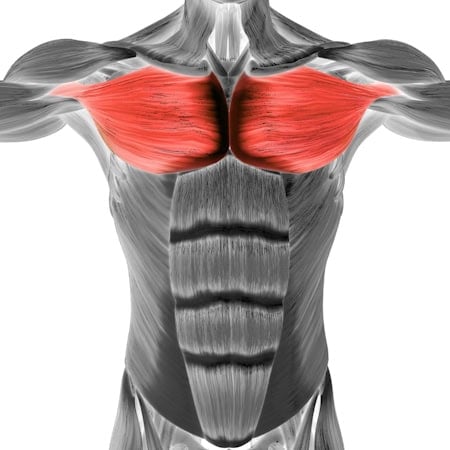
Lower chest
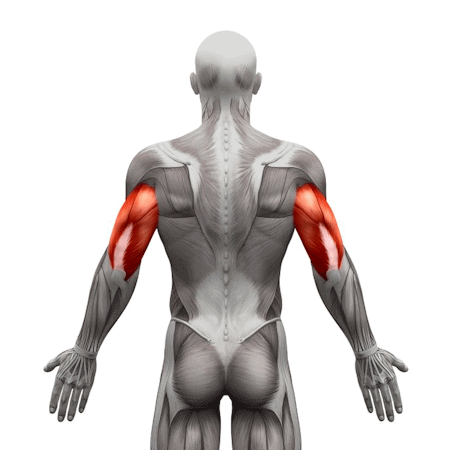
Triceps
Secondary Muscle(s):
Upper chest
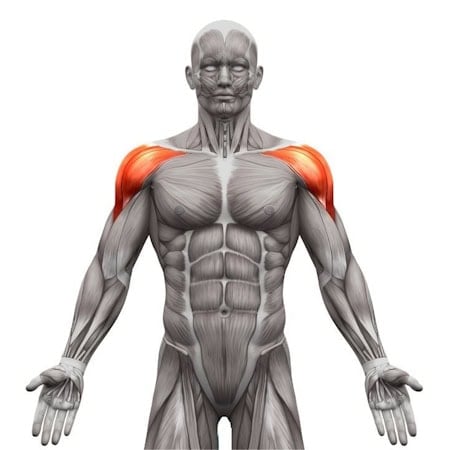
Anterior delt
Equipment needed for Weighted Dip
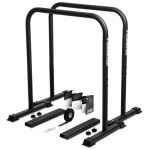
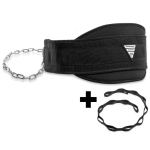
Adjust the difficulty of Weighted Dip
How to make Weighted Dip harder?
How to make Weighted Dip easier?
How to make Weighted Dip harder?
To make Weighted Dip harder:
-
Pause for one to two seconds at the bottom of each repetition.
-
Lower yourself for three to five seconds.
-
Perform 1.5 repetitions by pressing halfway up, lowering again and then completing the full repetition.
-
Progress to weighted ring dips for a greater stability challenge.
How to make Weighted Dip easier?
To make Weighted Dip easier:
-
Use a weighted vest to reduce swinging.
-
Perform slow negative dips.
-
Temporarily use a smaller range of motion that you can control.
-
Use a lighter weight plate.