
Human Flag
How to do Human Flag?
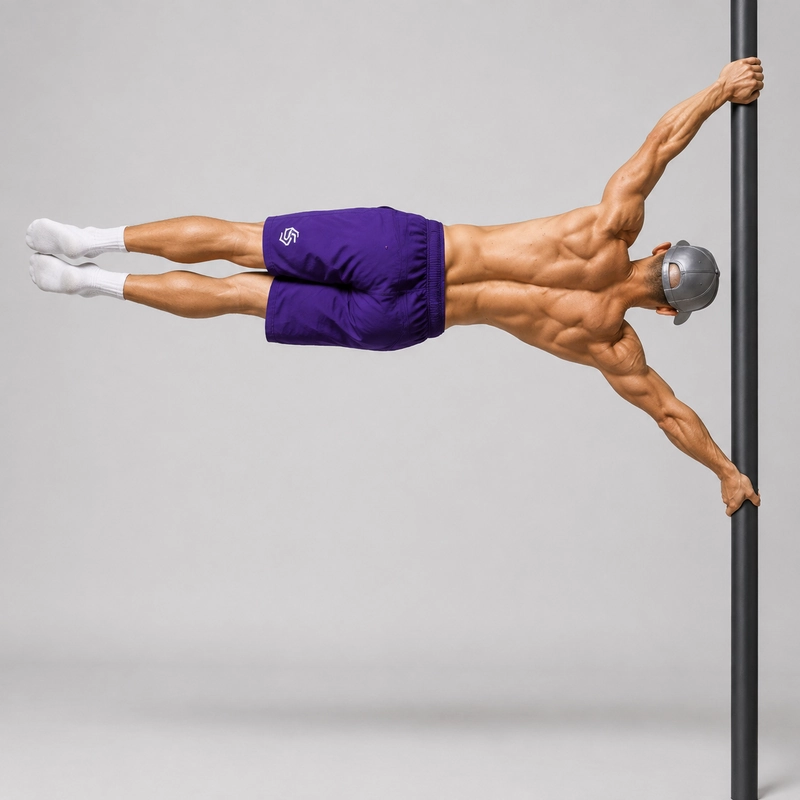
The human flag is an advanced calisthenics skill in which you hold your body sideways and approximately parallel to the ground while gripping a vertical pole, stall bars or another secure structure. The top arm pulls against the equipment while the bottom arm pushes away, creating the opposing forces needed to support the body.
Although the human flag is often described as a core exercise, it requires coordinated straight-arm strength from the shoulders, lats, upper back and arms as well as strong obliques and full-body tension. The length of the body creates a long lever, which is why tuck, one-leg and straddle variations are considerably easier than the full legs-together position.
Before attempting the full exercise, develop basic pulling strength with strict pull-ups, overhead support strength with the chest-to-wall handstand and lateral core control with the side plank. Our complete human flag progression guide provides the intermediate drills needed to connect these foundations to the full skill.
How to Perform the Human Flag
Learn the hand position and push–pull action with your feet supported before attempting an unsupported hold. A vertical pole can be used, but stall bars or horizontal rungs often make the initial grip and wrist position easier to control.
Before You Begin
- Use a structure that is securely anchored and strong enough to support your full bodyweight in multiple directions.
- Clear the surrounding area and place a suitable mat beneath you while learning entries and exits.
- Warm up the shoulders, elbows, wrists and scapular muscles before loading the full position.
- Do not attempt unsupported holds if you cannot maintain the setup with both elbows straight and pain-free.
- Practice both sides, even if one side initially feels more coordinated.
Step-by-Step Instructions
- Stand side-on to the equipment: Position one shoulder toward the pole or stall bars with enough open space for your body to extend sideways.
- Place the top hand: Grip the structure above your head with the arm fully extended and the hand approximately in line with your shoulder.
- Place the bottom hand: Grip below the top hand at approximately hip or waist height, using enough separation to keep both elbows straight and generate a strong push–pull action.
- Align the hands: Position the hands directly above and below one another instead of allowing either hand to move around the side of the pole.
- Set the grip: A common starting position uses an overhand grip with the top hand and an underhand grip with the bottom hand, although the exact orientation may vary with the equipment.
- Create opposing force: Pull downward with the top arm while actively pushing the structure away with the bottom arm, keeping both elbows locked.
- Enter an assisted position: Use your feet on the ground, a low rung or a stable platform to lean sideways and confirm that the shoulders remain active before becoming unsupported.
- Lift the hips: Continue the push–pull action as you raise your hips and bring your knees into a tuck or lift into a controlled high-flag position.
- Extend the body: Progress from a tuck to one leg, straddle and finally both legs together while keeping the torso, hips and heels aligned.
- Hold the flag: Squeeze your abs, obliques, glutes and quadriceps while maintaining straight elbows and keeping the body approximately parallel to the floor.
- Exit under control: Return to a tuck or high-flag position, lower your feet to a secure surface and release the hands only after your bodyweight is supported.
A controlled entry from an assisted high position is preferable while learning. A kick-up can be introduced later, but it should be small and deliberate rather than an uncontrolled attempt to throw the legs into position.
What Counts as a Complete Human Flag?
- The hands remain vertically aligned on a secure structure.
- Both elbows remain fully extended throughout the hold.
- The body is unsupported between the hands and feet.
- The shoulders, hips, knees and ankles form one continuous line.
- The torso and legs remain approximately parallel to the ground.
- The legs are together, the knees are straight and the toes are pointed.
- The position is held under control for at least two seconds.
- There is no contact with the pole from the torso, hips or legs.
- The athlete enters and exits without falling or releasing the grip unexpectedly.
A tuck, one-leg or straddle position is a valid progression, but it should not be recorded as a complete full human flag.
Common Mistakes to Avoid
- Bending either elbow: Bent arms change the mechanics and usually indicate that the straight-arm push–pull position has not yet been developed.
- Allowing the bottom shoulder to collapse: Keep pushing the structure away instead of sinking toward the bottom hand.
- Failing to pull with the top arm: The upper hand must pull strongly rather than acting only as a passive grip.
- Misaligning the hands: Hands positioned on different sides of the pole can cause the body to rotate away from the intended plane.
- Using unsuitable hand spacing: Choose a distance that allows both elbows to remain locked without forcing an uncomfortable shoulder position.
- Rotating the chest toward the ceiling: Slight rotation may make early progressions easier, but the full skill should gradually become more side-facing.
- Letting the hips sag: Contract the obliques and glutes so the hips remain aligned with the shoulders and feet.
- Relaxing the legs: Straight knees, squeezed quadriceps and pointed toes make the body easier to control as one unit.
- Using an uncontrolled kick-up: Throwing the legs upward can overload the shoulders and make the exit unpredictable.
- Training only the stronger side: Practice both orientations to develop the skill more evenly.
- Continuing through joint pain: Stop if you experience sharp or persistent pain, instability, tingling or numbness in the shoulders, elbows or wrists.
Benefits of the Human Flag
- Develops straight-arm pushing strength: The bottom arm must press continuously against the structure without allowing the elbow or shoulder to collapse.
- Develops straight-arm pulling strength: The top arm uses the lats and scapular muscles to pull against the upper grip.
- Challenges the lateral core: The obliques and other trunk muscles resist lateral flexion and help keep the hips from dropping.
- Builds full-body tension: The glutes, quadriceps and abdominal muscles must connect the upper and lower body into one rigid lever.
- Improves scapular coordination: The two shoulders perform different but simultaneous roles under an asymmetric load.
- Strengthens the grip and forearms: Both hands must remain securely attached while resisting forces in different directions.
- Develops advanced body awareness: The skill requires control of body angle, rotation, balance and tension without support from the feet.
Frequently Asked Questions
Which arm pushes and which arm pulls in the human flag?
The bottom arm pushes the structure away while the top arm pulls downward. Both elbows should remain straight, and the two actions must continue simultaneously throughout the hold. This same push–pull relationship is demonstrated in FitPro’s human flag tutorial.
How difficult is the human flag?
The full human flag is a high-difficulty skill because the shoulders support the body through two different straight-arm actions while the torso and legs form a long horizontal lever. Body proportions, bodyweight, previous strength training and access to suitable equipment can all affect the difficulty.
Is the human flag mainly a core exercise?
No. The obliques and other core muscles maintain body alignment, but the flag also depends heavily on the top arm’s pulling strength, the bottom arm’s pushing strength, scapular control and grip.
How strong should I be before training it?
There is no universal repetition requirement, but you should be comfortable with controlled pull-ups, a straight-arm side plank, an overhead support position and feet-assisted flag drills before attempting the full unsupported hold.
Can I learn the human flag without a pole?
You can build the necessary strength with exercises such as the hollow body hold, side plank, pull-up and handstand, but eventually you need a secure vertical pole, stall bars or comparable structure to practise the skill-specific push–pull position.
Should I train both sides?
Yes. One side will usually feel more natural, but practising both sides helps avoid making the movement entirely dependent on one preferred arm position.
How long should I hold the human flag?
Begin by accumulating short, technically clean holds in an appropriate progression. A controlled two-second full hold demonstrates the position, while longer holds can be developed after alignment and entry are repeatable.
How often should I practise the human flag?
Two or three focused sessions per week are sufficient for most athletes, with full recovery between demanding attempts and the session stopped when straight-arm position or shoulder control begins to deteriorate.
What is the best progression toward the full human flag?
A practical sequence is feet-assisted flag, upright flag, tuck flag, one-leg flag, straddle flag and full human flag, with band assistance or controlled high-to-horizontal negatives used where needed. See the complete human flag training and progression guide for a structured pathway.
Tips for the proper execution of Human Flag
Align the top and bottom hands vertically so the body does not rotate around the structure.
Pull continuously with the top arm while pushing the structure away with the bottom arm.
Keep both elbows fully extended instead of attempting to hold the position with bent arms.
Maintain active pressure through the bottom shoulder rather than allowing it to collapse toward the hand.
Brace the obliques and squeeze the glutes to keep the hips aligned with the shoulders.
Straighten the knees, contract the quadriceps and point the toes so the legs behave as one rigid lever.
Keep the head neutral and look forward rather than lifting or dropping the chin excessively.
Learn the position with feet assistance before adding unsupported kick-ups or lowering attempts.
Practise both sides even if one orientation initially feels substantially stronger.
Use short, technically clean attempts and stop the set when the arms bend or the hips begin to sag.
Lower the feet to a secure surface before releasing either hand from the equipment.
Stop training if the exercise causes sharp joint pain, instability, tingling or numbness.
Muscles worked when doing Human Flag
The human flag is a full-body isometric exercise in which the two sides of the upper body perform different roles. The top arm produces a strong pulling action, the bottom arm produces a pushing action and the trunk resists the tendency of the hips and legs to fall toward the ground.
Primary Muscles
- Latissimus dorsi: The lat on the top-arm side contributes heavily to the downward pulling force needed to support the upper end of the body.
- Deltoids: The shoulders maintain both straight-arm positions, with particularly high demand on the bottom arm as it pushes away from the structure.
- Obliques: The internal and external obliques resist lateral flexion and help keep the hips level with the shoulders.
- Rectus abdominis and transverse abdominis: These muscles brace the torso and help prevent excessive spinal extension or loss of trunk position.
Secondary Muscles
- Serratus anterior: The serratus helps maintain the active pushing position of the bottom shoulder.
- Trapezius and other scapular stabilizers: These muscles control the shoulder blades while the arms produce opposing forces.
- Teres major: The teres major assists the latissimus dorsi in the top-arm pulling action.
- Triceps: The triceps work isometrically to keep the elbows extended, especially in the bottom arm.
- Forearms and hand muscles: These muscles maintain both grips and prevent the hands from slipping or rotating.
- Quadratus lumborum and spinal erectors: These trunk muscles help resist side bending and maintain alignment through the torso.
- Glutes: The glutes stabilize the pelvis and help prevent the hips from folding or rotating.
- Quadriceps and hip adductors: These muscles keep the knees straight and the legs together in the full position.
The precise distribution of effort changes with the apparatus, grip orientation and chosen side, but the essential pattern remains the same: the top arm pulls, the bottom arm pushes and the trunk keeps the body rigid and horizontal.
Primary Muscle(s):
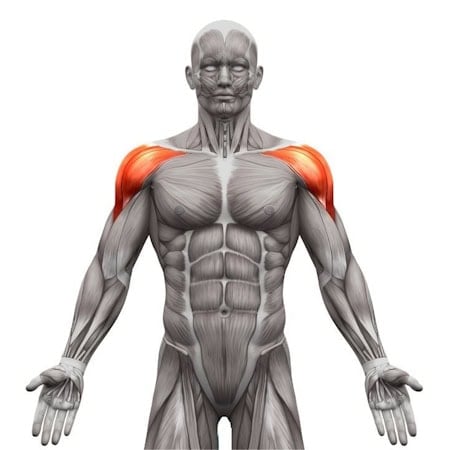
Anterior delt
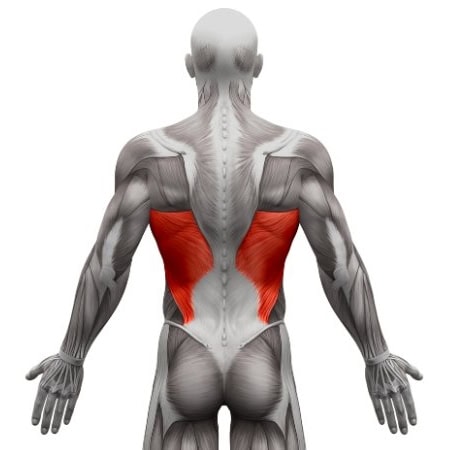
Lats
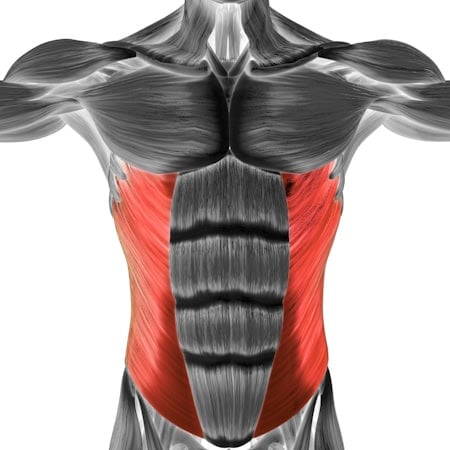
Oblique
Secondary Muscle(s):
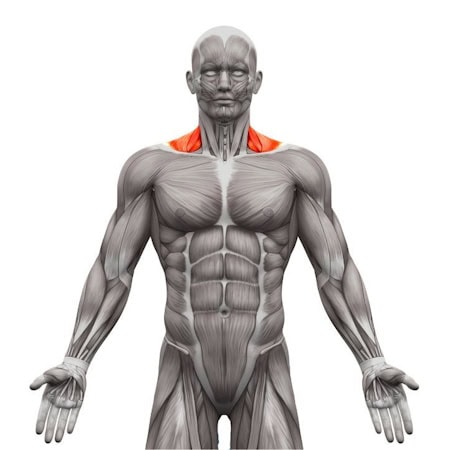
Trapezius
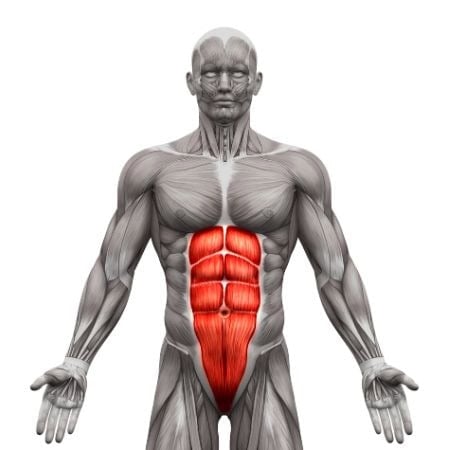
Abdominal
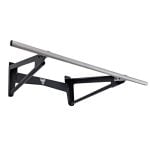
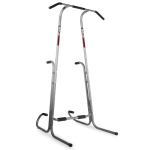
Equipment needed for Human Flag
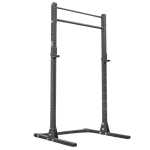
Adjust the difficulty of Human Flag
How to make Human Flag harder?
How to make Human Flag easier?
How to make Human Flag harder?
To make Human Flag harder:
-
Increase the full human flag hold gradually while preserving straight elbows and horizontal alignment.
-
Bring the legs completely together after mastering the straddle human flag.
-
Lower slowly from a high flag through the horizontal position and continue toward a low flag.
-
Perform controlled human flag raises between a lower angle and the horizontal position.
-
Enter the full position with a strict press or controlled swing-up instead of using a kick.
-
Perform human flag pull-ups by bending and re-extending the arms while maintaining the horizontal body position.
-
Add very light ankle weights only after long, repeatable full human flag holds are comfortable and technically consistent.
How to make Human Flag easier?
To make Human Flag easier:
-
Practise a straight-arm side plank to build the lateral core and bottom-shoulder support required for the flag.
-
Perform a feet-assisted flag plank while keeping both hands on the structure and one or both feet on the ground.
-
Practise an upright flag with your feet supported while learning to pull with the top arm and push with the bottom arm.
-
Use a downward low flag to learn the opposing arm actions with the legs remaining below the hands.
-
Perform a band-assisted human flag with the band supporting the hips or legs.
-
Use a tuck human flag to shorten the lever by bringing both knees toward the torso.
-
Perform a one-leg human flag with one knee tucked and the other leg extended.
-
Use a straddle human flag to reduce the effective leverage before bringing the legs together.
-
Enter from a supported high flag and lower only as far as you can maintain straight elbows and active shoulders.