
Incline Pike Hold
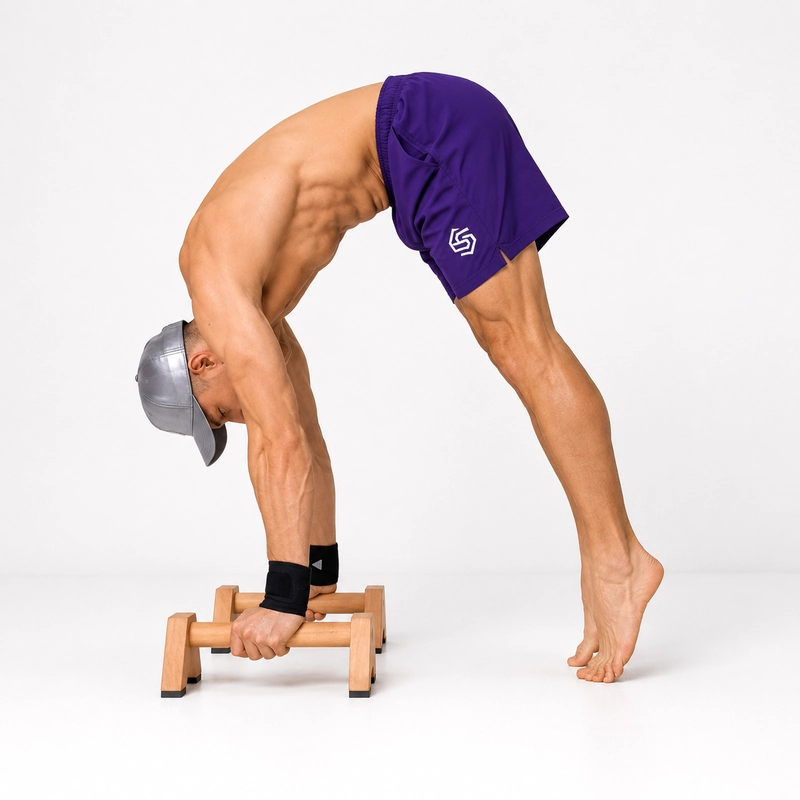
How to do Incline Pike Hold?
The Incline Pike Hold is a static vertical-pushing exercise performed with your hands on low parallettes or push-up bars and your feet on the floor. You raise your hips into an inverted-V position and hold yourself on straight arms while actively pushing away from the handles.
Elevating the hands provides a neutral wrist position and makes it easier to establish a strong shoulder position than when placing the palms flat on the floor. The exercise develops straight-arm shoulder endurance, overhead body awareness and the ability to shift more bodyweight toward the hands.
The Incline Pike Hold is an effective preparation exercise for the dynamic Pike Push-Up. It can also bridge the gap between basic plank exercises and more vertical progressions such as the Elevated-Feet Pike Push-Up, wall-supported handstands and freestanding handstand practice.
Use two handles of equal height and place them on a firm, non-slip surface. Push-up bars are suitable only if they remain completely stable when you shift your weight forward.
Tips for the proper execution of Incline Pike Hold
Use two handles of equal height on a firm, non-slip surface.
Place the parallettes approximately shoulder-width apart and parallel.
Wrap your thumbs around the handles for a secure grip.
Keep your elbows completely locked throughout the hold.
Push tall through your shoulders instead of sinking between your arms.
Raise your hips until they become the highest point of the position.
Keep your head between your arms and look toward the floor behind the handles.
Shift your weight toward your hands gradually rather than leaning forward suddenly.
Brace your abdominals to keep your ribs and pelvis controlled.
Bend your knees slightly if hamstring tightness causes your back to round.
End the hold when your elbows bend, hips drop or shoulders begin to collapse.
Walk back to a high plank before releasing the handles.
Muscles worked when doing Incline Pike Hold
The Incline Pike Hold uses isometric muscular contractions to support the upper body in a partially inverted position. The shoulders and triceps maintain straight-arm support, while the upper back and core keep the torso stable as the hips rise above the shoulders.
Primary Muscles
- Anterior deltoids: Support a large portion of your bodyweight as the shoulders move toward a more vertical pressing position.
- Lateral deltoids: Assist with shoulder stability while the arms remain overhead.
- Triceps: Maintain full elbow extension throughout the hold.
- Serratus anterior and trapezius: Support active shoulder elevation and prevent the upper body from collapsing between the arms.
Secondary Muscles
- Abdominals and obliques: Stabilize the torso and help control the position of the ribs and pelvis.
- Upper chest: Assists the shoulders during the inclined vertical-pushing position.
- Forearms and grip muscles: Secure the hands around the parallettes or push-up bars.
- Quadriceps: Keep the knees extended when performing the hold with straight legs.
- Hip flexors: Help maintain the closed angle between the torso and legs.
- Calves and foot muscles: Stabilize the lower-body contact with the floor as weight shifts toward the hands.
Once you can maintain the position with active shoulders and locked elbows, progress toward the Pike Push-Up for dynamic pressing strength. Raising the feet and bringing the hips more directly over the shoulders creates a more demanding handstand-specific position.
Primary Muscle(s):
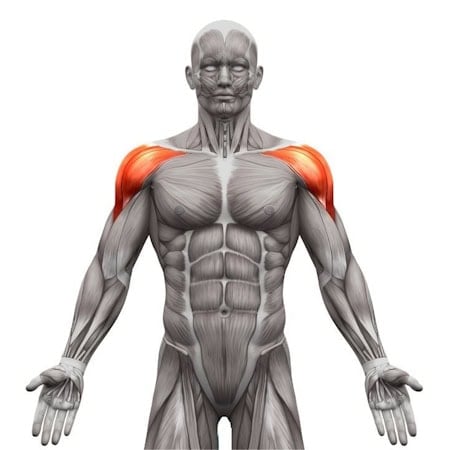
Anterior delt
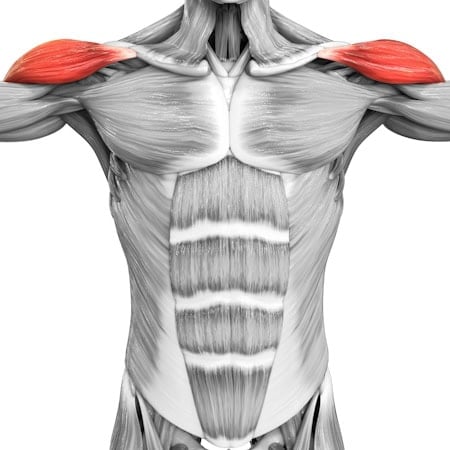
Lateral delt
Secondary Muscle(s):
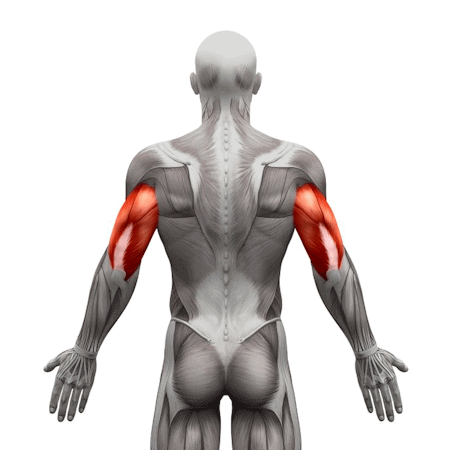
Triceps
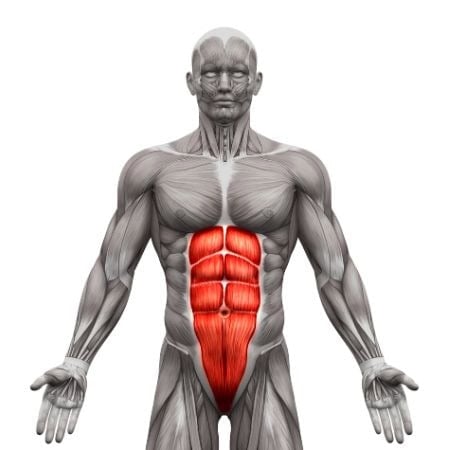
Abdominal
Equipment needed for Incline Pike Hold
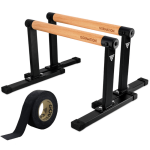
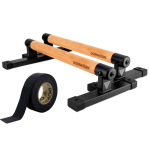
Adjust the difficulty of Incline Pike Hold
How to make Incline Pike Hold harder?
How to make Incline Pike Hold easier?
How to make Incline Pike Hold harder?
To make Incline Pike Hold harder:
-
Closer-Foot Incline Pike Hold: Walk the feet closer to the handles to raise the hips and place more bodyweight over the shoulders.
-
Forward-Shift Incline Pike Hold: Move the shoulders farther over the hands while maintaining locked elbows and elevated shoulders.
-
Floor Pike Hold: Place the palms directly on the floor to increase wrist-extension demands and remove the elevated hand position.
-
Pike Hold with Feet on a Plyo Box: Elevate the feet and bring the hips more directly over the shoulders.
-
Incline Pike Shoulder Shrugs: Maintain straight elbows while slowly elevating and slightly lowering the shoulders.
-
Pike Push-Up: Bend the elbows and lower the head between and slightly forward of the handles before pressing back up.
-
Elevated-Feet Pike Push-Up: Place the feet on a box and perform controlled pike push-ups through a more vertical pressing angle.
-
Wall Handstand Hold: Progress to supporting your full bodyweight in a vertical wall-assisted handstand.
How to make Incline Pike Hold easier?
To make Incline Pike Hold easier:
-
Higher Incline Pike Hold: Place your hands on a stable plyo box or bench to reduce the amount of bodyweight supported by the shoulders.
-
Bent-Knee Incline Pike Hold: Bend the knees to accommodate limited hamstring mobility while maintaining a long spine.
-
Wide-Stance Incline Pike Hold: Move the feet slightly wider apart to create a more stable base.
-
Longer Pike Position: Keep the feet farther from the handles so the hips remain lower and less weight shifts onto the shoulders.
-
Reduced Forward Weight Shift: Keep more bodyweight over the feet while learning to maintain locked elbows and active shoulders.
-
Short Incline Pike Hold: Perform repeated 5–10-second holds with complete control instead of one longer set.
-
Incline High Plank Hold: Begin with the body in a straight high-plank position before gradually raising the hips into a pike.