
Kneeling Triceps Extensions
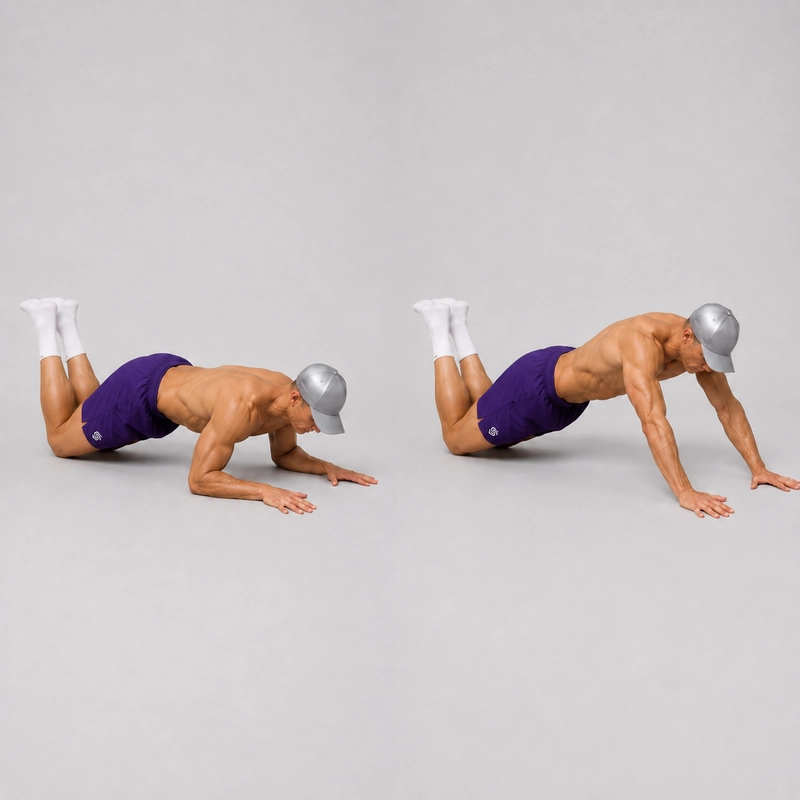
How to do Kneeling Triceps Extensions?
The kneeling triceps extension is a bodyweight arm exercise performed with your knees and hands on the floor. You lower your upper body by bending primarily at the elbows and then contract your triceps to straighten the arms. Using the knees as the pivot shortens the body lever, making this variation more accessible than a full-plank bodyweight triceps extension.
Some trainers call this movement a kneeling triceps push-up, bodyweight skull crusher or kneeling sphinx push-up. However, it is different from a standard knee push-up: during a knee push-up, the chest moves toward the floor through substantial movement at both the shoulders and elbows, while the kneeling triceps extension keeps the upper arms comparatively stable and emphasizes elbow flexion and extension.
The exercise is also different from a diamond push-up, which remains a compound chest, shoulder and triceps movement. Kneeling triceps extensions place more of the movement around the elbows, making them useful for developing the triceps strength required for push-up lockouts, dips and more advanced triceps extensions on a parallette.
The triceps brachii consists of three heads that join into a common tendon and primarily straighten the arm at the elbow, as explained in the NCBI anatomy overview of the triceps. Although the kneeling position reduces the resistance, the exercise can still place considerable stress on the elbows and wrists if performed too deeply or without control. Reduce the range or choose an elevated variation if you experience joint discomfort.
Tips for the proper execution of Kneeling Triceps Extensions
Place a folded mat beneath your knees if the floor feels uncomfortable.
Position your hands approximately shoulder-width apart and slightly in front of your shoulders.
Maintain a controlled line from your head through your hips to your knees.
Keep your abdominals and glutes engaged so your lower back does not arch.
Keep your upper arms comparatively still while your forearms move toward and away from the floor.
Guide your elbows generally forward instead of allowing them to flare widely to the sides.
Lower slowly enough that your forearms never crash into the floor.
Press evenly through both palms as you extend your elbows.
Use only the range of motion that you can complete without joint pain or loss of position.
Finish each repetition with controlled elbow extension without snapping into the top position.
Muscles worked when doing Kneeling Triceps Extensions
Kneeling triceps extensions primarily train the triceps brachii through repeated elbow flexion and extension. The shoulders and trunk work mainly to stabilize the upper arms and maintain the kneeling plank position.
Primary Muscle
- Triceps brachii: The long, lateral and medial heads of the triceps work together to extend the elbows and raise the body away from the floor.
All three heads combine into a common tendon at the elbow, and their principal shared function is elbow extension. The NCBI triceps anatomy reference identifies elbow extension as the muscle group’s primary function.
Secondary and Stabilizing Muscles
- Anconeus: This smaller muscle assists the triceps during elbow extension.
- Anterior deltoids: The front of the shoulders helps stabilize the upper arms as the body moves.
- Pectoralis major: The chest contributes to shoulder stability and provides limited assistance during the pressing phase.
- Serratus anterior: This muscle helps control the shoulder blades while your hands remain fixed against the floor.
- Forearm muscles: The wrist and forearm muscles stabilize the hands and wrists under load.
- Abdominals and obliques: The core resists extension and rotation so the torso moves as one controlled unit.
- Glutes: The gluteal muscles help keep the hips extended and prevent the body from folding backward.
Compared with a diamond push-up, the kneeling triceps extension reduces the contribution of the chest by limiting shoulder movement and concentrating more of the repetition around the elbows. The diamond push-up remains a useful related compound exercise when the goal is to train the chest, shoulders and triceps together.
Primary Muscle(s):
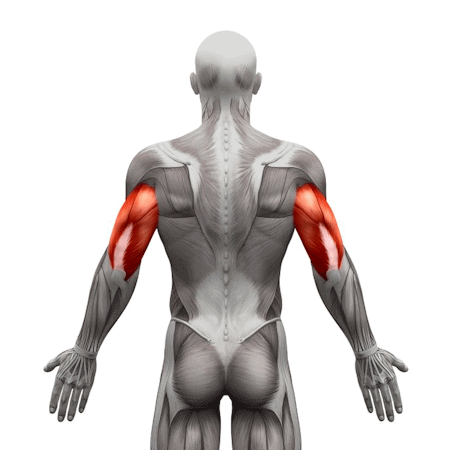
Triceps
Secondary Muscle(s):
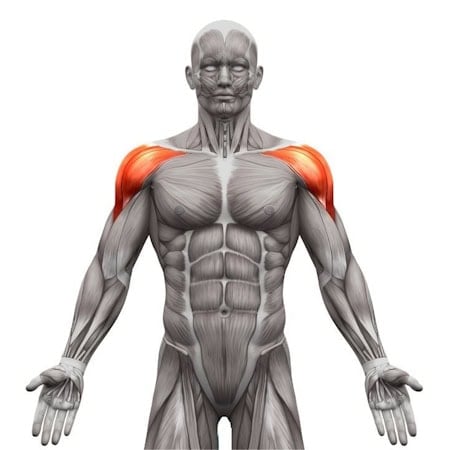
Anterior delt
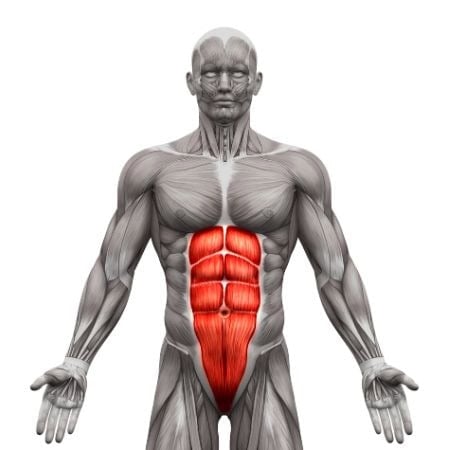
Abdominal
Equipment needed for Kneeling Triceps Extensions
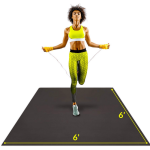
Adjust the difficulty of Kneeling Triceps Extensions
How to make Kneeling Triceps Extensions harder?
How to make Kneeling Triceps Extensions easier?
How to make Kneeling Triceps Extensions harder?
To make Kneeling Triceps Extensions harder:
-
Move your knees farther from your hands to lengthen the body lever and increase the resistance.
-
Take three to five seconds to complete the lowering phase of every repetition.
-
Pause with your forearms just above the floor before extending your elbows.
-
Perform one-and-a-half repetitions by lowering fully, rising halfway, lowering again and then returning to the top.
-
Progress from your knees to a full-plank bodyweight triceps extension supported by your toes.
-
Perform triceps extensions on a parallette to increase the available range of motion.
-
Elevate your feet after mastering the full-plank variation to shift more body weight toward your arms.
How to make Kneeling Triceps Extensions easier?
To make Kneeling Triceps Extensions easier:
-
Move your knees closer to your hands to shorten the body lever and reduce the resistance.
-
Perform a partial repetition and increase the depth only as your triceps strength improves.
-
Place your hands on a stable elevated surface while keeping your knees on a padded floor.
-
Perform standing triceps extensions against a wall to create a more upright and less demanding body angle.
-
Pause and reset from the starting position after each slow lowering repetition.
-
Use a light resistance-band triceps extension if supporting your body weight causes wrist discomfort.