
False Grip Pull-up
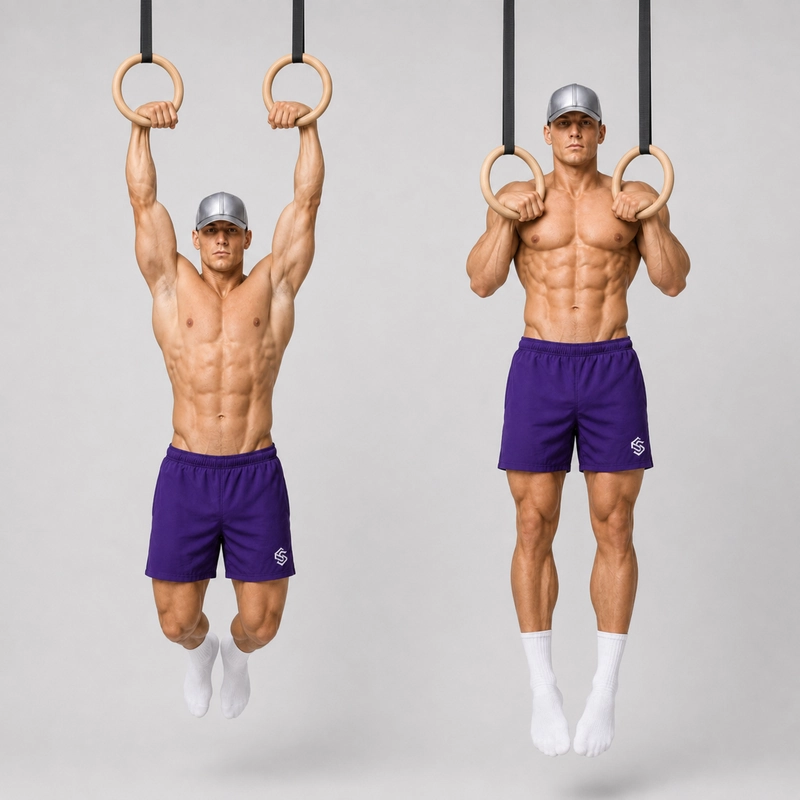
How to do False Grip Pull-up?
The false grip pull-up is a strict pull-up performed with the wrists positioned above the rings or bar instead of hanging entirely below the equipment. This grip demands more from the hands, forearms and wrist flexors while placing the body in a more useful position for high pulling and muscle-up transitions.
On gymnastics rings, the false grip allows you to move from the pull into a strict ring muscle-up without having to roll your hands around the rings during the transition. The straight-bar variation uses a similar wrist-over position, but the fixed bar makes the grip less forgiving and places pressure differently across the hands. A false grip can help with some bar muscle-up techniques, although it is not required for a standard bar muscle-up.
You should already be comfortable with controlled strict pull-ups before adding this grip. If maintaining the position is the limiting factor, begin with a ring false grip hang or feet-assisted holds on low rings. Preparing the hands and wrists with the wrist warm-up routine can also make the position easier to tolerate.
Tips for the proper execution of False Grip Pull-up
Set the false grip securely while your feet are still supported instead of trying to adjust it after you begin hanging.
Position the equipment against the heel of the hand rather than holding it near the fingers.
Keep both wrists flexed over the equipment throughout the entire repetition.
Draw your shoulders down before bending your elbows to begin the pull from a controlled position.
Brace your abs and glutes and keep your legs together to prevent swinging.
Keep the rings or bar close to your body as you pull toward the top position.
Lower slowly enough to confirm that you can maintain the grip with straight elbows.
End the set as soon as the wrists roll underneath the equipment or the grip becomes uneven.
Use chalk sparingly when permitted, but do not use it to compensate for an incorrectly positioned grip.
Stop and regress the exercise if the grip causes sharp wrist pain, tingling or numbness.
Muscles worked when doing False Grip Pull-up
The false grip pull-up uses the same major pulling muscles as a conventional pull-up, but it places substantially more continuous demand on the hands, forearms and wrist flexors. The ring and bar variations work similar muscle groups, although rings require additional stabilization and allow more natural rotation of the arms.
Primary Muscles
- Latissimus dorsi: The lats produce much of the shoulder extension and adduction needed to pull the body upward.
- Biceps brachii, brachialis and brachioradialis: These elbow flexors bend the arms and help control both the upward and downward phases.
- Forearm and grip muscles: The finger and wrist flexors work isometrically to keep the wrists above the rings or bar.
Secondary Muscles
- Rhomboids and middle trapezius: These muscles help control and retract the shoulder blades as the chest approaches the equipment.
- Lower trapezius: The lower trapezius assists with scapular depression and shoulder positioning.
- Rear deltoids and teres major: These muscles assist the lats during the pulling phase.
- Abdominals and obliques: The core stabilizes the torso and limits swinging or excessive spinal extension.
- Glutes: The glutes help maintain a controlled, unified body position throughout the repetition.
Compared with the strict pull-up, the main difference is not a completely different back-muscle stimulus but the additional isometric work required to maintain the wrist-over grip.
Primary Muscle(s):
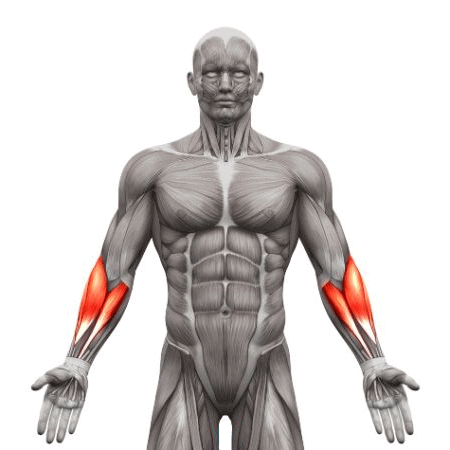
Forearm
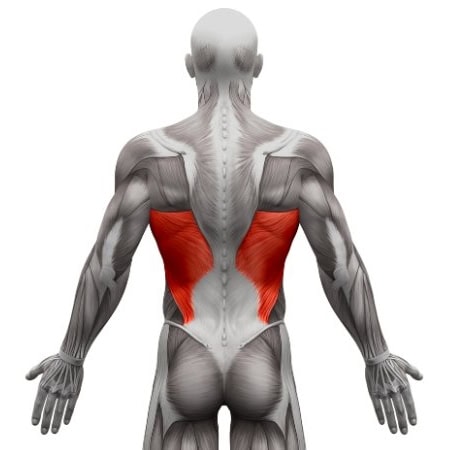
Lats
Secondary Muscle(s):
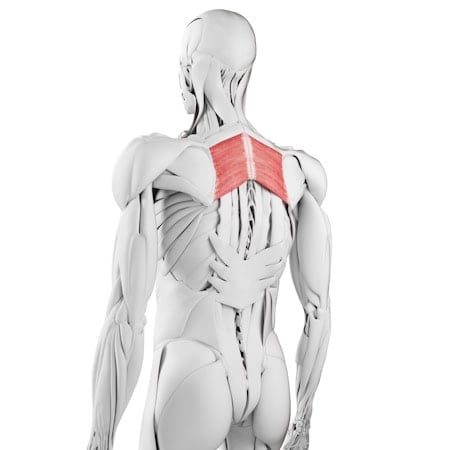
Rhomboid
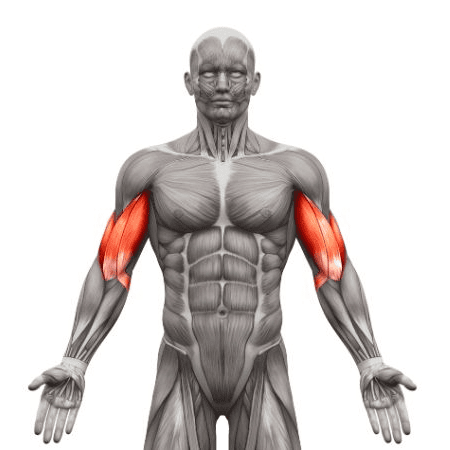
Biceps
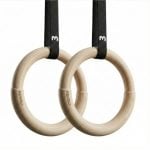
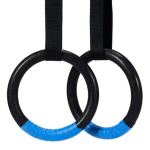
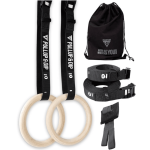
Equipment needed for False Grip Pull-up
Adjust the difficulty of False Grip Pull-up
How to make False Grip Pull-up harder?
How to make False Grip Pull-up easier?
How to make False Grip Pull-up harder?
To make False Grip Pull-up harder:
-
Pause for two to five seconds at the top of every repetition without allowing the grip to change.
-
Pull higher until the rings reach the lower chest or the upper chest makes controlled contact with the bar.
-
Use a three-to-five-second lowering phase while maintaining the false grip to full elbow extension.
-
Perform L-sit false grip pull-ups while keeping the knees and hips fully extended.
-
Add a small amount of weight only after you can maintain a secure false grip through multiple full-range repetitions.
-
Combine a high ring false grip pull-up with controlled low-ring muscle-up transition drills.
-
Progress from the ring variation into strict ring muscle-up negatives and eventually complete strict ring muscle-ups.
How to make False Grip Pull-up easier?
To make False Grip Pull-up easier:
-
Practice seated false grip holds on low rings while keeping most of your bodyweight on the floor.
-
Perform feet-assisted false grip hangs and gradually reduce the amount of support provided by your legs.
-
Build toward unsupported repetitions with controlled ring false grip hangs lasting 10 to 20 seconds.
-
Use a resistance band to reduce the amount of bodyweight lifted while maintaining the complete grip position.
-
Step or jump into the top position and perform false grip negatives with a controlled descent.
-
Perform partial-range false grip pull-ups while gradually increasing the depth toward straight elbows.
-
Develop basic pulling strength with regular ring pull-ups or strict bar pull-ups before returning to the false grip variation.