
Ring Victorian Hold
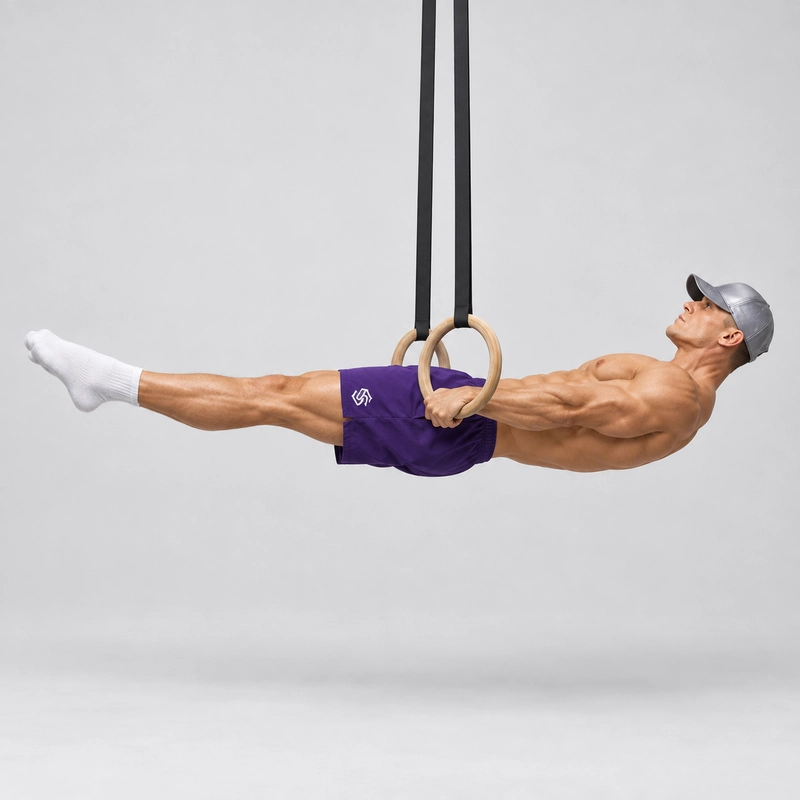
How to do Ring Victorian Hold?
The Ring Victorian Hold, also called the Victorian Cross or Inverted Swallow, is an elite straight-arm strength skill performed on gymnastics rings. The athlete supports the entire body through the hands while holding a straight, face-up body line horizontally at approximately ring height, with the elbows locked and the arms opened wide beside the body.
In men’s artistic gymnastics, the official name is Inverted Swallow. The current FIG Men’s Artistic Gymnastics Code of Points lists it as an E-value strength hold that must be shown for at least two seconds. Victorian Hold and Victorian Cross are the names more commonly used in calisthenics and street workout.
Although the body faces upward in both exercises, the Ring Victorian Hold is not simply a wider Front Lever. During a Front Lever, the hands remain overhead and the body hangs below the apparatus, whereas the Victorian moves the rings outward and beside the body until the arms and torso approach the same horizontal level. It can be understood as the face-up counterpart of a ring Maltese, which holds the body face-down.
The ring exercise is also substantially different from the Victorian performed on parallel bars or the floor. Those variations use the forearms or a larger part of the arms as support, while a strict Ring Victorian Hold is supported through the hands without resting the forearms on the rings, straps or another surface.
This is a specialist goal skill rather than a normal next step after learning the Front Lever. Even athletes with advanced lever strength should perform most Victorian training with a counterweight, supported legs, a qualified spotter or another measurable form of assistance.
Ring Victorian Hold quick facts
- Official gymnastics name: Inverted Swallow.
- Common calisthenics names: Victorian Hold and Victorian Cross.
- Exercise type: Static straight-arm rings skill.
- Body position: Face-up and horizontal at approximately ring height.
- Primary equipment: Gymnastics rings.
- Competition hold standard: At least two seconds after reaching a complete stop.
- Difficulty: Elite.
- Main muscular demand: Isometric shoulder extension, elbow extension and ring stabilization under extreme leverage.
Benefits of the Ring Victorian Hold
- Develops elite straight-arm strength: The shoulders and elbows must resist the leverage created by the extended body and widely positioned arms.
- Builds posterior shoulder strength: The rear deltoids and long heads of the triceps contribute strongly to maintaining the face-up horizontal position.
- Challenges independent ring control: Both arms must produce balanced force to keep the rings and straps still.
- Reinforces full-body tension: The trunk, glutes and legs must prevent the hips from dropping or the body from twisting.
- Develops advanced spatial awareness: The athlete must accurately judge body height, ring position and symmetry without seeing the complete body line.
- Prepares elite ring transitions: Victorian-specific strength can contribute to advanced strength sequences and named competitive ring elements.
Are you ready to train the Ring Victorian Hold?
There is no single test that guarantees Victorian readiness, but the following are useful practical coaching markers:
- You can maintain a stable Ring Support Hold with straight elbows and controlled rings.
- You can enter, stabilize and leave an Inverted Hang on Rings without swinging.
- You possess a strict Full Front Lever and have begun practising wider-arm lever positions.
- You can hold a heavily assisted Victorian position without bending your elbows, losing symmetry or experiencing pain.
- Your shoulders, elbows and wrists tolerate progressive straight-arm ring training.
- You have access to a qualified coach, suitable assistance, a mat and a planned exit.
A Full Front Lever is useful preparation, but it does not prove that an athlete is ready for the Victorian because the much wider arm position creates a different strength demand. The Iron Cross provides valuable ring and straight-arm experience, but it is not a compulsory prerequisite either.
Equipment and setup
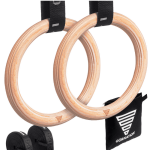
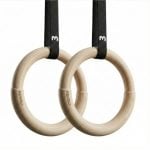
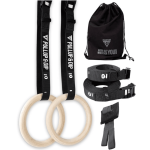
Use properly rated gymnastics rings suspended from a secure overhead structure with enough height and surrounding clearance to accommodate the complete horizontal body position.
- Set both rings and straps to exactly the same height.
- Inspect the rings, straps, buckles and anchor before training.
- Place an appropriate gymnastics mat beneath the working area.
- Ensure that the straps can hang freely without rubbing against your arms or body.
- Prepare the counterweight, leg support, resistance band or spotting arrangement before mounting the rings.
- Use a stable platform when one is needed for the entry or dismount.
- Confirm that the assistance system cannot suddenly detach or pull the athlete off balance.
How to warm up for the Ring Victorian Hold
Warm up thoroughly without exhausting the muscles required for the working sets.
- Complete five to ten minutes of easy general movement to raise your body temperature.
- Prepare the wrists and elbows with controlled flexion, extension and rotation through comfortable ranges.
- Perform shoulder circles and gradual straight-arm shoulder-extension exercises without forcing an end position.
- Complete several short Ring Support Holds while keeping the rings controlled.
- Practise a controlled Inverted Hang and one or two easier Front Lever variations.
- Perform several brief Victorian-specific holds with substantially more assistance than you intend to use in the working sets.
How to perform the Ring Victorian Hold
These steps describe the final position rather than prescribing one compulsory entry. Full attempts should be entered through the controlled method used in the demonstration, normally with a coach, counterweight or other assistance.
- Set the rings evenly, position the mat and arrange your assistance or spotter before mounting.
- Take an equal closed grip on both rings and keep the wrists as neutral as the position comfortably permits.
- Extend both elbows to their natural lockout before loading the target position.
- Use the assisted entry to move into a face-up position while keeping both arms symmetrical.
- Open the straight arms outward so the rings move beside the body rather than remaining overhead as they would in a Front Lever.
- Continue into the target position until the shoulders, torso, hips, knees and ankles form a straight horizontal line at approximately ring height.
- Create active straight-arm tension by driving the rings downward and toward your feet while keeping them wide and motionless.
- Keep the shoulders stable and the neck long without forcing the shoulder blades into an exaggerated position.
- Brace the abdomen, control the ribs, squeeze the glutes and contract the quadriceps.
- Keep the legs together, straighten the knees and point the toes.
- Allow the rings, straps and body to become still before beginning the timed hold.
- Maintain the completed position for at least two seconds while taking short, controlled breaths.
- Leave the hold through the planned assisted transition, shortened lever or controlled descent before your elbows or shoulders lose position.
Strict Ring Victorian Hold form standard
A clean full repetition should meet the following standards:
- The athlete’s bodyweight is supported through the hands without external assistance.
- The body faces upward throughout the completed hold.
- The body is horizontal at approximately ring height rather than hanging noticeably below the rings.
- The arms are opened wide beside the body instead of remaining overhead in a Front Lever position.
- Both elbows remain completely extended at the athlete’s natural lockout.
- The forearms, wrists and body do not rest on the rings or straps.
- The rings remain at equal heights and the left and right arm positions are symmetrical.
- The head, shoulders, torso, hips, knees and ankles form one controlled line.
- The hips remain extended without sagging or piking.
- The knees remain straight, the legs remain together and the toes are pointed.
- The rings, straps and body reach a complete stop before the hold is counted.
- The completed position is maintained for at least two seconds.
- The athlete leaves the position through a controlled and previously planned exit.
Grip, elbow and shoulder position
Use a secure closed grip with the rings seated evenly in both hands. Avoid deliberately folding the wrists over the rings or using wrist and forearm contact to create an additional support point, because that changes the leverage and no longer represents the strict hands-only position.
Lock the elbows before entering the hold, but do not aggressively force them beyond their natural range. Athletes with visible elbow hyperextension should use their normal controlled lockout rather than trying to exaggerate the joint position.
The freely moving rings allow some variation in hand and upper-arm rotation. Let the rings settle into a symmetrical orientation that preserves straight elbows and comfortable shoulder alignment instead of forcing an extreme rings-turned-out or internally rotated position.
Keep the shoulders active enough to resist collapsing toward the ears, but do not force maximal depression or retraction if it produces pinching, instability or loss of control. The objective is a strong and repeatable shoulder position rather than the most exaggerated scapular cue possible.
How to breathe during the Ring Victorian Hold
Take a preparatory breath and establish trunk tension before entering the hardest part of the movement. Once the body and rings are stable, use short, controlled breaths without relaxing the abdomen or changing the rib position. End the attempt if breath-holding makes you dizzy or causes you to lose awareness of your elbow, shoulder or ring position.
Common Ring Victorian Hold mistakes
Performing a wide Front Lever instead of a Victorian
If the hands remain overhead and the body hangs below the rings, the exercise is still a Front Lever variation, so use more assistance and move the rings beside the body at approximately torso height.
Resting the forearms on the rings or straps
Forearm contact adds another support point and turns the movement into a different assisted variation, so keep the rings in the hands and maintain clearance from the straps.
Bending the elbows
Bent elbows shorten the lever and change the muscular demand, so increase the assistance until a natural straight-arm lockout can be maintained.
Allowing the hips to sag
Brace the abdomen and contract the glutes before the hold, then use a shorter lever or more assistance if the pelvis falls below the shoulders.
Piking at the hips
Keep the front of the hips open and move the shoulders, pelvis and legs as one rigid unit instead of folding the legs toward the torso.
Entering one side before the other
Uneven ring movement creates rotation and hides an asymmetrical position, so use balanced assistance and review front-view video before increasing the load.
Counting the transition as part of the hold
Begin timing only after the body, rings and straps have reached the final position and stopped moving.
Forcing an extreme wrist or shoulder rotation
Choose a symmetrical position that preserves control without joint discomfort rather than copying another athlete’s exact hand angle.
Jumping or dropping into the position
Momentum makes the position difficult to control and judge, so enter through a slow assisted transition rather than an uncontrolled fall.
Attempting repeated unassisted failures
Use sufficient assistance to accumulate technically correct work instead of repeatedly exposing the shoulders and elbows to failed maximal attempts.
Leaving the hold without an exit plan
Decide how the coach, counterweight or shortened body position will help you leave before beginning every attempt.
Ring Victorian Hold progression
- Ring Support Hold: Develop straight-arm support and basic control of independently moving rings.
- Inverted Hang on Rings: Learn to control an inverted position and exit without swinging.
- Tuck and Advanced Tuck Front Lever: Build foundational straight-arm pulling strength with shorter body levers.
- Straddle and Full Front Lever: Develop the ability to maintain a long face-up horizontal body line.
- Wide Front Lever on Rings: Begin moving the arms farther apart while preserving straight elbows and horizontal alignment.
- Victorian preconditioning exercises: Use controlled cable, dumbbell or pulley exercises to train the relevant shoulder-extension pattern.
- Leg-Supported Ring Victorian: Support the heels or legs while reproducing the final ring and shoulder position.
- Counterweight- or Spotter-Assisted Victorian: Practise the complete position while progressively reducing assistance.
- Assisted Straddle Victorian: Use a straddle to shorten the effective lower-body lever while maintaining the correct upper-body position.
- Full Ring Victorian Hold: Bring the legs together and hold the unassisted final position for at least two controlled seconds.
A 2025 electromyography study compared the full Inverted Swallow with five common preconditioning exercises, including counterweighted, leg-supported, cable and dumbbell versions. The counterweight version reproduced the recorded muscle excitation particularly closely in the small group studied, but the research does not establish one compulsory progression order for every athlete.
How to program Ring Victorian Hold training
Victorian-specific work should normally be performed early in the session after warming up and before heavy Front Lever, Iron Cross, Maltese or pulling volume creates substantial fatigue. The following is a conservative coaching framework rather than a universal prescription:
- Perform three to five working sets of an assisted Victorian variation.
- Use approximately three to eight seconds of technically correct work per set.
- Accumulate roughly 15 to 30 seconds of high-quality position-specific work.
- Rest approximately three to five minutes between demanding sets.
- Begin with one or two dedicated sessions per week and adjust according to recovery.
- Record the counterweight, band setup, support height or type of spotting so progression remains measurable.
- Change one variable at a time by reducing assistance, improving alignment or extending the hold.
- End the set when an elbow bends, one ring drops, the hips lose height or the shoulders become unstable.
Accessory cable and dumbbell exercises can follow the ring-specific work, but they should not replace practice of the actual hand, shoulder and ring position. There is no reliable universal timeline for learning the Victorian because progress depends on prior ring experience, body proportions, training quality and tolerance of progressive straight-arm loading.
Safety considerations
The Ring Victorian Hold places very high demands on the shoulders, triceps, elbows, grip and surrounding stabilizers. It should be treated as a long-term specialist skill and trained with qualified gymnastics or advanced rings coaching whenever possible.
Use rated rings, secure anchors, equal straps, suitable mats and a controlled assistance system. Do not rely on an untested resistance band as the only protection from a fall, and do not attempt an unfamiliar entry without a spotter or another safe method of unloading the position.
Stop immediately if you experience sharp pain, a popping or tearing sensation, sudden loss of strength, joint instability, numbness or tingling. Persistent or recurring symptoms should be assessed by an appropriately qualified healthcare professional.
Frequently asked questions
Is the Ring Victorian Hold the same as the Inverted Swallow?
Yes, Inverted Swallow is the official gymnastics name, while Victorian Hold and Victorian Cross are the more common calisthenics names.
Is a Victorian Hold the same as a Front Lever?
No, a Front Lever keeps the hands overhead and the body below the apparatus, while the Victorian opens the arms wide and holds the body at approximately ring height.
Is a Victorian Hold the same as a Maltese?
No, the Victorian holds the body face-up, whereas the Maltese holds a comparable horizontal ring position with the body face-down.
Is the parallel-bar Victorian the same exercise?
No, the parallel-bar version supports the forearms or a larger part of the arms on the bars, while the strict ring version is supported through the hands.
Can a Victorian Hold be performed on a pull-up bar?
A maximal-width Front Lever or SAT can create a related position on a fixed bar, but it has different apparatus constraints and should be treated as a separate skill.
How long must a Ring Victorian Hold be held?
The current FIG standard requires the completed Inverted Swallow position to remain motionless for at least two seconds.
Do I need an Iron Cross before training the Victorian?
No, the Iron Cross is not a formal prerequisite, although the straight-arm conditioning and independent ring control developed through Cross training can be useful.
What muscles does the Ring Victorian Hold work?
The rear deltoids and triceps are major contributors, while the lats, chest, trapezius, serratus anterior, rotator cuff, biceps, forearms and trunk muscles assist with force production and stabilization.
Is the Ring Victorian Hold suitable for beginners?
No, beginners should first develop fundamental pulling strength, Ring Support control, inversion experience and a structured Front Lever progression.
How long does it take to learn the Ring Victorian Hold?
There is no dependable fixed timeline because the exercise requires an exceptional combination of relative strength, ring experience, body proportions and progressive tissue tolerance.
Tips for the proper execution of Ring Victorian Hold
Use enough assistance to lock both elbows before loading the Victorian position.
Keep the rings level and move both arms outward at the same speed.
Hold the body face-up with the shoulders, hips and ankles at approximately the same height.
Move the rings beside the body instead of leaving the hands overhead in a Front Lever position.
Drive the rings downward and toward your feet while keeping the arms wide.
Keep the forearms and wrists clear of the rings and straps.
Maintain your natural elbow lockout without forcing additional hyperextension.
Brace the abdomen and control the ribs before extending into the full body line.
Contract the glutes and quadriceps to prevent hip sag and bent knees.
Keep the legs together and point the toes throughout the completed hold.
Start timing only after the rings, straps and body have stopped moving.
Use short, controlled breaths without releasing full-body tension.
Film from the side to check height and from the front to check symmetry.
End the attempt as soon as an elbow bends or one side begins to drop.
Train Victorian-specific holds before heavy pulling or straight-arm accessory work.
Plan a controlled assisted exit before beginning every repetition.
Muscles worked when doing Ring Victorian Hold
The Ring Victorian Hold combines isometric shoulder extension, elbow extension, ring stabilization and full-body bracing. A 2025 surface-electromyography study involving six elite calisthenics athletes found a predominant role for the posterior deltoid and triceps brachii during the Inverted Swallow.
Because the study had a small elite sample and surface electromyography does not directly measure muscular force, its results should be treated as movement-specific evidence rather than a universal ranking for every athlete.
Primary muscles
- Posterior deltoids: The rear deltoids produce and resist shoulder extension as the straight arms remain wide and beside the body.
- Triceps brachii: The triceps maintain elbow extension, while the long head also contributes to the shoulder-extension demand of the hold.
Secondary and stabilizing muscles
- Latissimus dorsi: The lats assist shoulder extension and help control the relationship between the upper arms and torso.
- Pectoralis major: The chest contributes to controlling the upper arms and stabilizing the shoulders against the rings.
- Infraspinatus and the rotator cuff: These muscles help center and stabilize the upper-arm bones within the shoulder joints.
- Trapezius and serratus anterior: These muscles coordinate the shoulder blades against the rib cage while the rings are kept stable.
- Biceps brachii: The biceps contribute to shoulder and elbow stability during the heavily loaded straight-arm position.
- Forearms and hand muscles: The grip must control both independently moving rings without relying on forearm contact.
- Abdominals and spinal stabilizers: The trunk muscles maintain the horizontal body line and resist extension, rotation and piking.
- Glutes: The glutes maintain hip extension and prevent the pelvis from dropping below the shoulders.
- Quadriceps: The quadriceps keep the knees straight and preserve the continuous leg line.
Primary Muscle(s):
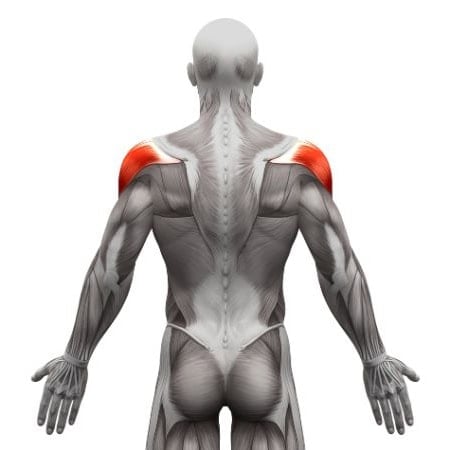
Rear delt
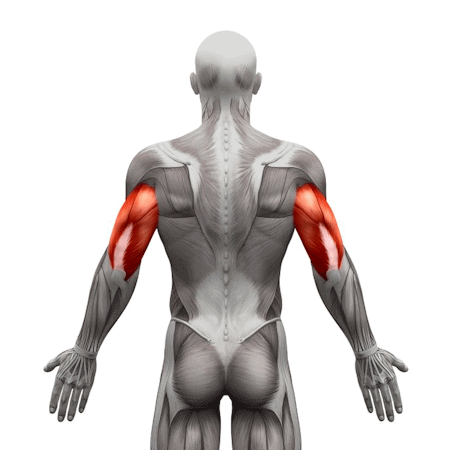
Triceps
Secondary Muscle(s):
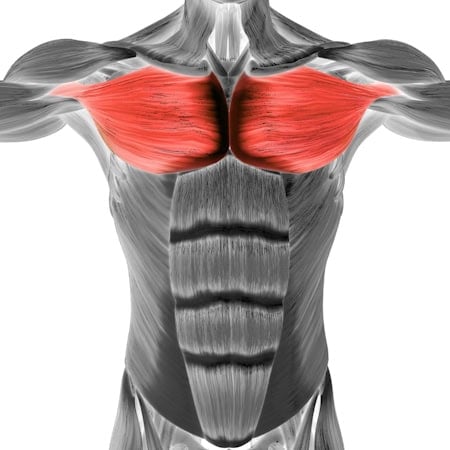
Upper chest
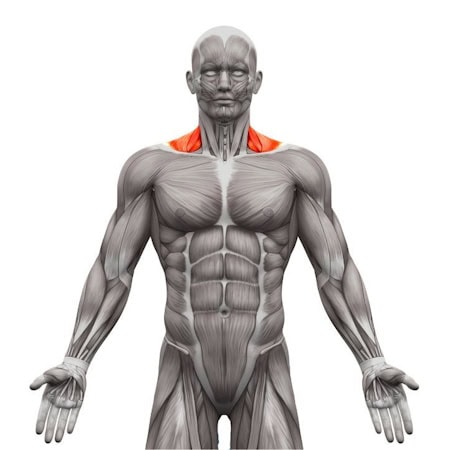
Trapezius
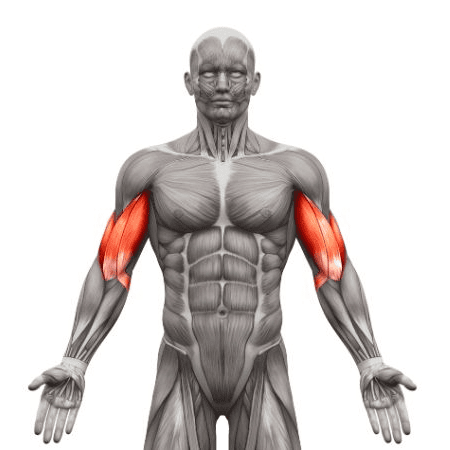
Biceps
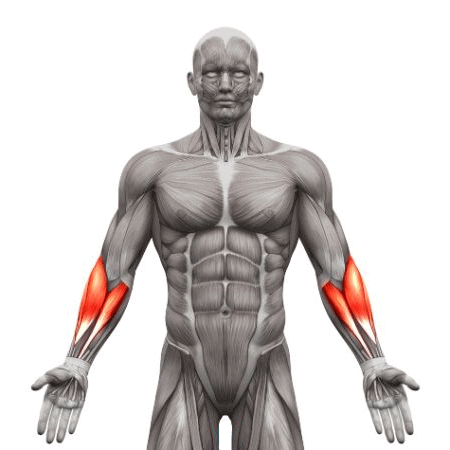
Forearm
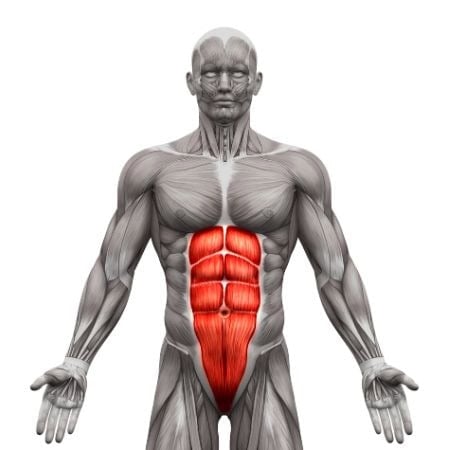
Abdominal
Equipment needed for Ring Victorian Hold
Adjust the difficulty of Ring Victorian Hold
How to make Ring Victorian Hold harder?
How to make Ring Victorian Hold easier?
How to make Ring Victorian Hold harder?
To make Ring Victorian Hold harder:
-
Reduce counterweight, band or spotter assistance in small measurable increments.
-
Progress from a wide straddle to a narrower straddle and eventually to legs together.
-
Move from a slightly reduced partial angle to a body line that is completely horizontal at ring height.
-
Extend the hold beyond two seconds only while preserving strict elbow and body alignment.
-
Enter the assisted Victorian through an increasingly slow and controlled negative.
-
Perform an unassisted Victorian negative while a coach controls the exit.
-
Pull into the Victorian from a controlled lower position without using momentum.
-
Leave the Victorian through a controlled strength transition instead of immediately reducing the body lever.
-
Perform repeated Victorian holds with complete stabilization between repetitions.
-
Progress toward named Victorian entries and transitions only under specialist gymnastics coaching.
How to make Ring Victorian Hold easier?
To make Ring Victorian Hold easier:
-
Use a counterweight pulley system to unload enough bodyweight to preserve straight elbows and the full target position.
-
Ask a qualified coach to provide balanced assistance at the pelvis or upper legs.
-
Set the rings low and support your heels or lower legs on a stable padded surface.
-
Use a straddle leg position to shorten the effective body lever before bringing the legs together.
-
Practise a coach-controlled partial position that reduces the load while preserving the target arm alignment.
-
Perform shorter assisted holds and end each repetition before the rings or elbows lose position.
-
Build the shoulder pattern with assisted Wide Front Lever holds before moving the rings fully beside the body.
-
Use cable or dumbbell Victorian preconditioning exercises after learning their setup from a qualified coach.
-
Use a robust resistance band beneath the hips only as part of a controlled setup with an independent safe exit.
-
Increase the assistance whenever the hips sag, an elbow bends or one ring drops below the other.