
Straddle Human Flag
How to do Straddle Human Flag?
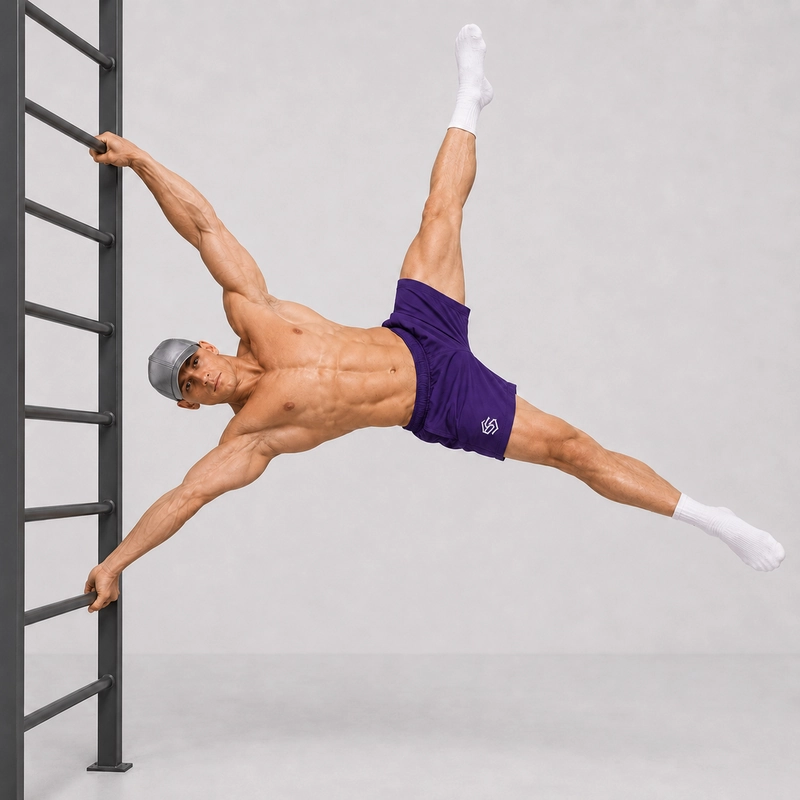
The straddle human flag is an advanced calisthenics skill in which you hold your body sideways while gripping a secure vertical structure and spreading your straight legs into a wide V. The top arm pulls against the structure, the bottom arm pushes away and the trunk keeps the shoulders and hips approximately parallel to the ground.
Separating the legs can reduce the effective leverage created by the lower body, which generally makes the straddle variation more manageable than the legs-together full human flag. However, it remains a demanding straight-arm skill requiring strong shoulders, lats, obliques, grip and full-body control.
The straddle human flag is most useful as a bridge between tuck or one-leg variations and the full position. If you are still developing the required strength and technique, follow our complete human flag progression guide before attempting unsupported horizontal holds.
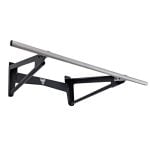
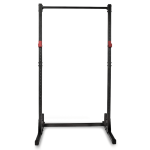
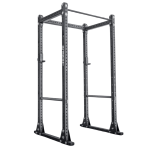
Use a rigid vertical pole, stall bar or similarly secure structure with enough space for your entire body. The equipment must be dry, stable and capable of supporting force in multiple directions.
How to perform a straddle human flag
- Position your hands: Place both hands on the structure with one directly above the other. Use a wide enough distance between the hands to generate strong opposing push-and-pull forces without losing shoulder control.
- Establish your grip: Use the grip orientation you have already practised during easier human flag variations. On a vertical pole, many athletes use an overhand grip with the top hand and an underhand grip with the bottom hand.
- Activate both shoulders: Pull firmly with the top arm while pushing the structure away with the bottom arm. Fully extend both elbows and maintain active pressure through the shoulders.
- Enter the position: Move into the flag from a controlled tuck, supported high flag or carefully practised kick-up. Avoid throwing the legs so forcefully that your body rotates past the target position.
- Open into a straddle: Extend both knees and separate the legs into a wide V as you bring the hips and torso toward horizontal. Keep the legs in the same plane as the rest of your body.
- Hold the flag: Brace the abdominals and obliques, squeeze the glutes and keep the hips aligned with the shoulders. Continue pulling with the top arm and pushing with the bottom arm throughout the hold.
- Maintain the finishing position: Hold with straight elbows, straight knees, pointed toes and a controlled, approximately horizontal body line without either foot touching the equipment or ground.
- Exit under control: Return to a tuck or supported position and place the feet securely on the ground before releasing either hand.
What counts as a clean straddle human flag?
A clean repetition has vertically aligned hands, fully extended elbows, active shoulders and a stable torso with the hips approximately level with the shoulders. Both knees remain straight, the straddle is controlled and the athlete exits the position without falling or twisting away from the structure.
Common mistakes to avoid
- Bending the top elbow: Maintain a continuous straight-arm pull instead of trying to hold the body with an improvised one-arm pull-up.
- Collapsing through the bottom shoulder: Push the structure away actively and keep the bottom elbow locked rather than allowing the shoulder to move toward the hand.
- Opening the legs without lifting the hips: A wide straddle does not compensate for hips that remain substantially below the shoulders.
- Piking at the hips: Brace the trunk and squeeze the glutes so the torso and pelvis remain connected instead of folding forward.
- Rotating the chest: Keep the shoulders and hips stacked in the same plane rather than turning the chest toward the ground or sky.
- Bending the knees: Contract the quadriceps and point the toes so both legs remain long and controlled.
- Using an uncontrolled kick-up: Generate only enough momentum to enter the position and avoid swinging past horizontal.
- Holding after technique fails: End the attempt when an elbow bends, the bottom shoulder collapses or the hips can no longer remain aligned.
- Training only the preferred side: Practise both orientations, even if one side initially feels much more coordinated.
Benefits of the straddle human flag
- Creates a practical bridge to the full human flag: The wide leg position reduces the effective leverage while preserving the essential horizontal flag mechanics.
- Develops opposing straight-arm strength: The exercise trains the top arm to pull while the bottom arm pushes against the same structure.
- Strengthens the lateral core: The obliques and other trunk muscles work isometrically to prevent the hips and legs from dropping.
- Improves human flag positioning: The variation gives you an opportunity to practise hand alignment, shoulder activation and body orientation before bringing the legs together.
- Develops active straddle control: Holding the legs apart challenges the hip abductors, quadriceps and other pelvic stabilizers.
- Builds full-body coordination: The arms, shoulders, trunk, hips and legs must produce different actions while maintaining one stable position.
Readiness and safety
Before attempting an unsupported straddle human flag, you should be able to control an easier feet-assisted, band-assisted, tuck or one-leg flag variation with straight elbows. Supporting exercises such as the strict pull-up, chest-to-wall handstand and hollow body hold can help develop relevant pulling, pushing and trunk strength. Use short attempts and generous rest so fatigue does not compromise your grip or shoulder position. Stop if you experience sharp pain, joint instability, tingling or numbness, and seek qualified medical advice if symptoms persist.
Frequently asked questions
Is the straddle human flag easier than the full human flag?
It generally is. Spreading the legs reduces their horizontal projection and can move the lower body's combined center of mass closer to the grip axis. This reduces the effective leverage compared with holding both legs together, although the difference depends on your straddle mobility and control.
How wide should the straddle be?
Use the widest active straddle you can maintain with straight knees, square hips and controlled legs. Do not force a maximum passive split if it causes the pelvis to rotate or makes the position less stable.
How long should I hold the straddle human flag?
A practical starting point is three to five sets of technically clean three-to-eight-second holds per side with approximately two to three minutes of rest. End each attempt before your elbows bend, shoulder position collapses or hips drop substantially.
How do I progress from the straddle to the full human flag?
Gradually narrow the distance between your feet while preserving the same horizontal alignment. You can also perform controlled straddle negatives and pause briefly with the legs progressively closer together.
Should I practise the human flag on both sides?
Yes. The two arms perform different roles, so changing sides exposes each shoulder and arm to both the pulling and pushing positions. You can give the weaker side slightly more technical practice, but avoid doubling its total workload abruptly.
Tips for the proper execution of Straddle Human Flag
Align the top and bottom hands vertically so your body does not rotate around the structure.
Pull continuously with the top arm while pushing the structure away with the bottom arm.
Keep both elbows fully extended throughout the entry, hold and exit.
Maintain active pressure through the bottom shoulder instead of allowing it to collapse toward the hand.
Open the legs into the widest straddle you can actively control without rotating the pelvis.
Straighten the knees, contract the quadriceps and point the toes to create clean leg lines.
Brace the obliques and squeeze the glutes to keep the hips aligned with the shoulders.
Keep the chest, hips and legs in the same plane rather than rotating toward the ground or sky.
Use only enough momentum to enter the position without swinging past horizontal.
Keep your head neutral and look forward rather than excessively lifting or dropping the chin.
Practise both sides so each arm develops experience in the top pulling and bottom pushing roles.
Use short, high-quality holds and finish the attempt as soon as your alignment deteriorates.
Return the feet to a secure surface before releasing either hand.
Stop the exercise if it causes sharp joint pain, instability, tingling or numbness.
Muscles worked when doing Straddle Human Flag
The straddle human flag is a full-body isometric exercise in which the upper and lower arms perform opposing actions. The top arm pulls against the structure, the bottom arm pushes away and the trunk resists the tendency of the hips and legs to fall toward the ground.
Primary muscles
- Latissimus dorsi: The lat on the top-arm side contributes substantially to the straight-arm pulling force that supports the upper end of the body.
- Deltoids: The shoulders stabilize both arms, with particularly high demand on the bottom shoulder as it pushes the structure away.
- Obliques: The internal and external obliques resist lateral flexion and help keep the hips aligned with the shoulders.
- Rectus abdominis and transverse abdominis: These muscles brace the torso and help prevent excessive spinal extension or loss of pelvic control.
Secondary muscles
- Serratus anterior: The serratus supports the active pushing position and scapular control of the bottom shoulder.
- Trapezius and other scapular stabilizers: These muscles control the shoulder blades while the arms apply opposing forces.
- Teres major: The teres major assists the latissimus dorsi in the top-arm pulling action.
- Triceps: The triceps contract isometrically to maintain elbow extension, particularly in the bottom arm.
- Forearms and hand muscles: These muscles maintain both grips and resist slipping or unwanted wrist rotation.
- Quadratus lumborum and spinal erectors: These trunk muscles assist the obliques in resisting side bending and maintaining torso alignment.
- Gluteus medius and other hip abductors: These muscles actively hold the legs apart and help stabilize the pelvis in the straddle position.
- Gluteus maximus: The glutes help maintain hip extension and prevent the body from folding at the pelvis.
- Quadriceps: The quadriceps keep both knees extended throughout the hold.
- Hip adductors: The adductors contribute to controlled leg positioning and prevent the straddle from becoming unstable.
The upper-body and trunk demands remain similar to those of the full human flag. The main difference is the wide leg position, which increases the active mobility and stabilization required around the hips while reducing the effective leverage of the lower body.
Primary Muscle(s):
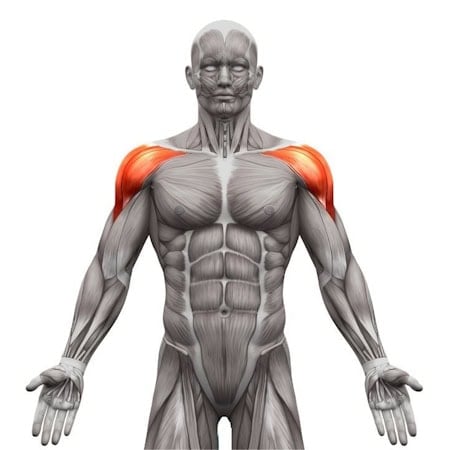
Anterior delt
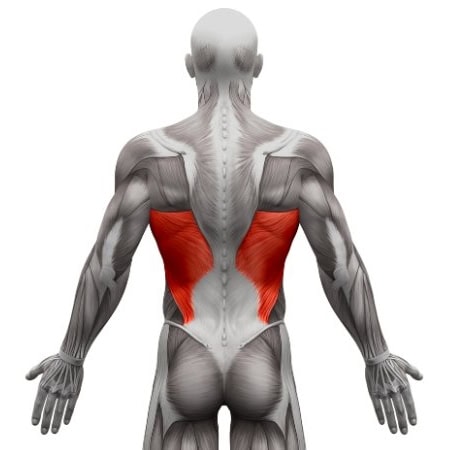
Lats
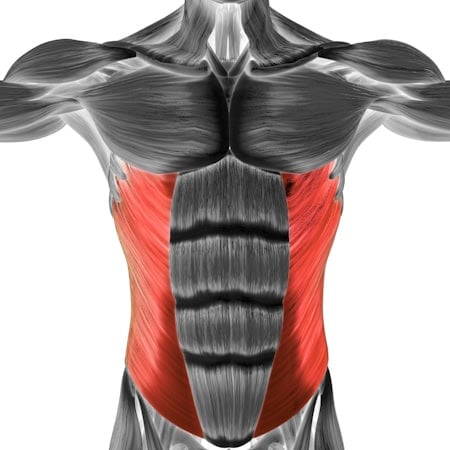
Oblique
Secondary Muscle(s):
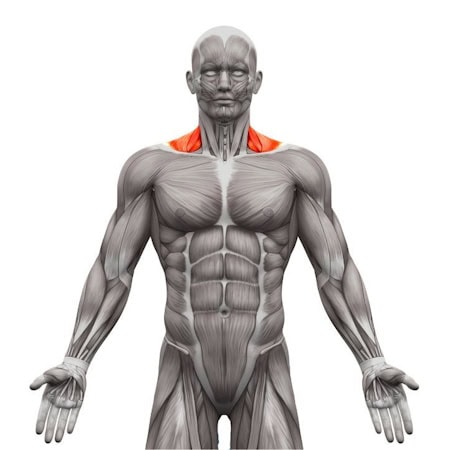
Trapezius
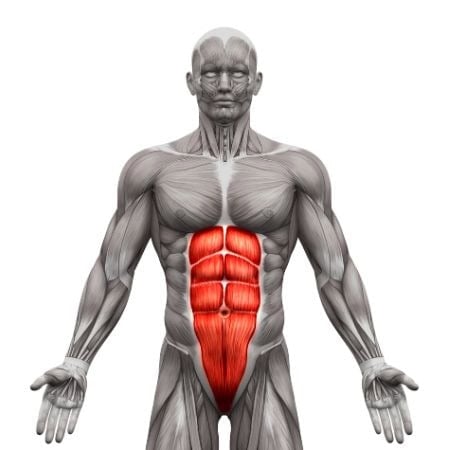
Abdominal
Equipment needed for Straddle Human Flag
Adjust the difficulty of Straddle Human Flag
How to make Straddle Human Flag harder?
How to make Straddle Human Flag easier?
How to make Straddle Human Flag harder?
To make Straddle Human Flag harder:
-
Gradually narrow the straddle until the legs can remain together in a full human flag.
-
Increase the duration of each hold while preserving straight elbows and horizontal alignment.
-
Lower slowly from a high straddle flag through the horizontal position.
-
Perform controlled straddle human flag raises between a lower angle and horizontal.
-
Pause at horizontal during a controlled negative before continuing the descent.
-
Enter the straddle flag with progressively less momentum.
-
Transition slowly between the tuck, one-leg, straddle and full human flag positions.
-
Perform the full human flag with the legs completely together after mastering the straddle variation.
How to make Straddle Human Flag easier?
To make Straddle Human Flag easier:
-
Practise a feet-assisted flag plank while learning to pull with the top arm and push with the bottom arm.
-
Use a resistance band to support the hips or legs while maintaining the straddle position.
-
Perform a tuck human flag with both knees drawn toward the torso to shorten the lever further.
-
Use a one-leg human flag with one knee tucked and the opposite leg extended.
-
Practise a bent-knee straddle flag before gradually straightening both legs.
-
Hold a downward-angled straddle flag instead of immediately trying to become parallel to the ground.
-
Start from a supported high flag and lower only as far as you can maintain straight elbows and active shoulders.
-
Increase the width of your straddle while keeping the knees straight and the pelvis controlled.