
Band-Assisted Parallel Bar Dip
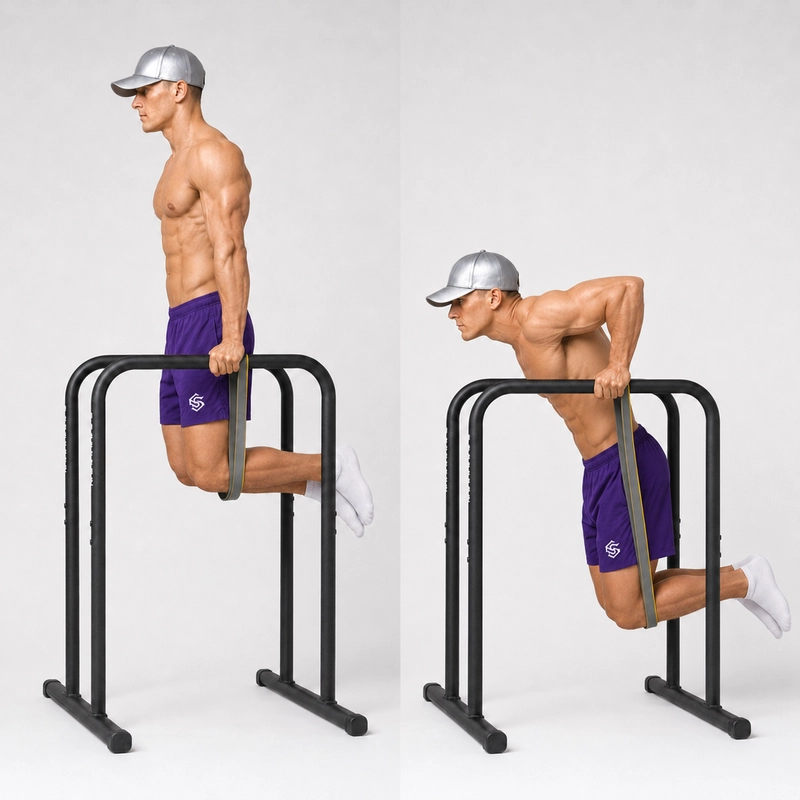
How to do Band-Assisted Parallel Bar Dip?
The band-assisted parallel bar dip is a regression of the strict parallel bar dip. A resistance band supports part of your bodyweight, allowing you to practise the same support position, controlled descent, bottom depth and full lockout before you are strong enough to perform every repetition without assistance.
Band assistance is not uniform throughout the repetition. The band stretches further and provides more support near the bottom, where the dip is usually hardest, while contributing less assistance as you return to the top. Different resistance-band strengths therefore create a measurable progression: begin with enough assistance to maintain proper form, then move to a thinner band as your strength improves.
Parallel bars provide a more stable learning environment than gymnastics rings. Once you can perform consistent strict dips on fixed bars, you can introduce the additional stabilization demands of band-assisted ring dips and eventually strict ring dips.
If your goal is to achieve your first unassisted repetitions, the six-week dip workout plan combines assisted dips with support holds, pushing exercises and progressive strength work. Athletes training at home should use stable equipment with sufficient height and leg clearance; see our guide to choosing the best dip bars for home workouts.
Readiness: You should be able to support some of your weight between the bars with straight arms. Check the band for cuts, cracks or excessive wear before every session, and stop the exercise if you experience sharp pain or instability in the shoulders, elbows or wrists.
Tips for the proper execution of Band-Assisted Parallel Bar Dip
Inspect the band and test its attachment before every set.
Use a stable step or box to enter the bars instead of jumping into position.
Keep the band centered beneath both knees throughout the repetition.
Begin and finish every repetition with fully extended elbows.
Press the shoulders down away from the ears in the top support.
Lower slowly and do not bounce against the resistance band.
Let the torso incline slightly while the elbows travel mostly backward.
Descend to approximately shoulder-to-elbow height when comfortable.
Keep the abdomen braced and the legs quiet.
Progress by using a thinner band, not by sacrificing depth or control.
Return your feet to a secure surface before removing your knees from the band.
Muscles worked when doing Band-Assisted Parallel Bar Dip
Band-assisted parallel bar dips train the same fundamental movement pattern as strict bodyweight dips. The resistance band changes the amount of bodyweight being lifted, but it does not change the principal pressing muscles responsible for the exercise.
Primary Muscles
- Pectoralis major: The chest contributes strongly as the upper arms move toward the torso during the press. The lower, sternocostal portion is particularly involved in the parallel bar dip position.
- Triceps brachii: Extend the elbows and complete the movement from the bottom position to the top lockout.
Secondary Muscles
- Anterior deltoids: Assist the pressing action and help control the shoulder as the body travels between the bars.
- Scapular stabilizers: The trapezius, serratus anterior and other shoulder-girdle muscles maintain an active support position.
- Forearms and hand muscles: Stabilize the wrists and maintain a secure grip on the bars.
- Abdominals and obliques: Brace the torso and limit swinging or unwanted rotation.
- Glutes and hip stabilizers: Help keep the lower body quiet while the knees remain supported by the band.
The band generally supplies its greatest assistance near the bottom of the dip because it is most stretched there. As a result, the chest, shoulders and triceps must contribute progressively more as the body approaches the top lockout.
Primary Muscle(s):
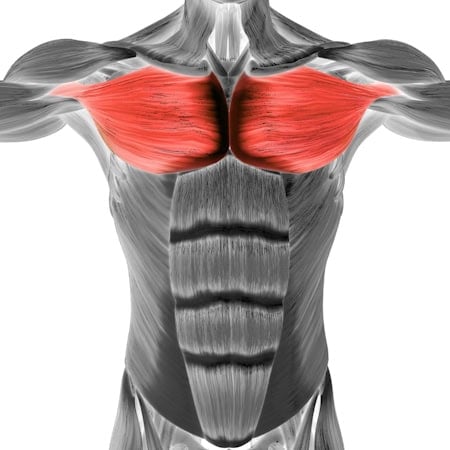
Lower chest
Secondary Muscle(s):
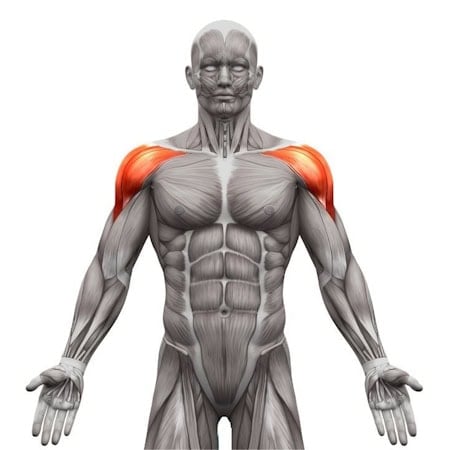
Anterior delt
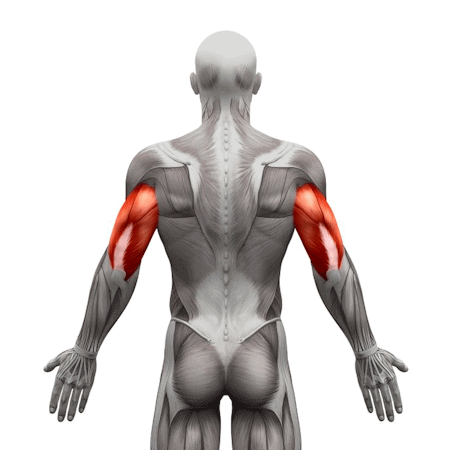
Triceps
Equipment needed for Band-Assisted Parallel Bar Dip
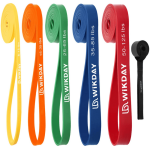
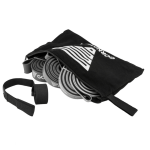
Adjust the difficulty of Band-Assisted Parallel Bar Dip
How to make Band-Assisted Parallel Bar Dip harder?
How to make Band-Assisted Parallel Bar Dip easier?
How to make Band-Assisted Parallel Bar Dip harder?
To make Band-Assisted Parallel Bar Dip harder:
-
Use a thinner resistance band.
-
Lower for three to five seconds on each repetition.
-
Pause for one to two seconds at the bottom without relaxing into the band.
-
Complete more repetitions with the same band and technique standard.
-
Progress to strict parallel bar dips without assistance.
-
Progress to band-assisted ring dips for a greater stabilization challenge.
How to make Band-Assisted Parallel Bar Dip easier?
To make Band-Assisted Parallel Bar Dip easier:
-
Use a thicker resistance band that provides more assistance.
-
Perform feet-assisted parallel bar dips with a box beneath the feet.
-
Temporarily reduce the range of motion and increase it gradually.
-
Practise locked-arm parallel bar support holds.
-
Perform assisted dip negatives and use the box to return to the top.
-
Use an assisted dip machine with a selectable counterweight.