
Shrimp Squat
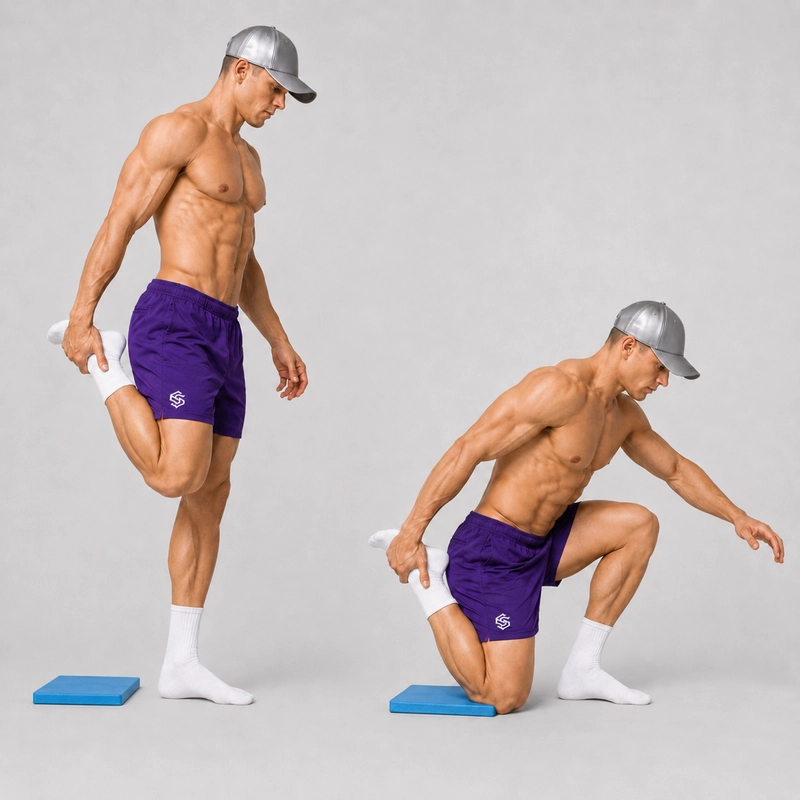
How to do Shrimp Squat?
The shrimp squat is a challenging single-leg squat in which you hold your non-working foot behind your body, balance on the opposite leg and lower your rear knee toward the floor. Unlike the pistol squat, where the free leg extends forward, the folded rear-leg position creates a different balance challenge and removes the need to hold one leg straight in front of you.
The exercise primarily develops unilateral quadriceps and glute strength while also challenging balance, ankle control and coordination. A systematic review of single-leg tasks found meaningful associations between gluteal muscle activation and control of the hip and knee, particularly during single-leg squats.
The shrimp squat is more demanding than a conventional split squat because the rear leg cannot provide support. It can be used as an alternative or complementary progression to the pistol squat, while the more complex dragon squat introduces additional rotation and mobility requirements.
You should first be able to perform controlled bodyweight squats, split squats and assisted single-leg squats without pain. The exercise requires the working leg to tolerate deep knee and hip flexion while the rear knee remains fully bent. Reduce the depth or choose an easier variation if you experience sharp pain, joint instability or an uncomfortable pulling sensation around either knee.
Tips for the proper execution of Shrimp Squat
Warm up your ankles, knees and hips before practising deep shrimp squats.
Use the hand on the same side as the rear leg to hold the foot behind your body.
Extend your free arm forward to provide a counterbalance during the descent.
Maintain contact through the heel, base of the big toe and base of the little toe of the working foot.
Guide the working knee in approximately the same direction as the toes throughout the repetition.
Allow a natural forward torso lean instead of forcing your chest to remain completely upright.
Lower under control and touch the rear knee down gently rather than dropping onto it.
Use a folded mat beneath the rear knee when training on a hard surface.
Regain your balance at the top before beginning the next repetition.
Train both sides and use the depth that your weaker or less mobile side can control.
Muscles worked when doing Shrimp Squat
The shrimp squat primarily trains the knee and hip extensors of the working leg. Because the exercise is performed on one foot, the muscles controlling the pelvis, ankle and trunk must also work continuously to keep the body balanced.
Primary Muscles
- Quadriceps: The quadriceps control knee flexion as you descend and extend the working knee as you return to standing.
- Gluteus maximus: The gluteus maximus controls hip flexion during the lowering phase and produces hip extension during the ascent.
Secondary and Stabilizing Muscles
- Gluteus medius and minimus: These muscles stabilize the pelvis and help control the position of the working thigh during the single-leg stance.
- Adductors: The inner-thigh muscles help stabilize the femur and can contribute to hip extension from the bottom position.
- Hamstrings: The hamstrings assist with hip extension and help stabilize the knee and hip, while the hamstrings of the rear leg help maintain knee flexion.
- Soleus and gastrocnemius: The calf muscles control the ankle as the working knee moves forward and help maintain balance over the foot.
- Tibialis anterior and foot muscles: These muscles assist with ankle control and help maintain a stable base of support.
- Abdominals and spinal stabilizers: The trunk muscles resist unwanted rotation and keep the torso controlled over the working leg.
The location of the free leg matters. A study comparing different single-leg squat positions found that changing the non-stance leg altered activation of the gluteus maximus, gluteus medius, hamstrings, rectus femoris and other hip muscles, as well as hip and knee kinetics. This helps explain why the shrimp squat and pistol squat can feel substantially different despite both being single-leg squats. See the published single-leg squat study for details.
Primary Muscle(s):
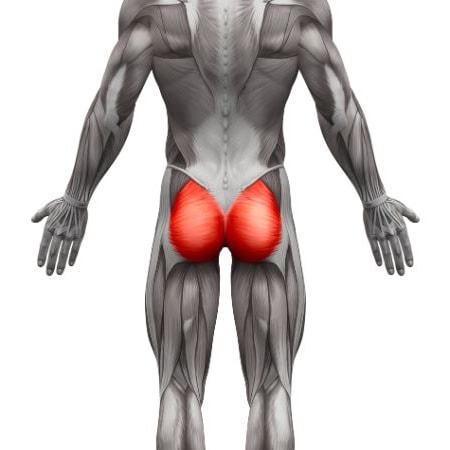
Glutes
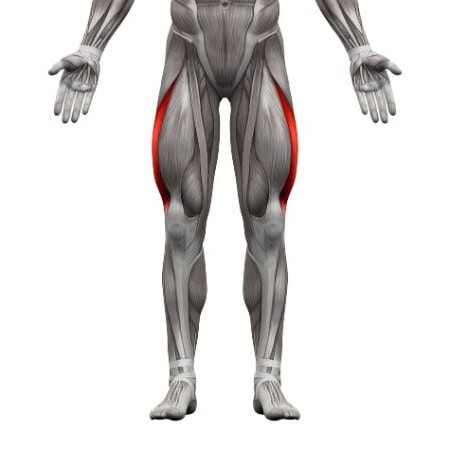
Quads
Secondary Muscle(s):
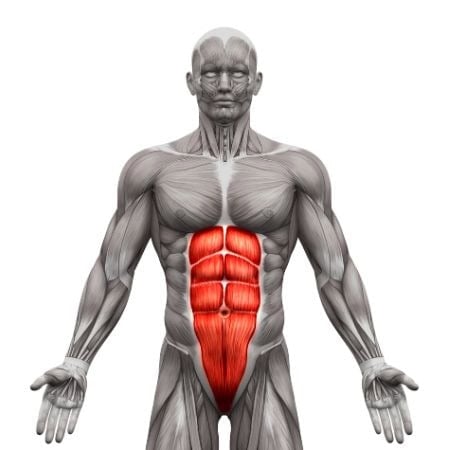
Abdominal
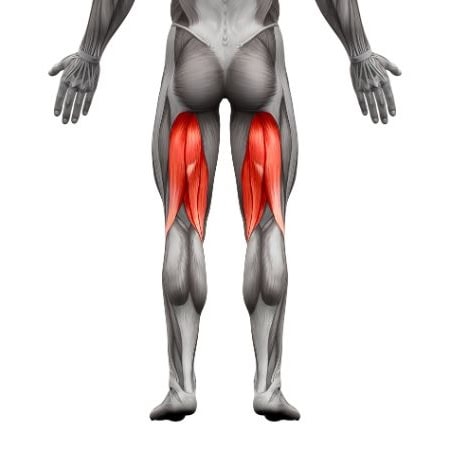
Hamstring
Equipment needed for Shrimp Squat
No equipment needed for this exercise.
Adjust the difficulty of Shrimp Squat
How to make Shrimp Squat harder?
How to make Shrimp Squat easier?
How to make Shrimp Squat harder?
To make Shrimp Squat harder:
-
Take three to five seconds to complete the lowering phase of each repetition.
-
Pause with the rear knee just above the floor before returning to standing.
-
Maintain a gentle rear-knee touch without transferring any body weight onto the floor.
-
Stand on a low platform and lower the rear knee below the level of the working foot.
-
Hold a light dumbbell or kettlebell in the free hand while maintaining the same technique.
-
Wear a weighted vest to increase resistance without occupying the counterbalancing arm.
-
Perform one-and-a-half repetitions by rising halfway from the bottom, descending again and then standing fully.
How to make Shrimp Squat easier?
To make Shrimp Squat easier:
-
Perform the shrimp squat beside a stable support and use your free hand for balance and assistance.
-
Lower through a partial range of motion and increase the depth only as your control improves.
-
Place a thick pad beneath the rear knee to reduce the required depth.
-
Practise single-leg squat negatives by lowering slowly and using both feet to return to standing.
-
Perform the movement without holding the rear foot so the free leg can help you balance.
-
Use a strap around the rear ankle if holding the foot directly restricts your position.
-
Build unilateral strength with split squats and box step-ups before returning to the shrimp squat.