
Typewriter Pull-Up
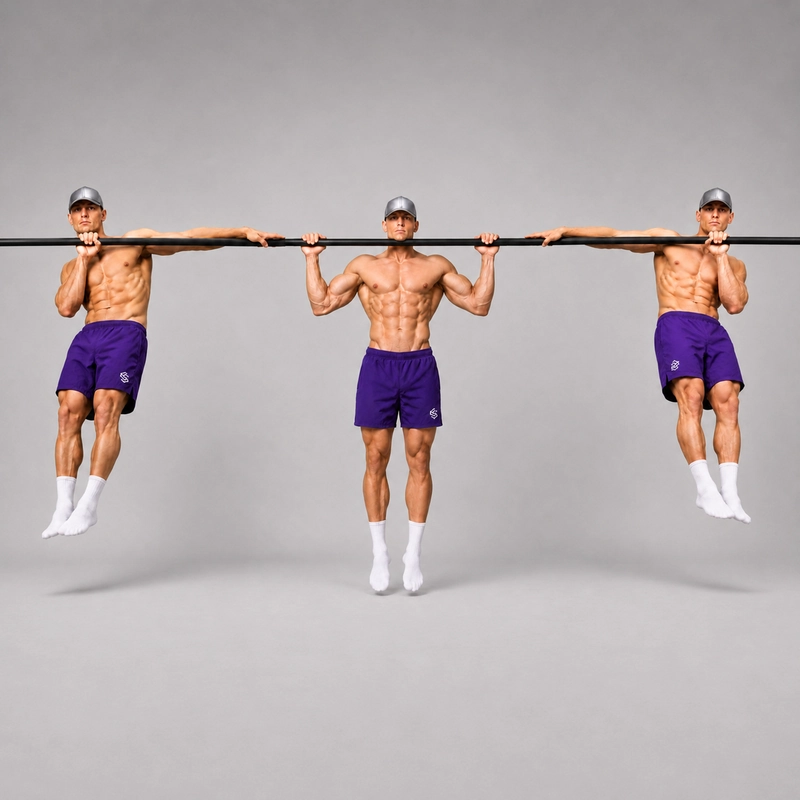
How to do Typewriter Pull-Up?
The typewriter pull-up is an advanced pull-up variation performed by pulling into a high position and moving your upper body horizontally from one hand to the other. As your body approaches one hand, that arm bends while the opposite arm straightens, creating the side-to-side motion that gives the exercise its name.
Unlike an archer pull-up, which normally finishes after pulling toward one hand, the typewriter pull-up requires you to remain near the top of the bar while transferring your weight between both sides. It also differs from the triangle pull-up, which combines a diagonal pull toward one hand, a lateral transition and a descent from the opposite side.
The typewriter pull-up develops unilateral pulling strength without removing the assistance of either hand completely. Before attempting it, build repeatable strict pull-ups, controlled top-position holds and enough strength to perform a wide pull-up without swinging or shortening the range of motion.
Use a secure pull-up bar that is wide enough for your hands to remain outside shoulder width and for your body to move between them. The bar should provide enough overhead and ground clearance for a complete hang.
How to perform a typewriter pull-up
- Take a wide overhand grip: Grip the bar with your palms facing away and your hands wider than shoulder width, leaving enough space for a controlled lateral transition.
- Establish an active hang: Fully extend your elbows, engage your shoulders and brace your abdominals, glutes and legs to minimize swinging.
- Pull into a high position: Drive your elbows down and pull your upper chest toward the bar until your chin is clearly above it.
- Move toward the first hand: Shift your chest toward one hand by bending that arm further and gradually straightening the opposite arm.
- Transfer across the bar: Keep your body high as you move laterally toward the other hand. The first arm gradually straightens while the second arm bends and accepts more of your bodyweight.
- Complete the side-to-side cycle: Move back toward the starting hand while maintaining control and keeping the upper chest close to the bar.
- Return to the center: Bring your weight back between both hands and allow the elbows to share the load evenly.
- Lower under control: Extend both elbows gradually and return to an active hang without dropping or swinging into the next repetition.
What counts as one repetition?
For consistent tracking, count one complete cycle as pulling to the top, moving from the first side to the second side, returning to the first side and then lowering under control. You can also count each single lateral transfer, but choose one method and use it consistently across your workouts.
What counts as a clean typewriter pull-up?
A clean repetition begins and ends with extended elbows, keeps the chin at or above bar height during the lateral transitions and visibly shifts the chest toward both hands. The body remains controlled without kipping, excessive rotation or a large drop between sides.
Common mistakes to avoid
- Pulling too low: Reach a sufficiently high position before moving sideways so the bar does not block the lateral transition.
- Dropping between sides: Keep pulling against the bar throughout the transfer instead of turning the exercise into two partial pull-ups.
- Moving only the head: Shift your chest and torso toward each hand rather than simply stretching your neck past the bar.
- Using a grip that is too narrow: Leave enough space between the hands for one arm to extend as you approach the opposite side.
- Using an excessively wide grip: Do not position the hands so widely that you cannot maintain comfortable shoulder control or produce a strong pull.
- Letting the straightening arm become passive: Keep the shoulder active and maintain pressure through the hand even as the elbow approaches extension.
- Twisting toward the bar: Keep the chest facing generally forward instead of rotating one shoulder substantially ahead of the other.
- Swinging the legs: Brace the trunk and pause briefly before pulling if momentum develops.
- Falling into the descent: Return toward the center and lower with both arms instead of suddenly releasing the top position.
- Always starting on the stronger side: Alternate your starting direction so both arms practise accepting the initial lateral transfer.
Benefits of typewriter pull-ups
- Develops unilateral pulling strength: Moving toward one hand shifts a greater share of your bodyweight onto that arm while the other hand continues to provide assistance.
- Builds top-position endurance: The lateral transitions extend the time spent near the most demanding part of the pull-up.
- Improves strength through different arm angles: Each elbow moves between a deeply flexed and nearly extended position while the body remains elevated.
- Develops lateral control: The exercise teaches you to transfer bodyweight smoothly between the arms without losing height.
- Challenges scapular control: The shoulder blades must adapt as the load changes from one side to the other.
- Strengthens the grip and forearms: Both hands remain on the bar during a relatively long and demanding repetition.
- Prepares for advanced unilateral pull-ups: Typewriter pull-ups can contribute to a progression toward assisted and eventual one-arm pull-ups, although they do not replace more specific one-arm training.
Readiness and safety
Attempt the typewriter pull-up only after you can perform repeatable strict pull-ups and controlled chin-over-bar holds without shoulder, elbow or wrist discomfort. The band typewriter pull-up is a useful regression if you can reach the top but cannot maintain enough height during the lateral transfer. Use a stable bar, wrap your thumbs securely and ensure the area below you is clear. Stop the set if you can no longer control the descent or if you experience sharp pain, instability, tingling or numbness.
Frequently asked questions
What is the difference between a typewriter pull-up and an archer pull-up?
An archer pull-up usually involves pulling toward one hand while the opposite arm straightens, followed by a descent. A typewriter pull-up adds a sustained lateral transfer across the bar while the body remains in the top position.
What is the difference between a typewriter pull-up and a triangle pull-up?
The typewriter pull-up emphasizes repeated horizontal movement while remaining near the top of the bar. The triangle pull-up follows a more defined path: pull diagonally toward one hand, move across the bar and lower from the opposite side.
How wide should my grip be?
Use a grip wide enough to let one arm approach full extension when your chest reaches the opposite hand. The ideal width depends on your arm length and shoulder comfort, so increase it gradually rather than immediately using the widest possible grip.
Should my chin stay above the bar?
For a clean repetition, keep the chin at or above bar height during the lateral movement. If you consistently drop below the bar, use a resistance band, reduce the transition distance or practise shorter top-position holds.
Are typewriter pull-ups good for achieving a one-arm pull-up?
They can help develop unilateral strength, top-position endurance and weight-transfer control. However, a complete one-arm pull-up progression should also include specific assisted one-arm pulls, isometric holds and controlled one-arm eccentrics appropriate to your current ability.
Can typewriter pull-ups be performed on gymnastics rings?
Yes, but the independently moving rings change the exercise substantially. They allow the hands to rotate and require you to control both the lateral body movement and the position of each ring, which is why the ring typewriter pull-up is best treated as a separate exercise variation.
Tips for the proper execution of Typewriter Pull-Up
Use a wide overhand grip that provides enough space for a complete lateral transition.
Reach a high pull-up position before beginning the side-to-side movement.
Keep your upper chest close to the bar throughout the lateral transfer.
Move your torso toward each hand instead of reaching with your head or neck.
Gradually straighten the arm you are moving away from while bending the arm you are approaching.
Keep both shoulders active even when one elbow is nearly fully extended.
Brace your abdominals, glutes and legs to prevent swinging or twisting.
Move smoothly across the bar without dropping between sides.
Alternate which hand you approach first across your sets.
Return toward the center before beginning the controlled descent.
Use a resistance band if you cannot maintain sufficient height during the transition.
End the set when you can no longer control the lateral movement or descent.
Muscles worked when doing Typewriter Pull-Up
The typewriter pull-up combines a concentric vertical pull, isometric top-position control, lateral weight transfer and a controlled eccentric descent. Both sides work throughout the exercise, but the distribution of the load changes continuously as the body moves between the hands.
Primary muscles
- Latissimus dorsi: The lats produce much of the vertical pulling force and help control the body as the load shifts from one side to the other.
- Biceps brachii: The biceps flex the elbow and work especially hard in the arm toward which the body is moving.
- Brachialis and brachioradialis: These elbow flexors assist the biceps during the initial pull and lateral transitions.
- Trapezius and rhomboids: These upper-back muscles control the shoulder blades and help keep the upper chest elevated near the bar.
Secondary muscles
- Teres major: The teres major assists the lats with upper-arm movement during the pull and transfer.
- Posterior deltoids: The rear deltoids contribute to shoulder extension and help control the changing arm positions.
- Rotator-cuff muscles: These muscles stabilize the shoulder joints as the load shifts laterally.
- Forearms and hand muscles: The grip muscles maintain contact with the bar throughout the extended repetition.
- Rectus abdominis and transverse abdominis: These muscles brace the trunk and help prevent excessive arching or swinging.
- Obliques: The obliques resist unwanted rotation as the body travels between the hands.
- Glutes and quadriceps: These muscles keep the lower body organized and reduce momentum from the hips and legs.
The arm nearest the body carries more of the load at each end of the movement, but the straighter arm remains active and continues to assist. A typewriter pull-up is therefore an asymmetrically loaded two-arm exercise rather than a true one-arm pull-up.
Primary Muscle(s):
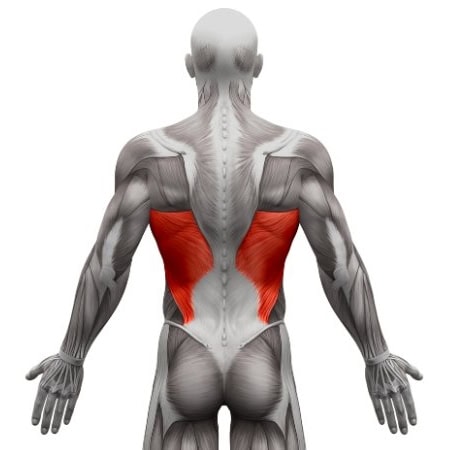
Lats
Secondary Muscle(s):
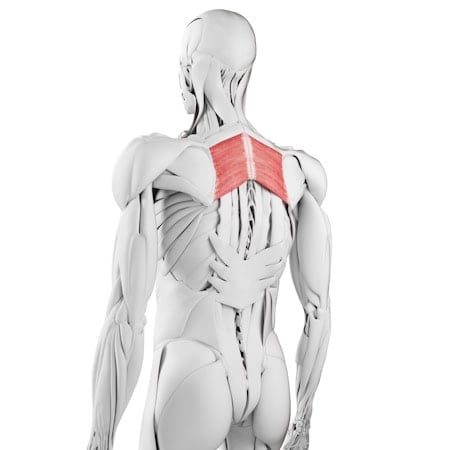
Rhomboid
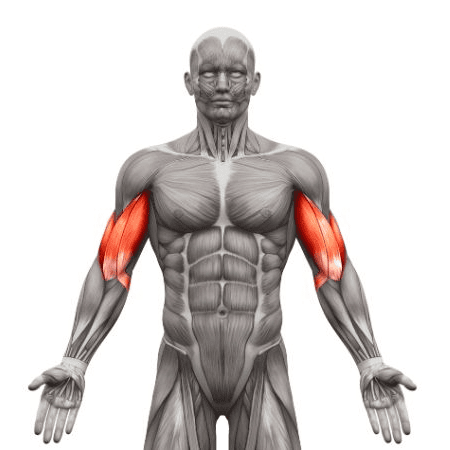
Biceps
Equipment needed for Typewriter Pull-Up
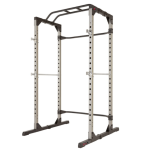
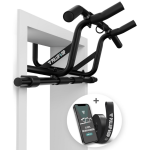
Adjust the difficulty of Typewriter Pull-Up
How to make Typewriter Pull-Up harder?
How to make Typewriter Pull-Up easier?
How to make Typewriter Pull-Up harder?
To make Typewriter Pull-Up harder:
-
Slow the lateral transition while keeping your chin above the bar.
-
Pause near each hand before moving back across the bar.
-
Perform multiple side-to-side cycles before lowering from the top position.
-
Increase the amount of weight shifted onto the bending arm while keeping the opposite elbow straight.
-
Use a slightly wider grip if you can maintain comfortable and controlled shoulder positions.
-
Add a slow eccentric phase after completing the lateral transitions.
-
Perform consecutive repetitions without resting in a passive hang.
-
Add a small amount of external resistance only after you can repeat strict bodyweight cycles consistently.
-
Progress to assisted one-arm pull-ups that reduce the contribution of the second arm.
-
Progress toward controlled one-arm isometric holds and one-arm pull-up negatives.
How to make Typewriter Pull-Up easier?
To make Typewriter Pull-Up easier:
-
Build repeatable strict pull-ups before adding lateral movement.
-
Practise wide pull-ups to become comfortable pulling with the required hand spacing.
-
Hold the top of a pull-up with your chin above the bar before attempting to move sideways.
-
Perform small lateral weight shifts and gradually increase the distance between sides.
-
Use the band typewriter pull-up to reduce the percentage of bodyweight being moved.
-
Place a resistance band around the bar and under your feet or knees for general assistance.
-
Use a plyometric box for light foot assistance during the pull and lateral transition.
-
Perform single archer pull-ups before combining both sides in one repetition.
-
Move from one side to the center before progressing to a complete side-to-side transfer.
-
Perform controlled typewriter negatives by starting above the bar and moving laterally before lowering.