
Human Flag Plank
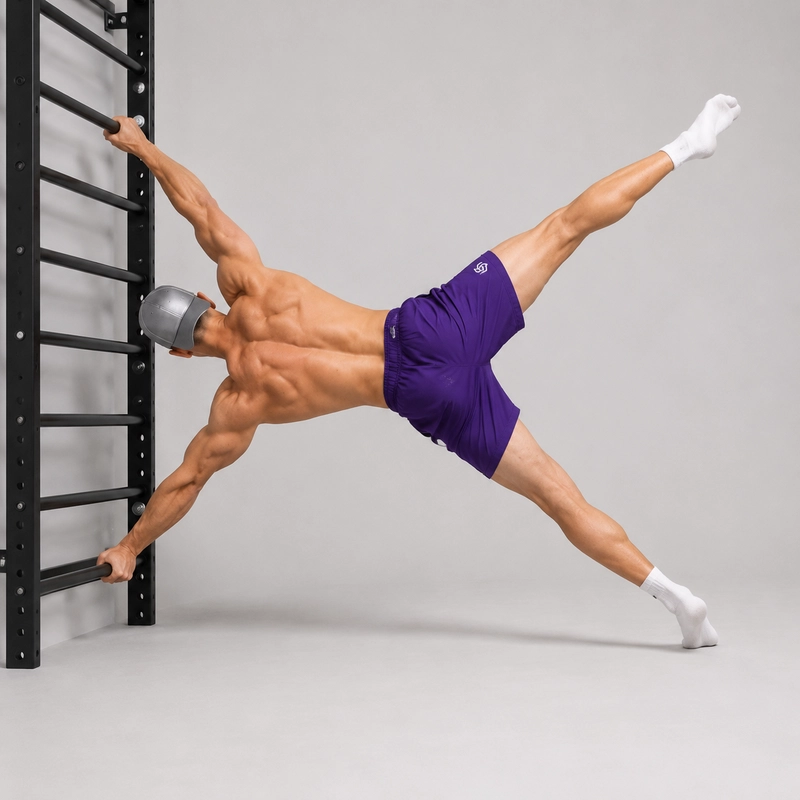
How to do Human Flag Plank?
The human flag plank, also known as a flag plank or foot-assisted human flag, is a beginner-to-intermediate progression for learning the mechanics of the Human Flag. You grip a secure vertical structure with both hands, lean your body sideways and lift one leg while keeping the other foot in contact with the ground.
The goal is to imitate the wide leg position and body alignment of the Straddle Human Flag. The grounded foot supports part of your bodyweight, allowing you to practise pulling with the top arm, pushing with the bottom arm and bracing your lateral core without supporting your entire body in the air.
This is not the same as a conventional side plank. In a side plank, one hand or forearm supports the body from the floor. In the human flag plank, both hands remain on a pole, stall bars or similar structure in the same basic arrangement used for an unsupported human flag.
The exercise is particularly useful because the amount of assistance can be adjusted easily. You can keep your body more upright and press firmly through the grounded foot at first, then gradually lean farther away and reduce how much weight the foot supports. The human flag progression guide provides additional exercises for developing the complete skill.
A foot-supported flag plank is also recommended as an early human flag progression in this human flag technique and progression guide.
How to Do the Human Flag Plank
Equipment and Setup
Use stall bars, a secure vertical pole or two firmly mounted horizontal bars positioned at different heights. The structure must not move, rotate or flex when you pull and push against it. Make sure the floor is dry and provides reliable traction for the supporting foot. Wear shoes with sufficient grip or practise barefoot on a suitable non-slip surface. Complete a general warm-up followed by shoulder, elbow, wrist and trunk preparation. The Joint Warm-Up Routine can be used before beginning your human flag preparation.
Step-by-Step Instructions
- Stand sideways beside the structure with enough open space to lean your body away from it.
- Place your top hand above your head and your bottom hand below it so the two hands are approximately vertically aligned.
- Grip the structure firmly and straighten both elbows.
- Step the foot of your lower leg away from the structure and plant it securely on the floor.
- Pull down continuously with the top arm while pushing the structure away with the bottom arm.
- Lean your torso sideways and move your hips away from the structure while keeping the supporting foot grounded.
- Brace your abdominals and obliques so your shoulders, torso and pelvis remain aligned.
- Lift the upper leg away from the floor and open it into a wide straddle position.
- Straighten both knees, contract your quadriceps and point the toes of the raised leg.
- Continue leaning until your body resembles a foot-assisted straddle human flag while maintaining enough pressure through the grounded foot to remain stable.
- Hold the position without bending your elbows, collapsing into the bottom shoulder or rotating your chest.
- Lower the raised leg under control, bring your torso upright and release the structure only after both feet are stable.
- Turn around and repeat the exercise on the opposite side.
Human Flag Plank Completion Standard
- One foot remains securely in contact with the ground throughout the hold.
- The other leg is lifted and extended into a wide straddle position.
- Both elbows remain fully extended.
- The top arm pulls while the bottom arm pushes the structure away.
- The bottom shoulder remains active instead of collapsing toward the hand.
- The torso and pelvis remain aligned without excessive twisting.
- The hips are lifted as close to the intended flag line as your current strength allows.
- The raised knee remains straight and the leg does not swing.
- The athlete enters and exits the position under control.
Common Mistakes
- Treating it like a passive lean: Pull actively with the top arm and push continuously with the bottom arm.
- Bending the bottom elbow: Move your body closer to upright until you can maintain a straight supporting arm.
- Relaxing the top shoulder: Keep pulling down instead of allowing the top shoulder to rise passively toward your ear.
- Collapsing into the bottom shoulder: Push the structure away and maintain an active shoulder position.
- Keeping the grounded foot too close: Move it farther from the structure if the exercise feels like an upright standing lean.
- Moving the foot too far away: Shorten your stance if your foot begins to slide or you cannot control the position.
- Relying entirely on the grounded leg: Gradually transfer more load into the arms while keeping the foot as controlled assistance.
- Bending the raised knee: Contract the quadriceps and fully extend the free leg.
- Letting the raised leg drift forward: Keep it in approximately the same plane as your chest and pelvis.
- Allowing the hips to sag: Brace your obliques and squeeze your glutes before lifting the free leg.
- Rotating the chest upward or downward: Keep the shoulders and pelvis facing in the same direction.
- Using a slippery surface: Change the floor, footwear or foot position before continuing.
- Training only one side: Repeat the exercise with both hand and leg orientations.
Benefits of the Human Flag Plank
- Teaches the opposing top-arm pull and bottom-arm push used in the human flag.
- Reduces the load by keeping one foot in contact with the ground.
- Provides a scalable introduction to human flag-specific strength.
- Develops straight-arm shoulder and scapular control.
- Strengthens the lats, deltoids, obliques and abdominals.
- Builds the hip abduction strength required to maintain a wide straddle.
- Improves resistance to lateral flexion and trunk rotation.
- Allows you to practise human flag alignment without using a kick-up.
- Helps identify differences between your left and right sides.
- Prepares you for tuck, one-leg and straddle human flag progressions.
Readiness and Safety
The human flag plank is an assisted progression, but it still places meaningful straight-arm load on the shoulders, elbows and grip. Begin with a relatively upright body angle and increase the lean only when you can keep both elbows straight and the bottom shoulder active. Inspect the structure before every session and make sure the supporting foot cannot slide. Keep the surrounding area clear and use a suitable exercise mat where appropriate, without placing a slippery mat beneath the grounded foot. Stop the exercise if you experience sharp pain, instability, tingling or numbness. The shoulder experiences substantial forces during gymnastics-style straight-arm exercises, so the loading should be increased gradually. This sports-medicine review of the gymnastics shoulder provides further context on the demands placed on the joint.
Frequently Asked Questions
Which foot should stay on the ground?
The foot of the lower leg normally remains on the ground while the upper leg lifts into the straddle position. Turn around when changing sides so you can practise both orientations.
How far should I place the supporting foot from the structure?
Place it far enough away that you can lean sideways and create a flag-like body position, but close enough to maintain reliable traction and control. Move the foot outward gradually as your strength improves.
Should my body be completely horizontal?
The long-term goal is to approach the alignment of a horizontal human flag, but maintaining straight arms, active shoulders and a stable supporting foot is more important. Begin at a higher angle and lower your torso progressively.
How much weight should remain on the grounded foot?
Use enough pressure to maintain control while deliberately applying force through both arms. As the exercise becomes easier, reduce the amount of assistance from the foot without allowing it to lose contact with the floor.
Is the human flag plank the same as a side plank?
No. A side plank is supported by one arm on the floor. The human flag plank uses two hands on a vertical structure and reproduces the opposing push-and-pull mechanics of a human flag.
Why can I not lift my upper leg very high?
Limited straddle mobility, insufficient hip abductor strength or a poorly positioned supporting foot may restrict the raised leg. Use a smaller straddle initially and increase it without rotating your pelvis.
How long should I hold the human flag plank?
Begin with three to five sets of approximately eight to twenty seconds per side. End the hold when an elbow bends, the bottom shoulder collapses, the supporting foot slips or your torso rotates.
Should I train both sides?
Yes. Changing sides reverses the pushing and pulling roles of the arms and changes which leg supports your body. Practising both orientations promotes more balanced skill development.
What exercise comes after the human flag plank?
Begin by reducing pressure through the supporting foot or briefly hovering it while maintaining control. You can then progress to the Tuck Human Flag, one-leg human flag and eventually the Straddle Human Flag.
Tips for the proper execution of Human Flag Plank
Align your top and bottom hands vertically to reduce unwanted rotation.
Pull continuously with the top arm while pushing the structure away with the bottom arm.
Straighten both elbows before leaning away from the structure.
Maintain active pressure through the bottom shoulder instead of collapsing toward the hand.
Keep the supporting foot fully planted on a dry, non-slip surface.
Adjust the distance of the supporting foot until you can control the sideways lean.
Use the grounded foot for assistance without allowing the leg to perform all the work.
Brace your obliques before lifting the upper leg.
Squeeze your glutes to keep your pelvis aligned with your torso.
Lift the upper leg into the widest straddle you can control without rotating.
Straighten both knees and contract your quadriceps.
Keep the raised leg in approximately the same plane as your chest and pelvis.
Keep your head neutral and look forward.
Increase the body angle gradually instead of dropping immediately toward horizontal.
Practise both sides so each arm develops experience in the pulling and pushing roles.
Lower the raised leg and return upright before releasing either hand.
Muscles worked when doing Human Flag Plank
The human flag plank is a full-body isometric exercise that combines a top-arm pull, a bottom-arm push and lateral trunk stabilization. The grounded foot reduces the total upper-body load, but the shoulders, back and core must still work together to reproduce the human flag position.
Primary Muscles
- Latissimus dorsi: The lat on the top-arm side contributes to the downward pulling force that supports the upper end of the body.
- Deltoids: The shoulders stabilize both straight-arm positions, with substantial involvement from the bottom shoulder during the pushing action.
- Obliques: The internal and external obliques resist lateral flexion and help lift the hips into the assisted flag position.
- Abdominals: The rectus abdominis and deeper abdominal muscles brace the torso and help control the pelvis.
Secondary Muscles
- Serratus anterior: Supports scapular control and the active pushing position of the bottom shoulder.
- Trapezius and scapular stabilizers: Control the shoulder blades while the arms apply opposing forces.
- Teres major: Assists the latissimus dorsi during the top-arm pulling action.
- Triceps: Contract isometrically to maintain elbow extension, particularly in the bottom arm.
- Forearms and grip muscles: Maintain secure contact with the structure.
- Quadratus lumborum: Assists the obliques in resisting side bending.
- Gluteus medius and minimus: Lift and stabilize the upper leg in the straddle position.
- Hip adductors: Help control the lower leg and stabilize the pelvis.
- Quadriceps: Keep both knees extended during the hold.
- Gluteus maximus: Helps maintain hip extension and prevents the pelvis from folding.
The exercise reproduces many of the muscular actions used in the Straddle Human Flag, but the supporting foot shares the load with the upper body. As foot assistance decreases, the demand gradually approaches that of an unsupported Human Flag.
Primary Muscle(s):
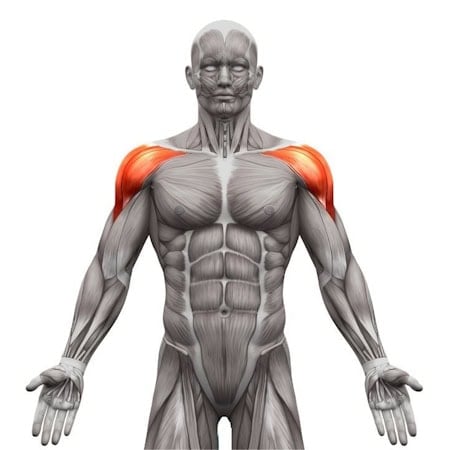
Anterior delt
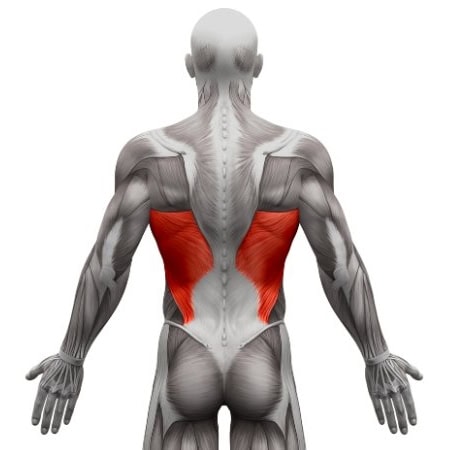
Lats
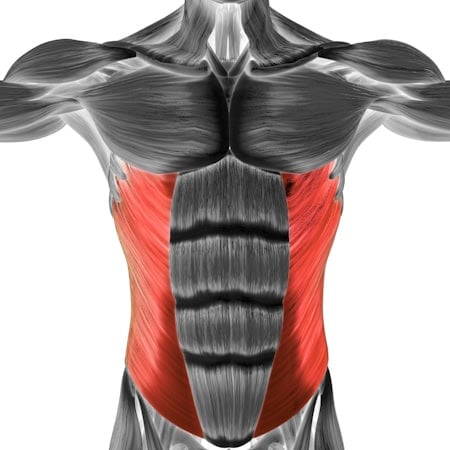
Oblique
Secondary Muscle(s):
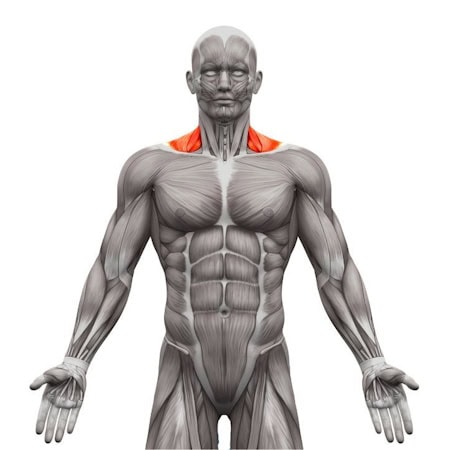
Trapezius
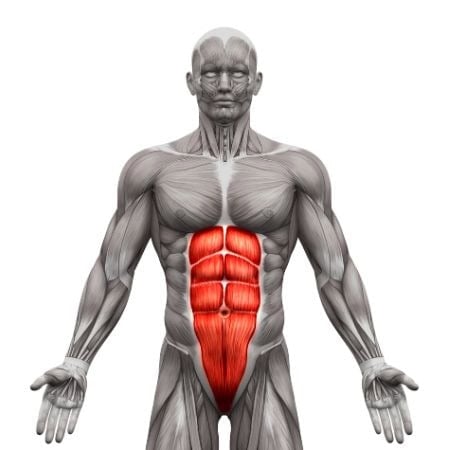
Abdominal
Equipment needed for Human Flag Plank

Adjust the difficulty of Human Flag Plank
How to make Human Flag Plank harder?
How to make Human Flag Plank easier?
How to make Human Flag Plank harder?
To make Human Flag Plank harder:
-
Move the supporting foot progressively farther from the structure.
-
Lower your torso closer to a horizontal position.
-
Reduce the amount of pressure placed through the supporting foot.
-
Increase the height and width of the raised leg without rotating your pelvis.
-
Straighten the supporting leg completely and point both toes.
-
Briefly hover the supporting foot while maintaining the straddle position.
-
Perform small controlled pulses by lifting and lowering the hips.
-
Transition from the supported plank into a tuck human flag.
-
Progress to a one-leg human flag with the opposite knee tucked.
-
Progress to an unsupported straddle human flag.
How to make Human Flag Plank easier?
To make Human Flag Plank easier:
-
Keep your torso more upright and use a smaller sideways lean.
-
Place the supporting foot closer to the structure.
-
Keep both feet on the ground while practising the opposing arm actions.
-
Lift the upper leg only slightly instead of opening into a full straddle.
-
Bend the supporting knee slightly while learning the setup.
-
Use a lower hand position that allows you to remain closer to the ground.
-
Perform shorter holds while maintaining straight elbows and active shoulders.
-
Ask a qualified training partner to help you establish the correct body position.