
High Pull-Up
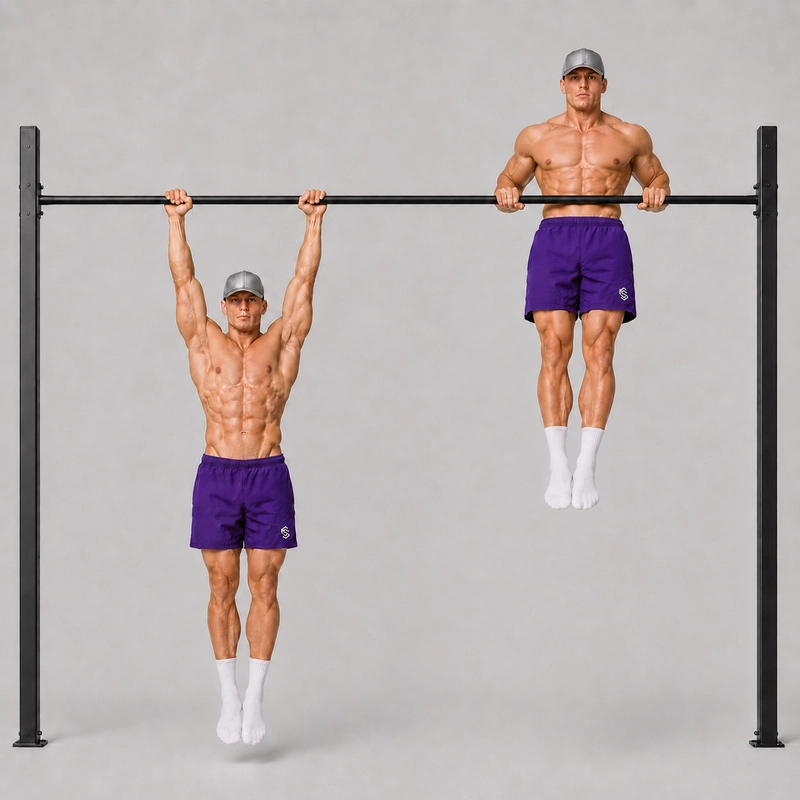
How to do High Pull-Up?
The high pull-up is an advanced, explosive pull-up variation in which you pull considerably higher than in a normal pull-up. Instead of finishing with your chin or upper chest above the bar, you pull the bar toward your lower abdomen, navel or waist. For this reason, the exercise is also known as the waist-to-bar pull-up, belly-button pull-up or navel-to-bar pull-up.
A strict pull-up finishes when the chin passes the bar, while a chest-to-bar pull-up brings the upper chest to the bar. The high pull-up continues this progression by raising the lower ribs and abdomen toward the bar. The goal of the version described on this page is controlled contact, or unmistakable bar-level alignment, around the navel-to-waist area.
Reaching this height requires more than simply performing a stronger conventional pull-up. You must accelerate from the bottom, keep your trunk and legs coordinated, allow your torso to incline slightly away from the bar and direct your elbows down and back toward your hips. The resulting path is more diagonal than the nearly vertical path of an ordinary pull-up.
The exercise is especially useful when preparing for a bar muscle-up. A high pull provides enough elevation for the athlete to begin moving above the bar instead of struggling through a low transition. This external high pull-up and muscle-up progression similarly develops the pull from chin-to-bar through chest, lower-rib and navel-to-bar targets.
The high pull-up on this page is performed without a deliberate kip, knee drive or leg swing. It is an explosive exercise, but the power should come primarily from the upper-body pull and coordinated trunk tension rather than momentum from the lower body.
How to Perform a High Pull-Up
Setup
- Use a stable pull-up bar with enough clearance above, in front of and behind your body.
- Take an overhand grip approximately shoulder-width apart or slightly wider.
- Wrap your thumbs around the bar and place your hands securely before beginning.
- Hang with straight elbows, long legs and your feet off the ground.
- Bring your ribs down, tighten your abdominal muscles and glutes, and keep your legs together.
- Let any initial swinging stop before starting the repetition.
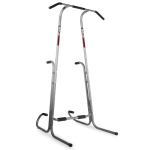
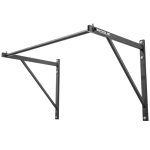
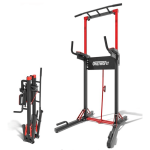
Because this is a dynamic movement, use a bar designed to tolerate explosive exercise. The Calisthenics.com guide to the best pull-up bars for calisthenics explains why secure wall-mounted, ceiling-mounted and freestanding bars are generally more suitable for advanced dynamic exercises than loosely fitted doorway bars.
Step-by-step instructions
- Begin in a controlled hang. Start with straight elbows and a quiet body. Engage your shoulders by gently drawing them down away from your ears without bending your elbows prematurely.
- Create full-body tension. Brace your abdominals and glutes, keep your knees straight and hold your legs together so that force is not lost through a loose or swinging lower body.
- Initiate the pull powerfully. Depress the shoulder blades and begin bending your elbows while pulling with maximum controlled acceleration.
- Pull through chest height. Do not slow down once your chin reaches the bar. Continue accelerating and drive your elbows down and back toward your hips.
- Allow a controlled backward body angle. As the bar passes your upper chest, incline your torso slightly away from it so the bar can travel toward your lower ribs and abdomen. Do not turn the movement into a horizontal front lever row.
- Pull the bar toward your waist. Think about bringing the bar toward your navel rather than lifting your chin over it. Keep your legs long and quiet while your elbows travel behind your torso.
- Reach the high point. Finish with the bar touching or closely approaching your abdomen around the navel-to-waist area. Your exact contact point will vary slightly with body proportions.
- Remain below the bar. Do not roll your chest over the bar or begin pressing into support; that would turn the repetition into a muscle-up attempt.
- Lower under control. Reverse the movement smoothly until your elbows are straight and you have returned to the starting hang.
- Reset before the next repetition. Eliminate any accumulated swing so each repetition demonstrates pulling power rather than pendulum momentum.
Maximum pulling height depends heavily on how quickly you can produce force. Research into the force-, load- and power-velocity relationships of the pull-up supports treating power and movement velocity as specific performance qualities. For this exercise, every upward phase should therefore be performed with maximal intent rather than as a slow grinding repetition.
High pull-up completion standard
Count a repetition when all of the following standards are met:
- The repetition begins from a motionless hang with straight elbows.
- The grip remains secure and both arms pull at the same time.
- The legs stay together without a deliberate knee drive, kick or kip.
- The bar reaches the lower abdomen around the navel-to-waist area.
- The athlete remains below the bar without beginning a muscle-up transition.
- The repetition finishes under control with the elbows straight again.
Contact with the upper chest or sternum is a chest-to-bar pull-up, not the full waist-to-bar standard used for this page. However, lower-chest and lower-rib targets are valuable progressions while learning the exercise.
High Pull-Up vs. Similar Exercises
High pull-up vs. chest-to-bar pull-up
The chest-to-bar pull-up finishes when the upper chest reaches the bar. The high pull-up continues above that point and aims the bar toward the lower ribs, abdomen, navel and eventually the waist.
High pull-up vs. bar muscle-up
The high pull-up is entirely a pulling exercise and finishes below the bar. The bar muscle-up continues by moving the shoulders over the bar and pressing into a straight-arm support position.
High pull-up vs. kipping pull-up
A strict high pull-up uses explosive upper-body strength and controlled trunk tension. A kipping pull-up deliberately uses a swing and hip action to generate momentum. Kipping drills can have a place in dynamic muscle-up training, but they should not be counted as strict high pull-ups.
High pull-up vs. front lever pull-up
The high pull-up uses a diagonal pulling path but remains predominantly vertical. A front lever pull-up keeps the body approximately horizontal and requires much greater straight-body lever strength.
Common High Pull-Up Mistakes
Stopping when the chest reaches the bar
Chest contact is an important progression, but a complete waist-to-bar repetition requires you to continue accelerating until the lower abdomen approaches the bar.
Pulling the chin toward the bar
Looking up and reaching with your chin reinforces the mechanics of a standard pull-up. Keep your head relatively neutral and think about pulling the bar down toward your waist.
Remaining completely vertical
A completely vertical torso leaves insufficient room for the bar to reach the abdomen. Allow a controlled backward inclination as you rise while keeping the body tight.
Leaning too far away
Excessive backward lean turns the movement into a more horizontal row and can reduce its transfer to the muscle-up. Create only as much space as necessary to bring the bar toward your abdomen.
Bending the elbows too early
Curling tightly toward the bar can trap you at chest height. Continue driving your elbows down and back toward your hips so the shoulders can extend and the body can rise higher.
Using a knee drive or hip kick
A visible kick may help you reach the target, but it changes the exercise into a kipping variation and makes your true pulling power difficult to assess.
Starting every repetition with more swing
Accumulated momentum can make later repetitions appear higher even as your pulling power decreases. Return to a quiet hang before each strict repetition.
Using an excessively wide grip
A very wide grip reduces the available pulling range and can make it harder to bring the elbows behind the torso. Start around shoulder width and adjust only slightly for comfort.
Training after pulling height has dropped
The exercise becomes less specific once fatigue reduces every repetition to an ordinary chest-to-bar or chin-over-bar pull-up. End the set when you can no longer reach the intended target.
Benefits of High Pull-Ups
- Develops explosive pulling power: You learn to produce force rapidly instead of relying only on slow maximal strength.
- Increases pulling range of motion: The exercise trains you to continue pulling well beyond chin and chest height.
- Prepares the bar muscle-up: Greater pulling height provides more time and space for the transition over the bar.
- Improves whole-body coordination: The shoulders, arms, trunk and lower body must remain connected during a fast movement.
- Strengthens high-range shoulder extension: Driving the elbows behind the torso develops the upper portion of the pull.
- Provides an objective target: Chest, lower ribs, navel and waist create measurable stages of progress.
- Challenges grip control: The hands and forearms must maintain a secure grip during rapid acceleration and deceleration.
Prerequisites and Readiness
Before training full waist-to-bar repetitions, you should be able to perform repeatable strict pull-ups and several clean chest-to-bar pull-ups. As a practical coaching guideline, approximately eight to ten strict pull-ups and three to five chest-to-bar repetitions provide a useful foundation, although individual requirements vary.
If you are still developing your first pull-ups, begin with the six-week pull-up workout plan before adding explosive high-pull training.
Your shoulders, elbows, wrists and hands should be comfortable during full-range pull-ups. Do not use an explosive variation to work through sharp pain, recent injury or an unstable overhead position.
High Pull-Up Progression
- Strict pull-up with chin clearly above the bar
- Explosive pull-up with the upper chest approaching the bar
- Chest-to-bar pull-up
- Lower-chest-to-bar pull-up
- Lower-ribs-to-bar pull-up
- Band-assisted navel-to-bar pull-up
- Unassisted navel-to-bar pull-up
- Waist-to-bar high pull-up
- High pull-up into a controlled bar muscle-up transition
Use progressively lower contact targets as checkpoints. Do not wait until you can reach the waist before recording progress: moving consistent contact from the upper chest to the sternum, lower ribs and upper abdomen demonstrates meaningful improvement.
Programming High Pull-Ups
Train high pull-ups near the beginning of your pulling workout, after warming up but before heavy pulling fatigue. The objective is maximum height and speed, not muscular exhaustion.
- Technique and power: Perform 3–6 sets of 1–4 repetitions with 2–4 minutes of rest.
- Band-assisted practice: Perform 3–5 sets of 3–5 repetitions using the lightest band that allows the correct target.
- Target progression: Choose one contact point—chest, lower ribs, upper abdomen or navel—and end the set when you can no longer reach it.
- Frequency: One or two focused sessions per week is sufficient for most athletes when combined with regular pulling strength work.
Research on velocity loss during pull-up training found diminishing value after substantial repetition-speed loss. Although that study examined conventional pull-up training, the practical implication is especially relevant here: stop power-focused sets before fatigue causes a major drop in speed or pulling height.
Safety Considerations
- Use a securely installed bar that is rated for dynamic exercise and your body weight.
- Check that there is enough clearance around your head, torso and legs.
- Avoid explosive repetitions on an unsecured doorway bar.
- Use a full thumb-around grip unless you have a specific reason and sufficient experience to use another grip.
- Keep the movement symmetrical rather than throwing one shoulder over the bar.
- Reduce the target or use assistance when you cannot control the descent.
- Stop if you experience sharp shoulder, elbow, wrist or hand pain.
Frequently Asked Questions
Is a high pull-up the same as a waist-to-bar pull-up?
High pull-up is the broader exercise name. Waist-to-bar pull-up describes the most advanced target used on this page. Lower-chest and lower-rib pull-ups can therefore be considered stages of the high pull-up progression.
Where should the bar touch?
For a complete waist-to-bar repetition, the bar should touch or closely approach the abdomen around the navel or natural waistline. The precise point varies with arm length, torso length, grip width and body angle.
Does a chest-to-bar pull-up count as a high pull-up?
It may be described as a lower-level high pull-up, but it does not meet this page’s waist-to-bar completion standard.
Should high pull-ups be strict or kipping?
The canonical exercise on this page is strict: no deliberate leg swing, knee drive or hip kick. Assisted and kipping variations can be used as drills, but they should be labelled separately.
Why can I reach my chest but not my waist?
You may need greater pulling speed, better shoulder extension, a more suitable diagonal pulling path or improved full-body tension. Practice lower-rib targets and band-assisted navel-to-bar repetitions before attempting the waist.
Should I keep my body completely vertical?
No. A slight backward torso angle is necessary to create room between your abdomen and the bar. Excessive lean, however, changes the exercise toward a horizontal row.
Do I need a false grip?
No. A normal overhand grip is sufficient. An overgrip with the knuckles positioned slightly higher can reduce later hand adjustment for muscle-ups, but it should not compromise grip security or wrist comfort.
Are high pull-ups necessary for a bar muscle-up?
They are not the only possible muscle-up drill, but developing a powerful pull to the lower chest, ribs or abdomen makes the transition considerably easier and supports stricter technique.
Can I train high pull-ups with a resistance band?
Yes. A light band can help you experience the extended pulling range, but you should still initiate the repetition actively and avoid bouncing out of the bottom.
Can I perform high pull-ups on rings?
You can pull high on rings, but the freely moving handles, neutral grip options and different transition mechanics make the ring version meaningfully different. This page should remain specific to a fixed pull-up bar.
How many high pull-ups should I perform?
Use low-repetition sets and prioritize height. One to four powerful repetitions per set is usually more appropriate than continuing until fatigue turns the movement into ordinary pull-ups.
Tips for the proper execution of High Pull-Up
Start every repetition from a quiet hang so momentum does not hide a loss of pulling power.
Think about pulling the bar toward your waist instead of lifting your chin over the bar.
Accelerate from the beginning and continue pulling hard after your chest reaches bar height.
Drive your elbows down and back toward your hips rather than curling your hands toward your shoulders.
Allow your torso to incline slightly away from the bar as you rise.
Keep your legs straight, together and quiet throughout the repetition.
Use the chest, lower ribs, upper abdomen and navel as progressive contact targets.
Finish the set when your contact point becomes noticeably higher on the torso.
Practice high pull-ups before heavy pulling exercises while your speed and coordination are fresh.
Use a light resistance band if you cannot yet experience the full navel-to-bar range.
Keep your head relatively neutral instead of reaching toward the bar with your chin.
Lower under control and let any swing disappear before beginning another repetition.
Muscles worked when doing High Pull-Up
The high pull-up is a compound upper-body pulling exercise. It uses the same broad muscle groups as a strict pull-up, but its greater speed, pulling height and shoulder-extension demand make coordination and force production especially important.
Latissimus dorsi
The lats are the primary muscles responsible for pulling the upper arms down and back. They produce much of the force required to raise the body and continue driving the elbows behind the torso at the top.
Biceps and brachialis
The biceps brachii and brachialis flex the elbows as the body rises. They assist the back throughout the pull, although trying to curl excessively with the arms can limit maximum height.
Rhomboids and trapezius
The rhomboids and middle and lower trapezius coordinate the shoulder blades as they depress and retract during the pull.
Rear deltoids
The rear deltoids help move the upper arms behind the torso as the bar approaches the lower ribs and abdomen.
Forearms and grip muscles
The forearms and hand muscles maintain a secure connection to the bar during rapid acceleration and the controlled descent.
Abdominals and obliques
The abdominal muscles and obliques stabilize the trunk, limit uncontrolled arching and help keep the upper and lower body moving as one unit.
Glutes and spinal stabilizers
The glutes and spinal stabilizers maintain the position of the pelvis and legs while the torso changes angle relative to the bar.
Primary Muscle(s):
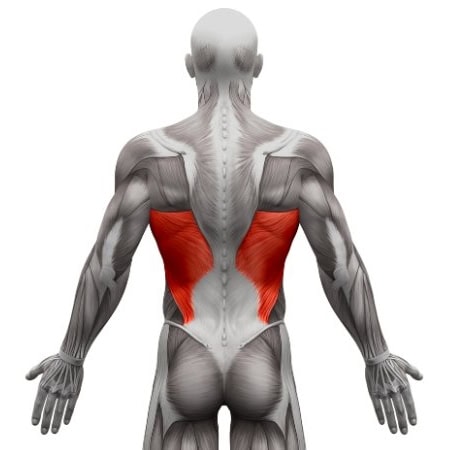
Lats
Secondary Muscle(s):
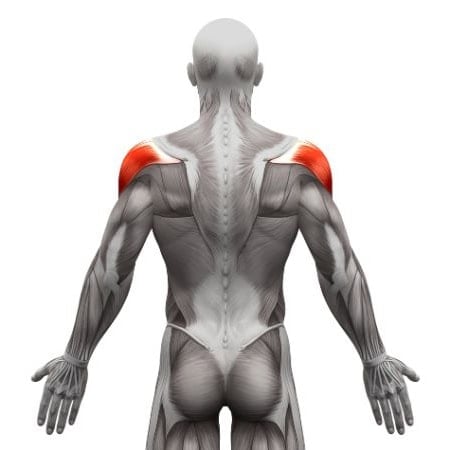
Rear delt
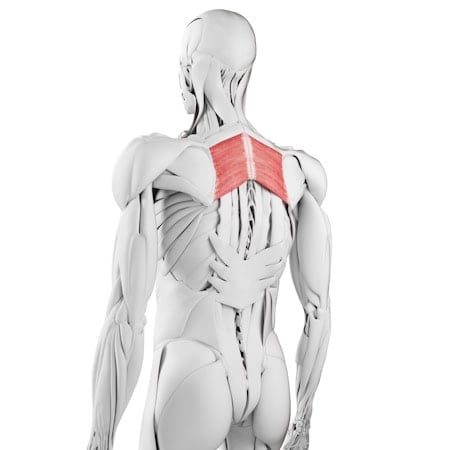
Rhomboid
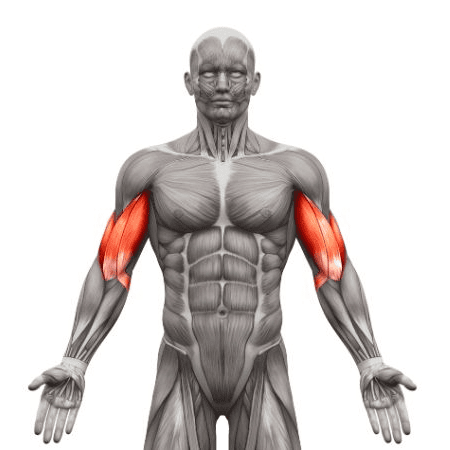
Biceps
Equipment needed for High Pull-Up
Adjust the difficulty of High Pull-Up
How to make High Pull-Up harder?
How to make High Pull-Up easier?
How to make High Pull-Up harder?
To make High Pull-Up harder:
-
Pull consistently until the bar makes controlled contact with your natural waistline.
-
Progress from navel-to-bar repetitions toward hip-to-bar high pull-ups.
-
Pause briefly at the highest point without resting your body on the bar.
-
Use a slower eccentric descent while preserving maximum speed during the upward phase.
-
Perform strict high pull-ups with completely straight, motionless legs and no accumulated swing.
-
Add a small amount of resistance with a securely fitted weighted vest while maintaining the same pulling height.
-
Link the high pull into a symmetrical bar muscle-up transition.
-
Perform consecutive waist-to-bar repetitions while resetting body control between each pull.
How to make High Pull-Up easier?
To make High Pull-Up easier:
-
Perform strict pull-ups to build the foundational vertical pulling strength required for high pull-ups.
-
Use chest-to-bar pull-ups as the first extended-range target above a conventional pull-up.
-
Pull to the lower chest or sternum before progressing toward the lower ribs and abdomen.
-
Use a light resistance band to practice the navel-to-bar path with reduced body-weight resistance.
-
Perform single explosive pull-ups with a full reset between repetitions.
-
Use a lower target and gradually move the point of contact down your torso.
-
Practice scapular pull-ups to improve control when initiating the movement from a hang.
-
Use regular weighted pull-ups to develop greater maximal pulling strength before converting it into speed.