One Arm Bodyweight Row
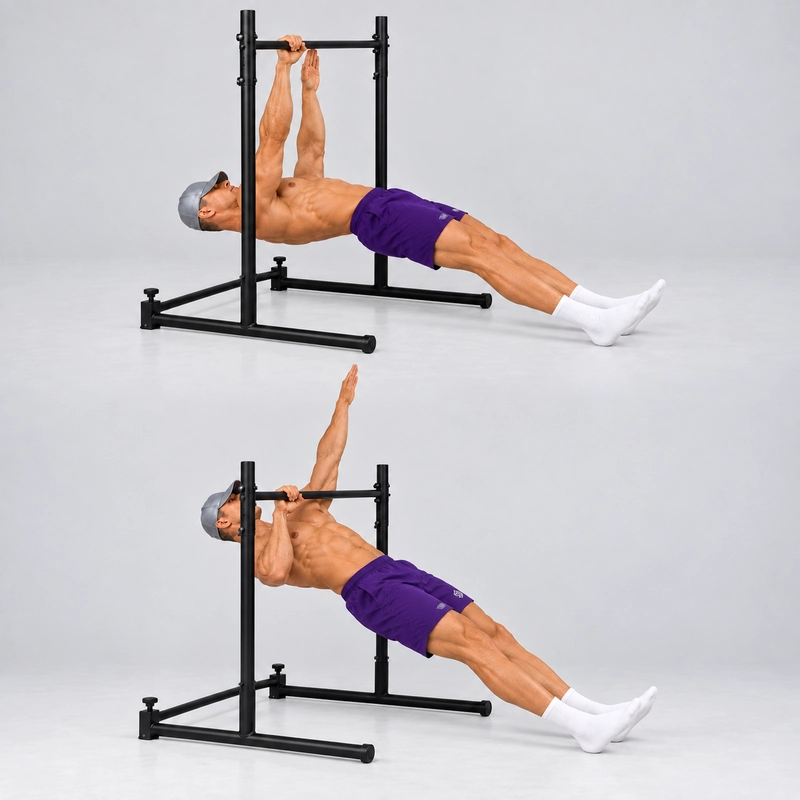
How to do One Arm Bodyweight Row?
The one arm bodyweight row is a unilateral inverted row performed beneath a low fixed bar. Use a bar approximately hip height when standing, or around 90 cm (35.4 in), with both heels on the ground and the legs straight. One hand grips the bar while the free hand provides no support.
Pull your working-side lower chest toward the rail, then lower until the working elbow is straight. Keep your shoulders, hips, knees and ankles aligned, with the hips clear of the floor. Control torso rotation instead of rolling onto one side to finish the pull.
Unlike an Archer Row, this version has no assisting hand on the bar. It also differs from the one-arm ring row, which uses a freely moving handle and allows the grip to rotate.
Equipment and Setup
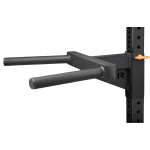
Use a securely fixed horizontal bar that can resist the uneven pulling load. One suitable rail of a dip station can work, provided the station cannot slide, tip, rotate or lift when loaded with one hand.
- Bar height: approximately hip height when standing beside it; around 90 cm (35.4 in) is a guide, not an exact requirement for every athlete.
- Grip: one overhand grip on the horizontal rail, with the thumb wrapped around the bar and the wrist comfortably aligned with the forearm.
- Heel position: both heels on a non-slip floor, approximately hip-width apart and at the same distance from the rail, with toes pointing upward.
- Body position: knees straight, torso and legs aligned, and enough room for full elbow extension and working-side lower-chest contact.
- Free arm: raised away from the equipment for balance, using a comfortable position you can repeat without swinging.
Position yourself so the grip lines up with the working-side lower chest at the top. Set the heel locations before starting. The bar height and your proportions determine the body angle; a 90 cm rail does not guarantee a horizontal torso or a fixed bodyweight load.
How to Do a One Arm Bodyweight Row
- Enter beneath the rail. Establish an overhand grip with the working hand. You may use both hands to enter safely, but remove the assisting hand before the repetition begins.
- Extend the legs. Place both heels securely on the floor, straighten the knees and keep the feet approximately hip-width apart.
- Set the starting position. Brace your abdomen and glutes, lift the hips clear of the floor and straighten the working elbow. Keep a continuous line through the shoulders, hips, knees and ankles.
- Hold the free arm clear. Raise it in a comfortable position away from the bar. Do not grip the rail or working arm, push on a thigh or brace against the floor.
- Pull with the working arm. Bend the elbow and draw the upper arm back, raising the working-side lower chest toward the bar. Let the shoulder blade move naturally as you pull.
- Reach controlled chest contact. Bring the working-side lower chest gently to the rail without throwing the hips upward, reaching with the chin or rolling the chest away from the pelvis.
- Lower fully. Extend the working elbow under control, allowing the shoulder blade to move forward naturally while retaining the straight body line and fixed heel positions.
- Repeat, then change sides. Complete the planned repetitions, return to a supported position and reset for the other arm using a mirrored setup.
Exhale as you pull and inhale as you lower. A small, controlled change in torso orientation may occur during a unilateral row; avoid a large roll, separate chest-and-pelvis twist or free-arm swing that completes the movement.
What Counts as a Full Repetition?
A strict repetition begins with the working elbow straight, reaches gentle working-side lower-chest contact and returns under control to the same straight-arm position.
- Only the working hand grips the bar during the entire repetition.
- The free hand provides no support or pulling assistance.
- Both knees remain straight and both heels remain in their original positions on the floor.
- The body stays aligned, with the hips and back clear of the floor.
- The chest reaches the rail through the pull, without bouncing, hip thrusting or excessive torso rolling.
- The working elbow straightens before the next pull begins.
Do not count a repetition if the free hand assists, a heel moves or loses contact, the knees bend, chest contact is missing or momentum substitutes for the pull. Do not force the elbow into hyperextension at the bottom.
Count repetitions per arm. Three repetitions per arm means three right-arm pulls and three left-arm pulls, for six pulls in total.
One Arm Row vs. Archer Row
In an Archer Row, both hands stay on the bar: one elbow bends while the other arm remains extended and assists. In this one-arm version, the second hand is completely unsupported.
Removing the assisting hand increases demand on the working arm in an otherwise comparable setup. An archer row at a more challenging body angle may still be harder than a more upright one-arm row, so compare the full setup rather than the exercise names alone.
The heels still support part of the bodyweight. One-arm execution does not mean the hand carries your entire bodyweight, and it does not establish one-arm pull-up strength.
Benefits of the One Arm Bodyweight Row
- Trains unilateral horizontal pulling: each arm performs the row without help from the opposite hand.
- Develops back and elbow-flexor strength: the working arm draws the torso toward the rail.
- Practises rotation control: the trunk stays coordinated during the one-sided pull.
- Allows separate side tracking: you can record right and left repetitions using matched setups.
Training both sides can help you identify differences in performance. It does not guarantee that an imbalance will resolve or that a particular skill will follow automatically.
Readiness and Progression
First build controlled Low Bar Bodyweight Rows with two hands and consistent lower-chest contact. Then use Archer Rows and assisted one-arm rows to practise a side-dominant pull while gradually reducing help from the other hand.
When first removing the assisting hand, use a higher rail and a more upright body position if necessary. Retain straight legs and a complete range instead of immediately forcing an unassisted attempt at 90 cm.
There is no universal repetition threshold that guarantees readiness. Return to an assisted or more upright version if you cannot control the descent, keep the heels fixed or reach the rail without rolling the torso.
Common Mistakes and Corrections
Using the Free Hand to Help
Holding the working wrist, gripping the bar or pushing on a thigh changes the exercise to an assisted version. Use assistance deliberately during practice, but record it separately from an unassisted repetition.
Rolling the Chest to the Bar
Keep the shoulders and pelvis coordinated, with the chest broadly facing upward. A small controlled orientation change is acceptable; a large roll onto the working side does not replace the remaining pull.
Swinging the Free Arm
Choose a comfortable free-arm position and keep it controlled. Avoid a rapid reach or arm sweep that creates momentum.
Sagging or Thrusting the Hips
Brace before starting and maintain the body line. Use a more upright or assisted setup if you need to lift the hips separately to reach the rail.
Bending the Knees or Moving the Heels
Keep both legs straight and heels fixed. Bent knees, a staggered stance or sliding feet change the setup and should be tracked as separate variations.
Skipping the Straight-Arm Bottom
Lower until the working elbow is straight under control, allowing natural shoulder-blade movement. Do not hold a bent elbow between repetitions to shorten the range.
Using an Unstable Dip Bar
A station that is stable during two-hand exercises may still move under a one-hand load. Stop if a support tips, slides or lifts, and secure the apparatus before another set.
Sets, Reps and Progression
As a coaching starting point, perform 2–3 sets of 2–5 controlled repetitions per arm, with roughly 2–3 minutes before loading the same arm again. Start with the less capable side and match its clean repetitions on the other side. Leave one or two clean repetitions in reserve where possible.
Use assistance or a more upright angle if you cannot complete repeatable full-range repetitions. Once you can repeat three sets of five clean repetitions per arm across two sessions, add repetitions before introducing a top pause, slower lowering or a small amount of securely fitted vest load.
These are programming suggestions, not standardized pass thresholds. Foot elevation is a later, separately labelled option; keep the heels on the ground when training or assessing the base version described here.
Keep Your Setup Consistent When Retesting
Record the actual bar height, grip location, heel distance from the rail, heel spacing, footwear, free-arm position and tempo. Mirror the setup for the other arm, including the chest-contact point.
Record right and left results separately. Wider feet can change rotation control; a higher bar, bent knees or hand assistance changes the task. Do not compare those results as if the setup were identical.
One Arm Bodyweight Row FAQ
How high should the bar be?
Use a low bar around hip height when standing beside it. Approximately 90 cm (35.4 in) is a practical guide, provided you have floor clearance and can complete the full movement.
Can I use a dip bar?
Yes, if the rail and station are suitable for an uneven pulling load and remain secure. Use one overhand grip on a horizontal rail.
Are the legs straight and the heels on the ground?
Yes. That is the base version on this page. Keep both heels fixed on the floor and both knees straight throughout each repetition.
Where should the free hand go?
Keep the free arm raised clear of the equipment in a comfortable position for balance. It must not grip the bar or working arm, brace on the floor or push against a leg to assist.
Can the torso rotate?
A small controlled change in orientation may occur, but keep the shoulders and pelvis coordinated. Avoid rolling onto one side or twisting separately to manufacture chest contact.
Is an archer row a one-arm row?
No. The extended arm still provides assistance in an archer row. Here, the free hand provides no support.
What if I cannot complete one full repetition?
Use a more upright one-arm setup or return to assisted one-arm and archer rows. Build full-range control before reducing assistance or returning to the low-bar version.
Tips for the proper execution of One Arm Bodyweight Row
Use a secure low horizontal bar around hip height, approximately 90 cm (35.4 in), and check that it resists an uneven one-hand pulling load.
Take one overhand grip with the thumb wrapped around the rail and the wrist comfortably aligned with the forearm.
Keep both heels on a non-slip floor, approximately hip-width apart and at the same distance from the rail, with straight knees.
Brace the abdomen and glutes to keep the shoulders, hips, knees and ankles aligned, with the back and hips clear of the floor.
Keep the free arm raised and unsupported; do not grip the bar or working arm, brace on the floor or push on a thigh.
Bend the working elbow and draw the upper arm back to bring the working-side lower chest gently to the rail.
Keep the shoulders and pelvis coordinated rather than rolling onto one side, twisting the chest or swinging the free arm to finish the pull.
Keep the neck aligned with the torso and reach the rail with the chest rather than lifting the chin toward it.
Lower under control until the working elbow is straight, keeping both heels fixed and the knees straight.
Count repetitions separately for each arm and use a mirrored setup, matching the less capable side's clean repetitions.
Muscles worked when doing One Arm Bodyweight Row
The one arm bodyweight row trains the working-side back and elbow flexors through a unilateral horizontal pull. The trunk and legs maintain alignment while both heels support part of the bodyweight on the floor.
Main Pulling Muscles
- Latissimus dorsi: Helps draw the working-side upper arm backward toward the torso.
- Rhomboids and middle trapezius: Contribute to working-side shoulder-blade retraction and control.
- Rear deltoid: Assists the backward movement of the working upper arm.
- Biceps brachii, brachialis and brachioradialis: Bend the working elbow.
Supporting Muscles
- Working-side forearm and hand muscles: Maintain the grip on the fixed bar.
- Rotator cuff: Helps control the working shoulder through the movement.
- Abdominals, obliques and spinal stabilizers: Help maintain alignment and control unwanted rotation.
- Glutes and thigh muscles: Help maintain the straight-leg body position.
The free arm does not provide pulling assistance, but the floor-supported heels still share the load. The exact force through the working hand depends on body proportions, support geometry and movement; it cannot be stated as a fixed percentage from the exercise name alone.
Primary Muscle(s):
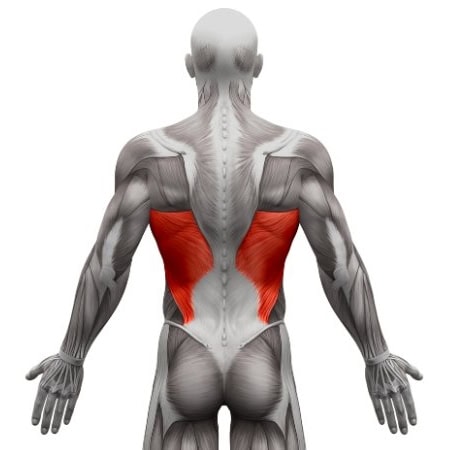
Lats
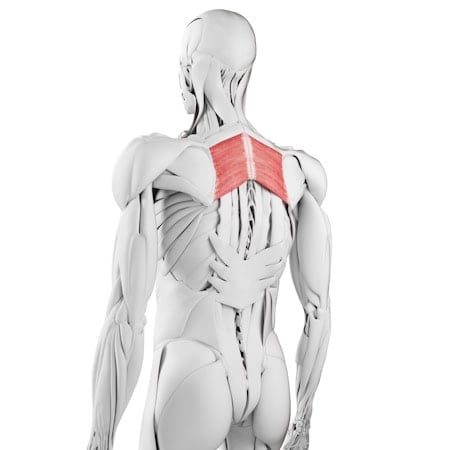
Rhomboid
Secondary Muscle(s):
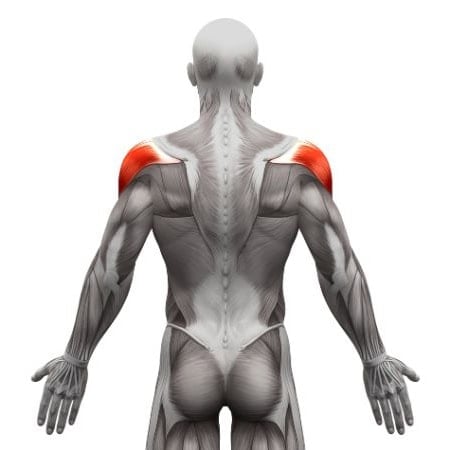
Rear delt
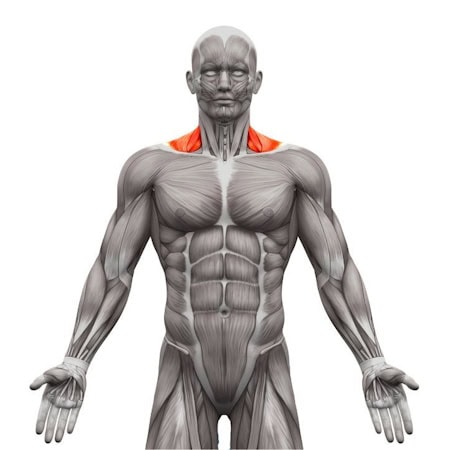
Trapezius
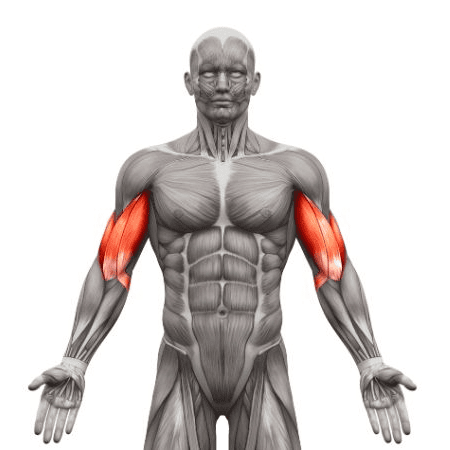
Biceps
Equipment needed for One Arm Bodyweight Row
Adjust the difficulty of One Arm Bodyweight Row
Use a higher bar and a more upright position or add deliberate free-hand assistance to reduce the challenge. Record assisted and bent-knee versions separately from the unassisted straight-leg row. Increase overload with a top pause, slower lowering or a securely fitted weighted vest. Keep the base setup around hip height, with straight legs and both heels on the ground, when comparing performance.
How to make One Arm Bodyweight Row harder?
How to make One Arm Bodyweight Row easier?
How to make One Arm Bodyweight Row harder?
To make One Arm Bodyweight Row harder:
-
Pause for one to two seconds at working-side lower-chest contact while keeping the free hand unsupported and both heels fixed.
-
Take three seconds to lower to full working-elbow extension without changing the body line or heel positions.
-
Add a small amount of load using a securely fitted weighted vest while retaining the same bar height, grip, heel spacing and full range.
-
Progress to a separately labelled feet-elevated one-arm row using a stable low support, preserving one-hand execution and controlled rotation.
How to make One Arm Bodyweight Row easier?
To make One Arm Bodyweight Row easier:
-
Use a higher fixed bar to create a more upright one-arm row while keeping the knees straight, heels on the floor and full range controlled.
-
Perform assisted one-arm rows using the free hand on the rail, gradually reducing help while retaining a controlled pull and descent.
-
Return to Archer Rows, keeping the opposite elbow straight and its hand on the bar as assistance.
-
Use a bent-knee, floor-supported one-arm row as a separate regression, then rebuild the straight-leg version without changing the full-range criteria.