
Band-Assisted Bar Muscle-Up
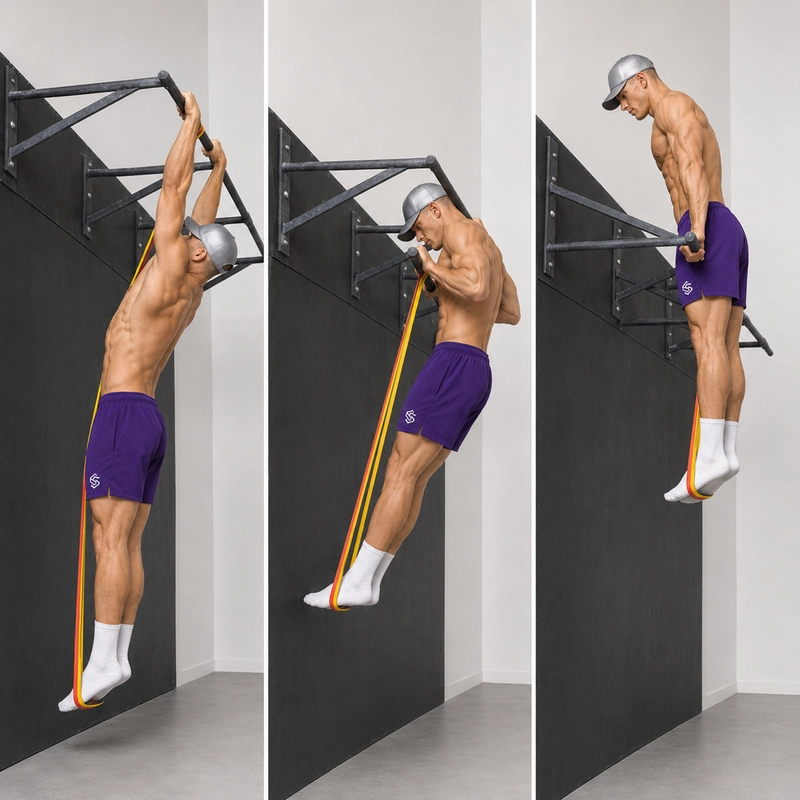
How to do Band-Assisted Bar Muscle-Up?
What Is a Band-Assisted Bar Muscle-Up?
The band-assisted bar muscle-up is a progression exercise in which a resistance band supports part of your body weight while you perform the complete bar muscle-up. Unlike a resistance band pull-up, the repetition does not finish when your chin or chest reaches the bar. You continue by moving your torso over the bar, turning both elbows above it, and pressing into a stable support position.
This variation lets you practice all three phases described in our muscle-up guide: the high pull, the transition, and the straight-bar dip. The pulling phase is related to a powerful chest-to-bar pull-up, while the final phase requires the control used in a straight bar dip. The band reduces the load, but it does not remove the need for coordinated pulling, wrist turnover, shoulder control, and pressing strength.
A loop band normally provides the most assistance near the bottom, where it is stretched the furthest, and progressively less assistance as you rise. Choose the lightest band that allows you to pass over the bar without an uncontrolled jump or one elbow turning over before the other. CrossFit Affiliate Programming's bar muscle-up plan similarly recommends selecting band assistance that permits controlled repetitions.
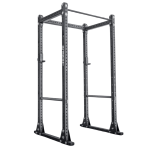
This is not a beginner pull-up exercise. Before attempting it, you should be able to maintain an active hang, perform controlled assisted pull-ups, and support yourself above a straight bar without shoulder, elbow, or wrist pain. Use a pull-up bar with enough overhead clearance, an undamaged resistance band, and a stable box or platform for entering and leaving the band safely.
Tips for the proper execution of Band-Assisted Bar Muscle-Up
Inspect the resistance band for cuts, cracks, thinning, or other damage before every session.
Choose the lightest band that allows a smooth, symmetrical transition over the bar.
Wrap your thumbs around the bar and use a slight overgrip to make the wrist turnover easier.
Begin from an active hang with straight elbows, engaged shoulders, and a braced trunk.
Keep your body centered beneath the band's attachment point so the assistance does not pull you sideways.
Pull toward your lower chest or upper abdomen rather than stopping when your chin clears the bar.
Keep the bar close to your torso as you shift your chest forward into the transition.
Turn both elbows over together and stop the set if you repeatedly use a one-arm chicken-wing transition.
Finish every successful repetition in a stable straight-arm support above the bar.
Control the descent and avoid dropping suddenly into the band's strongest stretch.
If you are using a box return to the box before removing your foot and keep your face away from the band's recoil path.
Muscles worked when doing Band-Assisted Bar Muscle-Up
The band-assisted bar muscle-up is a compound upper-body exercise that combines a vertical pull, a transition over the bar, and a vertical push. The same muscle groups used in an unassisted bar muscle-up contribute, although the band reduces the load—especially near the bottom of the repetition.
- Latissimus dorsi: Produces much of the pulling force and helps drive the bar toward the torso during the high pull.
- Trapezius, rhomboids, and rear deltoids: Control the shoulder blades and upper back as the body rises toward the bar.
- Biceps, brachialis, and brachioradialis: Flex the elbows during the pulling phase and help control the descent.
- Pectoralis major: Becomes increasingly involved as the chest passes over the bar and during the straight-bar dip.
- Triceps and anterior deltoids: Extend the elbows and press the body from the transition into the top support position.
- Forearms and grip muscles: Maintain the grip and control the change in wrist position during the turnover.
- Serratus anterior and rotator cuff: Help stabilize the shoulder blades and shoulder joints throughout the pull, transition, and support.
- Abdominals, obliques, spinal erectors, and glutes: Keep the trunk and legs connected so force transfers efficiently through the movement.
The assisted leg also works against the band to maintain body position, but the legs are not the main training target. A thicker or more strongly stretched band decreases the relative demand on the upper body.
Primary Muscle(s):
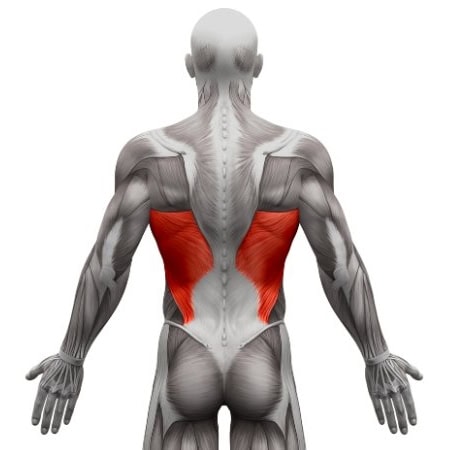
Lats
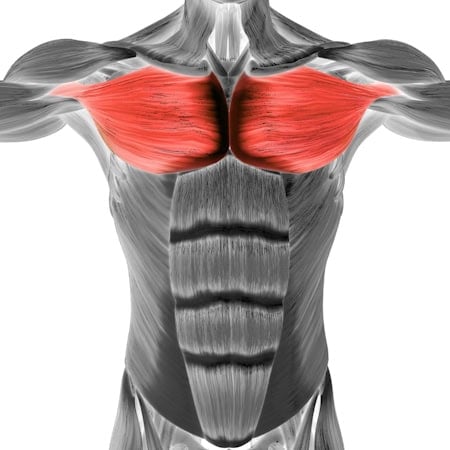
Lower chest
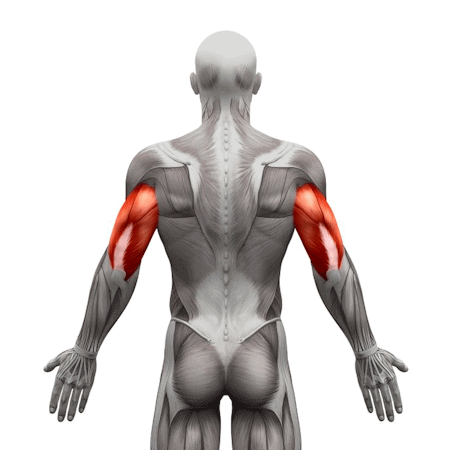
Triceps
Secondary Muscle(s):
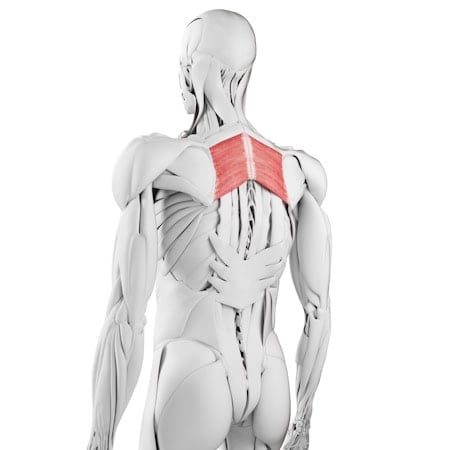
Rhomboid
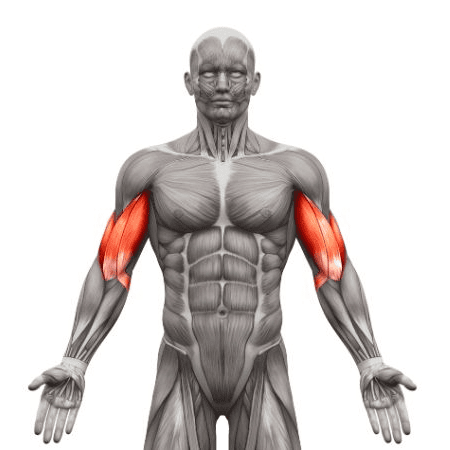
Biceps
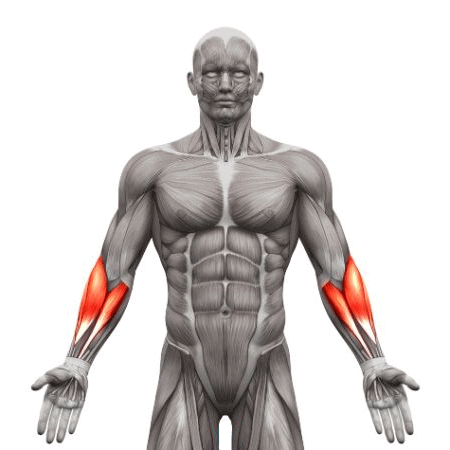
Forearm
Equipment needed for Band-Assisted Bar Muscle-Up
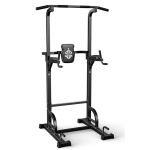
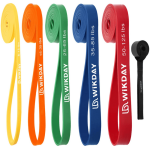
Adjust the difficulty of Band-Assisted Bar Muscle-Up
How to make Band-Assisted Bar Muscle-Up harder?
How to make Band-Assisted Bar Muscle-Up easier?
How to make Band-Assisted Bar Muscle-Up harder?
To make Band-Assisted Bar Muscle-Up harder:
-
Use a thinner resistance band that provides less assistance.
-
Move from foot assistance to knee assistance if the setup remains secure and controlled.
-
Use less body swing and perform the repetition with a more controlled, strict pulling action.
-
Pause briefly with your lower chest at bar height before initiating the transition.
-
Pause in the deepest part of the transition with both elbows above the bar.
-
Lower through the complete movement for three to five seconds before returning to the hang.
-
Perform a full straight bar dip after reaching the transition position.
-
Complete several technically consistent repetitions without using extra bounce from the band.
-
Progress to an unassisted bar muscle-up only when you can pull high, turn over symmetrically, and finish the dip without relying on the band.
How to make Band-Assisted Bar Muscle-Up easier?
To make Band-Assisted Bar Muscle-Up easier:
-
Use a thicker resistance band that provides more assistance while still allowing a controlled turnover.
-
Start with the low-bar muscle-up transition so your feet can regulate the amount of assistance.
-
Practise resistance band pull-ups until you can reach the bar with control.
-
Train band-assisted chest-to-bar pull-ups to develop a higher pulling position before adding the transition.
-
Practise feet-assisted straight bar dips separately to strengthen the pushing phase.
-
Use a box-assisted jumping muscle-up and keep one or both feet supported during the turnover.
-
Practise only the pull-to-transition portion and step down instead of completing the full dip.
-
Step back onto the box after reaching support rather than lowering through the entire movement.
-
Ask a qualified coach to guide your torso lightly through the transition while both hands remain on the bar.