
Floor Maltese (Maltese Planche)
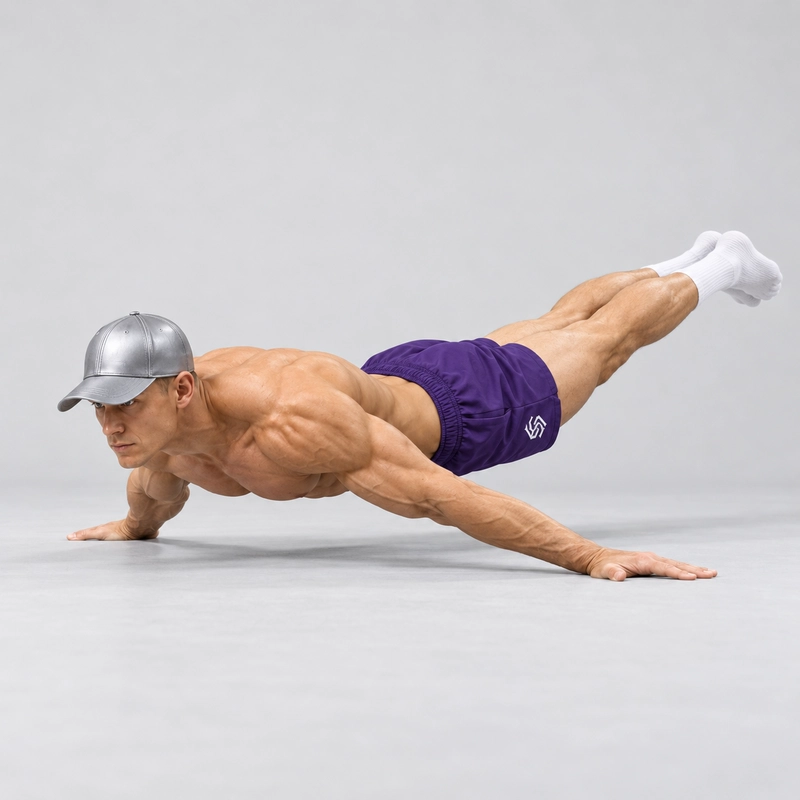
How to do Floor Maltese (Maltese Planche)?
The Floor Maltese, also called the Maltese Planche or Floor Maltese Hold, is an elite straight-arm calisthenics skill in which your body remains face down and approximately parallel to the floor while being supported only by your hands. Unlike a standard Planche, the hands are placed much wider and closer to the waist or hip line, bringing the torso closer to the floor and dramatically increasing the leverage acting on the shoulders and elbows.
The Floor Maltese should be treated as a post-planche skill rather than another compulsory step toward the Planche. Most athletes should first develop repeatable straight-arm control in the Planche Lean, Tuck Planche, Advanced Tuck Planche, One-Leg Planche, Straddle Planche and full Planche before beginning serious Maltese-specific training.
This page covers the fixed-support Maltese performed on the floor. Parallettes change the grip, wrist angle and available clearance, but they do not change the defining body position enough to justify a separate canonical exercise. The Ring Maltese, also known in gymnastics as the Swallow or Maltese Cross, should receive a separate exercise page because the independently moving rings create different grip, stability, shoulder and entry demands. Under the current FIG Men’s Artistic Gymnastics rules, the Swallow is a rings strength element in which the straight body is held horizontally at ring height with straight arms.
Floor Maltese quick facts
| Exercise type | Static straight-arm strength skill |
|---|---|
| Recommended level | Elite |
| Primary equipment | None |
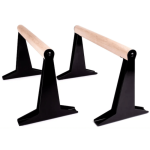
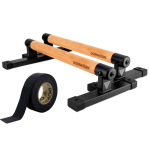
| Alternative equipment | Parallettes or suitably spaced fixed parallel bars |
| Body position | Face down, straight and approximately parallel to the floor |
| Defining feature | Hands positioned wide and close to the waist or hip line |
| Primary prerequisite | Repeatable full Planche strength and controlled Maltese Leans |
| Demonstration standard | A stationary hold lasting at least two seconds with straight elbows and no floor contact |
Do different equipment versions need separate exercise pages?
| Version | Key difference | Canonical decision |
|---|---|---|
| Floor Maltese | Flat palms, substantial wrist extension and very limited clearance beneath the torso | Primary version on this page |
| Parallette Maltese | Neutral grip, more clearance and a handle that can be actively squeezed | Keep on this page as an equipment variation |
| Parallel Bar Maltese | Elevated fixed supports whose preset width may restrict the final arm position | Keep on this page when the same Maltese standard is achieved |
| Ring Maltese or Swallow | Freely moving rings, lateral straight arms, ring-height body position and ring-specific stability | Create a separate canonical exercise |
Do not label every wide-hand Planche as a Maltese. If the hands are merely wider than shoulder width but remain substantially beneath the shoulders and the torso stays well above hand level, the position is better described as a Wide Planche.
Where the Floor Maltese fits in the progression
A practical route toward the Floor Maltese is:
- Planche Leans develop foundational straight-arm shoulder and wrist loading.
- Tuck Planche teaches full-body support with a short lower-body lever.
- Advanced Tuck Planche increases the lever while preserving compact legs.
- One-Leg Planche and Straddle Planche introduce longer straight-leg positions.
- The full Planche develops the long-lever straight-arm support required before Maltese-specific work.
- A Floor Maltese Lean introduces wider hands and a position closer to the hip line while the toes remain supported.
- Tuck, straddle or band-assisted Floor Maltese holds progressively reduce assistance or lengthen the lower-body lever.
- The full Floor Maltese brings both straight legs together while maintaining the wide, low support position.
This is a practical coaching sequence rather than a compulsory ladder. Some athletes respond better to straddle work, while others use resistance-band assistance or progressively wider Maltese Leans to bridge the substantial gap between a full Planche and a Floor Maltese. The complete Planche progression and training guide provides the earlier stages of this pathway.
Benefits of the Floor Maltese
- Develops elite straight-arm pushing strength beyond the demands of a standard Planche.
- Strengthens control of the shoulders and shoulder blades in a wide, heavily leveraged position.
- Requires strong co-contraction around the elbow from the biceps and triceps.
- Trains the chest, anterior shoulders and serratus anterior to support a horizontal body position.
- Reinforces full-body tension through the abdominals, glutes, quadriceps and lower-body line.
- Prepares advanced athletes for Planche-to-Maltese transitions and Maltese Press variations.
- Provides a fixed-support counterpart to advanced ring-strength training without replacing ring-specific preparation.
Are you ready to train the Floor Maltese?
The Floor Maltese is not appropriate for beginners or athletes who are still learning to support a basic Planche position. Before attempting unassisted holds, you should be able to:
- Perform pain-free Planche Leans with completely straight elbows and controlled scapular protraction.
- Produce several repeatable full Planche or strong Straddle Planche holds without hip sagging.
- Maintain a wider Maltese Lean without bending the elbows or collapsing the chest.
- Control a hollow or slightly rounded body position similar to a strict Hollow Body Hold.
- Tolerate progressively wider hand positions without wrist, inner-elbow, biceps or shoulder pain.
- Exit a failed attempt by lowering the feet deliberately rather than collapsing onto the torso.
No Planche duration guarantees Maltese readiness. Several technically repeatable holds and pain-free Maltese-specific preparation are more useful than one long Planche performed with bent elbows or deteriorating shoulder position.
Floor setup and hand position
- Choose a firm, level and non-slip floor with enough open space for your full body.
- Place both palms symmetrically and substantially wider than your normal Planche position.
- Position the hands closer to the waist or hip line than they would be during a standard Planche.
- Turn the fingers outward or slightly backward only as far as your wrists can tolerate comfortably.
- Spread the fingers and press through the full palm rather than allowing the outer edge of the hand to lift.
- Leave enough space beneath the chest and face to exit without striking the floor.
There is no universal hand width or finger angle because arm length, shoulder width, mobility and hand size affect the final geometry. Increase the width and backward hand position gradually rather than copying another athlete’s measurements.
How to warm up for the Floor Maltese
- Complete five to ten minutes of easy general movement to raise your body temperature.
- Prepare the fingers and wrists with gradual flexion, extension, rotation and palm-loading drills.
- Warm the elbows with controlled flexion, extension and low-intensity straight-arm support.
- Perform scapular push-ups while keeping the elbows completely straight.
- Complete progressively harder Planche Leans and wide-hand Maltese Leans.
- Perform one or two submaximal Tuck, Straddle or band-assisted Maltese holds before the working sets.
A Pseudo Planche Push-Up can build useful bent-arm strength, but it does not replace the specific straight-arm preparation required for this hold.
How to perform a Floor Maltese
- Set your hands: Place both palms wide and close to the waist or hip line with matching finger angles on both sides.
- Establish straight arms: Fully extend the elbows before shifting substantial weight forward and avoid passively forcing them beyond their controllable range.
- Externally rotate the upper arms: Turn the elbow pits mostly forward while preserving full palm contact and a pain-free wrist position.
- Set the shoulder blades: Push the floor away to broaden the upper back while keeping the shoulders controlled away from the ears.
- Brace the trunk: Tighten the abdominals and glutes, control the ribs and use a slight posterior pelvic tilt to prevent lower-back sagging.
- Begin from supported toes: Extend the legs behind you and establish a wide-hand Maltese Lean with both feet still touching the floor.
- Shift forward gradually: Move the shoulders forward while allowing the torso to approach the floor without bending the elbows.
- Unload the feet: Continue shifting pressure into the hands until both feet become light and lift without jumping or kicking.
- Complete the bodyline: Keep the hips level with the shoulders, press the legs together, straighten the knees and point the toes.
- Hold the position: Maintain even pressure through both palms while keeping the body stationary and approximately parallel to the floor.
- Exit under control: Lower both feet gently or return to a supported lean before relaxing the shoulders and elbows.
Athletes using a straddle progression may initially lift with the legs apart and close them only after the upper-body position is stable. The canonical full Floor Maltese, however, finishes with both straight legs together.
How to breathe during the Floor Maltese
Brace before unloading the feet, then use small controlled breaths without allowing the ribs, pelvis or shoulder blades to change position. Do not extend an attempt merely by holding your breath while the technical position deteriorates.
What counts as a proper Floor Maltese?
- Both palms remain planted and stationary throughout the hold.
- The hands are clearly wider and closer to the hip line than in a standard Planche.
- Both elbows remain fully extended without the forearms touching the floor.
- The shoulder blades remain actively controlled without the chest collapsing between the arms.
- The torso remains close to the floor without the chest, hips or thighs touching it.
- The shoulders, hips, knees and ankles form an approximately horizontal line.
- The legs remain together with straight knees and deliberately pointed toes.
- The lower back does not sag into a pronounced arch and the hips do not pike upward.
- The feet lift through a controlled weight shift rather than a jump or kick.
- The final position remains visibly stationary for at least two seconds.
- The athlete exits without collapsing onto the chest, elbows or face.
The two-second hold is a useful demonstration standard borrowed from gymnastics strength holds, but it is not an official competition rule for a calisthenics Floor Maltese. Calisthenics currently has no universally enforced boundary between a Wide Planche and Floor Maltese, so the hand, arm and body-position criteria above should be used consistently throughout this exercise database.
Floor Maltese versus related skills
| Exercise | Support position | Defining difference |
|---|---|---|
| Full Planche | Hands approximately beneath the shoulders | The arms remain relatively close to the torso and the body sits higher above the hands |
| Wide Planche | Hands wider than a standard Planche | The wider base increases difficulty, but the hands and body have not reached the Maltese relationship |
| Floor Maltese | Hands wide and close to the waist or hip line | The torso remains very low while the arms extend diagonally outward and backward |
| Ring Maltese or Swallow | Body supported on freely suspended rings | The straight body remains at ring height while the arms extend laterally and stabilize two independent supports |
Common Floor Maltese mistakes and corrections
| Mistake | Correction |
|---|---|
| Calling a slightly wider Planche a Maltese | Move through progressive Maltese Leans until the hands can sit clearly wide and close to the hip line. |
| Bending the elbows during the lift | Use more assistance or a shorter leg position that permits complete elbow extension. |
| Allowing the chest to collapse | Push the floor away and maintain active scapular protraction throughout the attempt. |
| Shrugging the shoulders toward the ears | Maintain a long neck and controlled shoulder-blade depression without forcing the shoulders downward. |
| Jumping the feet from the floor | Shift the shoulders forward gradually until the feet float from the change in balance. |
| Letting the hips sag | Increase abdominal and glute tension or return to a shorter assisted progression. |
| Piking to keep the feet elevated | Open the hips until the torso and legs form one horizontal line. |
| Forcing the fingers directly backward | Use a less extreme hand angle or parallettes until the wrists can tolerate the required loading. |
| Placing one hand farther back than the other | Mark the hand positions and confirm symmetry before every set. |
| Holding after the position has failed | End the attempt when the elbows bend, shoulder blades retract or hips leave the horizontal line. |
| Collapsing out of the hold | Lower the feet while the shoulders and elbows are still controllable. |
How to identify your limiting factor
| What happens | Likely limitation | Training emphasis |
|---|---|---|
| The elbows bend immediately | Insufficient straight-arm shoulder or elbow-support strength | Planche Leans, narrower Maltese Leans and stronger band assistance |
| The wrists hurt before the shoulders fatigue | Insufficient wrist tolerance or an unsuitable hand angle | Gradual floor loading, adjusted finger position or stable parallettes |
| The chest touches the floor | Insufficient support strength or floor clearance | Parallettes, straddle holds or greater band assistance |
| The hips drop as the feet lift | Insufficient trunk tension or an excessively long progression | Hollow-body work, tuck holds and band-assisted full positions |
| The feet will not leave the floor | Insufficient forward weight shift or shoulder torque | Controlled Maltese Leans and progressively reduced foot support |
| One shoulder rotates or drops | Asymmetrical hand placement or side-to-side control | Marked hand positions, video feedback and appropriately assisted holds |
Sets, hold times and training frequency
Train the Floor Maltese near the beginning of a pushing or skill session, after warming up but before heavy Planche, pressing or chest fatigue. A conservative starting framework for an already advanced athlete is:
- Frequency: One or two Maltese-specific sessions per week while the wrists, elbows and shoulders recover comfortably.
- Working sets: Three to six sets of the most advanced repeatable progression.
- Hold duration: Approximately two to six seconds of technically clean position per set.
- Rest: Approximately two to four minutes between demanding attempts.
- Assisted work: Two to four additional sets using a straddle, band, spotter or supported Maltese Lean.
- Advancement: Reduce assistance or lengthen the lever only after several sets can be repeated without changing the elbows, shoulders or bodyline.
These figures are coaching starting points rather than universal requirements. Avoid testing a maximum unassisted hold every session, and reduce the volume when straight-arm control or joint comfort worsens.
Safety and discomfort
The Floor Maltese places very high loads through the shoulders and straight elbows, while the floor version also requires substantial wrist extension and rotational tolerance. Strong muscular effort is expected, but sharp or localized joint pain is not.
Stop the exercise if you experience sharp wrist pain, pain at the front of the shoulder, pain near the biceps tendon or inner elbow, numbness, tingling, a sudden pop or an unexpected loss of strength. Return to an easier progression and seek assessment from an appropriately qualified healthcare professional when symptoms persist or follow an acute injury.
Use a competent spotter or securely anchored assistance system when attempting a new progression. Inspect bands and anchors before every session, keep the landing area clear and never continue an attempt after you can no longer control the exit.
What does the research tell us?
Published research on the exact Floor Maltese is limited, so floor-specific muscle percentages and guaranteed training prescriptions should not be claimed. A small electromyography report examining the Ring Swallow and muscular activation found coordinated involvement of the infraspinatus, serratus anterior, lower trapezius, biceps, triceps, anterior deltoid and pectoralis major. Because that study examined one high-level gymnast performing the rings version, it provides useful biomechanical context but should not be presented as direct evidence for the Floor Maltese.
Frequently asked questions
Is the Floor Maltese harder than a full Planche?
It is generally an advanced post-planche skill because the wider, lower support position increases the leverage acting on the shoulders and elbows, although individual difficulty varies with proportions, mobility and technique.
Do the floor and parallette versions need separate pages?
No, because both use the same fixed-support body position and progression purpose, while parallettes primarily change wrist orientation, grip and clearance.
Does the Ring Maltese need a separate page?
Yes, because the Swallow uses freely moving rings, a distinct arm and grip relationship, ring-specific entries and an official gymnastics standard that do not apply to the floor version.
Which direction should the fingers point?
The fingers may point outward or somewhat backward, but the correct angle is the most externally rotated position you can load while retaining full palm contact and pain-free wrists.
How close should the body be to the floor?
The torso should remain low enough for the arms and hands to show a clear Maltese relationship, but no part of the chest, hips, thighs or forearms should touch the floor.
Do I need a full Planche first?
A full Planche is not an official prerequisite, but repeatable full Planche strength is a sensible readiness marker because the Floor Maltese normally imposes still greater straight-arm demands.
Can I use a resistance band?
Yes, provided the band is securely anchored above the pelvis and supplies vertical assistance without pulling the body forward or changing the required hand position.
Is the Floor Maltese a pushing or pulling exercise?
It is best classified as a straight-arm horizontal pushing skill, although the biceps, lats and surrounding shoulder muscles contribute substantially to joint and scapular stability.
Tips for the proper execution of Floor Maltese (Maltese Planche)
Place both hands symmetrically on a firm, dry and non-slip floor.
Turn the fingers outward or slightly backward only as far as your wrists can tolerate without pain.
Lock the elbows before shifting enough weight forward to unload the feet.
Externally rotate the upper arms so the elbow pits face mostly forward.
Push the floor away to keep the upper back broad and the shoulder blades controlled.
Keep the neck long instead of allowing the shoulders to collapse toward the ears.
Move the shoulders forward gradually rather than jumping or kicking the feet upward.
Brace the abdominals and glutes before attempting to lift the feet.
Keep the legs together, contract the quadriceps and point the toes.
Maintain the shoulders, hips, knees and ankles in one approximately horizontal line.
Press evenly through both palms to prevent one shoulder or hip from rotating.
Use small controlled breaths without changing the rib or pelvic position.
Film from both the side and front to assess body height, hand position and symmetry.
End the set as soon as the elbows bend, shoulder blades retract or hips leave the required line.
Lower the feet deliberately before relaxing the shoulders or elbows.
Muscles worked when doing Floor Maltese (Maltese Planche)
The Floor Maltese is a whole-body isometric exercise, but its greatest demands occur around the shoulders, chest and straight elbows. The anterior deltoids, upper chest and biceps help resist the substantial shoulder torque created by positioning the hands wide and close to the hips.
The serratus anterior, lower trapezius and other scapular muscles maintain protraction and control the shoulder blades against the rib cage. The rotator cuff, particularly the external rotators, stabilizes the upper-arm bones while the body is supported in the wide position.
The biceps and triceps co-contract around the straight elbows, while the forearm and hand muscles stabilize the palms against the floor. The lats and surrounding shoulder muscles contribute to controlling the upper arms and preventing unwanted movement.
The abdominals, obliques and deeper trunk muscles connect the rib cage and pelvis, while the spinal stabilizers and glutes prevent the hips from sagging. The quadriceps straighten the knees, and the calf and foot muscles maintain the pointed-toe position.
- Anterior deltoids: Produce and resist the demanding forward shoulder position.
- Pectoralis major: Assists shoulder flexion, adduction and stabilization under load.
- Biceps brachii: Contributes to shoulder control and stabilization of the straight elbow.
- Triceps brachii: Maintains elbow extension throughout the hold.
- Serratus anterior: Protracts and stabilizes the shoulder blades.
- Rotator cuff: Stabilizes the shoulder joints in the wide externally rotated position.
- Trapezius: Helps control the shoulder blades and prevent passive shoulder collapse.
- Forearms and hands: Maintain palm pressure, wrist position and balance.
- Abdominals and glutes: Preserve the horizontal trunk and pelvic position.
- Quadriceps: Keep the knees straight and complete the full-body line.
Primary Muscle(s):
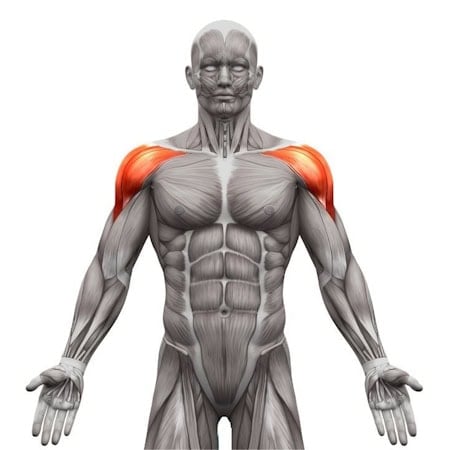
Anterior delt
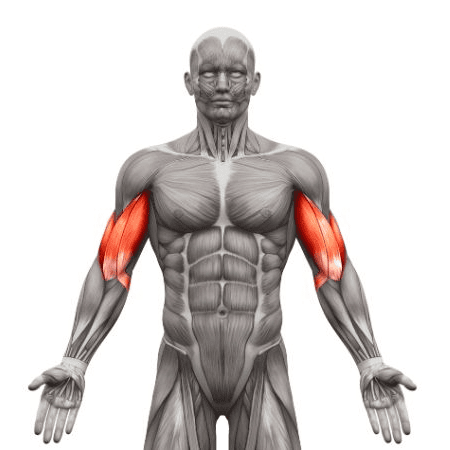
Biceps
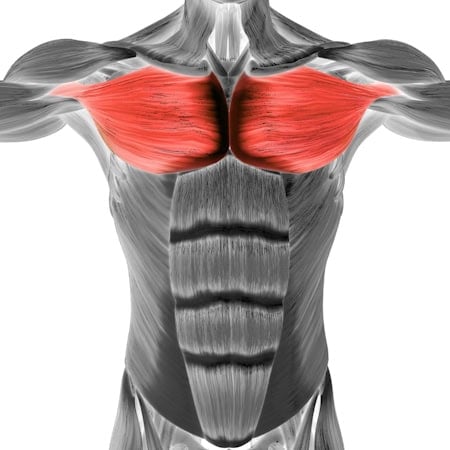
Upper chest
Secondary Muscle(s):
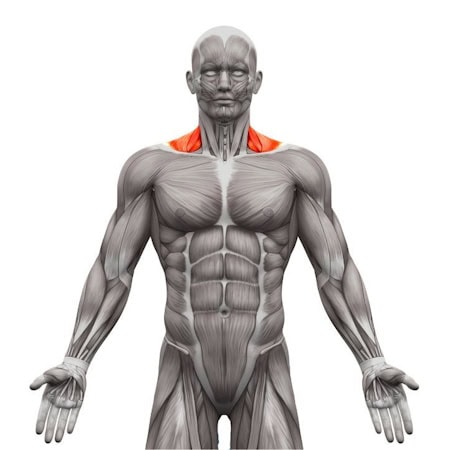
Trapezius
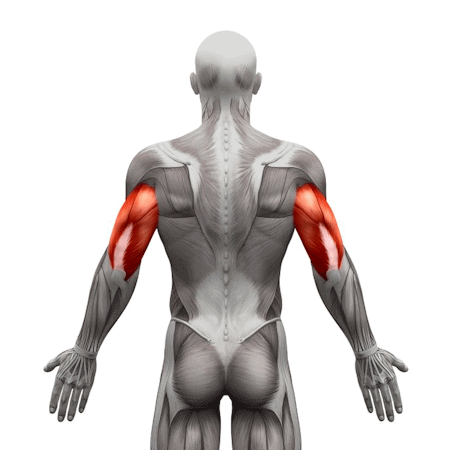
Triceps
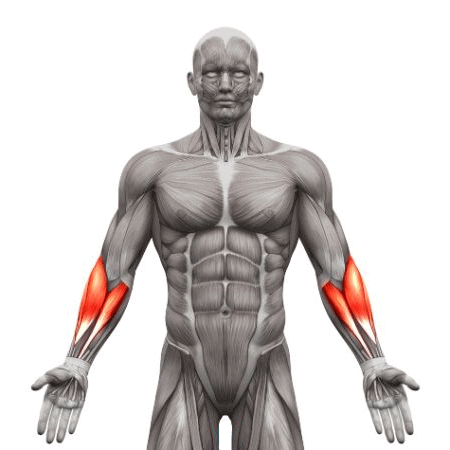
Forearm
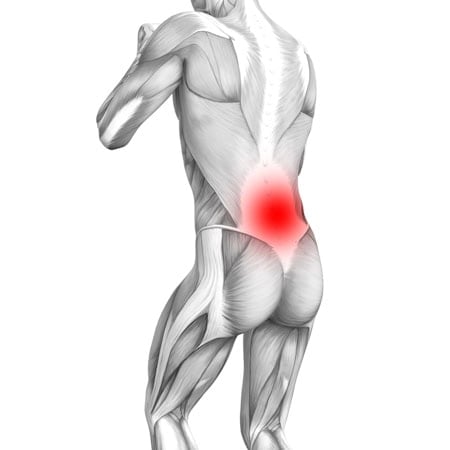
Lower back
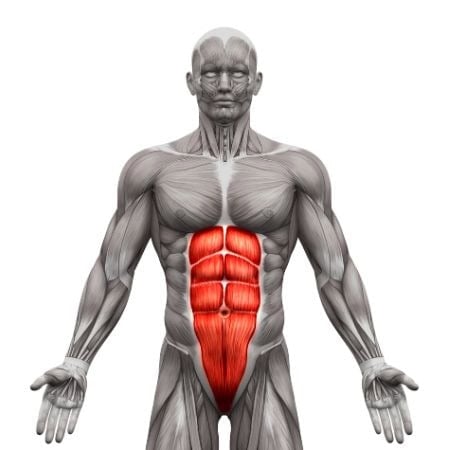
Abdominal
Equipment needed for Floor Maltese (Maltese Planche)
Adjust the difficulty of Floor Maltese (Maltese Planche)
How to make Floor Maltese (Maltese Planche) harder?
How to make Floor Maltese (Maltese Planche) easier?
How to make Floor Maltese (Maltese Planche) harder?
To make Floor Maltese (Maltese Planche) harder:
-
Reduce resistance-band or spotter assistance in small and measurable increments.
-
Narrow the straddle gradually until both straight legs remain together.
-
Increase the unassisted hold duration only while every completion standard remains intact.
-
Move the hands incrementally wider and closer to the hip line without losing wrist comfort or elbow lockout.
-
Enter the Floor Maltese from a strict Planche without allowing the feet to touch down.
-
Return from the Floor Maltese to a strict Planche under control.
-
Perform repeated Planche-to-Floor-Maltese transitions without changing the bodyline.
-
Progress to a controlled Maltese Press only after the static hold and both transition directions are repeatable.
How to make Floor Maltese (Maltese Planche) easier?
To make Floor Maltese (Maltese Planche) easier:
-
Keep both toes on the floor and practise a controlled Floor Maltese Lean before attempting to float the feet.
-
Place the hands only slightly wider than your strongest Planche position and increase the width gradually.
-
Use stable parallettes to create more torso clearance and keep the wrists closer to neutral.
-
Loop a securely anchored resistance band beneath the pelvis to reduce the amount of bodyweight supported by the arms.
-
Ask a competent spotter to support the pelvis while you reproduce the final bodyline.
-
Use a tuck or advanced-tuck leg position to shorten the lower-body lever.
-
Use a wide straddle with straight knees before progressing to legs together.
-
Perform one-to-two-second assisted holds and stop before the elbows or shoulder position change.