
German Hang

How to do German Hang?
The German Hang is a static calisthenics position in which you support your body from a pull-up bar while your arms are extended behind your torso. In the finished position, your body hangs beneath your hands, your chest faces approximately toward the floor and your shoulders are placed in deep extension.
The position combines shoulder mobility with straight-arm control. The front of the shoulders, chest and biceps are placed under tension in a lengthened position, while your hands, forearms and shoulder-girdle muscles keep you connected to the bar and control how deeply you descend.
The German Hang is the bottom position of the Skin the Cat, but the two exercise names do not mean exactly the same thing. A German Hang is the static hold itself. A Skin the Cat is the complete rotational movement used to enter the German Hang and, in its more advanced form, return to the starting hang.
It is also different from the Back Lever. In a German Hang, most of your body hangs downward beneath the bar. In a back lever, your body is extended horizontally, which creates a much greater leverage and strength demand. The German Hang can help you become comfortable controlling the shoulder-extension position used in back lever training, but it does not replace the specific strength progressions required for the back lever.
| German Hang quick facts | What to know |
|---|---|
| Main purpose | Controlled, loaded shoulder-extension mobility |
| Primary equipment | A secure pull-up bar with clear space on both sides |
| Standard grip | Overhand grip, approximately shoulder-width apart |
| Entry | From a dead hang through an inverted tuck, or with foot assistance on a low bar |
| Completion standard | A controlled, pain-free hold with straight elbows and a safe exit |
| Most important rule | Never descend farther than you can control |
On this page: purpose and benefits · readiness test · equipment and setup · warm-up · step-by-step instructions · form standard · common mistakes · programming · safety · questions
What Is the German Hang Used For?
The German Hang gives you a controlled way to practise supporting load while your arms are behind your torso. This position is useful for athletes working toward the Skin the Cat, ring transitions and back lever progressions. It can also be trained independently as a loaded shoulder-extension mobility drill.
Its main value is not simply reaching the deepest possible stretch. The more useful goal is to develop a range that you can enter, stabilize and leave under control. A shallower German Hang that you can reproduce without pain is more valuable than a deeper position reached by dropping, twisting or losing control of your shoulders.
The exercise may help you:
- Become more comfortable supporting load in shoulder extension.
- Develop control at the bottom of the Skin the Cat.
- Prepare for the shoulder position used in back lever progressions.
- Strengthen your grip and straight-arm positional control.
- Identify differences between your left and right shoulder-extension range.
- Learn to enter and exit an inverted hanging position without relying on momentum.
The German Hang should not be presented as a guaranteed treatment for shoulder pain or as an exercise that prevents injuries. It is a demanding loaded position, and its suitability depends on your current mobility, training history and shoulder condition.
Are You Ready to Try a German Hang?
You do not need advanced back lever strength before learning the German Hang. However, the full hanging version requires sufficient grip strength, inversion control and shoulder-extension tolerance.
Before attempting an unsupported German Hang on a high bar, check whether you can answer “yes” to the following:
- Can you maintain a comfortable Dead Hang for several controlled breaths?
- Can you support some weight with your arms behind your body in a Reverse Plank or a foot-assisted German Hang?
- Can you lift into a compact inverted tuck without uncontrolled swinging?
- Do both shoulders tolerate a similar amount of extension without sharp pain or instability?
- Can you reverse the rotation, reach a support with your feet or use a competent spotter to exit?
If you cannot yet pass all five checks, you can still practise the position with your feet supported on the floor. The foot-assisted variation allows you to control how much bodyweight reaches your shoulders and does not require an inverted entry.
If you have a current shoulder or biceps injury, recurrent shoulder instability, a history of shoulder dislocation or recent surgery involving the shoulder, elbow or upper arm, seek individualized guidance from an appropriately qualified healthcare professional before loading this position.
Equipment and Setup
For the full version, use a securely installed pull-up bar with enough clearance for your body to rotate on both sides. You need unobstructed space above, below and behind the bar. Place an exercise mat underneath you and remove boxes, benches or other objects from the rotation path.
A doorway pull-up bar is usually a poor choice because the doorframe can obstruct your legs or torso. Only use one if it is securely installed and provides enough space on both sides for the complete movement.
Use a bar that is thick enough to grip securely but not so thick that your hands begin to fail before your shoulders. Chalk can help if the bar or your hands are slippery, but it cannot compensate for an insecure grip or unsuitable equipment.
Choosing Your Grip Width
Begin with an overhand grip approximately shoulder-width apart or slightly wider. Wrap your thumbs around the bar rather than using an open or thumbless grip.
A very narrow grip can make it harder to pass your body between your arms and may increase the shoulder-mobility demand. An excessively wide grip can reduce control. Adjust the width slightly until you can keep both hands secure and rotate symmetrically.
Keep the overhand grip as your default bar technique. Underhand and mixed-grip variations change the demands around the shoulders, elbows and biceps and should not be your first version.
High Bar or Low Bar?
- Use a high bar when you can enter through an inverted tuck and confidently reverse the movement.
- Use a low bar when learning the shoulder position, controlling the load with your feet or developing a reliable exit.
A high bar does not make the German Hang more correct. It simply removes foot assistance. Start with the setup that lets you control the movement safely.
How to Warm Up for the German Hang
Do not use the full German Hang as your first shoulder warm-up exercise. Begin with general movement and progress from unloaded shoulder motion to partially loaded extension.
A practical preparation sequence is:
- Complete the upper-body portions of our Joint Warm-Up Routine.
- Perform several slow Towel Pass Throughs using a grip width that allows smooth movement without forcing the shoulders.
- Perform two or three short dead hangs to prepare your hands, forearms and overhead position.
- Use a Reverse Plank or supported tabletop position to introduce low-load shoulder extension.
- Perform two or three foot-assisted partial German Hangs, gradually increasing the depth only if the preceding position feels comfortable.
The warm-up should make the movement feel more controlled, not tire your grip or force a large increase in range.
How to Do the German Hang on a Pull-Up Bar
Method 1: Full German Hang From a Dead Hang
- Grip the bar. Take a closed overhand grip approximately shoulder-width apart. Check that both hands are equally spaced and that your thumbs are wrapped securely around the bar.
- Establish a still dead hang. Extend your elbows and allow your body to settle directly beneath the bar. Stop any forward-and-back swinging before beginning the rotation.
- Create a compact tuck. Bring your knees toward your chest and curl your pelvis upward. A tight tuck keeps your mass closer to the bar and makes the entry easier to control.
- Lift into an inverted tuck. Continue raising your hips until they approach the height of the bar. Your knees and feet should travel upward and then backward between your arms.
- Rotate beyond the inverted position. Let your tucked legs pass behind the bar. Move slowly and maintain a secure grip as your shoulders begin moving into extension.
- Control the descent. Gradually lower your legs behind you. Do not let their weight pull you suddenly into the bottom position.
- Find your German Hang depth. Stop when your arms are behind your torso and you feel strong but manageable tension across the front of the shoulders, chest or biceps. You do not need to reach your maximum possible range.
- Stabilize the hold. Straighten your elbows, keep both shoulders at a similar depth and maintain enough muscular tension to prevent an uncontrolled drop. Let your shoulder blades move naturally rather than forcing them into an exaggerated “back and down” position.
- Breathe normally. Keep your head and neck relaxed, maintain your grip and take slow breaths without using each exhalation to force yourself deeper.
- Exit under control. Tuck your knees tightly, lift your hips and reverse the rotation until your legs pass back through your arms. Return first to an inverted tuck and then to a controlled dead hang.
Method 2: Foot-Assisted German Hang on a Low Bar
This is the preferred starting method if you want to learn the shoulder position without first mastering the full inversion.
- Stand with your back close to a secure bar positioned approximately between waist and chest height.
- Reach behind you and take an even overhand grip with your hands approximately shoulder-width apart.
- Keep your feet firmly on the floor and gradually bend your knees or move your hips forward and downward.
- Allow your arms to move farther behind your torso while controlling how much weight you transfer from your legs into your hands.
- Stop at the first strong but manageable stretch. Keep your elbows straight and both shoulders even.
- Hold the position while breathing normally and maintaining substantial support through your feet.
- To exit, press through your feet, straighten your legs and return your torso toward the bar before releasing your grip.
Reduce foot assistance gradually over multiple sessions. Do not lift your feet merely to make the exercise look more advanced.
What Does a Correct German Hang Look Like?
A repetition counts as a controlled German Hang when:
- Your hands maintain a secure, closed grip throughout the hold.
- Your elbows are fully extended without being aggressively hyperextended.
- Your upper arms are visibly behind your torso.
- Your body hangs beneath the bar with your chest facing approximately toward the floor.
- Your shoulders remain at a similar depth without one side twisting or dropping lower.
- Your body remains still rather than swinging through the position.
- You maintain control instead of collapsing into your deepest available range.
- You breathe normally during the hold.
- You can reverse the movement or return your feet safely to a support.
- The position does not produce sharp pain, pinching, instability, tingling or numbness.
Your legs do not have to be perfectly straight for the hold to count. A tucked or partially extended lower-body position is acceptable when the primary goal is shoulder mobility and control. Straightening the legs mainly changes your body shape and can increase the difficulty of the entry and exit.
There is also no universal depth that every athlete must reach. Shoulder structure, training history and mobility differ between individuals. Judge the exercise by control and comfort rather than by how far your feet travel toward the floor.
Should the German Hang Be Active or Passive?
The most useful answer is controlled rather than completely rigid or completely passive.
You do not need to pull your shoulder blades forcefully down and back. However, you should maintain enough muscular tension to control your speed, keep both shoulders even and prevent your bodyweight from pulling you suddenly into the deepest possible position.
A gentle reduction in tension may be appropriate in a supported mobility variation, where your feet continue to carry much of your weight. In an unsupported full-bodyweight German Hang, avoid collapsing passively at your end range.
The shoulder achieves its large range of motion through a combination of static and dynamic stabilizing structures, including the rotator cuff and surrounding shoulder-girdle muscles. The NCBI overview of the glenohumeral joint provides additional anatomical context.
Common German Hang Mistakes
- Using a high bar without an exit plan: Being able to lower into the German Hang does not mean you are strong enough to reverse the movement. Use a low bar, foot assistance or a spotter until you have a reliable exit.
- Dropping into the bottom: The legs create momentum as they descend behind the bar. Slow them down instead of allowing them to pull your shoulders abruptly into extension.
- Forcing maximum depth: A deeper position is not automatically a better repetition. Stop at the deepest range you can stabilize without pain.
- Using momentum to invert: Kicking may help you reach the position, but it makes the descent more difficult to control. Begin from a still hang and use a compact tuck.
- Bending the elbows: Bent elbows change the exercise and can hide insufficient shoulder range or entry control. Use more assistance rather than forcing the full version with bent arms.
- Holding the breath: Normal breathing helps you assess the position honestly. If you must brace excessively or hold your breath, reduce the depth.
- Twisting toward the more mobile side: Keep your grip even and check that both shoulders descend together. Film from behind if asymmetry is difficult to feel.
- Forcing the shoulders “down and back”: Avoid imposing an exaggerated scapular position. Maintain control while allowing the shoulder blades to respond naturally to the movement.
- Relaxing deeper with every exhalation: Breathing should help you remain calm, not push you beyond the range you can actively control.
- Training through biceps or joint pain: A stretch sensation is not the same as sharp, localized or escalating pain. End the set and reassess the variation.
How Long Should You Hold a German Hang?
There is no research-established German Hang duration that is ideal for everyone. Hold time should be based on your control, training goal and response to the exercise rather than an arbitrary maximum.
A conservative starting point is:
- Sets: 2–4 controlled holds
- Hold duration: approximately 5–15 seconds
- Rest: 60–120 seconds between demanding holds
- Initial frequency: 1–2 sessions per week
These ranges are starting guidelines, not mandatory targets. Use more foot assistance or a shorter hold if your position deteriorates. Increase either the depth, hold duration or amount of bodyweight supported—but not all three at once.
Do not train the German Hang to grip failure or maximum shoulder depth. Finish each set while you can still exit safely. If your shoulders, elbows or biceps remain unusually sore or uncomfortable after the session, reduce the range, duration or frequency the next time.
Where Should It Go in Your Workout?
- For skill preparation: Practise controlled German Hangs after your warm-up and before fatiguing Skin the Cat or back lever work.
- For mobility: Use a foot-assisted version later in the session, keeping the intensity moderate and the position controlled.
- For beginners: Practise the entry, hold and exit while your grip is fresh. Do not leave it until the end of a workout if fatigue makes your exit unreliable.
What Should a German Hang Feel Like?
You may feel broad, symmetrical tension or a stretching sensation across the front of the shoulders, chest and biceps. The sensation should remain manageable, should not become sharper as you hold and should reduce when you leave the position.
Stop the exercise if you experience:
- Sharp or stabbing pain.
- Pinching or deep joint pain in the shoulder.
- A sudden pulling sensation in the biceps or near the front of the elbow.
- Tingling, numbness, burning or an electrical sensation in the arm or hand.
- A feeling that the shoulder is slipping, unstable or about to give way.
- Rapidly increasing pain during the hold.
- Symptoms that become worse after each set instead of settling.
Do not use the German Hang to diagnose, test or rehabilitate an existing shoulder injury on your own. Persistent pain, neurological symptoms, instability or a sudden loss of strength warrants assessment by an appropriately qualified healthcare professional.
German Hang on a Bar vs. Rings
The bar and ring versions belong on the same canonical exercise page because the basic position and purpose are the same. This page uses the fixed-bar German Hang as the standardized demonstration.
- A bar provides a fixed, predictable apparatus and makes it easier to compare your grip and body position between attempts.
- Rings allow each hand to rotate and find a more individual position, which some athletes find more comfortable for the wrists and shoulders.
- Low rings make foot assistance particularly easy and can be an excellent way to learn the shoulder position.
- Unsupported rings move independently and require you to control the position of both hands, but hanging below the rings is not automatically harder for every athlete.
Treat the ring German Hang as an equipment variation, not a separate exercise progression. Choose the apparatus that allows the most controlled, symmetrical and comfortable position.
Frequently Asked Questions
Is the German Hang the same as a Skin the Cat?
No. The German Hang is the static bottom position. The Skin the Cat is the rotational movement used to enter the position and, when performed as a complete repetition, return to the starting hang.
Do I need to pull back out for the hold to count?
No. The German Hang itself is the stationary position. However, you still need a safe way to exit. If you cannot reverse the movement, use a low bar, keep your feet close to a support or work with a spotter.
Why can I lower into the German Hang but not pull back out?
Lowering is assisted by gravity, while reversing the movement requires grip strength, shoulder control, pulling strength and enough abdominal compression to bring your legs back through your arms. Practise a tighter tuck and use foot or spotter assistance when learning the return.
How deep should I go?
Descend only as far as you can keep your elbows straight, shoulders even and movement controlled without painful symptoms. Your deepest passive range is not automatically your appropriate training range.
Should my legs be straight?
Not necessarily. The German Hang is defined primarily by the shoulder and arm position. Keeping the legs tucked makes the entry and exit easier, while extending them creates a longer and more demanding body position.
Does the German Hang help with the Back Lever?
It can help you become accustomed to loaded shoulder extension and the inverted entry used in back lever training. However, you must still develop straight-arm strength and horizontal body control through progressions such as the Tucked Back Lever.
Is the German Hang a flexibility exercise or a strength exercise?
It contains elements of both. The shoulders move into a large extension range, but your grip and upper body must also stabilize that range under load. It is most accurately classified as a loaded mobility and positional-control exercise.
What Should You Practise Next?
Your next exercise should depend on why you are training the German Hang:
- For more shoulder-extension mobility: Continue with foot-assisted German Hangs and gradually reduce assistance without forcing additional depth.
- For a complete rotational skill: Progress to a controlled Skin the Cat that returns from the German Hang to the starting position.
- For the Back Lever: Combine comfortable German Hangs with dedicated inverted-hang and Tucked Back Lever practice.
- If the full position remains uncomfortable: Continue using the Reverse Plank, Towel Pass Through and foot-assisted German Hang instead of forcing the unsupported version.
The German Hang is mastered when you can control the position—not when you can tolerate the deepest possible stretch.
Tips for the proper execution of German Hang
Warm up your shoulders, elbows and wrists before loading the German Hang position.
Use a low bar and foot assistance when first learning the required shoulder-extension range.
Begin with a compact tuck to keep your centre of mass close to the bar and reduce leverage.
Enter slowly. Do not kick your legs or drop rapidly into the bottom position.
Keep your elbows straight without aggressively forcing them beyond their natural lockout.
Maintain enough shoulder-girdle tension to control the depth instead of collapsing suddenly into a passive hang.
Keep both hands evenly positioned and check that one shoulder is not descending farther than the other.
Breathe normally and use short, repeatable holds instead of forcing a maximum-duration stretch.
Increase the range only when you can enter, hold and exit the current depth without pain or loss of control.
Stop immediately if you feel sharp pain, pinching, tingling, numbness or a sudden pulling sensation around the shoulder or biceps.
Muscles worked when doing German Hang
The German Hang is primarily a loaded mobility and positional-control exercise rather than a conventional muscle-building movement. The anterior shoulders, chest and biceps are placed under considerable tension as the arms move behind the torso, while the grip and shoulder-girdle muscles stabilize the position.
Main Muscles Under Load
- Anterior deltoids: The front deltoids help control the arms as the shoulders move into extension behind the body. The anterior deltoid normally contributes to shoulder flexion, so it is placed in a lengthened and demanding position during the German Hang.
- Biceps brachii: The biceps help stabilize the arm while the elbows remain straight. Because the long head of the biceps crosses the shoulder joint, the muscle is affected by both the extended elbow and the arms-behind-the-body position. Its anatomy and relationship with the shoulder are described in this NCBI overview of the biceps muscle.
- Pectoralis major: The chest is placed under tension as the upper arms move behind the torso. It contributes to controlling the shoulder and resisting an uncontrolled descent into deeper extension.
Secondary and Stabilizing Muscles
- Rotator cuff muscles: Help stabilize the upper-arm bone within the shoulder joint while the shoulders support the hanging position.
- Trapezius, rhomboids and other scapular stabilizers: Control the shoulder blades during the entry, hold and exit.
- Triceps: Contract isometrically to maintain elbow extension.
- Forearm and hand muscles: Maintain the closed grip that supports your bodyweight on the bar.
- Latissimus dorsi and teres major: Contribute to controlling the upper arms and the transition into and out of the position.
- Abdominals and hip flexors: Compress the body during the tucked entry and reverse rotation.
The shoulder is highly mobile and relies on coordinated muscular stabilization. This NCBI overview of the glenohumeral joint provides additional anatomical context for shoulder movement and stabilization.
Primary Muscle(s):
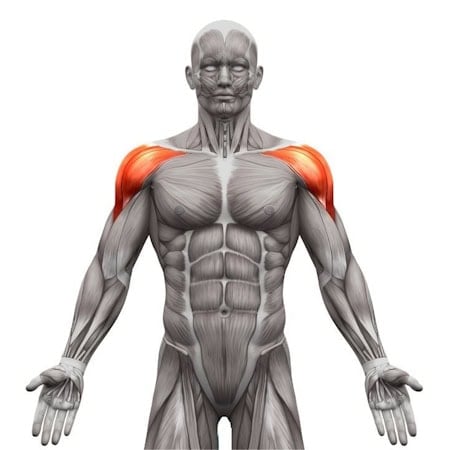
Anterior delt
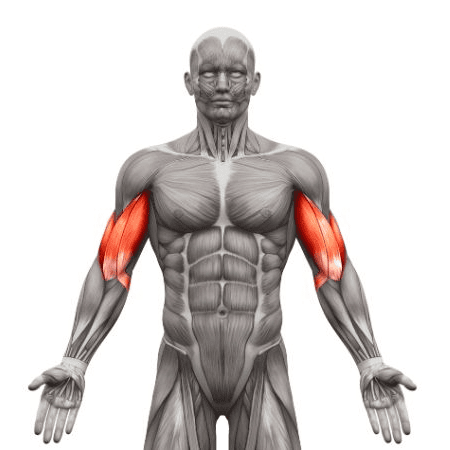
Biceps
Secondary Muscle(s):
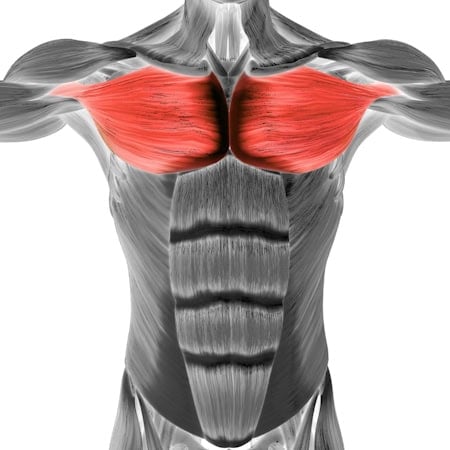
Middle chest
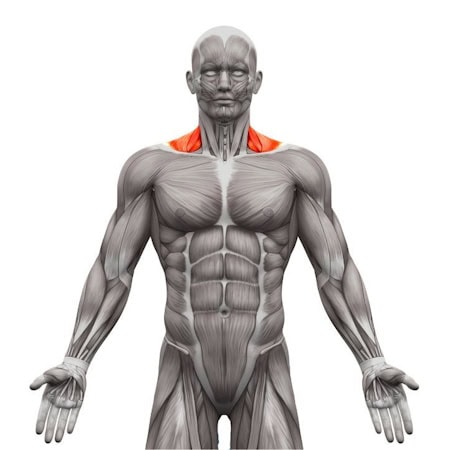
Trapezius
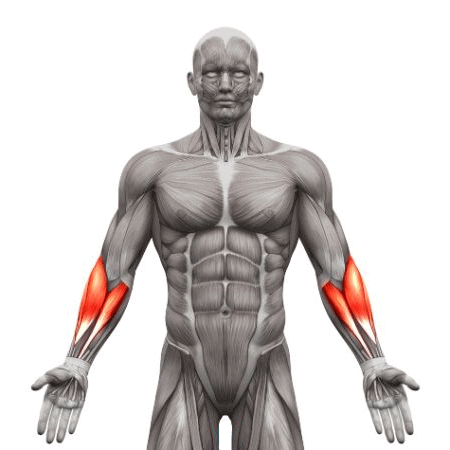
Forearm
Equipment needed for German Hang
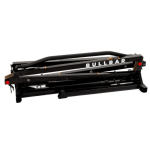
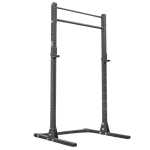
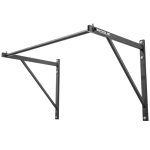
Adjust the difficulty of German Hang
Adjust the German Hang by changing how much bodyweight your arms support, how deeply your shoulders move into extension and how demanding the entry and exit are. Begin with a depth that you can control without pain and increase the range gradually.
The ability to lower into the position does not automatically mean that you can pull back out. Learn on a low apparatus or with assistance until you have a reliable exit strategy. When the German Hang is comfortable and repeatable, the next logical steps are a complete Skin the Cat and, later, the Tucked Back Lever.
How to make German Hang harder?
How to make German Hang easier?
How to make German Hang harder?
To make German Hang harder:
-
Increase the Hold Duration: Extend the hold gradually while preserving straight elbows, even shoulders and a controlled exit.
-
German Hang Pull-Out: Pull from the bottom position back into an inverted tuck without assistance.
-
Full Skin the Cat: Perform the complete rotation from dead hang to German Hang and back to the starting position.
-
Straight-Leg Entry: Keep the knees extended during more of the rotation to increase the leverage placed on the upper body.
-
Unsupported Ring German Hang: Perform the same position on high gymnastics rings without foot assistance, controlling the independently moving handles.
-
Tucked Back Lever: Progress from the inverted position into a horizontal tucked back lever with straight arms.
How to make German Hang easier?
To make German Hang easier:
-
Foot-Assisted German Hang: Use a low bar and keep part of your bodyweight supported through your feet.
-
Partial German Hang: Stop the descent before reaching your maximum shoulder-extension range.
-
Spotter-Assisted German Hang: Ask a competent spotter to support your hips and control how much weight reaches your shoulders.
-
Shorter Holds: Pause only briefly before returning your feet to the floor or reversing the movement.
-
Reverse Plank: Practise supporting yourself with the arms behind the torso without hanging your full bodyweight.
-
Towel Pass Through: Use controlled pass-throughs to explore shoulder range without applying full bodyweight.