
Hanging Side Pull
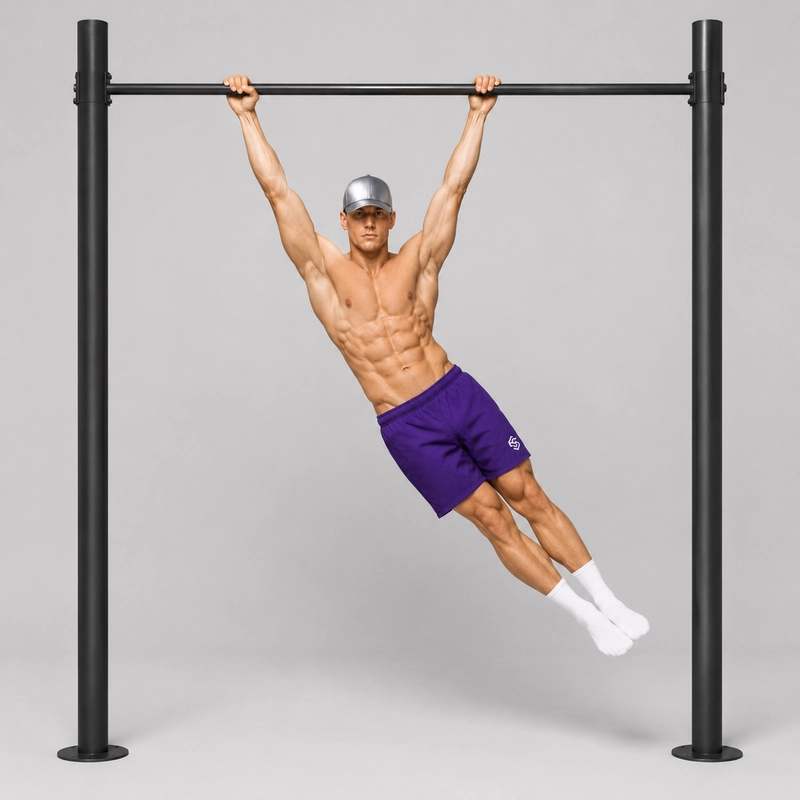
How to do Hanging Side Pull?
The hanging side pull is a lateral pulling and core exercise performed from a pull-up bar. Instead of pulling your chin vertically over the bar, you keep your arms straight and use one side of your back and core to lift your hips toward one hand while keeping your legs straight and together.
The movement begins from an active hang. You depress the shoulder on the working side, engage the corresponding lat and contract your obliques to move your hips sideways. Although the legs rise during the exercise, the goal is not simply to perform a sideways hanging leg raise. The shoulders, torso, hips and legs should move together without swinging.
The hanging side pull can support your Human Flag training because it develops the lateral pulling action associated with the top arm and strengthens the obliques in a hanging position. It does not train the bottom arm’s pushing action, so it should be combined with exercises such as the Human Flag Plank and other drills from our human flag progression guide.
The exercise can also improve unilateral scapular control, grip endurance and the ability to maintain straight-leg tension. These qualities carry over to more advanced flag variations, including the Tuck Human Flag and Straddle Human Flag.
The hanging side pull is also identified as a human flag preparation exercise in this external human flag technique and progression guide.
How to Do the Hanging Side Pull
Equipment and Setup
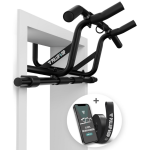
Use a secure pull-up bar high enough for your legs to hang without touching the floor. Make sure there is sufficient clearance on both sides of the bar because your hips and legs will move laterally. Use a shoulder-width or slightly wider pronated grip, with your palms facing away. A fixed pull-up bar is preferable while learning because it provides more lateral stability than independently moving rings. Complete a general warm-up followed by shoulder, elbow, wrist and trunk preparation. The Joint Warm-Up Routine can be followed by easier hanging exercises and controlled repetitions of the Hanging Leg Raise.
Step-by-Step Instructions
- Grip the pull-up bar with a shoulder-width or slightly wider overhand grip.
- Hang with your arms completely straight and your feet clear of the floor.
- Bring your legs together, straighten your knees and point your toes.
- Move from a passive hang into an active hang by drawing your shoulders down and creating tension through your upper back.
- Brace your abdominals and squeeze your glutes before beginning the sideways movement.
- Depress the shoulder on one side more strongly and pull your upper body slightly toward that hand without bending the elbow.
- Contract the obliques on the same side and lift your hip laterally toward the working hand.
- Allow your straight, joined legs to travel upward and sideways as part of the same controlled movement.
- Keep your chest and pelvis facing forward instead of twisting toward the ceiling or floor.
- Pause briefly at the highest position you can control without bending your arms or swinging.
- Lower your hips and legs slowly until you return to a balanced active hang beneath the center of the bar.
- Repeat toward the opposite side, keeping the range of motion as symmetrical as possible.
Hanging Side Pull Completion Standard
- The repetition begins and ends in a controlled active hang.
- Both elbows remain fully extended throughout the movement.
- The legs remain straight, together and clear of the floor.
- The hip travels upward and toward one side rather than only moving forward.
- The shoulder on the working side actively depresses as the body shifts toward it.
- The torso, pelvis and legs move together without uncontrolled swinging.
- The chest and pelvis remain facing forward without excessive rotation.
- The athlete pauses briefly at the highest controlled position.
- The body returns to the center under control before changing sides.
Common Mistakes
- Turning the movement into a pull-up: Keep both elbows straight and initiate the side pull through the shoulder blade, lat and lateral core.
- Performing only a sideways leg raise: Move the hip and torso toward the working hand rather than swinging the feet independently.
- Bending the knees: Contract the quadriceps and keep the legs straight to preserve the intended leverage.
- Separating the legs: Press the legs together so the lower body behaves as one controlled lever.
- Using momentum: Pause in the center before every repetition and eliminate any forward-and-back swing.
- Beginning from a passive hang: Establish active shoulder tension before attempting to move the hips.
- Shrugging toward the ears: Maintain scapular depression, particularly on the side toward which you are pulling.
- Rotating the chest: Keep your sternum and pelvis facing forward instead of turning the exercise into a twisting movement.
- Arching the lower back: Brace your abdominals and maintain a controlled pelvic position.
- Chasing excessive height: Use only the range you can achieve with straight arms, straight legs and no swing.
- Dropping from the top: Control the eccentric phase back to the centered hang.
- Pulling higher on one side: Use a smaller range on your stronger side until both directions become more balanced.
- Holding your breath: Exhale during the lateral pull and inhale as you return to the center.
Benefits of the Hanging Side Pull
- Develops unilateral lat strength and scapular depression.
- Strengthens the obliques through controlled lateral trunk movement.
- Builds grip endurance and active-hang control.
- Improves coordination between the shoulders, torso, hips and legs.
- Develops straight-leg tension through the quadriceps, glutes and core.
- Trains both sides independently and helps reveal strength differences.
- Provides a pull-up-bar-based preparation exercise for human flag training.
- Strengthens the pulling action associated with the top arm of a human flag.
- Teaches controlled lateral movement without relying on momentum.
- Can be scaled from a small hip shift to a much larger side pull.
Readiness and Safety
Before attempting the full straight-leg variation, you should be able to maintain a controlled active hang and perform basic hanging core exercises without swinging. The Hanging Knee Raise and Hanging Leg Raise can help develop the required hanging control. Use a bar that provides enough lateral clearance and inspect the mounting before training. Avoid performing the movement if your feet could hit a wall, rack or another athlete. Increase the range gradually and stop if you experience sharp shoulder, elbow or back pain, instability, numbness or tingling. Do not force the hips higher by suddenly pulling or twisting from a passive hang.
Frequently Asked Questions
Should my arms remain straight during a hanging side pull?
Yes. In the strict version, both elbows remain extended so the exercise emphasizes scapular control, straight-arm lat engagement and lateral core strength. If your elbows bend, reduce the range of motion.
How high should I lift my hips?
Lift as high as you can while keeping your arms and legs straight, your body controlled and your chest facing forward. The hip does not need to reach the hand or bar for the repetition to be effective.
Should my legs move sideways or forward?
Your legs should travel upward and sideways with your hips. They may move slightly forward because of your body proportions, but the exercise should not become a conventional Hanging Leg Raise.
What is the difference between a hanging side pull and a hanging oblique knee raise?
A hanging oblique knee raise uses bent knees and primarily brings the knees toward one side of the torso. The hanging side pull keeps the legs straight and includes an active sideways shift of the shoulders, torso and hips.
Is the hanging side pull a human flag progression?
It is a useful human flag preparation exercise because it strengthens lateral pulling, scapular depression and the obliques. However, it does not train the opposing bottom-arm push required for the full flag. Combine it with the Human Flag Plank and the progressions in our human flag training guide.
What grip should I use?
Use a shoulder-width or slightly wider pronated grip. Keep the wrists neutral and wrap the thumbs around the bar for a secure grip.
Should I perform alternating repetitions?
You can alternate sides after every repetition or complete all repetitions toward one side before changing. Alternating repetitions often makes it easier to compare your range and control immediately.
How many hanging side pulls should I perform?
Begin with three to four sets of three to six controlled repetitions per side. Pause briefly at the top and use a slow lowering phase rather than performing additional swinging repetitions.
Why does my body start swinging?
Swinging usually occurs when the legs initiate the movement or when you change direction too quickly. Return to a centered active hang, allow the body to become still and begin the next repetition through the shoulder and lateral core.
Can I perform hanging side pulls on rings?
The movement can be adapted to rings, but the rings move independently and make lateral control less predictable. A fixed pull-up bar is preferable for learning the exercise and remains the canonical equipment for this page.
What should I progress to next?
Increase your lateral range and pause duration before moving into more specific human flag exercises. Useful next steps include the Human Flag Plank, Tuck Human Flag and eventually the Human Flag.
Tips for the proper execution of Hanging Side Pull
Use a shoulder-width or slightly wider pronated grip on the pull-up bar.
Wrap your thumbs around the bar to create a secure grip.
Establish an active hang before beginning each repetition.
Keep both elbows fully extended throughout the movement.
Depress the shoulder on the side toward which you are pulling.
Initiate the movement through the working-side lat and obliques rather than swinging your feet.
Move your hip upward and sideways toward the working hand.
Keep your legs straight and pressed together.
Contract your quadriceps and point your toes to create a rigid lower-body lever.
Keep your chest and pelvis facing forward instead of rotating.
Allow your shoulders, torso, hips and legs to move as one connected unit.
Pause briefly at the highest position you can control.
Lower slowly to the center instead of dropping from the top.
Let your body become still before initiating the next repetition.
Use the same range of motion on both sides.
Stop the set when your elbows bend, your knees soften or momentum takes over.
Muscles worked when doing Hanging Side Pull
The hanging side pull combines unilateral straight-arm pulling with dynamic lateral core work. The lat and scapular muscles on the working side help shift the upper body, while the obliques lift the hip and control the sideways movement of the straight legs.
Primary Muscles
- Latissimus dorsi: The lat on the working side contributes to shoulder adduction and scapular depression as the body moves toward that hand.
- Obliques: The internal and external obliques produce and control lateral trunk flexion while helping lift the hip toward the side.
- Rectus abdominis: Braces the torso and helps prevent excessive spinal extension as the lower body rises.
Secondary Muscles
- Lower trapezius: Assists with scapular depression and shoulder stability.
- Rhomboids and other scapular stabilizers: Control the position of the shoulder blades during the lateral pull.
- Teres major: Assists the latissimus dorsi in controlling the upper arm.
- Quadratus lumborum: Supports lateral flexion and stabilization of the trunk.
- Hip flexors: Help lift and control the straight legs as the hips move upward.
- Quadriceps: Maintain knee extension throughout the exercise.
- Glutes: Help stabilize the pelvis and maintain lower-body tension.
- Forearms and hand muscles: Maintain the grip throughout each repetition.
- Biceps and triceps: Contract isometrically to stabilize the straight elbows.
The hanging side pull develops the lateral pulling component used by the top arm during the Human Flag. Because it does not include the bottom-arm pushing action, combine it with the Human Flag Plank or another exercise that specifically trains that part of the skill.
Primary Muscle(s):
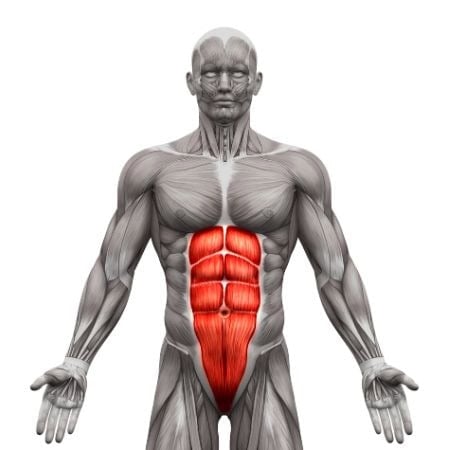
Abdominal
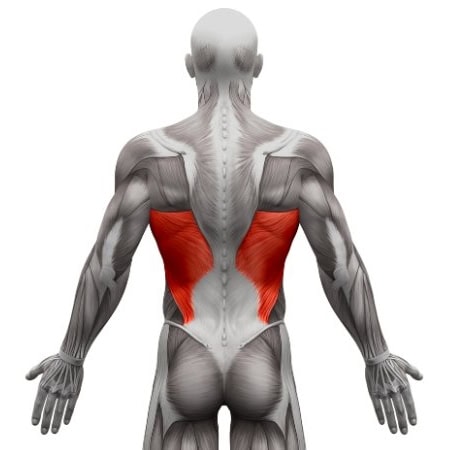
Lats
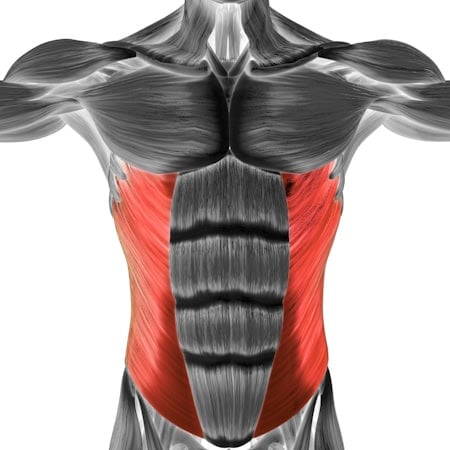
Oblique
Secondary Muscle(s):
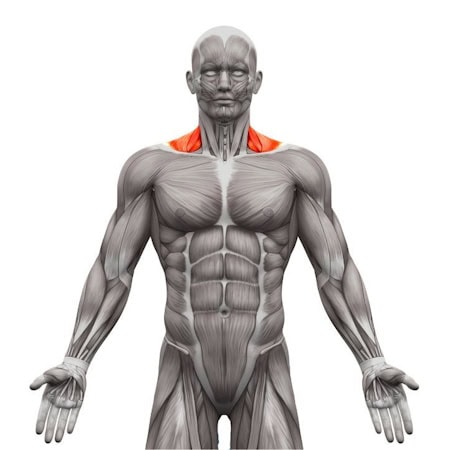
Trapezius
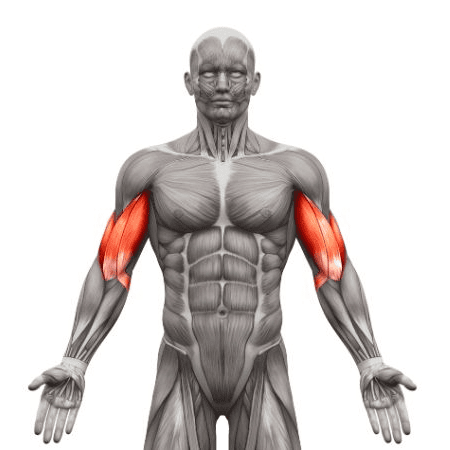
Biceps
Equipment needed for Hanging Side Pull
Adjust the difficulty of Hanging Side Pull
How to make Hanging Side Pull harder?
How to make Hanging Side Pull easier?
How to make Hanging Side Pull harder?
To make Hanging Side Pull harder:
-
Increase how far your hip travels toward the working hand.
-
Hold the highest position for two to five seconds.
-
Use a slower three-to-five-second lowering phase.
-
Alternate sides without returning to a passive hang.
-
Perform continuous controlled repetitions without allowing the body to swing.
-
Lift your thighs progressively closer to your forearms while keeping your knees straight.
-
Use a slightly wider grip if you can maintain secure shoulders and straight elbows.
-
Add very light ankle weights only after mastering strict bodyweight repetitions.
-
Combine hanging side pulls with human flag plank holds.
-
Progress to tuck, one-leg and straddle human flag exercises.
How to make Hanging Side Pull easier?
To make Hanging Side Pull easier:
-
Practise active hangs with small side-to-side shoulder shifts.
-
Use a smaller lateral hip movement while keeping your arms straight.
-
Perform the exercise with your knees bent to shorten the lower-body lever.
-
Practise alternating hanging oblique knee raises before straightening the legs.
-
Lift only one straight leg toward the working side while the other leg hangs vertically.
-
Perform slow eccentric repetitions after stepping or receiving assistance into the higher position.
-
Use a resistance band under your feet to reduce the effective weight of the legs.
-
Perform fewer repetitions and reset completely between each side pull.