
Wall-Assisted Straddle Handstand Press Negative
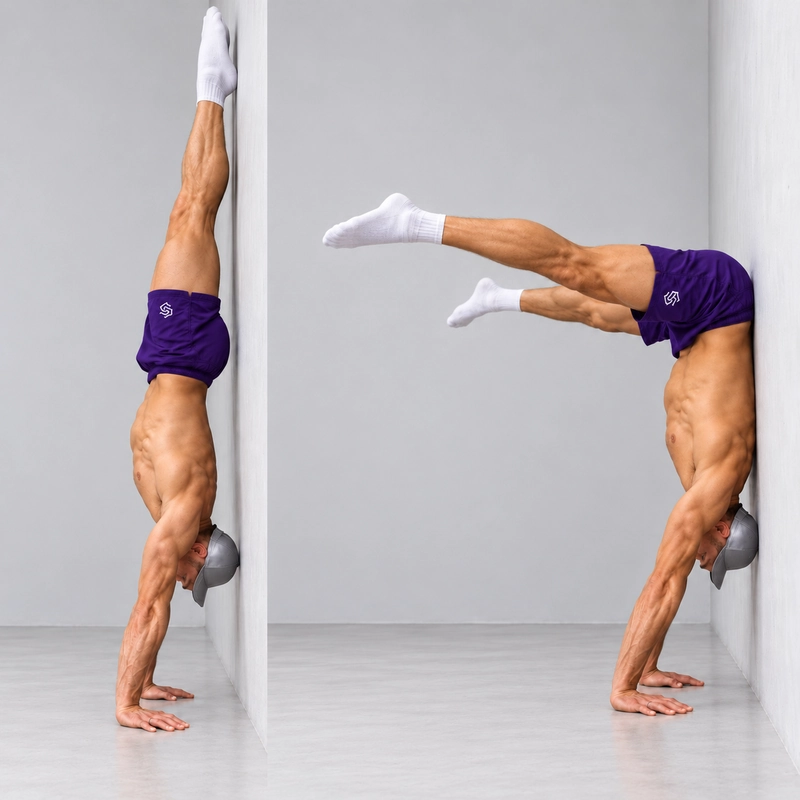
How to do Wall-Assisted Straddle Handstand Press Negative?
What is the Wall-Assisted Straddle Press Negative?
The Wall-Assisted Straddle Press Negative is a controlled straight-arm descent from a wall-assisted handstand to a folded straddle with both feet on the floor. Start with your back facing the wall, hands planted on the floor and a stable inverted position. Open the legs into a comfortable straddle, fold through the hips and lower both feet deliberately while continuing to push through straight arms.
The word “negative” describes the descending task: you practise the return pathway of a straddle press without having to perform the upward press first. You may use an entry you already control to establish the handstand, then settle before lowering. The entry is a separate reset and does not count as the negative.
This drill complements the Press to Handstand, which rises from a floor straddle to unsupported overhead balance without jumping. Here, the wall assists balance and the main result is a controlled descent to the floor. Being able to lower does not automatically mean you can reverse the movement and press back up.
It also differs from a Back-to-Wall Handstand hold. The hold maintains an upright position; the negative deliberately changes the hip angle and leg position. A handstand push-up negative bends the elbows to lower the body. In this exercise, the elbows stay straight and the head is never a support point.
The Freestanding Handstand Toe Float Drill works at the other end of the pathway: it starts near the floor and practises a brief unsupported takeoff. Feet-Elevated Straddle Press to Handstand changes the foot starting height and performs an ascent. Those drills can fit the same broader press practice, but their starts and completion standards should remain separate.
For a wider coaching explanation of lift and lowering practice, see GMB’s press handstand guide. It includes wall and freestanding negatives and discusses hand-to-wall spacing. Use that as broader coaching context; the floor finish and straight-arm standard below define this particular version.
What the wall assists—and what you still control
The wall gives you a contact surface behind the body as you move out of the vertical start. It can reduce the balance demand compared with a completely unsupported negative. You still need to support yourself through the hands, keep the elbows straight and control the changing position of the hips and legs. The wall does not turn a fast drop into a controlled press negative.
At the start, the heels can make light contact behind you. As the legs straddle and move towards the floor in front of you, heel contact changes and the posterior torso or pelvis may provide suitable assistance. Keep that contact controlled. Do not force the whole back flat, press the head into the wall or drag through a position where friction becomes your only brake.
The shoulders and hips need to coordinate rather than remain frozen in one vertical line. Some shoulder travel towards the landing side may be necessary as the legs lower and the body folds. Allow a gradual shift that you can support; avoid a sudden lunge away from the wall or a collapse between the arms.
A study of complete straight-arm presses in male gymnasts reported differences in body shape and joint moments between skill groups. It provides context for coordinating the fold and shoulder support. It did not test wall-assisted negatives or establish how slowly a beginner should lower.
Think of the descent as controlled movement into a folded straddle, not simply lowering straight legs like a rigid pendulum. Continue supporting the upper body as the thighs approach the torso. Near the floor, keep enough control to place the feet rather than letting their final few inches fall freely.
Setup and readiness
- Wall: use a clear, solid wall without protrusions, shelves or obstacles in the contact area. Avoid a surface that catches clothing or causes uncontrolled slipping.
- Floor: choose a firm, level, non-slip surface. Keep the palm support stable; a loose or deeply compressible mat can change the base of support.
- Clearance: leave room for a wide straddle and both feet to land on the floor in front of the wall. Clear the space to the sides for your practised exit.
- Hands: start approximately shoulder-width apart, with fingers spread and a comfortable forward or slightly outward orientation. Keep the full palms planted.
- Wall distance: use spacing that permits the back-to-wall start and the intended straddle descent. There is no universal measurement. Rehearse a small range and adjust between attempts, rather than moving the hands mid-repetition.
- Main range: hands and landing feet are on the same floor. Parallettes, raised hands or an elevated foot landing change the setup and must be labelled separately.
Before a full attempt, you should be able to enter the back-to-wall handstand deliberately, maintain active straight-arm support and use a familiar controlled exit. A freestanding handstand hold is not mandatory for the wall-assisted version. However, you need enough inverted control to start the descent without relying on an uncontrolled kick or an exhausted overhead hold.
You should also be able to place the palms from a folded straddle and keep the knees straight through a comfortable range. A full split is unnecessary. If the available fold makes the final floor approach uncontrollable, use a reduced-range or assisted version rather than forcing the legs down.
Prepare the palms with gradually loaded movements from the Wrist Warm-Up Routine. For earlier supported shoulder practice, the Pike Hold on a Plyo Box retains foot support. It is a preparation for loading the arms, not the same dynamic descent.
Learn your exit before working near the edge of your control. Handstand Factory’s public bail-training overview describes graded exit practice. Use suitable instruction and practise the exit in a manageable position; do not first try an unfamiliar cartwheel when your arms begin to give way.
How to do the Wall-Assisted Straddle Press Negative
- Establish the start. Plant both palms, use an entry you can control and settle into a back-to-wall handstand. A modest kick-up can be used for the reset; do not crash the heels into the wall. Keep the elbows straight and the shoulders actively supporting the body.
- Pause before the descent. Show a recognisable stable inverted position. Bring the legs under control and take a comfortable breath. The negative begins after the entry has settled, not while momentum from the kick is still moving the body.
- Open into a straddle. Separate the legs symmetrically to a width you can manage without twisting or bending the knees. Keep the hands fixed and the neck comfortable, looking towards the floor near the hands.
- Begin the hip fold. Lower both straight legs away from the wall towards the landing side while bending at the hips. Maintain pressure through the palms and continue pushing the floor away. Let wall contact change gradually as needed without using the head or neck for support.
- Control the middle range. As the feet pass through lower positions, keep the torso supported and allow the shoulder position to adapt gradually. Do not bend the elbows, fling the legs or abruptly lose posterior-body contact and fall away from the wall.
- Keep the last part slow. Continue folding as the feet approach the floor. Maintain straight knees and arms, and guide both feet down together. Reduce the range on later attempts if you repeatedly lose control in this part.
- Set both feet down. Finish with bilateral contact on the same floor as the hands, in a folded straddle. Keep the palms planted until your feet are supporting you. A quiet, deliberate landing matters more than reaching the floor after a fast drop.
- Unfold and reset separately. Once stable, shift support back to the feet and stand or rest. Re-enter the handstand only when ready. You do not need to press back upward for the repetition to count.
What counts as a full repetition?
A full repetition starts from a settled wall-assisted handstand with the back facing the wall. Both legs lower through a deliberate straddle while the elbows and knees remain straight, the hands stay fixed and the shoulders continue supporting the body. It ends with both feet deliberately grounded on the same floor as the hands. Wall assistance is allowed and should be recorded.
A partial descent is useful practice but is not a completed floor negative. A fast fall, elbow-bending descent, one-leg step-down or landing on a box changes the standard. If you must use one of those exits to recover, prioritise the exit and record the attempt as incomplete rather than chasing the repetition.
The starting legs may be together before you open into the straddle, or you may settle in a straddled handstand first. Keep the choice consistent when comparing sessions. The defining task is the controlled straight-leg straddle descent, not the entry style.
Common mistakes and useful corrections
Bending the elbows when the legs get lower
This changes the movement into a bent-arm descent and can bring the head towards the floor. Shorten the range, stop earlier or use planned spotting. Practise within a range where you can maintain active support rather than trying to rescue the last section with an elbow bend.
Holding the top well but dropping near the floor
A long wall hold does not prove that you can control the changing descent geometry. Pay attention to where speed suddenly increases. Use a smaller range or assistance through that section, and only extend it when the feet can approach their target deliberately.
Keeping the hips open while the feet swing down
The pathway requires a hip fold. If you try to lower the legs while preserving the entire upright shape, you may be pulled away from the wall. Bring the thighs towards the torso progressively while keeping the shoulders supportive and the neck clear.
Forcing one exact contact pattern against the wall
Heel contact in a static handstand does not remain possible through every part of the negative. Allow suitable posterior-body assistance to change with the movement. Do not force a deep lower-back arch, jam the head into the wall or use a rough surface to hold the body in place.
Changing hand distance during the repetition
If the setup is wrong, recover using your known exit and adjust before the next attempt. Hand walking changes the support base and makes the descent harder to compare. Moving farther from the wall is not an automatic progression: spacing changes both contact geometry and hand loading.
Turning the landing into a stretch test
Use a straddle and fold you can actively control. Do not push into your widest possible split under full hand support. If you must bend the knees to reach the floor, label that regression and keep it separate from the straight-leg standard.
Rushing the reset
Rest after landing instead of immediately kicking back up while fatigued. Each attempt needs a settled top and a controlled descent. A fresh single is more useful than several entries followed by increasingly uncontrolled landings.
Programming and progression
Practise near the beginning of a skill session, after gradual wrist and shoulder preparation. A conservative example is two to four sets of one to two descents, resting roughly 90 seconds to three minutes or longer as needed. Start with the range you can control; do not make full floor attempts the default if the lower portion is still a drop.
A descent lasting around three to six seconds can be a useful coaching target once the pathway is manageable. It is not a validated requirement. Judge the whole descent: pausing at the top for five seconds and then falling to the floor is not a five-second controlled negative. Breathe comfortably and avoid holding your breath through every attempt.
Track the descent range, wall assistance, straddle shape and landing quality. First improve control within the present range, then extend towards the floor. After full floor negatives become consistent, you can add a modest pause or a slower descent. Change one feature at a time so that the reason for improvement remains clear.
Reducing wall assistance adds a balance demand as well as changing support. Before moving to a freestanding negative, develop a reliable Freestanding Handstand and an appropriate exit. The unsupported negative is a separate progression, not simply a longer wall-assisted rep.
Compression practice can be trained separately. The Seated Double-Leg Pike Lifts use a different seated base and leg position; Seated Straddle Compression Lifts are another relevant branch once their actual page is available. Neither substitutes for supporting the body during this inverted descent.
End the set when the elbows bend, the shoulders collapse, wall contact becomes uncontrolled or the feet start landing heavily. Stop for sharp discomfort, dizziness or numbness rather than attempting another inversion. If symptoms persist, get appropriate professional guidance before resuming loaded inversion work.
Frequently asked questions
Do I need to press up into the starting handstand?
No. Use a controlled entry or appropriate assistance to reach the start, settle, then perform the negative. A kick-up used for the reset does not turn the descent into an upward press.
Do I have to keep my entire back against the wall?
No. The wall is behind you and provides suitable balance assistance as contact changes. Forcing the whole back flat can interfere with the fold. Keep the head and neck unloaded, and do not rely on uncontrolled sliding.
How far should my hands be from the wall?
Far enough to permit your controlled back-to-wall start and intended straddle pathway, without excessive arching or an unsupported lunge. Test a small range first. Body proportions, available fold and shoulder control differ, so no fixed distance fits everyone.
Is a partial descent still useful?
Yes, if you can perform it and use a planned exit. Record the endpoint and label it as partial. It becomes a full repetition only when both feet reach the floor under control with straight arms and knees.
Can I bend my knees to make it easier?
A deliberately bent-knee version can be a regression, but it is a different configuration from the main straight-leg straddle negative. Do not treat bent knees as an unnoticed exception to the completion standard.
Why can I lower but not press back up?
The descending and ascending tasks have different demands, and the wall contributes assistance here. Continue separate takeoff, compression and supported press practice rather than assuming a successful negative establishes a full unassisted press.
Is this a handstand push-up negative?
No. In a handstand push-up negative, the elbows bend. In this drill, the elbows stay straight while the hip fold and straddle guide the feet back towards the floor.
Tips for the proper execution of Wall-Assisted Straddle Handstand Press Negative
Settle into the back-to-wall handstand before lowering. Momentum from the entry should not carry you into the descent.
Keep both elbows naturally straight and push the floor away. Do not force the joints beyond their available range.
Use a comfortable, symmetrical straddle with straight knees. A maximal split is not required.
Fold through the hips as the legs lower. Avoid swinging the feet down while keeping the whole body rigid and upright.
Let light wall contact change with the descent. Do not force the whole back flat or use the head as a support point.
Choose hand-to-wall spacing before the repetition. Adjust between attempts rather than walking the hands while inverted.
Watch the lower part of the descent. Reduce the range if the last section repeatedly turns into a fast drop.
Keep pressing through the palms until both feet have landed deliberately. A quiet floor contact is part of the repetition.
Reset and rest after landing. A press back upward is a separate progression and is not required here.
Rehearse an appropriate exit before increasing the range. End the set while straight-arm support and landing control are still reliable.
Muscles worked when doing Wall-Assisted Straddle Handstand Press Negative
The Wall-Assisted Straddle Press Negative combines straight-arm upper-body support with controlled movement into a folded straddle. This explanation describes likely roles from the movement; it is not an exercise-specific muscle-activation measurement.
- Shoulder and shoulder-blade support: the deltoids, trapezius, serratus anterior and other stabilising muscles help maintain active support as the angle between the arms and torso changes. Wall pressure and body shape affect the demand.
- Elbow stability: the triceps help maintain elbow extension throughout the descent. The arms support the body without a deliberate elbow-bending repetition.
- Trunk and pelvis: the abdominal and oblique muscles contribute to coordinating the fold and limiting unwanted arching or rotation.
- Leg control: the hip flexors and other hip muscles coordinate the legs and straddle relative to the pelvis. The quadriceps help keep the knees straight as the feet approach the floor.
- Hand and wrist control: the forearm and hand muscles contribute to stable palm contact and pressure adjustments.
“Negative” names the descending exercise task. It does not mean every involved muscle lengthens eccentrically throughout the repetition: some muscles stabilise, while others change their action as the body folds. The wall also supplies external assistance, so this version should not be treated as an identical loading test to an unsupported press negative.
Primary Muscle(s):
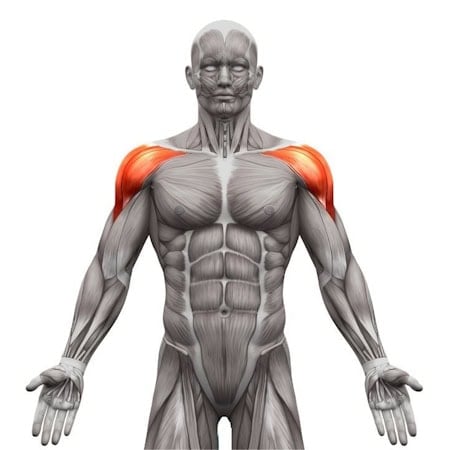
Anterior delt
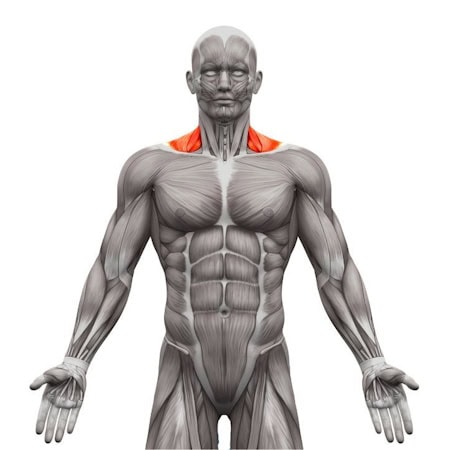
Trapezius
Secondary Muscle(s):
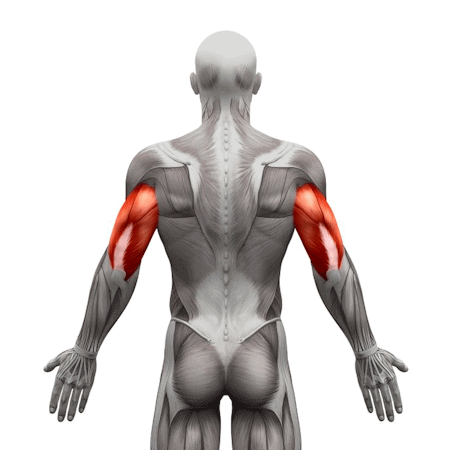
Triceps
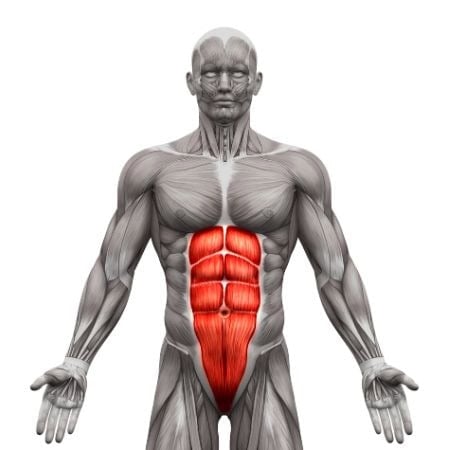
Abdominal
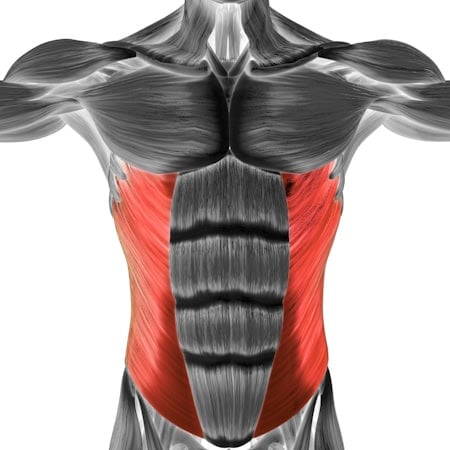
Oblique
Equipment needed for Wall-Assisted Straddle Handstand Press Negative
No equipment needed for this exercise.
Adjust the difficulty of Wall-Assisted Straddle Handstand Press Negative
Adjust the descent range, assistance and time under control. Begin with a range you can support through straight arms and leave using a planned exit. Extend towards the floor before adding long pauses or reducing wall assistance. Keep partial, spotted and bent-knee attempts distinct from a full straight-leg floor negative, and do not treat a change in hand-to-wall distance as a universal difficulty upgrade.
How to make Wall-Assisted Straddle Handstand Press Negative harder?
How to make Wall-Assisted Straddle Handstand Press Negative easier?
How to make Wall-Assisted Straddle Handstand Press Negative harder?
To make Wall-Assisted Straddle Handstand Press Negative harder:
-
Slow the full descent modestly while preserving straight arms, straight knees and a deliberate floor landing. Increase time through the moving phase rather than pausing at the top and then dropping.
-
Add a short pause at a controllable point in the descent, then continue without a sudden drop. Choose a point where you can maintain support and still use your planned exit.
-
Reduce posterior-body pressure against the wall gradually while keeping the same hand placement, range and controlled landing. Treat lighter contact as a balance progression, not as a reason to push abruptly away from the wall.
-
Progress to a freestanding straddle press negative once you have reliable unsupported handstand balance and an appropriate exit. The wall-free version has a separate assistance standard and should be recorded separately.
How to make Wall-Assisted Straddle Handstand Press Negative easier?
To make Wall-Assisted Straddle Handstand Press Negative easier:
-
Use a reduced-range negative and stop before descent control deteriorates. Arrange a familiar exit or appropriate spotting before starting; do not assume you can reverse back to handstand. Record the endpoint as a partial attempt.
-
Use a qualified spotter for planned assistance at the pelvis through the difficult part of the descent. Agree on the support and exit beforehand, and record the repetition as spotted.
-
Return to a supported pike hold with the feet on a stable plyo box if straight-arm overhead loading is not yet reliable. Build active shoulder support there before attempting an inverted straddle descent.