
Archer Row
How to do Archer Row?
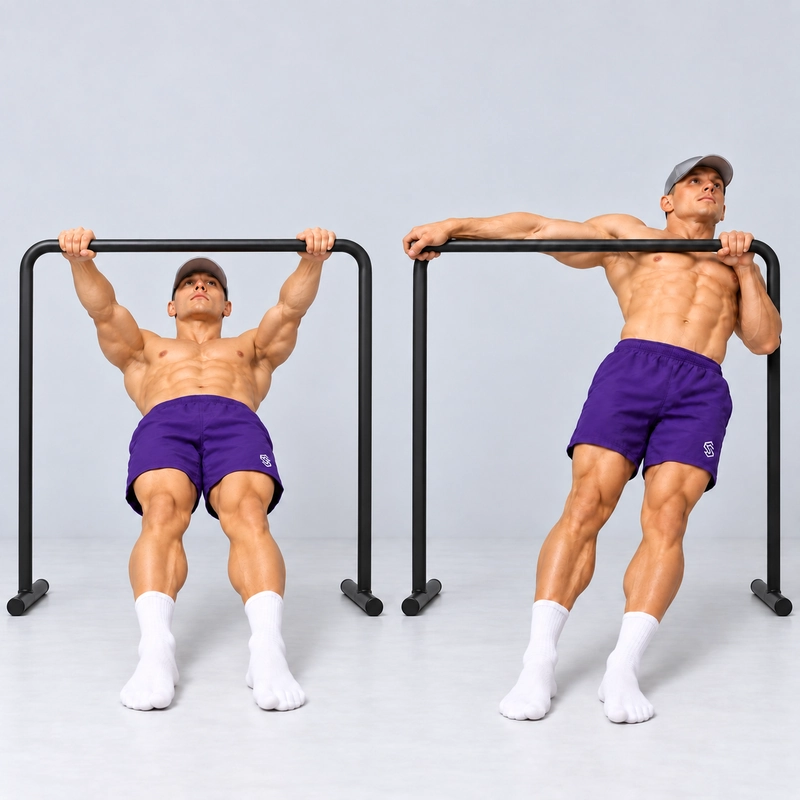
The archer row is an asymmetrical bodyweight row performed on a fixed low bar set around hip height when standing upright. Use a wide overhand grip, keep both legs straight and leave both heels on the ground. Pull your body toward one hand by bending that elbow while the opposite arm stays straight and continues to assist.
This variation increases the emphasis on one side compared with the low bar bodyweight row at a comparable body angle. It can help you practise the control needed for more demanding one-arm rowing variations, but both hands remain loaded. This page defines the fixed-bar version; ring archer rows use independently moving handles and are a separate equipment alternative.
Equipment and Setup
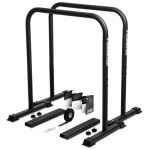
Use a securely fixed horizontal bar, a stable row station or a locked Smith-machine bar approved for this use. Set it approximately level with your hip crease when standing upright beside it. You need enough usable bar width for a wide grip and enough space to move toward either hand without contacting the supports.
- Check that the bar cannot roll, slide, lift or tip, including when loaded unevenly toward one end.
- Choose a grip wider than shoulder width that allows chest contact on either side while the opposite elbow stays straight.
- Use a comfortable grip width; do not force a wider position that causes shoulder or wrist discomfort.
- Place the heels approximately hip-width apart on a firm, non-slip surface, with both knees straight.
- Leave enough clearance for your back and hips to remain off the floor with both elbows straight.
Hip height is a setup reference, not a universal measurement. Record the actual height, hand spacing and heel position if you want repeatable results. Do not use a loose barbell resting on supports or assume that a freestanding dip bar will resist the sideways and backward forces of this exercise.
How to Do an Archer Row on a Low Bar
- Set up beneath the bar. Sit underneath it and take a wide overhand grip with both thumbs wrapped around the bar. Keep your hands fixed throughout the set.
- Extend your legs. Plant both heels on the ground approximately hip-width apart, straighten your knees and point your toes upward.
- Lift into the centre starting position. Brace your abdomen and glutes, raise your hips and straighten both elbows. Maintain one line through the shoulders, hips, knees and ankles, with the back and hips clear of the floor.
- Pull toward the right hand. Bend the right elbow and draw the right upper arm back as your upper body travels upward and toward the right grip. Keep the left elbow straight, with the left hand still holding and assisting on the bar.
- Finish at the bar. Bring the right side of your lower chest into gentle contact with the bar. The right elbow is bent and the left arm extends out to the side. Keep your neck neutral and your hips aligned with your trunk.
- Return to the centre. Lower smoothly until both elbows are straight and your body is centred beneath the grip again. Keep the heels and hands fixed.
- Repeat toward the left hand. Mirror the movement: bend the left elbow, keep the right elbow straight and bring the left side of the lower chest to the bar.
Exhale as you pull and inhale as you lower. You can alternate sides or complete one side before the other, but return to the arms-straight centre position between repetitions.
What Counts as a Full Archer Row?
For the strict standard on this page, a repetition starts from the centre with both elbows straight, finishes with working-side lower-chest contact and returns under control to the same centre position.
- The pulling-side elbow bends; the opposite elbow stays straight without being forced into hyperextension.
- Both hands keep their original grip on the bar.
- Both knees stay straight and both heels remain in their original positions on the ground.
- The trunk and legs maintain their alignment, with the hips and back clear of the floor.
- The working-side lower chest contacts the bar without a chin reach, hip thrust or bounce.
- Both elbows are straight again before the next repetition starts.
A lateral shift toward the pulling hand is part of the exercise. Keep the shoulders and pelvis moving together rather than twisting the chest toward the bar while the hips lag behind. Do not count a repetition if the assisting elbow bends, chest contact is missing, the heels move or momentum completes the pull.
Count repetitions per side. One right-side pull is one repetition for the right side. One left-side pull is one repetition for the left side. Four repetitions per side means eight individual pulls in total.
Benefits of the Archer Row
- Practises side-dominant pulling: One elbow performs the main bending action while the opposite hand provides assistance.
- Builds horizontal rowing strength: The back, rear shoulders and elbow flexors work through a controlled pulling movement.
- Develops control during an uneven pull: The trunk maintains alignment as the body moves toward one hand.
- Provides a bridge toward one-arm row training: Both hands remain available while you learn the more demanding side-dominant pattern.
Compare your technique and repetitions on both sides, but do not treat a difference as an injury diagnosis. Archer rows also do not guarantee a one-arm pull-up; horizontal and vertical pulling require separate practice.
Readiness and Progression
First develop Low Bar Bodyweight Rows with straight legs, full elbow extension and reliable chest contact. Feet-elevated inverted rows can provide additional two-arm strength work, although they are not a universal prerequisite.
Before using strict archer rows in working sets, check that you can hold the wide grip comfortably and perform controlled pulls on both sides without bending the assisting elbow. If you cannot, use a higher bar or an assisted side-dominant row.
There is no validated repetition threshold that guarantees readiness. Progress by preserving range and alignment as the assistance and leverage change.
Common Mistakes and Corrections
Bending Both Elbows
This turns the movement into a side-dominant two-arm row. It is a useful regression, but it is not the strict archer variation defined here. Use an easier angle if you cannot keep the assisting elbow straight.
Pulling Straight Up Between the Hands
A centred wide-grip row does not practise the archer pattern. Direct the pull upward and toward one hand while the opposite arm stays extended.
Using an Excessively Wide Grip
Wider is not automatically better. Find a hand spacing that permits chest contact, a straight assisting arm and comfortable shoulders. If those requirements cannot be combined, reduce the difficulty.
Twisting or Thrusting the Hips
Keep the pelvis aligned with the trunk. A controlled lateral shift is expected; rotating the chest separately or throwing the hips upward to reach the bar changes the repetition.
Sliding or Lifting a Heel
Keep both heel positions fixed throughout the set. Use a non-slip surface and an easier setup if you cannot move toward either hand without repositioning your feet.
Moving Across the Bar Without Lowering
Travelling from one side to the other while staying at the top is a typewriter-row variation. For an archer row, return to the centre with both elbows straight between pulls.
Sets, Reps and Progression
As a coaching starting point, use 2–3 sets of 3–6 clean repetitions per side, resting 90–180 seconds between sets. Choose a setup that leaves one or two clean repetitions in reserve. Begin with the less capable side and match its controlled repetitions on the other side.
When you can repeat three sets of six full repetitions per side with consistent technique across two sessions, consider adding repetitions, a brief pause or a slower descent. These are coaching guidelines rather than assessment cutoffs.
For later one-arm row training, reduce assistance gradually using a setup designed for that progression. Removing one hand completely is a substantial change; use an easier angle for your first attempts. A bent-knee one-arm row changes the lever and should be recorded as a separate variation.
Keep the Setup Consistent When Retesting
Record the floor-to-centre-of-bar height, grip width, heel positions and heel spacing. Use the same footwear, tempo and chest-contact standard. Keep the assisting elbow straight on every counted repetition and record right and left results separately.
Self-reported repetitions do not measure the force contributed by each hand. Consistent form improves repeatability, but does not make the amount of assistance identical between athletes.
Comfort and Safety
Warm up with easy two-arm rows and a few gentle side-dominant practice pulls. Do not force the extended arm into hyperextension or hang passively from a painful shoulder position. Stop if the equipment moves, your heels slip or you experience sharp pain, numbness or dizziness. Persistent symptoms warrant advice from a qualified healthcare professional.
Archer Row FAQ
How high should the bar be?
For this version, start around the hip crease when standing upright. Check that you can straighten both elbows with the body clear of the floor and touch the bar with the working-side lower chest on either side.
Does the straight arm provide assistance?
Yes. The straight arm can transmit force through its grip and shoulder even though its elbow does not bend. An archer row uses both hands and is not a true one-arm row.
Should my legs be bent or straight?
This page defines straight legs with both heels on the ground. Bent-knee and feet-elevated archer rows are separate variations with different setups.
Are bar and ring archer rows interchangeable?
They share the side-dominant rowing pattern, but rings move independently and allow the hands to rotate. Use the correct equipment-specific demonstration and record the setup separately.
Tips for the proper execution of Archer Row
Set the fixed bar around standing hip height and check that it remains stable under uneven loading toward either hand.
Use a comfortable wide overhand grip that permits working-side chest contact while the opposite elbow stays straight.
Keep both legs straight, toes pointing upward and heels planted approximately hip-width apart.
Start each repetition centred beneath the grip with both elbows straight and the hips clear of the floor.
Pull upward and toward one hand by bending that elbow while keeping the opposite elbow straight without forcing hyperextension.
Bring the working-side lower chest to the bar without reaching with the chin, shrugging or thrusting the hips upward.
Keep the shoulders and pelvis moving together during the lateral shift rather than twisting the torso to finish the pull.
Keep both hands and heels in their original positions throughout the set.
Lower to the arms-straight centre position between sides; do not travel sideways across the bar while staying at the top.
Count each pull for its working side: four repetitions per side means four right-side pulls and four left-side pulls.
Muscles worked when doing Archer Row
The archer row trains the back and elbow flexors through an asymmetrical horizontal pull. The bending arm performs the main elbow-flexion action, while the extended arm assists through its grip and shoulder. The trunk and legs maintain alignment.
Main Pulling Muscles
- Latissimus dorsi: Helps draw the pulling-side upper arm back toward the torso.
- Rhomboids and middle trapezius: Contribute to shoulder-blade control and retraction during the pull.
- Rear deltoids: Assist the backward movement of the pulling-side upper arm.
- Biceps brachii, brachialis and brachioradialis: Bend the pulling-side elbow.
Supporting Muscles
- Extended-arm shoulder muscles and rotator cuff: Help transmit assistance and control the shoulder while the elbow stays straight.
- Forearm and hand muscles: Maintain both grips on the bar.
- Abdominals, obliques and spinal stabilizers: Help maintain trunk alignment and control unwanted twisting.
- Glutes and thigh muscles: Maintain the straight-leg body position.
Both arms contribute to the exercise. A straight assisting elbow does not establish that all of the upper-body load has moved onto the bending arm, and the exact load split cannot be determined from appearance alone.
Primary Muscle(s):
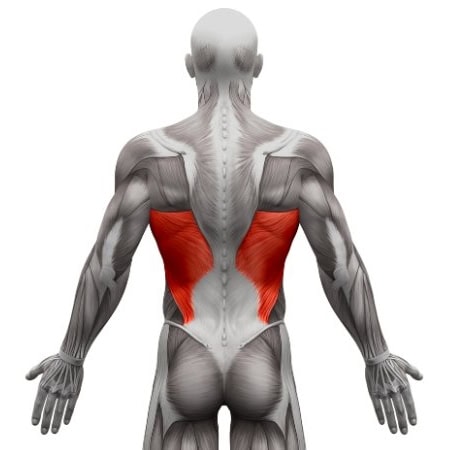
Lats
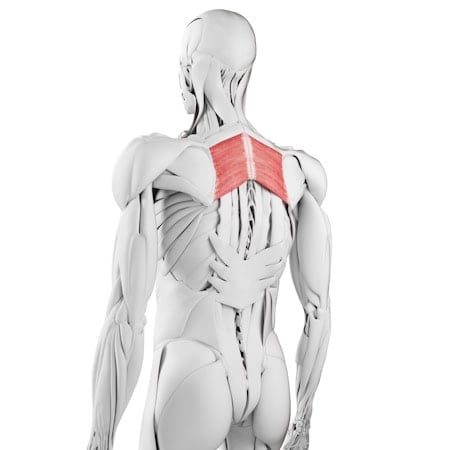
Rhomboid
Secondary Muscle(s):
Equipment needed for Archer Row
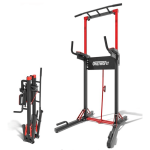
Adjust the difficulty of Archer Row
Raise the bar and use a more upright angle to make archer rows easier while preserving the straight assisting elbow. A side-dominant row with both elbows bending is a separate regression. Pauses, slower lowering, foot elevation or a weighted vest can increase the training challenge. Keep the hip-height bar, straight legs, heels on the ground and full range unchanged when recording results for this specific variation.
How to make Archer Row harder?
How to make Archer Row easier?
How to make Archer Row harder?
To make Archer Row harder:
-
Pause for one to two seconds at working-side chest contact while keeping the opposite elbow straight and the body aligned.
-
Take three seconds to lower from the bar to the arms-straight centre position without moving either heel.
-
Use a securely fitted weighted vest while maintaining the same bar height, hand spacing, heel positions and full range.
-
Progress to feet-elevated archer rows on a stable, non-slip support, recording the changed setup as a separate variation.
-
Develop assisted one-arm rows with progressively less help before attempting a true one-arm row. Begin with an easier angle when removing the second hand.
How to make Archer Row easier?
To make Archer Row easier:
-
Raise the bar and choose a more upright body angle while keeping the assisting elbow straight and completing chest contact on each side.
-
Perform an assisted side-dominant row, allowing the opposite elbow to bend and provide more help. Record it separately from a strict archer row.
-
Return to the Low Bar Bodyweight Row and pull evenly with both arms to develop full-range strength and body control.
-
Use a bent-knee archer row with both feet flat on the ground as a separate regression, maintaining hip alignment and avoiding leg drive.