
Archer Pull-Up
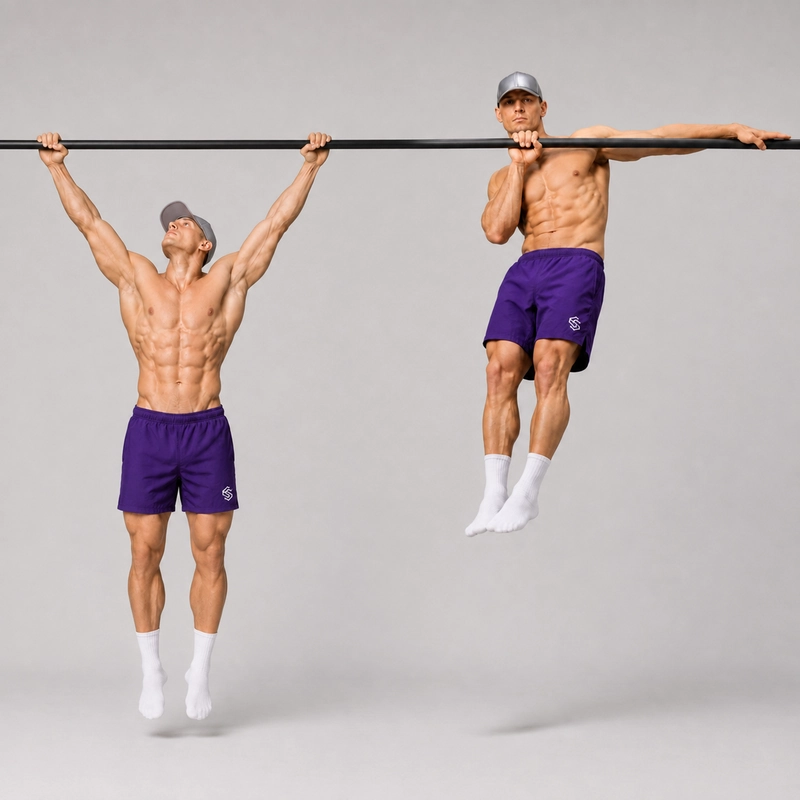
How to do Archer Pull-Up?
The archer pull-up is an advanced vertical-pulling exercise performed on a pull-up bar. Instead of pulling symmetrically toward the center of the bar, you pull diagonally toward one hand while gradually straightening the opposite arm. The resulting position resembles an archer drawing a bow.
Although one arm carries more of the load, the straighter arm remains connected to the bar and continues to provide assistance. The archer pull-up is therefore an asymmetrically loaded two-arm exercise rather than a true one-arm pull-up.
Before attempting this exercise, build a foundation of controlled strict pull-ups and become comfortable using a wider grip with the wide pull-up. The archer variation demands more strength from the arm you pull toward and more straight-arm control from the opposite shoulder.
The archer pull-up differs from the typewriter pull-up. An archer repetition finishes after pulling toward one hand and lowering to the starting position. A typewriter pull-up adds a lateral transfer from one hand to the other while remaining near the top of the bar.
Pull-up grip and width can change shoulder-blade movement and joint positioning, so use a grip that gives you enough room to straighten the assisting arm without forcing an excessively wide position. These differences between pull-up techniques have also been examined in a peer-reviewed study of pull-up scapular mechanics.
How to Perform an Archer Pull-Up
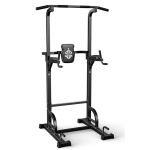
Use a secure pull-up bar that provides enough width for both hands and enough height for your feet to remain clear of the floor. A closed grip, with the thumbs wrapped around the bar, provides greater security during the asymmetrical pull.
Setup
- Stand on a stable box or step if necessary and take a wide overhand grip with your palms facing away.
- Place your hands far enough apart that one arm can become nearly straight when your body reaches the opposite hand.
- Step from the box into a controlled dead hang with both elbows extended.
- Bring your legs together and brace your abdominals and glutes to minimize swinging.
- Create tension through your shoulders before beginning the pull.
Pulling Phase
- Choose the hand toward which you will pull; this is the working side for the repetition.
- Drive the working-side elbow downward and pull your upper body diagonally toward that hand.
- As your body moves toward the working hand, gradually straighten the opposite elbow.
- Keep both hands firmly around the bar and maintain active control through the assisting shoulder.
- Continue pulling until your chin is clearly above the bar and your upper chest approaches the working hand.
- At the top, the working elbow should be strongly bent while the opposite arm is straight or nearly straight.
Lowering Phase
- Lower your body diagonally away from the working hand under control.
- Gradually bend the assisting arm as your torso returns beneath the center of the bar.
- Finish with both elbows fully extended and your body stable in the starting hang.
- Pause briefly to eliminate swinging before beginning the next repetition.
- Repeat toward the opposite hand and perform equal repetitions on both sides.
Exhale during the pull and inhale as you lower. A controlled two- to four-second descent is useful for building strength, but only if you can maintain shoulder control and complete the full range.
Completion Standard
A complete archer pull-up begins from a controlled hang with both elbows extended. The athlete pulls diagonally toward one hand until the chin passes above the bar, the working elbow is deeply bent and the opposite elbow is straight or nearly straight. The repetition finishes by returning under control to full elbow extension without kicking, kipping or swinging.
Which Arm Is Working During an Archer Pull-Up?
The arm nearest your body at the top is the primary working arm. For example, when you pull toward your right hand, the right arm performs most of the pulling while the left arm becomes the assisting arm.
The straighter arm is not inactive. It remains connected to the bar and contributes assistance and shoulder stability. Straightening it more transfers a greater percentage of the load toward the working side, which provides a simple way to scale the exercise.
Archer Pull-Up vs Typewriter Pull-Up
- Archer pull-up: Pull toward one hand and then descend to the starting hang.
- Typewriter pull-up: Pull to the top, travel laterally from one hand to the other and then descend.
- Triangle pull-up: Pull diagonally toward one hand, travel across the top and descend from the other side.
The archer pull-up is generally the best exercise to learn first because every repetition includes a regular descent and reset. Once both sides are controlled, the typewriter pull-up and triangle pull-up add longer top-position holds and lateral transitions.
Bar Archer Pull-Up vs Ring Archer Pull-Up
The bar archer pull-up uses a fixed overhand grip. Your hands cannot move, so your body travels diagonally beneath the bar as the assisting elbow straightens.
During a ring archer pull-up, the handles move independently. The working ring can be pulled toward the chest while the opposite ring travels outward with the straightening arm. The rings also allow the hands and forearms to rotate and require additional stabilization.
Because these differences change the setup, grip, pulling path and equipment progression, the ring version is best treated as a separate exercise rather than simply adding gymnastics rings to this page’s equipment taxonomy.
Common Archer Pull-Up Mistakes
Pulling Toward the Center
If your chest remains centered between your hands, you are performing a wide pull-up rather than an archer pull-up. Pull diagonally toward one hand and allow the opposite elbow to straighten progressively.
Keeping the Assisting Arm Too Bent
A strongly bent assisting arm keeps the exercise close to a regular two-arm pull-up. Begin with whatever assistance you need, but gradually work toward a straighter elbow at the top.
Relaxing the Straight-Arm Shoulder
The assisting shoulder should remain controlled even as the elbow straightens. Do not allow your body to drop passively against the shoulder joint at the top of the repetition.
Using an Excessively Wide Grip
A very wide grip can reduce your available pulling range and place you in an uncomfortable shoulder position. Use only enough width to let the assisting arm approach straight without forcing the position.
Reaching With the Head
Moving your chin sideways does not transfer meaningful load onto the working arm. Move your upper chest and torso toward the hand while keeping your neck relatively neutral.
Twisting the Entire Body
A small amount of rotation can occur naturally, but the hips and legs should not spin around the bar. Brace your core and keep the lower body quiet.
Kicking or Kipping
Using the legs to generate momentum reduces the unilateral strength demand. Return to the band archer pull-up or a partial-range variation if you cannot pull without momentum.
Dropping Through the Descent
The lowering phase is part of the repetition. Control your return until both elbows are extended rather than dropping suddenly from the top position.
Moving Across the Top
Travelling from one hand to the other before lowering turns the movement into a typewriter pull-up. For a standard archer repetition, pull to one side and descend from that same side.
Training Only the Stronger Side
Perform the same number of repetitions toward each hand. Start some sets with your weaker side so that it is not always trained after fatigue has accumulated.
Benefits of Archer Pull-Ups
- Develop asymmetrical vertical-pulling strength while both hands remain on the bar.
- Prepare the lats, elbow flexors and grip for assisted one-arm pulling.
- Provide a scalable progression toward the one-arm pull-up.
- Build controlled strength through the concentric and eccentric phases.
- Challenge the abdominals and obliques to control rotation and swinging.
- Help reveal strength and coordination differences between sides.
- Prepare athletes for typewriter and triangle pull-ups.
- Allow the difficulty to be adjusted by changing how straight the assisting arm becomes.
Before Attempting Archer Pull-Ups
You should already be able to perform repeatable strict pull-ups through a full range without kipping. As a practical coaching guideline, approximately 8–10 clean strict pull-ups and several controlled wide pull-ups provide a reasonable starting foundation, but no specific repetition number guarantees readiness.
You should also be able to maintain a stable top pull-up position and lower under control. The scapular pull-up can help you practise initiating a pull with controlled shoulders, while the band archer pull-up provides a more specific regression.
Archer pull-ups place considerably more load on one elbow and shoulder at a time. Introduce them with low volume and stop if you experience sharp pain, persistent joint discomfort, tingling or a sudden loss of strength. Regress the exercise rather than forcing the assisting arm straight.
How to Progress the Archer Pull-Up
- Develop repeatable strict pull-ups.
- Practise wide pull-ups with a controlled full range.
- Perform side-biased pull-ups while keeping both elbows moderately bent.
- Use band archer pull-ups or foot-assisted archer pull-ups.
- Perform partial archer pull-ups and gradually straighten the assisting arm.
- Complete full archer pull-ups toward both hands.
- Add pauses beside the working hand and slower descents.
- Progress to typewriter or triangle pull-ups.
- Reduce the assistance of the second hand with a towel or resistance band.
- Progress toward assisted and strict one-arm pull-ups.
Hybrid Calisthenics also uses the amount of bend in the supporting arm as a way to regulate the difficulty of the archer pull-up progression.
Programming Archer Pull-Ups
Perform archer pull-ups near the beginning of a pulling workout while your grip, elbows and shoulders are fresh. Start with 3–5 sets of 2–5 controlled repetitions per side, resting approximately two to three minutes between sets.
Leave one or two technically clean repetitions in reserve rather than continuing until the assisting arm bends excessively or the movement becomes uneven. One or two sessions per week can be sufficient when combined with strict or weighted bilateral pulling.
Progress by first improving the range and straightening the assisting arm. Add repetitions, pauses, slower negatives or external weight only after you can maintain the completion standard on both sides.
Frequently Asked Questions
Is an archer pull-up a one-arm pull-up?
No. Both hands remain on the bar and the straighter arm continues to assist. The exercise shifts more weight toward one arm, making it a progression toward the one-arm pull-up rather than a true one-arm repetition.
Which arm works during an archer pull-up?
The arm you pull toward performs most of the work. When your body moves toward the right hand, the right arm is the working arm and the left arm provides assistance.
How wide should my grip be?
Use a grip noticeably wider than shoulder width, but not wider than necessary. You need enough space to straighten the assisting arm while still pulling your chin clearly above the bar.
How many pull-ups should I do before archer pull-ups?
There is no universal requirement. Being able to perform approximately 8–10 controlled strict pull-ups is a useful guideline, but full range, shoulder control and the ability to lower slowly are more important than the number alone.
Are archer pull-ups harder than typewriter pull-ups?
Archer pull-ups are normally the more accessible exercise. Typewriter pull-ups require you to remain near the top while transferring your body from one hand to the other, creating more isometric and lateral-control demand.
Should the assisting arm be completely straight?
A strong archer pull-up finishes with the assisting elbow straight or nearly straight. However, you should initially retain enough elbow bend to control the movement without pain, twisting or momentum.
Can archer pull-ups be performed on rings?
Yes. However, independently moving rings change the grip, assistance-arm path and stability requirement. The ring archer pull-up should therefore be treated as a related equipment-specific exercise.
Are archer chin-ups the same exercise?
No. An archer pull-up uses an overhand or pronated grip. An archer chin-up uses an underhand or supinated grip and changes the position and contribution of the elbow flexors.
Tips for the proper execution of Archer Pull-Up
Use a wide overhand grip that allows the assisting arm to straighten without forcing an extreme shoulder position.
Wrap your thumbs around the bar to maintain a secure grip.
Create shoulder tension before bending your elbows and beginning the pull.
Drive the working elbow downward as you pull diagonally toward that hand.
Move your upper chest toward the working hand instead of reaching sideways with your chin.
Gradually straighten the opposite elbow as your body approaches the working side.
Keep the straighter arm active rather than hanging passively from its shoulder.
Brace your abdominals and glutes to prevent kicking, swinging and excessive rotation.
Lower under control until both elbows are completely extended.
Pause briefly in the bottom position before beginning the next repetition.
Perform equal repetitions toward the right and left hands.
End the set when you can no longer maintain the same range and assisting-arm position on both sides.
Muscles worked when doing Archer Pull-Up
The archer pull-up trains the same broad muscle groups as a strict pull-up, but distributes the load asymmetrically. The arm nearest the body at the top carries more of the pulling demand, while the straighter arm continues to assist and stabilize.
Primary Muscles
- Latissimus dorsi: Produces much of the shoulder extension and adduction required to pull the torso toward the working hand.
- Biceps brachii: Contributes to elbow flexion, particularly in the arm toward which the body is moving.
- Brachialis: Assists the working arm in bending the elbow throughout the pull.
- Brachioradialis: Supports elbow flexion and forearm control with the overhand grip.
Secondary and Stabilizing Muscles
- Rhomboids and trapezius: Control the shoulder blades during the asymmetrical ascent and descent.
- Teres major: Assists the latissimus dorsi during upper-arm movement.
- Rear deltoids: Contribute to shoulder extension and upper-arm stability.
- Rotator-cuff muscles: Help stabilize both shoulder joints as their positions and loads differ.
- Forearms and hand muscles: Maintain the wide overhand grip throughout the repetition.
- Abdominals and obliques: Resist uncontrolled trunk rotation and help keep the legs from swinging.
- Glutes and spinal stabilizers: Maintain lower-body position beneath the bar.
Both sides remain active, but the bent working arm experiences a substantially greater pulling demand. Alternate sides evenly rather than treating the straighter arm as completely inactive.
Primary Muscle(s):
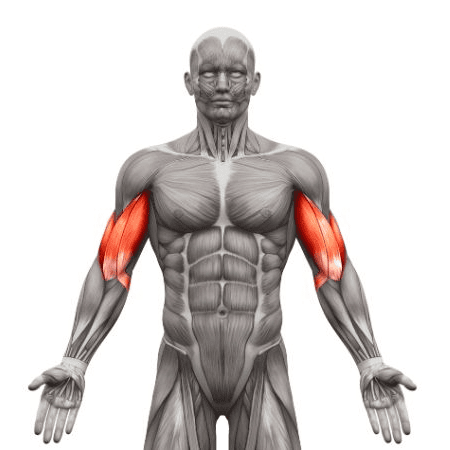
Biceps
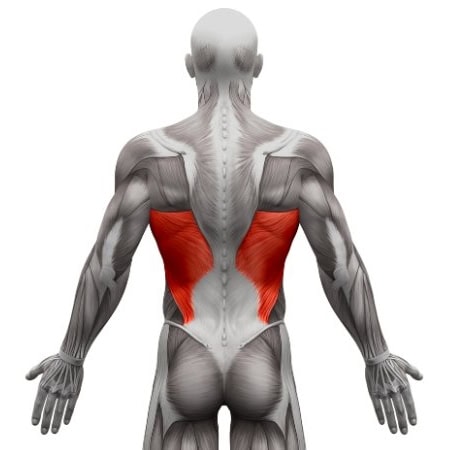
Lats
Secondary Muscle(s):
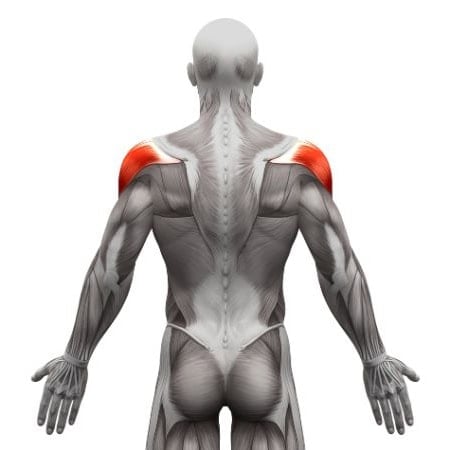
Rear delt
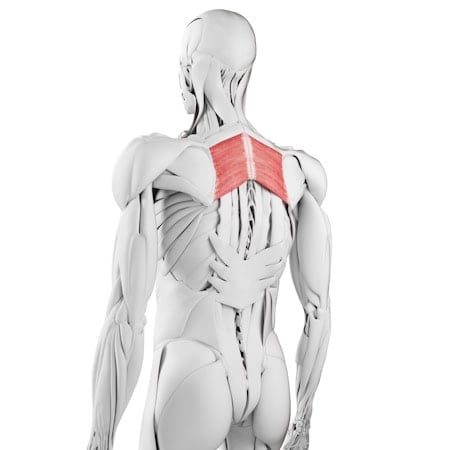
Rhomboid
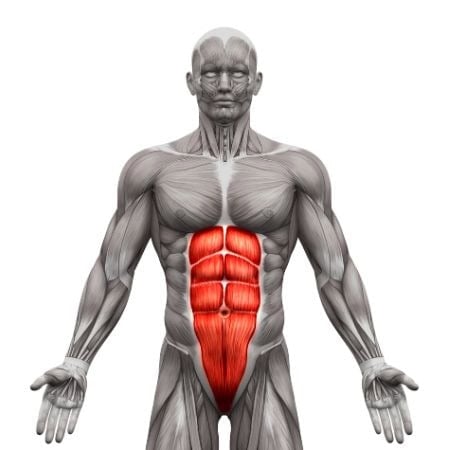
Abdominal
Equipment needed for Archer Pull-Up
Adjust the difficulty of Archer Pull-Up
How to make Archer Pull-Up harder?
How to make Archer Pull-Up easier?
How to make Archer Pull-Up harder?
To make Archer Pull-Up harder:
-
Straighten the assisting arm completely at the top of every repetition.
-
Pause beside the working hand for two to three seconds.
-
Lower from each repetition over four to six seconds.
-
Add isometric pauses at several positions during the descent.
-
Perform consecutive repetitions on one side before switching.
-
Perform typewriter pull-ups by moving laterally between both hands at the top.
-
Perform triangle pull-ups by ascending toward one hand and descending from the other.
-
Use progressively less assistance from the second hand by holding a towel or resistance band.
-
Perform assisted one-arm pull-ups with the free hand positioned lower on a towel or band.
-
Progress to controlled one-arm pull-up negatives.
-
Progress to a strict one-arm pull-up.
-
Add light external resistance only after mastering repeatable bodyweight repetitions on both sides.
How to make Archer Pull-Up easier?
To make Archer Pull-Up easier:
-
Perform strict pull-ups to build the bilateral pulling strength required for archer pull-ups.
-
Use wide pull-ups to become comfortable pulling through a full range with a wider grip.
-
Perform side-biased pull-ups while allowing both elbows to remain bent.
-
Straighten the assisting arm only partially at the top of each repetition.
-
Use a resistance band to reduce the total bodyweight load.
-
Perform band archer pull-ups while gradually reducing assistance.
-
Use a box to provide light foot assistance during the pulling phase.
-
Step into the top position from a box and perform controlled archer pull-up negatives.
-
Hold the top archer position for short isometric attempts before training full repetitions.
-
Perform ring archer rows to develop the unilateral pattern with the feet supported.