
Horizontal Parallel Bar Row
How to do Horizontal Parallel Bar Row?
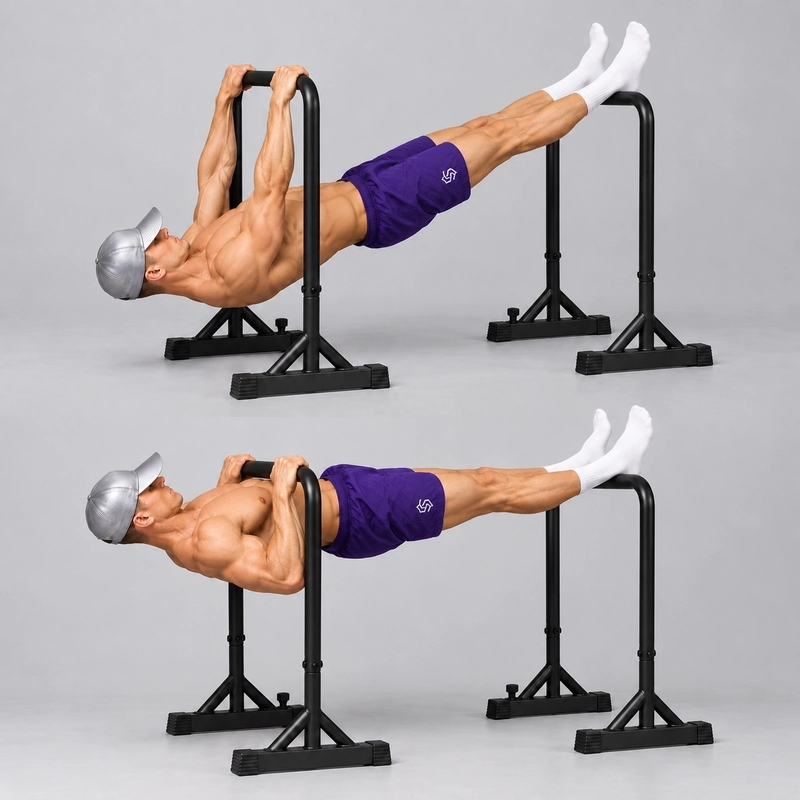
The horizontal parallel bar row is a straight-leg bodyweight row with both hands gripping one horizontal rail and both heels supported on a second rail at approximately the same height. Pull with both arms together until your chest reaches the hand rail and your body is roughly horizontal at the top.
Keep your shoulders, hips, knees and ankles aligned throughout the repetition. Equal-height supports do not mean the body stays parallel to the floor at every point: when you lower to straight elbows, your shoulders move below the heel support. The body remains straight while its angle changes.
This setup progresses from an otherwise comparable inverted row with feet on a lower bench. Raising the heels to the hand-rail height generally increases the pulling demand, although your proportions, support spacing and range of motion also matter.
Equipment and Setup
Use two stable parallel rails positioned so both hands can grip one rail while both heels rest securely on the other. The station must be suitable for rowing forces as well as foot support. Freestanding dip bars can slide, tip or move toward each other under this load; use a secured setup that stays fixed throughout the movement.
- Support height: the hand rail and heel-bearing surface should be at approximately the same height. Hip-height dip bars can work; for example, 90 cm is approximately 35.4 in. This is an example, not a required height.
- Grip: both hands on the same rail, approximately shoulder-width apart, palms facing away and thumbs wrapped around the bar.
- Feet: both heels supported securely on the other rail, about hip-width apart, with straight knees and toes pointing upward.
- Rail spacing: enough distance for straight legs, chest contact at the top and full elbow extension at the bottom. Set this for your body length before starting.
- Floor clearance: your shoulders, back and hips must remain clear of the ground at the arms-straight bottom.
Check the actual heel contact on the rounded rail. Use footwear and a surface that provide reliable contact, and stop if the heels slip or either support moves. Do not balance the feet on an unsuitable narrow, rotating or unstable support.
How to Do a Horizontal Parallel Bar Row
- Enter the setup under control. Position yourself beneath the hand rail and establish a secure overhand grip. Place both heels on the opposite rail using a stable entry method. Use a step or assistance if needed rather than climbing on unsecured bars.
- Find the bottom position. Straighten both elbows and both knees. Brace your abdomen and glutes so your shoulders, hips, knees and ankles form one line, with the hips clear of the floor.
- Pull with both arms. Bend both elbows and draw the upper arms back as your chest rises toward the hand rail. Let the shoulder blades move together naturally; keep your neck in line with your torso.
- Reach the top. Bring the middle-to-lower chest gently to the rail. Your body should now be approximately horizontal, with the legs straight and both heels still in their original positions.
- Pause briefly. Hold the top without bouncing against the rail, lifting the hips ahead of the chest or reaching forward with the chin.
- Lower through the full range. Extend both elbows under control. Let the shoulder blades move forward naturally while retaining trunk tension and a straight body line.
- Repeat from straight arms. Begin the next repetition only after reaching the same controlled bottom position.
Exhale as you pull and inhale as you lower. Finish the set before grip, heel contact or body alignment fails. Return to a supported seated or standing position under control before releasing the rail.
What Counts as a Full Repetition?
One repetition starts with both elbows straight, reaches gentle chest contact and finishes with both elbows straight again.
- Both hands stay fixed on the same rail, and both arms pull together.
- Both heels remain supported in their original positions on the opposite rail.
- The knees remain straight, and the shoulders, hips and legs stay aligned.
- The chest reaches the hand rail without a hip thrust, chin reach or bounce.
- The descent is controlled, and the body remains clear of the floor.
Do not count a repetition if a heel slips or loses contact, the knees bend, the hips sag or pike, chest contact is missing, or momentum completes the pull. Count the bilateral pull as one repetition; there is no per-side count for this exercise.
Why Is It Called a Horizontal Row?
The name describes the approximately horizontal body position reached at the top when the hand and heel supports are at similar heights. The shoulders move downward as the elbows straighten, so the body slopes upward toward the heels at the bottom.
Trying to hold the body parallel to the floor throughout the repetition would require changing the support geometry or bending at the hips. Prioritize a straight body line and full rowing range rather than a fixed angle.
Benefits of the Horizontal Parallel Bar Row
- Trains bilateral horizontal pulling: both arms work together to raise the chest to a fixed rail.
- Develops the back and elbow flexors: the upper arms move backward and the elbows bend through the pull.
- Challenges whole-body alignment: the trunk and legs stay braced between the hand and heel supports.
- Offers a bodyweight progression: equal-height supports increase the challenge compared with an otherwise similar lower-foot setup.
This remains a feet-supported exercise. It does not measure front lever strength, and its appearance does not reveal a fixed percentage of bodyweight carried through the hands.
Readiness and Progression
First develop controlled two-arm rows with heels on the ground, then practise feet-elevated inverted rows on a lower bench. Keep the knees straight, reach the chest to the bar and return to full elbow extension before raising the heel support further.
Progress toward equal-height supports gradually. There is no universal repetition threshold that guarantees readiness. If you cannot complete the full range without sagging or bending the knees, lower the foot support and continue building strength there.
Common Mistakes and Corrections
Using One Hand on Each Rail
For this version, both hands grip one rail and both heels rest on the other. One hand on each rail produces a different grip and setup.
Trying to Stay Horizontal at the Bottom
Allow the shoulders to lower below the heels as the elbows straighten. Keep the body straight rather than lifting the hips to preserve a horizontal torso.
Letting the Hips Sag or Pike
Brace the abdomen and glutes before pulling. If the chest cannot reach the rail while the body stays aligned, use a lower heel support.
Shortening the Range
Return to straight elbows and bring the chest to the rail on each repetition. Adjust the spacing before the set if the equipment prevents either endpoint.
Reaching With the Chin
Keep your neck aligned with your torso. Raise the chest through the pull instead of lifting the head toward the bar.
Letting the Supports or Heels Move
Stop and reset the equipment if a bar slides, tips or rolls, or if heel contact becomes insecure. Do not finish the set on a moving support.
Sets, Reps and Progression
As a coaching starting point, perform 2–3 sets of 4–8 controlled repetitions, resting 2–3 minutes between sets. Choose a setup that leaves one or two clean repetitions in reserve.
Once you can repeat three sets of eight full repetitions with stable heel contact across two sessions, add a short top pause, slower lowering or a small amount of load in a securely fitted weighted vest. Change one variable at a time. These are programming guidelines, not standardized assessment cutoffs.
Archer rows provide a separate side-dominant progression. Their difficulty also depends on the foot support, grip and assistance, so do not assume every archer setup is harder than this equal-height bilateral row.
Keep Your Setup Consistent When Retesting
Record the hand-rail height, heel-bearing height, distance between rails, grip width, heel spacing, footwear and tempo. Use the same chest-contact point and full elbow extension when comparing results.
A lower bench changes the exercise geometry. Changing the rails, bending the knees or allowing the heels to slide also changes the task, so record those versions separately.
Horizontal Parallel Bar Row FAQ
Where do the hands and feet go?
Both hands take an overhand grip on one rail. Both heels rest on the other rail at approximately the same height, with the knees straight.
Does the body stay horizontal throughout the row?
No. It is approximately horizontal at chest contact. At the arms-straight bottom, the shoulders sit lower than the heels while the body remains straight.
Do the bars have to be 90 cm high?
No. A rail height around 90 cm (35.4 in) can be suitable, but the defining features are approximately equal-height supports, secure contact and enough clearance for the full movement.
How is this different from a feet-elevated row on a bench?
A lower bench places the heels below the hand rail. This version raises the heels to approximately hand-rail height, changing the body angle and generally increasing demand when the other setup details are comparable.
What if I cannot touch the chest to the rail?
Check that the spacing permits chest contact and full elbow extension. If the setup is suitable but the pull is too difficult, lower the heel support and practise full-range rows there.
Is this a front lever row?
No. The heels remain supported throughout this exercise. In a front lever row, the feet are unsupported, creating a different strength demand.
Tips for the proper execution of Horizontal Parallel Bar Row
Grip one rail with both hands and support both heels on the other rail at approximately the same height.
Use a secure overhand grip around shoulder width, with the thumbs wrapped around the bar.
Set the rail spacing before the set so you can keep the knees straight, touch the chest to the bar and fully extend both elbows.
Keep both heels securely supported in their original positions, with the toes pointing upward.
Brace the abdomen and glutes to keep the shoulders, hips, knees and ankles in one line as the body angle changes.
Pull with both arms together and bring the chest gently to the hand rail without bouncing or thrusting the hips upward.
Reach a roughly horizontal top position, then let the shoulders lower below the heels as both elbows straighten.
Keep the neck aligned with the torso and let the shoulder blades move naturally through the pull and descent.
Lower under control until both elbows are straight, keeping the back and hips clear of the floor.
Stop the set if either rail moves, heel contact becomes insecure or you cannot maintain the full range and straight body line.
Muscles worked when doing Horizontal Parallel Bar Row
The horizontal parallel bar row trains the back and elbow flexors through a bilateral horizontal pull. Both arms raise the chest toward the hand rail while the trunk and legs maintain alignment between the equal-height supports.
Main Pulling Muscles
- Latissimus dorsi: Helps draw the upper arms back toward the torso.
- Rhomboids and middle trapezius: Contribute to shoulder-blade retraction and control.
- Rear deltoids: Assist the backward movement of the upper arms.
- Biceps brachii, brachialis and brachioradialis: Bend the elbows during the pull.
Supporting Muscles
- Forearm and hand muscles: Maintain the grip on the hand rail.
- Rotator cuff: Helps control the shoulders through the movement.
- Abdominals, obliques and spinal stabilizers: Help maintain trunk alignment.
- Glutes and thigh muscles: Help maintain the straight-leg body position.
Muscle emphasis depends on grip, elbow path, body proportions and range of motion. The equal-height setup does not establish an exact load percentage or prove that a particular muscle works more than in every other row variation.
Primary Muscle(s):
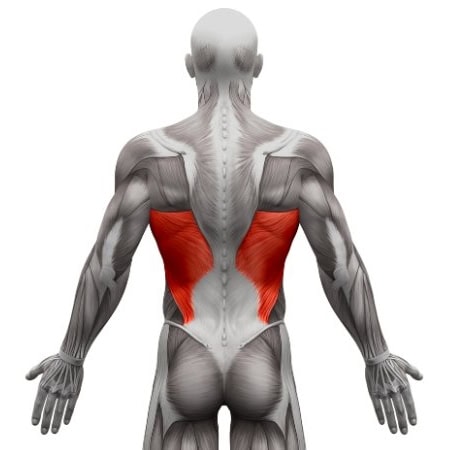
Lats
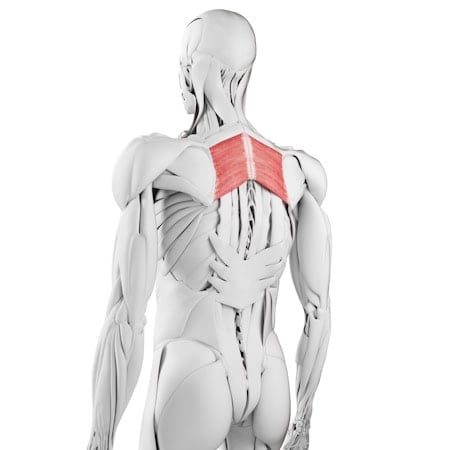
Rhomboid
Secondary Muscle(s):
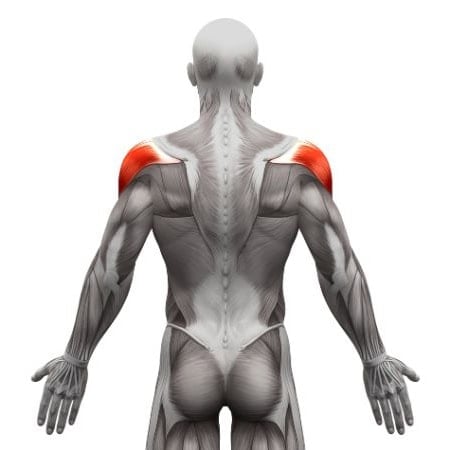
Rear delt
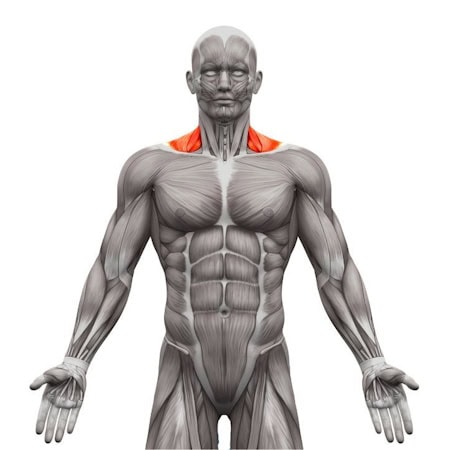
Trapezius
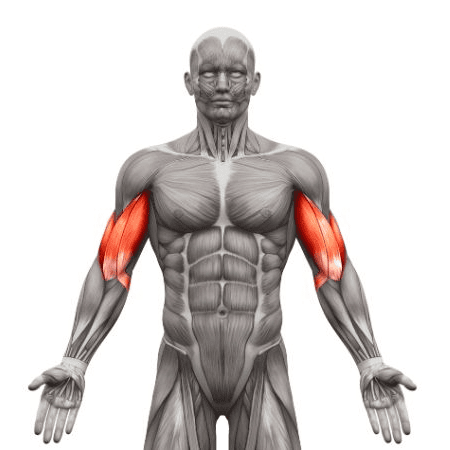
Biceps
Equipment needed for Horizontal Parallel Bar Row
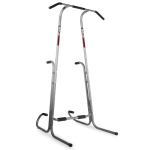
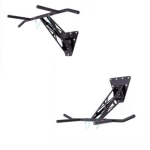
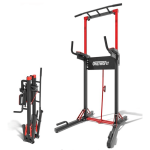
Adjust the difficulty of Horizontal Parallel Bar Row
Lower the heel support to a stable bench or return the heels to the ground to reduce the challenge. Build back toward equal-height supports while preserving straight legs and full range. For more overload within this setup, add a top pause, slower lowering or a securely fitted weighted vest. Record changes to support height or body position as separate variations when comparing performance.
How to make Horizontal Parallel Bar Row harder?
How to make Horizontal Parallel Bar Row easier?
How to make Horizontal Parallel Bar Row harder?
To make Horizontal Parallel Bar Row harder:
-
Pause for one to two seconds with the chest gently touching the hand rail while keeping both heels fixed and the body aligned.
-
Take three seconds to lower to full elbow extension without sagging at the hips or moving the heels.
-
Add a small amount of load using a securely fitted weighted vest while keeping the support heights, rail spacing and full range unchanged.
-
Explore a separate archer-row progression for side-dominant pulling. Start with a manageable lower-foot setup rather than assuming you can transfer directly to equal-height supports.
How to make Horizontal Parallel Bar Row easier?
To make Horizontal Parallel Bar Row easier:
-
Support the heels on a stable bench below the hand rail and perform straight-leg feet-elevated inverted rows with full chest contact.
-
Return the heels to the ground and perform a Low Bar Bodyweight Row with the same controlled pull and straight body line.
-
Use a higher hand rail with the heels on the ground for a more upright bodyweight row, then progress toward lower-bar and elevated-foot setups.