
L-Sit Chin-Up (L-Hang Chin-Up)
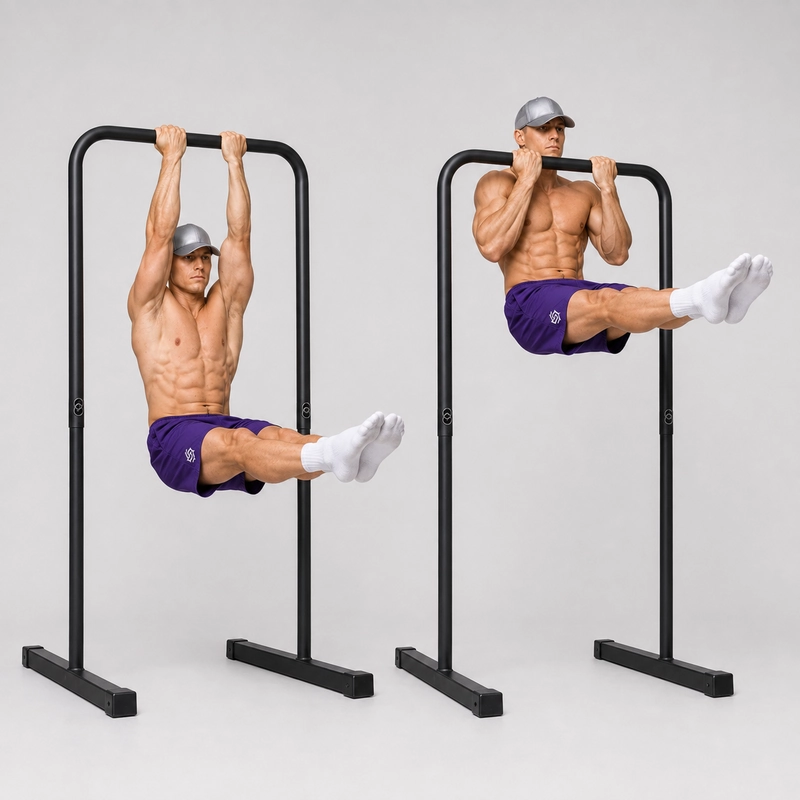
How to do L-Sit Chin-Up (L-Hang Chin-Up)?
The L-sit chin-up, also called the L-hang chin-up, is a strict chin-up performed while holding both legs straight and horizontal in front of the body. It combines the upper-body pulling strength of a chin-up with the isometric compression and body control required for an L-hang.
The exercise uses a supinated grip, meaning the palms face toward the athlete. This allows the biceps to contribute strongly to elbow flexion while the lats and upper-back muscles pull the body toward the bar. At the same time, the hip flexors hold the legs up and the abdominal muscles stabilize the pelvis and spine.
The grip distinguishes this movement from the L-sit pull-up, which uses a pronated grip with the palms facing away. Both variations train similar muscle groups, but the underhand position generally places greater emphasis on the elbow flexors.
Before attempting the full exercise, develop controlled chin-ups and enough compression endurance to hold a straight-leg L-hang without swinging. The hanging knee raise and hanging leg raise can help build the required hip-flexor and trunk strength.
Use a stable bar with enough space for your extended legs. Keep the hands approximately shoulder-width apart and avoid forcing the wrists or elbows into an uncomfortable position. Stop the exercise if you experience sharp pain, numbness or joint instability.
Tips for the proper execution of L-Sit Chin-Up (L-Hang Chin-Up)
Establish the L position before bending your elbows so the leg raise cannot create momentum for the chin-up.
Use a shoulder-width underhand grip and keep your wrists as neutral as the bar allows.
Drive your elbows down toward your sides instead of thinking only about getting your chin over the bar.
Slightly tuck your pelvis and keep your ribs controlled to prevent excessive lower-back arching.
Contract your quadriceps and press your legs together to keep the knees straight.
Pause at the bottom whenever you feel the body beginning to swing.
End the set when the legs drop below horizontal or the chin-up range becomes shorter.
Muscles worked when doing L-Sit Chin-Up (L-Hang Chin-Up)
The L-sit chin-up combines a dynamic vertical pull with an isometric straight-leg hold. The back and arm muscles move the body toward and away from the bar, while the trunk, hips and legs work continuously to preserve the L position.
Primary Muscles
- Latissimus dorsi: Produces shoulder extension and adduction as the body is pulled toward the bar.
- Biceps brachii: Contributes strongly to elbow flexion because of the supinated hand position.
- Brachialis and brachioradialis: Assist the biceps in bending and controlling the elbows.
- Hip flexors: The iliopsoas and rectus femoris actively hold the legs horizontally in front of the body.
- Rectus abdominis: Helps control the pelvis and resist excessive extension of the lower back.
Secondary and Stabilizing Muscles
- Trapezius and rhomboids: Control the shoulder blades during the pulling and lowering phases.
- Posterior deltoids and teres major: Assist shoulder extension and upper-arm control.
- Forearm and hand muscles: Maintain the underhand grip throughout the set.
- Obliques and transverse abdominis: Stabilize the trunk and resist rotation or unwanted movement.
- Quadriceps: Keep the knees extended and preserve the straight-leg position.
- Serratus anterior and rotator-cuff muscles: Support shoulder-blade and shoulder-joint control.
- Pectoralis major: Assists the upper-arm movement, particularly with the supinated grip.
The hip flexors are primarily responsible for holding the legs up. The abdominal muscles support the position by stabilizing the pelvis and spine rather than lifting the legs independently.
Primary Muscle(s):
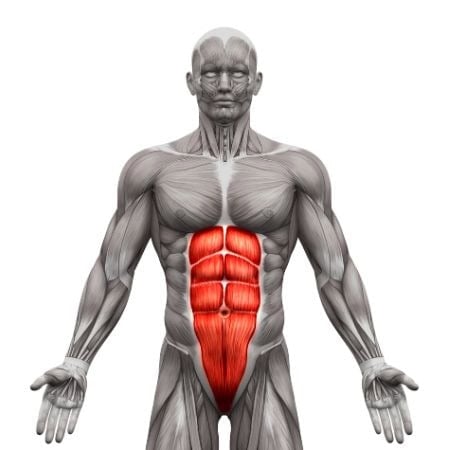
Abdominal
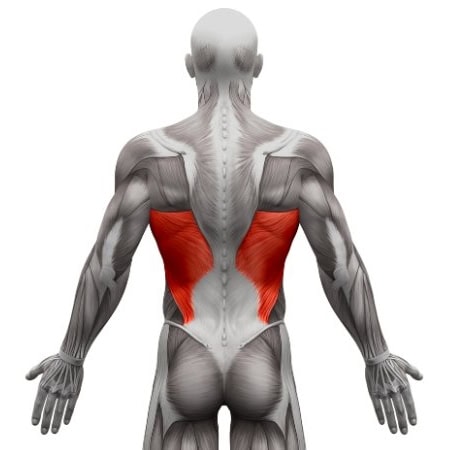
Lats
Secondary Muscle(s):
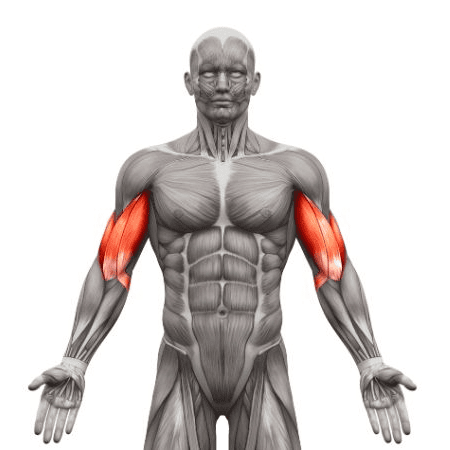
Biceps
Equipment needed for L-Sit Chin-Up (L-Hang Chin-Up)
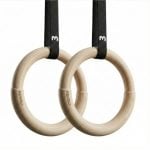
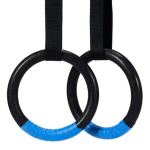
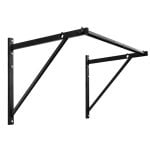
Adjust the difficulty of L-Sit Chin-Up (L-Hang Chin-Up)
How to make L-Sit Chin-Up (L-Hang Chin-Up) harder?
How to make L-Sit Chin-Up (L-Hang Chin-Up) easier?
How to make L-Sit Chin-Up (L-Hang Chin-Up) harder?
To make L-Sit Chin-Up (L-Hang Chin-Up) harder:
-
Pause for two to three seconds with your chin above the bar while keeping the legs horizontal.
-
Lower for three to five seconds on every repetition without allowing the legs to drop.
-
Perform L-sit chest-to-bar chin-ups by pulling until the upper chest contacts the bar.
-
Wear a light weighted vest after you can consistently perform strict bodyweight repetitions.
-
Raise the straight legs above horizontal to perform a V-sit chin-up.
-
Perform L-sit chin-ups on gymnastics rings while controlling the position and rotation of both rings.
-
Perform archer L-sit chin-ups by shifting toward one arm while the opposite arm becomes progressively straighter.
How to make L-Sit Chin-Up (L-Hang Chin-Up) easier?
To make L-Sit Chin-Up (L-Hang Chin-Up) easier:
-
Perform tuck L-sit chin-ups with both knees bent toward the chest to shorten the leg lever.
-
Perform one-leg L-sit chin-ups with one leg straight and the other knee tucked, alternating sides between sets.
-
Hold the straight legs slightly below horizontal and gradually raise them as your compression strength improves.
-
Use a resistance band to assist the chin-up while maintaining a compact tuck position.
-
Perform negative L-sit chin-ups by starting above the bar and lowering slowly while maintaining the best leg position you can control.
-
Train regular chin-ups separately until you can complete full-range repetitions without swinging.
-
Train L-hang holds separately until you can keep the legs straight and horizontal without losing pelvic control.