
Pull 11: Max Pull-Up Testing, Back Strength Workout and a Rear Delt Burner
🎯 Workout Description:
This is your pull-up progress check. After a warm-up and prep phase, you’ll test your maximum unassisted or band-assisted pull-ups, followed by a clean strength circuit that balances vertical and horizontal pulling. This is where you learn what your body is truly capable of.
👤 Who It’s For:
Everyone in the final week of the program. Whether you’re doing banded, partial, or full pull-ups, this workout helps you evaluate your progress.
🧰 Equipment Needed:
Pull-up bar ▶️ check out the best Pull-Up Bars for calisthenics
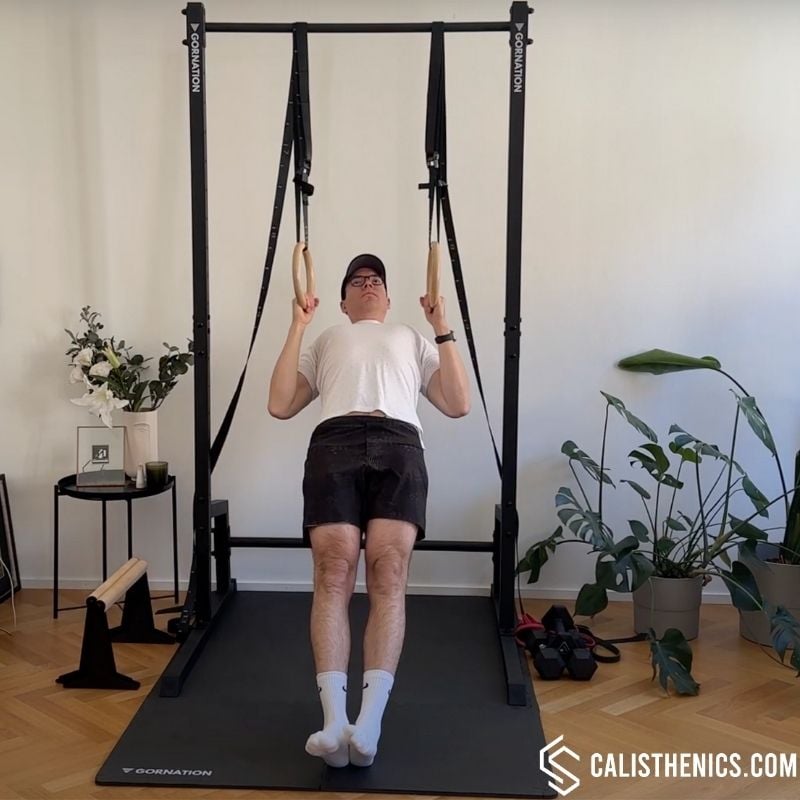
- Both ▶️ Gymnastics rings and ▶️ these Dip Bars are great for bodyweight rows
Warm-Up
Goal: Mobilize, activate, and mentally prepare for your test.
Format: Circuit – 2 rounds, no rest between exercises or rounds
-
5x Inchworms with Push-Up
-
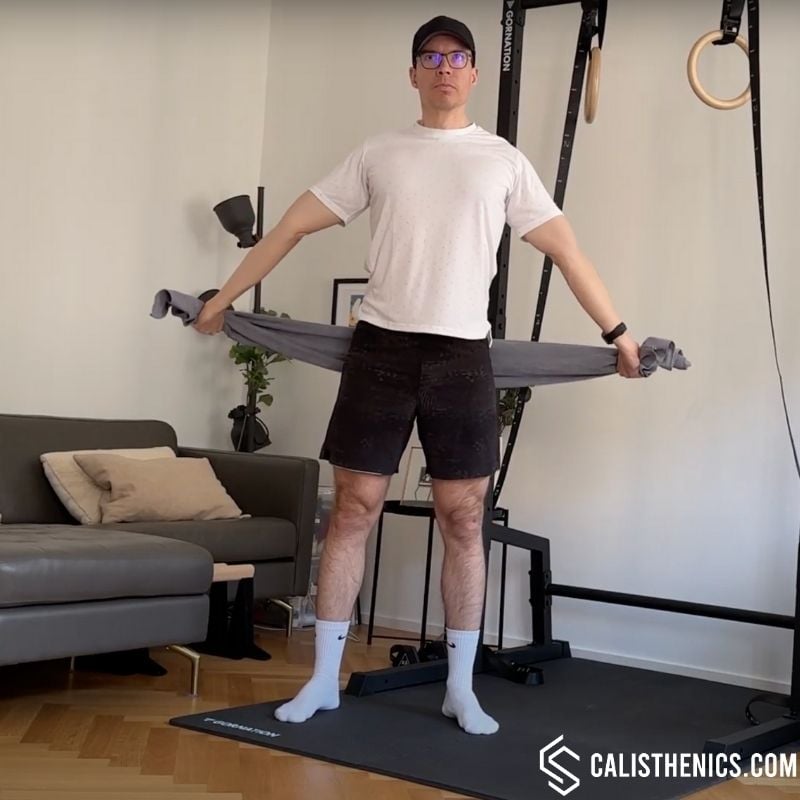
10x Towel Pass-Throughs
-
10x Scapula Rows
Tips
-
Start with a wider grip if you feel tightness in your shoulders.
-
If the movement feels too challenging, switch to a resistance band, which allows more flexibility.
-
Perform in front of a mirror to check for excessive arching or compensations.
-
Include it in your warm-up routine before upper body workouts, especially if working on overhead movements.
-
If you experience pain, stop and reassess your grip width and movement control.
Tips
-
Keep your body in a rigid plank position to maximize stability.
-
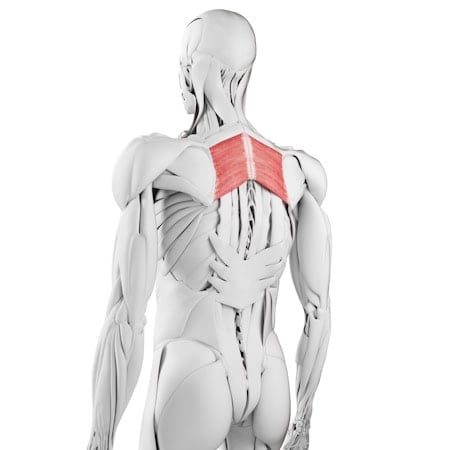
Engage your lats throughout the movement to maintain control.
-
Perform the exercise slowly, focusing on mind-muscle connection.
-
If you’re new to scapular control, practice hanging scapular retractions first.
-
Use controlled breathing to maintain core engagement and stability.
-
Keep your neck neutral—avoid tucking or craning it forward.
Testing + Strength
Goal: Test your current level, then reinforce your pulling patterns with high-quality reps.
Structure:
-
Test Set: 1 round, then proceed to strength work
-
Superset A (3 rounds): A1 + A2, rest 90–120 sec
-
Set B (2 sets): Performed alone, rest 45 sec
✅ Pull-Up Test Set:
-
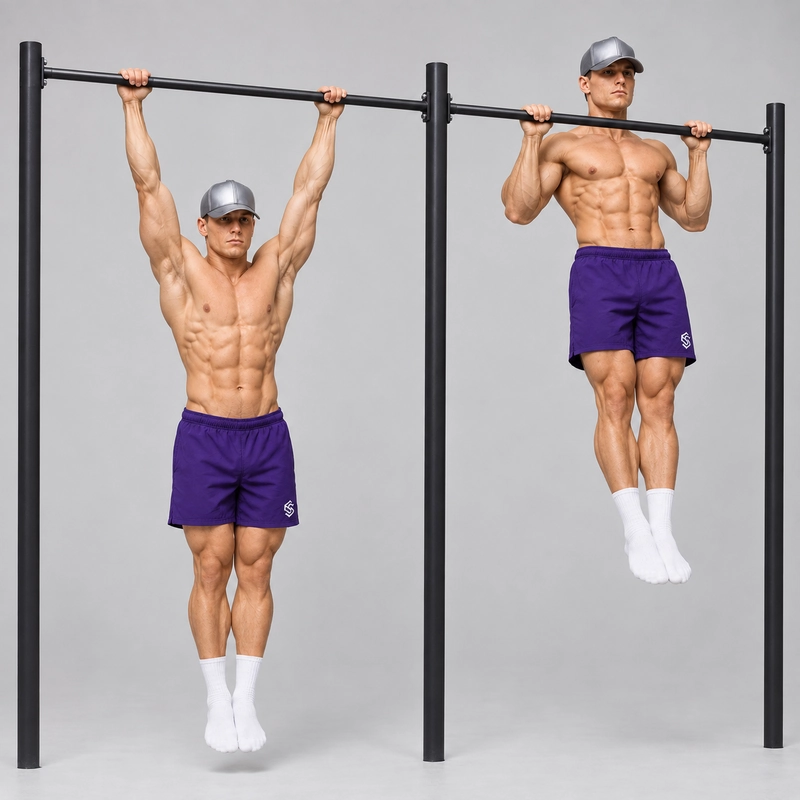
Max pull-ups (band-assisted or unassisted)
→ Rest 2–3 min before moving on
🟦 Superset A:
-
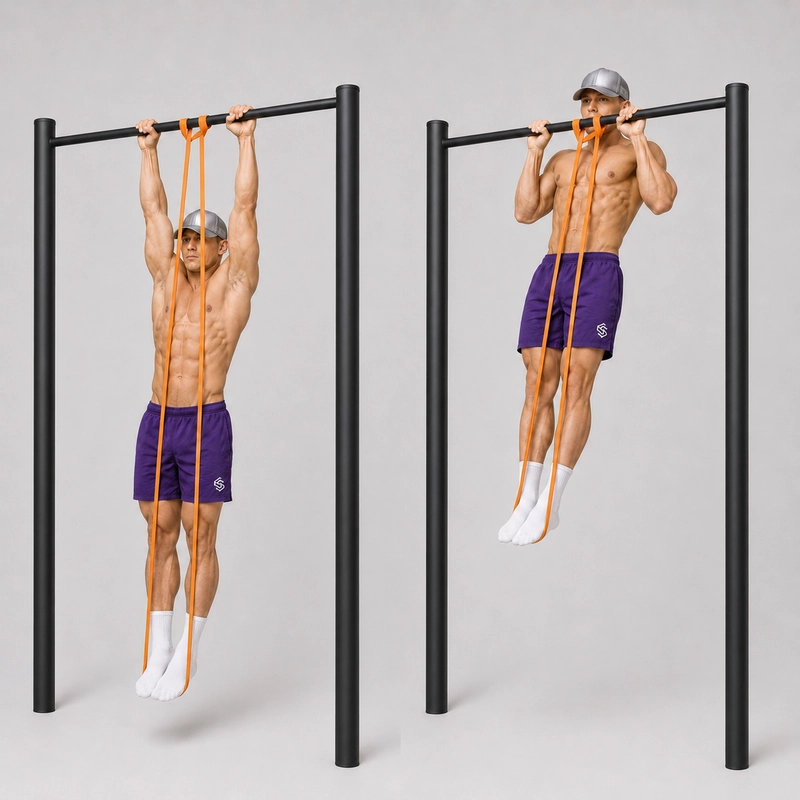
A1: Band-Assisted Pull-Ups (or Full Pull-Ups) – 4–6 reps
-
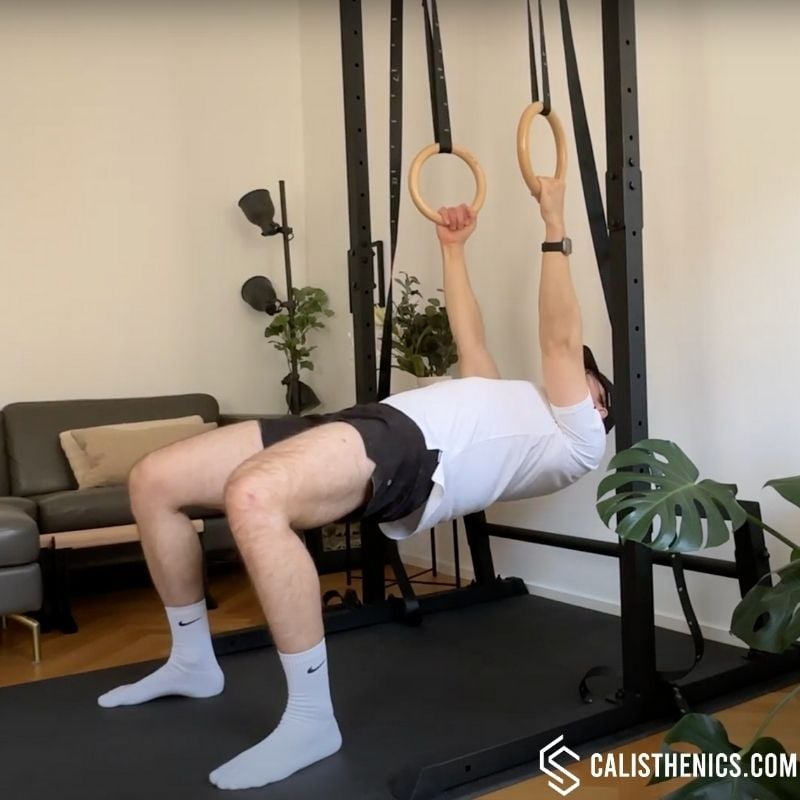
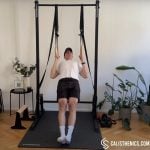
A2: Australian Pull-Ups (aka. Bodyweight Rows with Straight Legs) – 8–10 reps
→ Rest 90–120 sec after each round
🟩 Set B:
-
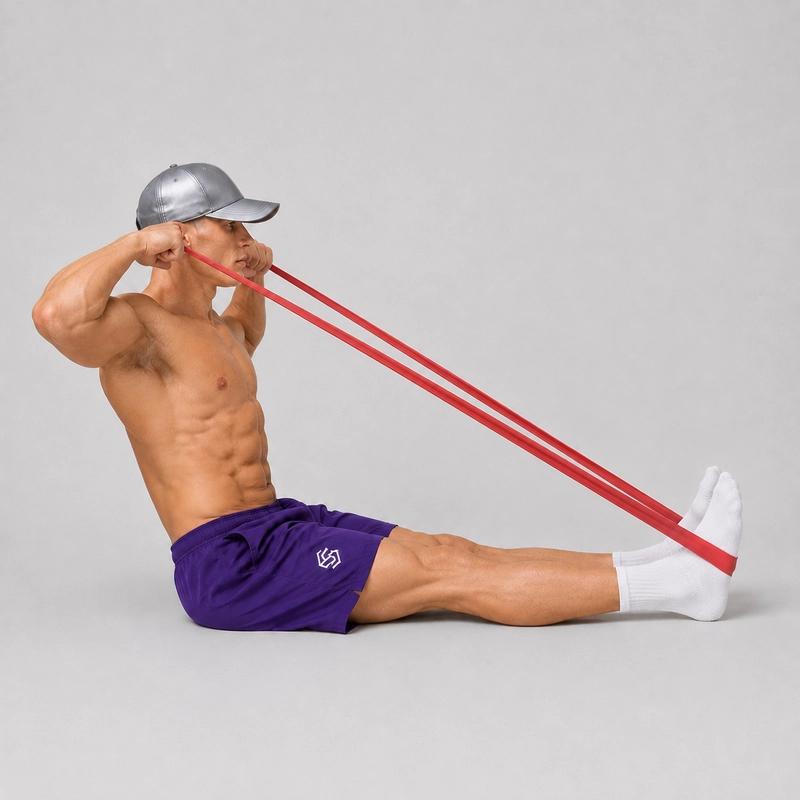
Resistance Band Face Pulls – 15 reps
→ Rest 45 sec between sets
Write down your test results! Whether it’s one unassisted rep or six clean banded reps, it’s your new starting point.
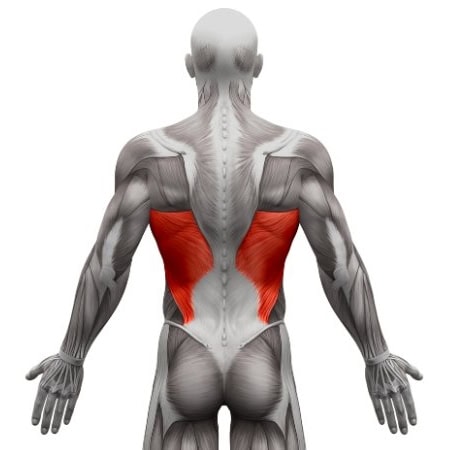
Tips
-
Keep your wrists neutral to avoid unnecessary strain.
-
Squeeze your glutes and engage your core to maintain body control.
-
Try a slight pause at the top to increase time under tension and improve muscle engagement.
-
Start the pulling motion by first engaging your scapulas before bending your arms.
-
Wrap your thumbs around the bar and use chalk or gloves for better hold.
-
If struggling with full reps, focus on negative pull-ups to build strength.
Tips
-
Choose the right band tension – A thicker band makes the pull-up easier, while a thinner band provides less assistance.
-
Experiment with different grips – Try neutral grip (palms facing each other) or wide grip for variation.
-
Keep your body tight – Engage your core and glutes to prevent swinging.
-
Control the descent – Lowering slowly builds more strength than letting the band recoil you downward.
-
Breathe properly – Exhale as you pull up, inhale as you lower yourself.
-
Gradually decrease assistance – As you get stronger, transition to thinner bands or fewer loops.
Tips
-
Maintain a neutral neck position to avoid strain.
-
Keep your wrists straight and aligned with your forearms.
-
Adjust grip width to target different areas of the back (wider for lats, narrower for biceps).
-
If using rings, rotate your grip naturally during the movement for better joint alignment.
-
Pause at the top for a brief second to maximize muscle engagement.
-
Gradually increase the difficulty by changing body position or adding weight.
Tips
-
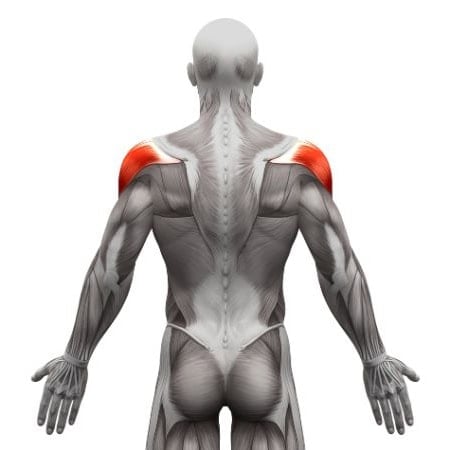
Keep the Elbows High: Lead with your elbows, keeping them in line with your shoulders as you pull to maximize engagement of the rear deltoids.
-
Engage the Core: Keep your core tight to stabilize your torso and maintain an upright posture, avoiding any rocking or leaning.
-
Focus on Shoulder Rotation: Rotate your shoulders externally as you pull, ensuring your hands are level with your ears at the peak of the movement.
-
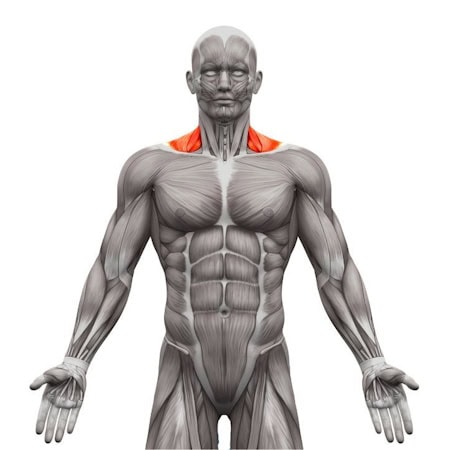
Avoid Shrugging the Shoulders: Keep your shoulders down and away from your ears to avoid upper trap overactivation.
-
Controlled Movement: Perform the exercise slowly and with control to fully activate the target muscles and avoid using momentum.
HIIT Finisher
Goal: Push full-body effort and mental resilience post-strength work.
Format: 5 Rounds – EMOM (Every Minute on the Minute)
-
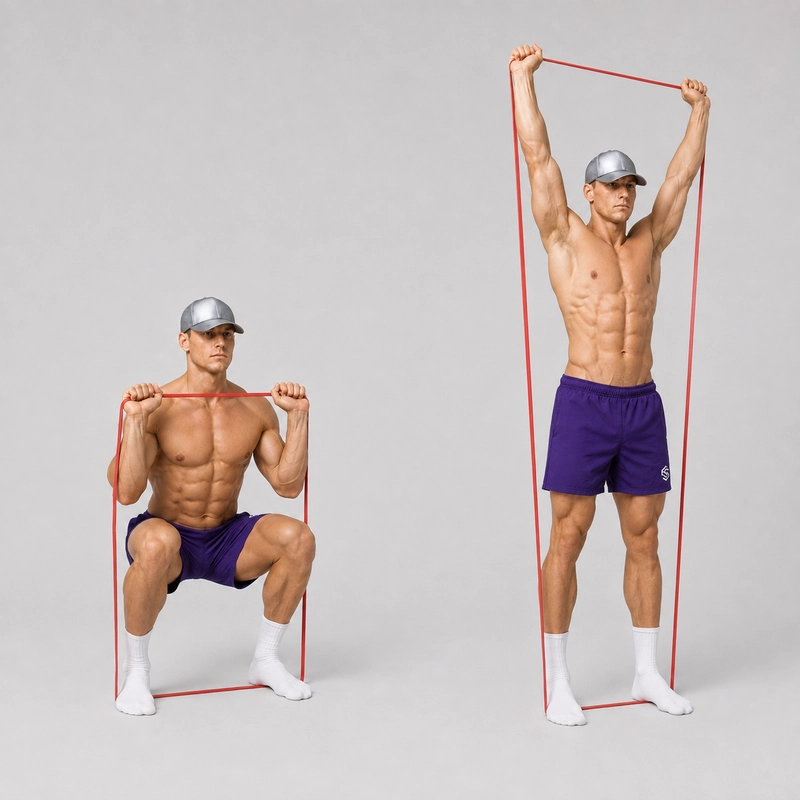
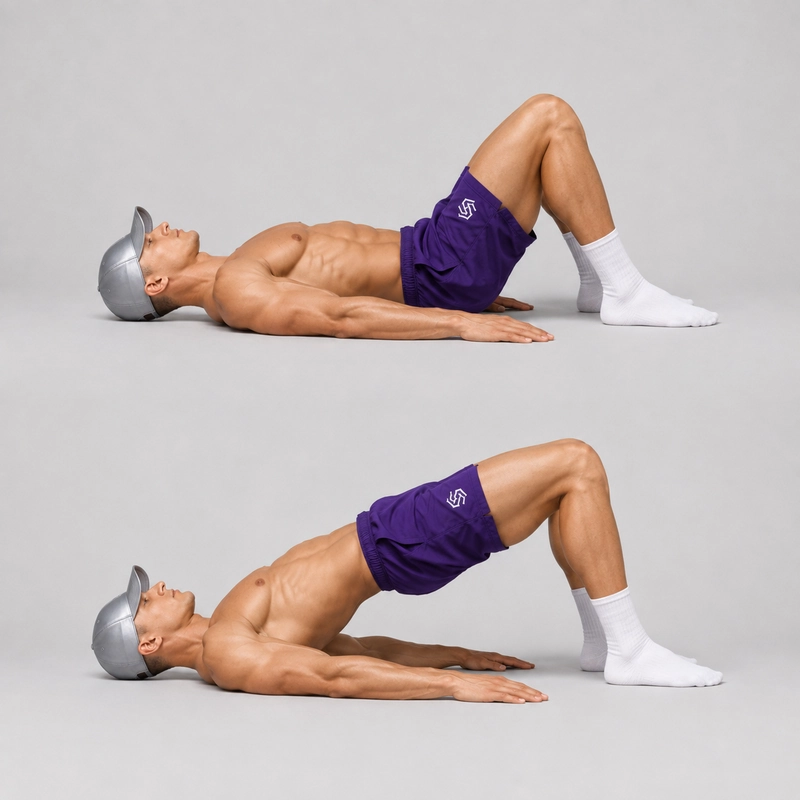
Minute 1: 40 sec Resistance Band Thrusters + 20 sec Glute Bridges
-
Minute 2: Repeat
→ 5 total rounds = 10 minutes
Muscle groups:
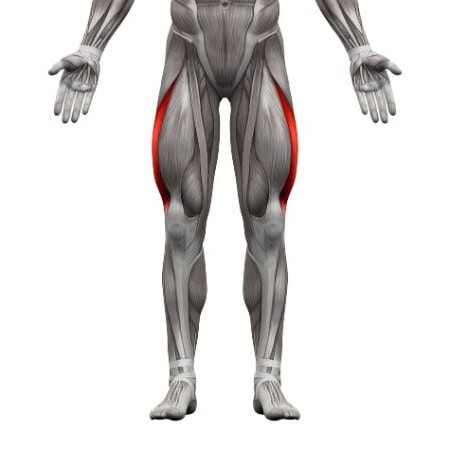
Tips
-
Secure Band Position: Ensure the band is securely anchored under both feet to prevent any slipping, and hold it firmly at shoulder height.
-
Engage the Core: Keep your core tight throughout the entire movement to maintain balance and stability.
-
Drive Through the Heels: Push through your heels as you rise from the squat to fully engage your glutes and quads.
-
Smooth Transition: Move fluidly from the squat into the overhead press, ensuring a controlled, coordinated movement.
-
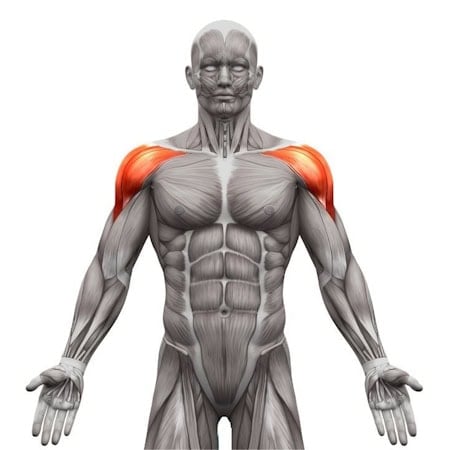
Avoid Locking Elbows: At the top of the press, avoid fully locking out your elbows to keep constant tension on the shoulders.
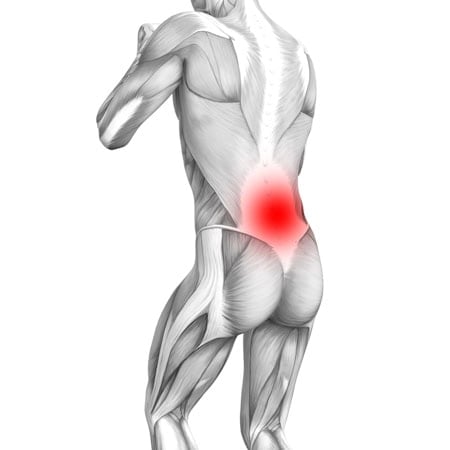
Muscle groups:
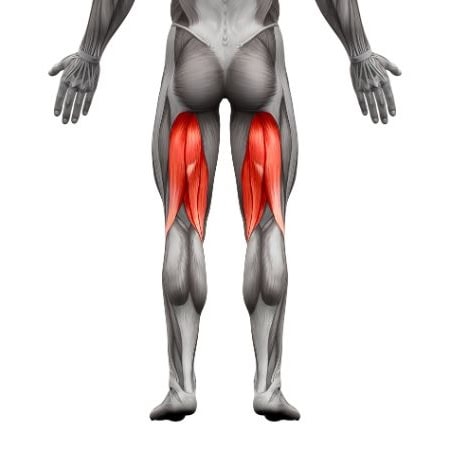
Tips
-
Core Engagement: Keep your core muscles engaged throughout the movement to prevent your lower back from arching. This helps protect your spine and enhances the effectiveness of the exercise.
-
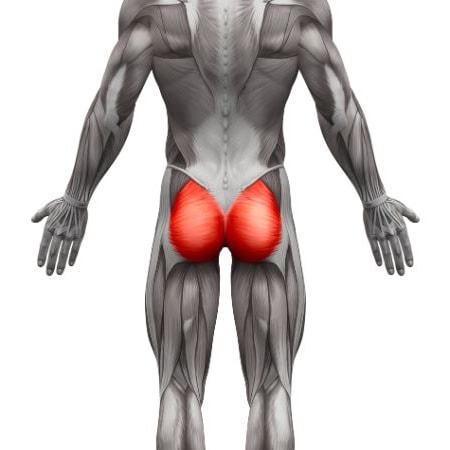
Push Through Your Heels: Pressing through your heels activates the glutes more effectively. Avoid pushing through the balls of your feet or letting your toes lift off the floor.
-
Squeeze at the Top: At the top of the movement, fully squeeze your glutes to maximize muscle activation. Ensure that your body forms a straight line from your shoulders to your knees.
-
Avoid Overextension: Be mindful not to hyperextend your lower back at the top of the movement. Focus on lifting with your glutes, not your lower back.
-
Breathing: Inhale as you lower your hips and exhale as you lift them. Proper breathing enhances core engagement and control.