
Hefesto Pull-Up
How to do Hefesto Pull-Up?
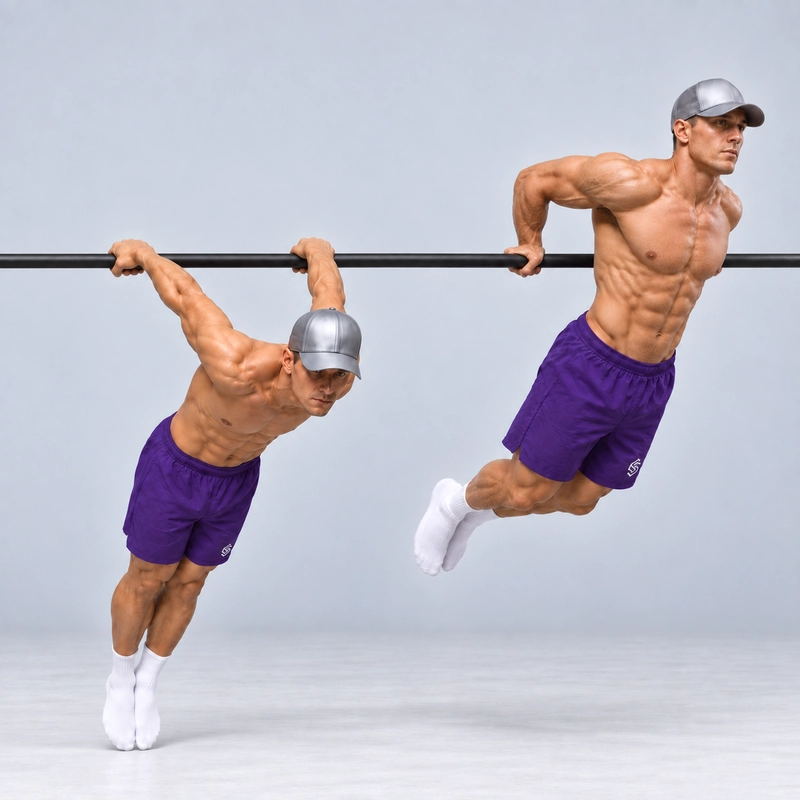
The Hefesto pull-up, commonly called the Hefesto, backwards muscle-up or reverse muscle-up, is an elite fixed-bar calisthenics skill in which you pull from beneath the bar with an underhand grip and your arms behind your torso, rotate upright around the back of the bar, and finish in straight-arm rear support above it.
Despite its name, the Hefesto pull-up is not a conventional chin-up performed behind the body. It combines powerful elbow flexion, strength through deep shoulder extension, grip control, a demanding transition and a final behind-the-body pressing phase. The bar must remain close to the upper back and armpits while the body travels around it; pulling directly into the lower back usually blocks the transition.
This page describes the fixed pull-up bar version. A Ring Hefesto belongs on a separate page because independently moving rings permit hand rotation and require different stabilization, positioning and progression drills. Low-bar, high-bar and single-rail versions remain variations of the same fixed-bar exercise.
The movement requires substantially more specific preparation than ordinary pull-ups. A controlled German Hang can help establish familiarity with an arms-behind position, while Skin the Cat develops the inversion and entry control needed to reach it. An Advanced Tuck Back Lever develops useful compact-body control, although the underhand grip and bent-arm Hefesto pull must still be prepared separately.
Equipment and Training Setup
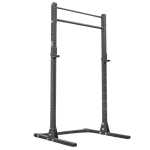
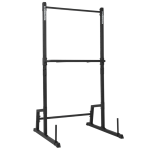
- Use a stable fixed bar that is rated for dynamic bodyweight exercise and has sufficient space behind, beneath and above it.
- Do not practise the full movement on an unsecured pressure-mounted doorway bar or any structure that can rotate, detach or tip.
- Place suitable padding beneath the bar and use an experienced spotter when learning the entry, negative or transition.
- Use a firmly secured low bar for foot-assisted repetitions so you can immediately reduce the load if your grip or shoulders become uncomfortable.
- Check that clothing, resistance bands and nearby equipment cannot catch on the bar during the rotation.
Readiness Before Attempting the Hefesto
There is no universal pull-up number or hold time that guarantees readiness because the limiting factor may be the wrists, elbows, shoulder-extension control, grip position or transition technique rather than general pulling strength. Before attempting the full skill, you should be able to demonstrate all of the following without pain or uncontrolled movement:
- A controlled entry into and exit from the required arms-behind shoulder position.
- A stable tucked or advanced-tuck back-lever position without swinging.
- A secure supinated grip with the wrists maintained high over the bar under partial load.
- Symmetrical elbow flexion during assisted Hefesto pulls and partial repetitions.
- A controlled deep Korean Dip or assisted equivalent for the final pressing phase.
- A slow assisted or eccentric repetition that can be stopped before form deteriorates.
A full Back Lever is useful but is not an absolute prerequisite; repeatable control in an appropriate shorter-lever position is more relevant than forcing a full lever solely to qualify for Hefesto training.
Strict Hefesto Pull-Up Standard
For the canonical fixed-bar version, one repetition begins in a controlled compact position beneath the bar with a closed supinated grip, straight elbows and the arms behind the torso. The athlete pulls symmetrically, rotates around the back of the bar and finishes in stable rear support with both elbows extended.
- The grip remains closed and neither hand releases or changes position during the repetition.
- The start is controlled rather than created by dropping, bouncing or swinging into the shoulders.
- Both elbows bend together without a one-arm “chicken-wing” transition.
- The bar travels toward the armpit and upper-back line rather than being driven into the lower back.
- The legs remain quiet, with no intentional kick counted as part of a strict repetition.
- A small amount of body arch is acceptable during the rotation, but it should be deliberate and distributed through the body rather than forced entirely through the lower back.
- The repetition ends only after the athlete reaches balanced rear support and extends both elbows.
Step-by-Step Execution
- Prepare the working range. Warm the shoulders, elbows, wrists and grip, then rehearse the required shoulder-extension position with progressively increasing but submaximal load.
- Set the grip. Hold the bar with a closed supinated grip, thumbs wrapped and hands approximately shoulder-width to slightly wider than shoulder-width apart.
- Keep the wrists high. Position the heel of each hand over the bar and resist allowing the wrists to roll completely underneath it, because a low wrist position makes the transition considerably harder.
- Enter under control. Reach the arms-behind position through a controlled inversion, a supported low-bar setup or another entry you already own rather than throwing the legs through the shoulders.
- Establish the start. Straighten the elbows, bring the knees into a compact tuck and make both shoulders active and symmetrical without aggressively forcing the shoulder blades down and back.
- Initiate the pull. Flex both elbows together and pull the upper back toward the bar while maintaining the high wrist position.
- Aim for the armpits. Continue pulling the bar toward the armpit and upper-back line instead of pulling it toward the waist or lower back.
- Rotate the torso upright. As the elbows reach deeper flexion, allow the chest and hips to travel through a controlled arc so the torso becomes increasingly vertical behind the bar.
- Clear the hips. Keep the bar close while shifting the pelvis just enough to avoid becoming trapped underneath it, without bouncing the lower back or hips off the bar.
- Finish the transition. Press through the final Korean-dip phase until the body is balanced above the bar in rear support with both elbows straight.
- Exit safely. Step down from a low bar, use a spotter or reverse only the range you can control rather than dropping rapidly into deep shoulder extension.
Breathing and Bracing
Take a controlled breath and brace before initiating the pull, then exhale gradually through the hardest portion of the transition. Keep enough abdominal, glute and leg tension to control the lower body, but do not force a rigid hollow position when a deliberate whole-body arch is needed to rotate upright.
Common Hefesto Mistakes
- Allowing the wrists to roll underneath the bar: Regress to a low-bar or assisted version and practise maintaining pressure through the heel of the hand.
- Pulling toward the lower back: Direct the pull toward the armpits so the elbows can continue flexing as the torso rotates.
- Using an excessively wide grip: Return to a grip only slightly wider than the shoulders so strength, range and joint position remain manageable.
- Transitioning one arm at a time: Increase assistance until both elbows can bend and clear the transition together.
- Kicking the legs: Use a tuck, band or spotter that lets you complete the same path without hiding the weak portion with momentum.
- Forcing the lower-back arch: Distribute the arc through the shoulders, chest, hips and trunk rather than collapsing through one spinal segment.
- Dropping through negatives: End the repetition as soon as you cannot control the descent because an uncontrolled fall into shoulder extension does not build useful eccentric strength.
- Training repeated maximal attempts: Stop the set when the grip rolls, the elbows become uneven or the movement becomes substantially slower.
Safety Considerations
The Hefesto places high force through the biceps, forearms, elbows, wrists, chest and anterior shoulders while the arms are behind the body. The biceps brachii crosses both the shoulder and elbow, which helps explain why ordinary pulling strength alone does not prepare every position used by this skill. The shoulder also relies on several static and dynamic stabilizers throughout its large range of motion, as outlined in this overview of the glenohumeral joint.
Progressive preparation cannot guarantee that the movement will be appropriate for every athlete. Do not force additional depth or continue through sharp pain, a sudden pop, new weakness, numbness, tingling or a feeling that the shoulder is slipping or unstable. Anyone with current upper-limb pain, a recent injury or a history of significant shoulder instability should seek individualized guidance from a qualified healthcare or rehabilitation professional before training the skill.
How to Program the Hefesto Pull-Up
Train the Hefesto early in a session, after a specific warm-up but before high-volume pulling, back-lever or dip work creates fatigue. A practical starting point is three to five sets of one to three high-quality assisted, partial or eccentric repetitions with two to four minutes of rest, performed once or twice per week and adjusted according to recovery.
Treat negatives as high-load strength work rather than high-repetition conditioning. Record the assistance, body shape, usable range and sticking point so progress can be measured without relying on uncontrolled full attempts.
Frequently Asked Questions
Is the Hefesto the same as a backwards muscle-up?
In calisthenics, Hefesto and backwards muscle-up generally describe the same movement family, although some athletes use “Hefesto pull-up” for the pulling phase and “full Hefesto” for the complete transition into rear support.
Do you need a full back lever before learning the Hefesto?
No, but you should have controlled shorter-lever back-lever strength, pain-free shoulder-extension capacity and specific strength in the supinated grip used by the Hefesto.
Is the Hefesto a pulling or pushing exercise?
The demanding first portion is primarily a pull, while a complete repetition finishes with a behind-the-body pressing phase similar to a deep Korean Dip.
Can you perform the Hefesto on gymnastics rings?
Yes, but the rotating and independently moving rings change the grip, stabilization, body path and finishing support enough that the Ring Hefesto should be taught as a separate exercise rather than presented as an interchangeable equipment option.
Tips for the proper execution of Hefesto Pull-Up
Use a fixed bar that is rated for dynamic bodyweight training and has unobstructed space behind, beneath and above it.
Hold the bar with a closed supinated grip approximately shoulder-width to slightly wider than shoulder-width apart.
Keep the wrists high over the bar so the grip does not roll underneath during the transition.
Establish active and symmetrical shoulders before initiating the pull from the compact starting position.
Pull the bar toward the armpits and upper back rather than toward the waist or lower back.
Bend both elbows together to prevent an asymmetrical one-arm transition.
Allow the entire body to travel through a controlled arc instead of forcing all the extension through the lower back.
Keep the legs quiet and use assistance rather than a kick when training strict repetitions.
Keep the bar close without bouncing the back or hips against it to bypass the sticking point.
Finish in balanced rear support with both elbows straight before counting the repetition.
Film the movement from a rear three-quarter or side angle so the wrist position, elbow symmetry and bar path remain visible.
End the set when the grip rolls, the shoulders lose control or one arm begins moving ahead of the other.
Muscles worked when doing Hefesto Pull-Up
The Hefesto pull-up is a compound upper-body skill that combines elbow flexion, loaded shoulder control, grip strength, trunk stabilization and a final pressing phase. No direct electromyography study of the Hefesto was identified, so the muscle classification below is based on the movement’s joint actions, established anatomy and practical movement analysis rather than unsupported activation percentages.
Primary Muscles
- Biceps brachii: Produces powerful elbow flexion during the pull and contributes to controlling the shoulder while the arms remain behind the torso.
- Brachialis and brachioradialis: Assist elbow flexion throughout the pull, particularly as the grip and forearm position become difficult to maintain.
- Anterior deltoids: Help control the upper arms and move the body out of the deeply extended shoulder position during the transition.
Secondary and Stabilizing Muscles
- Pectoralis major and coracobrachialis: Assist with upper-arm control as the torso rotates from beneath the bar toward an upright position.
- Forearm flexors and hand muscles: Maintain the closed supinated grip and prevent the wrists from rolling underneath the bar.
- Triceps: Extend the elbows during the final Korean-dip phase and stabilize the top rear-support position.
- Rotator cuff: Helps maintain dynamic shoulder-joint control throughout the loaded arms-behind range.
- Trapezius, rhomboids and serratus anterior: Coordinate and stabilize the shoulder blades as the body changes orientation around the bar.
- Latissimus dorsi and teres major: Contribute to upper-arm and torso control, particularly during the entry, start and eccentric return.
- Abdominals and obliques: Control the tuck, resist unwanted rotation and keep the legs from swinging independently of the torso.
- Spinal erectors and glutes: Help create and control the body arc used to rotate upright without collapsing through the lower back.
- Hip flexors and quadriceps: Maintain the compact tuck or extended-leg position selected for the repetition.
Muscle Emphasis Compared With a Standard Pull-Up
A standard pull-up mainly combines shoulder adduction or extension with elbow flexion while the arms begin overhead. The Hefesto instead places the arms behind the torso, demands considerably more wrist and shoulder-position control, emphasizes the elbow flexors through an unusual pulling path, and adds a rear-support pressing finish.
Primary Muscle(s):
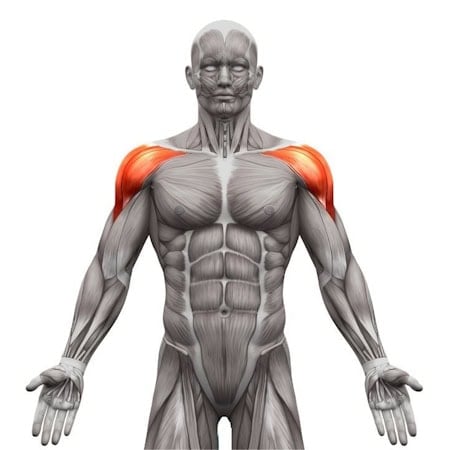
Anterior delt
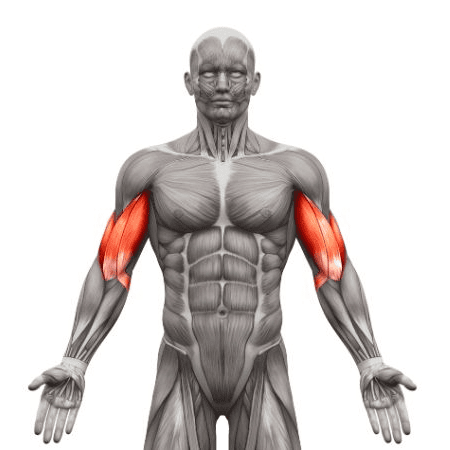
Biceps
Secondary Muscle(s):
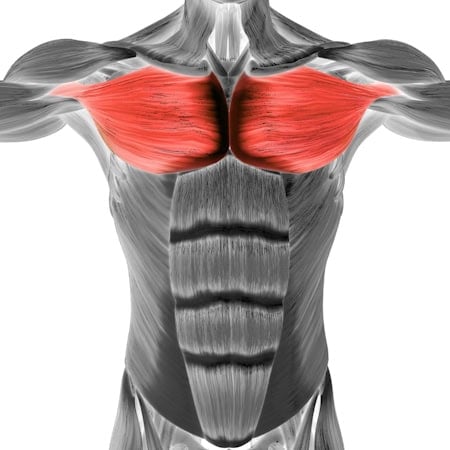
Middle chest
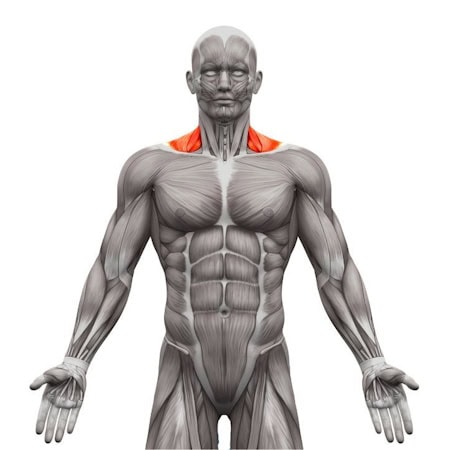
Trapezius
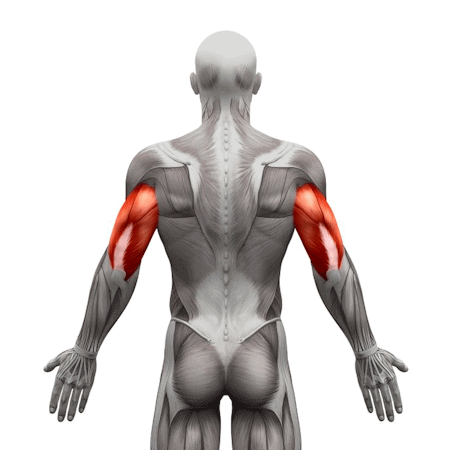
Triceps
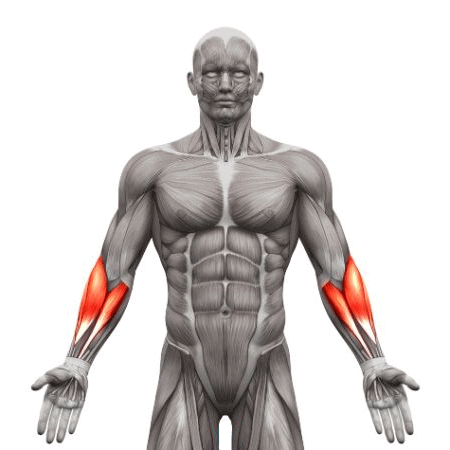
Forearm
Equipment needed for Hefesto Pull-Up
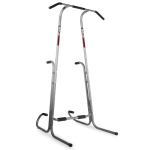
Adjust the difficulty of Hefesto Pull-Up
How to make Hefesto Pull-Up harder?
How to make Hefesto Pull-Up easier?
How to make Hefesto Pull-Up harder?
To make Hefesto Pull-Up harder:
-
Reduce foot, band or spotter assistance while preserving the same bar path and elbow symmetry.
-
Move from a tight tuck to an advanced tuck, one-leg or progressively straighter body position.
-
Pause at the weakest portion of the pull before continuing into the transition.
-
Extend the eccentric phase while keeping the wrists high and both shoulders controlled.
-
Remove all intentional leg kick, rebound and bar-assisted bounce from the repetition.
-
Begin from a deeper controlled straight-arm position without dropping into the shoulders.
-
Perform multiple strict repetitions without resetting the grip or using momentum between reps.
-
Progress toward a straight-body Hefesto only after the tucked version is consistently controlled.
How to make Hefesto Pull-Up easier?
To make Hefesto Pull-Up easier:
-
Perform a foot-assisted Hefesto on a low fixed bar and use only enough leg drive to keep the arms moving symmetrically.
-
Use a securely positioned resistance band around the hips to unload the pull while preserving the intended path around the bar.
-
Ask an experienced spotter to support the hips and reduce the load through the weakest portion of the transition.
-
Begin with a tight tuck to shorten the body lever and reduce the rotational demand.
-
Practise assisted partial repetitions through progressively larger ranges instead of repeatedly failing the complete movement.
-
Separate the pulling phase from the final Korean-dip press and strengthen each portion before combining them.
-
Use short assisted isometric holds at several points in the pull to strengthen specific sticking positions.
-
Perform a controlled negative from rear support only through a range that you can stop at any point.
-
Practise maintaining the high wrist position on a low bar before applying full bodyweight.