
Kip Swing Bar Muscle-Up
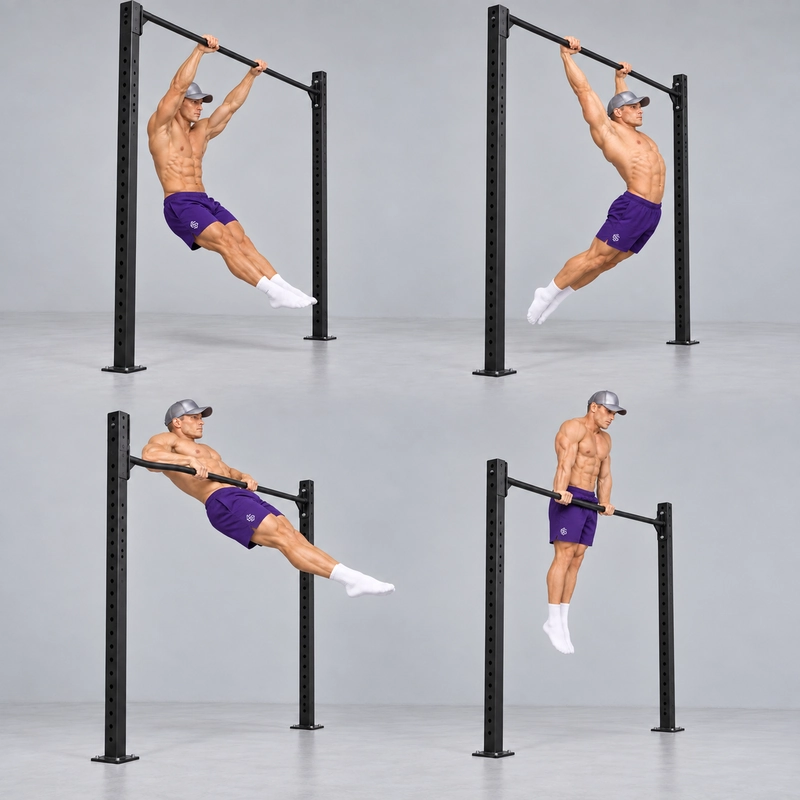
How to do Kip Swing Bar Muscle-Up?
The Kip Swing Bar Muscle-Up, also called a Kipping Bar Muscle-Up, moves you from a hanging position beneath a fixed bar to straight-arm support above it. You deliberately alternate between arch and hollow body shapes to organize a swing, use that motion with an active pull to gain height, turn both elbows over the bar and complete the dip.
This differs from the strict Bar Muscle-Up, which excludes deliberate swing and hip drive. The kip is part of the intended technique on this page, not an accidental cheat. However, a kipping repetition should not be recorded as a strict repetition or treated as proof of the same strict pulling strength.
A complete muscle-up still includes a pulling phase, a transition and a press into support, as described in CrossFit's Kipping Bar Muscle-Up overview. A swing that finishes below the bar is a preparation drill; a turnover without the final lockout is an incomplete muscle-up. For the wider learning pathway, see our muscle-up training guide.
Kip swing versus strict bar muscle-up
| Feature | Kip Swing Bar Muscle-Up | Strict Bar Muscle-Up |
|---|---|---|
| Start of the ascent | A deliberate arch-to-hollow swing supplies momentum before and during the pull. | The ascent begins from a controlled, motionless hang. |
| Lower-body action | Coordinated leg and hip motion is permitted as part of the kip. | No deliberate knee drive, leg swing or forceful hip extension. |
| Main learning focus | Connect the swing, rise, turnover and press without losing control. | Generate sufficient height with strict upper-body pulling and connect it to the turnover and press. |
| Finish | Both elbows fully extended in stable support above the bar. | Both elbows fully extended in stable support above the bar. |
| Tracking | Record as kipping; separate single-reset and linked sets. | Record as strict; any deliberate kip changes the category. |
The kip can help you get into the transition, but it does not remove the need for a secure grip, usable pulling strength and a controlled press. Learning one version does not automatically demonstrate mastery of the other.
Readiness and equipment
Before attempting the full movement, develop repeatable Strict Pull-Ups, comfortable hanging shoulder control and stable Straight Bar Dips. You should also be able to make small arch-to-hollow swings without losing your grip or being pulled into an uncontrolled bottom position. There is no universal pull-up count that guarantees readiness.
Practise a Low-Bar Muscle-Up Transition to learn the wrist and elbow turnover with foot assistance. Use High Pull-Ups to develop pulling height separately; the strict high-pull standard does not include the kip used here. CrossFit's bar muscle-up progression guidance likewise separates kip practice, pulling work, assisted transitions and pressing preparation.
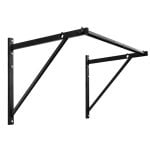
Use a securely installed bar and structure suitable for dynamic swinging and above-bar support. A static bodyweight rating alone does not confirm suitability for this movement. Follow the equipment manufacturer's installation and usage instructions. Check clearance for the complete swing in front of and behind the bar, the legs below it, and the head and torso above it. Keep any access box outside the swing path once you are hanging.
Warm up the wrists, elbows and shoulders with progressively loaded movement, easy pulling, comfortable support work and small rehearsal swings. Do not begin with a maximal kip. If hanging, swinging or turning over causes sharp pain, a feeling of shoulder instability or repeated loss of grip, stop and return to appropriate preparation rather than adding momentum.
Understand the arch-to-hollow swing
In the arch, the chest moves forward relative to the bar while the legs move behind you. In the hollow, the chest moves back and the legs move forward. Keep the shapes connected through the shoulders and trunk rather than kicking the feet independently. CrossFit's explanation of the arch-to-hollow kip describes this foundational swing; the muscle-up then continues beyond a pull-up into support.
Begin with long, together legs and a modest swing. A small knee bend can occur in a coordinated kip, but a large knee tuck is not required. Avoid forcing the lower back into an exaggerated arch. Your shoulders move through the swing while remaining actively controlled; do not try to hold them rigidly pulled down throughout both shapes.
How to do a Kip Swing Bar Muscle-Up
- Take a secure grip. Hold the bar overhand at approximately shoulder width or slightly wider. Wrap the thumbs around it and establish the grip before swinging. A comfortable slight overgrip can help the turnover, but a deep ring-style false grip is not required. Keep both hands on the bar throughout.
- Establish a controlled hang. Begin with straight elbows and both feet clear of the floor or platform. Brace enough to connect the torso and legs while allowing the body shapes to change deliberately.
- Create a small beat swing. Move through arch and hollow shapes with straight arms. The chest and legs move to opposite sides of the hanging line. Use only enough rehearsal swings to establish timing; do not keep increasing the amplitude until you are barely holding on.
- Use the arch-to-hollow return to begin the rise. As the chest moves back and the legs come forward, press against the bar with the arms still long. Coordinate the hip action with this return so the hips rise and approach the bar while the torso has room behind it. The goal is upward travel, not a long horizontal pendulum.
- Add the high pull. As you rise, bend both elbows and direct them down and back while bringing the bar toward the lower torso. Let the kip and pull work together. Do not turn the movement into a normal chin-over-bar pull-up or pull your face directly into the bar.
- Turn over while you still have height. Once the lower torso is close enough and your chest can clear the bar, bring the shoulders forward above it. Allow the wrists to rotate into support and bring both elbows over at approximately the same time. The knees do not need to reach the bar, and the feet should remain below bar level.
- Control the dip catch. Receive your weight with the chest above the bar and the elbows bent. Keep the hands secure and the bar close without dropping your chest or abdomen heavily onto it. If one elbow cannot clear, do not force a one-arm scramble to finish.
- Complete the press. Extend both elbows and finish in recognizable straight-arm support, with the bar near the hips. Briefly show control instead of immediately falling back through the transition.
- Return deliberately. Bend the elbows, lower into the dip and reverse the turnover beneath the bar while retaining the grip. Let the elbows extend as you return to the hang and manage the resulting swing. Do not release the hands or free-fall into the bottom position.
- Reset or link only when ready. For early practice, settle the swing and start another single only after control returns. Linked repetitions require a deliberately managed descent that feeds the next arch-to-hollow cycle; do not improvise repeated bouncing attempts once your timing deteriorates.
Completion standard
- Start from, or pass through, a hang below the bar with both elbows extended and the feet unsupported.
- Use a deliberate, controlled kip. No jump from a box, foot push-off, band or spotter assistance is included in the unassisted standard.
- Keep both hands on the same fixed bar throughout the pull, transition and support.
- Turn both elbows over at approximately the same time; a one-arm-first “chicken-wing” turnover does not meet this page's technique standard.
- Keep the feet below bar height and avoid a pullover, roll or glide-kip entry.
- Finish with both elbows fully extended and the body supported above the bar.
- Count one repetition at the completed lockout. Manage the return before starting another repetition or leaving the apparatus.
These are this exercise library's training standards, not a claim of compliance with every competition rulebook. Count preparatory swings separately from completed muscle-ups. Record whether repetitions were singles with a reset or a linked set.
Common mistakes and corrections
- More swing without more height: reduce the amplitude and reconnect the arch-to-hollow return with the rise instead of taking progressively larger swings.
- Pulling too early: bending the elbows immediately can interrupt the straight-arm swing. Rehearse the long-arm return, then add the pull as the body rises.
- Waiting until upward movement has stopped: the turnover must use the available height; practise the timing with foot-assisted transitions rather than forcing a stalled attempt.
- Pulling straight into the bar: create room behind it during the rise, then bring the shoulders above it for the turnover.
- Throwing one elbow over first: return to an assisted, symmetrical transition. Do not reinforce a chicken-wing pattern with repeated full attempts.
- Resting heavily on the abdomen: develop more usable height and a controlled dip catch rather than dragging the body across the bar.
- Skipping the press: catching above the bar is not the finish; both elbows must reach full extension.
- Dropping to generate the next kip: learn the controlled return before linking repetitions. Reduce the set if you cannot manage the bottom swing.
Sets, repetitions and progression
Practise after warming up and before substantial pulling fatigue. A practical starting option is 3 to 5 sets of 1 to 3 clean repetitions, resting approximately 2 to 3 minutes between sets. Beginners to the skill should favor controlled singles. These are adjustable coaching suggestions, not a validated readiness test or a promised mastery timeline.
End the set when grip security, height, symmetrical turnover or descent control deteriorates. Once singles are repeatable, practise a short linked set without adding a larger swing to rescue each repetition. Develop strict pulling and dipping alongside this skill.
If the transition is your limiting factor, use the Low-Bar Muscle-Up Transition. If you need reduced resistance through the whole movement, use the Band-Assisted Bar Muscle-Up with its appropriate setup and a controlled path; do not simply combine a strong band with an aggressive swing. A Negative Bar Muscle-Up is a separate lowering drill for athletes who can already support themselves and control the turnover.
Frequently asked questions
Is a kip swing muscle-up the same as a kipping bar muscle-up?
Yes, those names refer to the same complete movement on this page. An isolated kip or beat swing remains below the bar and does not include the turnover and dip.
Do I need a strict muscle-up first?
No. You can learn the kipping version before the strict version, provided you have appropriate pulling, pressing, grip and swing control. The kip is not a substitute for building those foundations.
Should I lift my knees as high as possible?
No. Keep the legs coordinated with the trunk and use enough hip action for the rise. A large tuck or forceful isolated kick can make timing harder to repeat; focus on getting the torso above the bar rather than the knees toward it.
Does a kipping muscle-up count as a strict strength result?
No. Record the two standards separately. Kipping performance depends on swing timing and coordination as well as strength, so its repetition count does not provide an equivalent strict result.
Tips for the proper execution of Kip Swing Bar Muscle-Up
Use a securely installed bar suitable for dynamic swinging and above-bar support, with clearance for the entire movement.
Set an overhand grip around shoulder width, wrap the thumbs and keep both hands connected to the bar throughout.
Practise a modest arch-to-hollow beat swing before adding the pull; avoid generating momentum by kicking the feet independently.
Keep the arms long through the initial swing return, then add the elbow pull as the hips and torso rise.
Create room behind the bar during the ascent, then bring the shoulders forward above it for the turnover.
Bring both elbows over at approximately the same time rather than forcing one arm through a chicken-wing transition.
Receive the dip under control; do not crash the chest or abdomen onto the bar to compensate for insufficient height.
Finish every repetition with both elbows fully extended and a recognizable stable support position.
Manage the return to the hang before starting another repetition; a free-fall descent is not a useful reset.
Count complete muscle-ups separately from rehearsal swings, and label singles, linked sets and strict repetitions distinctly.
Muscles worked when doing Kip Swing Bar Muscle-Up
The Kip Swing Bar Muscle-Up combines a swinging body-shape change, an active pull, a turnover and a straight-bar press. Muscle roles change across these phases rather than remaining identical throughout the repetition.
Primary muscles
- Latissimus dorsi: contributes to pressing against the bar with long arms and to the pulling action that raises the torso.
- Biceps and other elbow flexors: bend the elbows during the high pull.
- Pectoralis major: contributes to the pressing phase once the chest is above the bar.
- Triceps: extend the elbows to complete the dip and establish straight-arm support.
Secondary muscles
- Deltoids and shoulder stabilizers: organize the upper arms through the swing, pull, turnover and support.
- Trapezius, rhomboids and serratus anterior: coordinate shoulder-blade movement across the hanging and support positions.
- Forearm and hand muscles: maintain grip and control the change from hanging beneath the bar to supporting above it.
- Abdominals, obliques and spinal stabilizers: control the arch-to-hollow shapes and keep the swing connected rather than loose.
- Hip flexors, glutes and other lower-body muscles: coordinate the leg and hip motion used in the kip.
The kip changes how momentum contributes to the ascent. It does not establish a fixed reduction in arm loading or a muscle-activation percentage, and this page does not claim that kipping is superior to strict work for hypertrophy or maximal strength.
Primary Muscle(s):
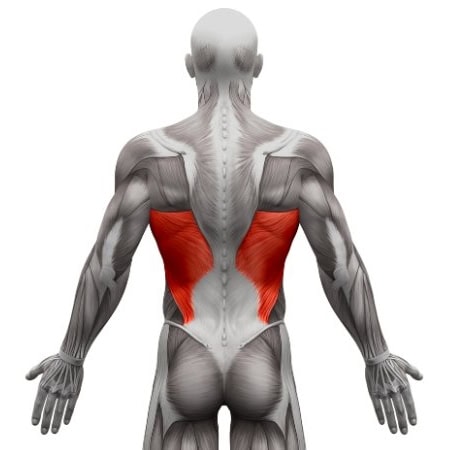
Lats
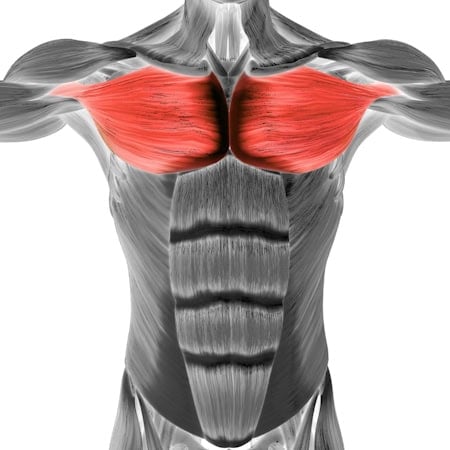
Lower chest
Secondary Muscle(s):
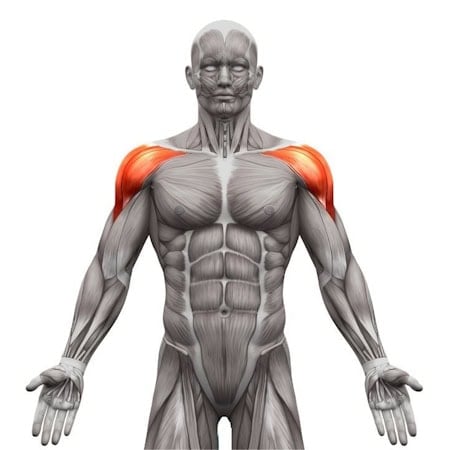
Anterior delt
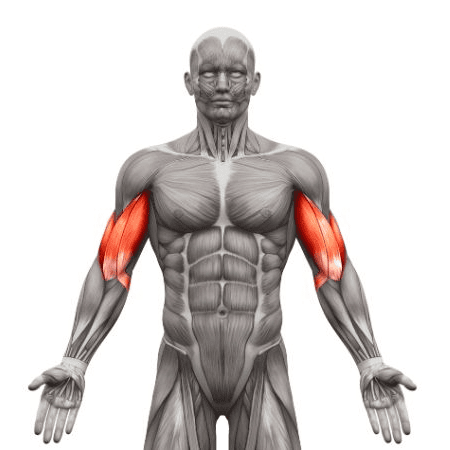
Biceps
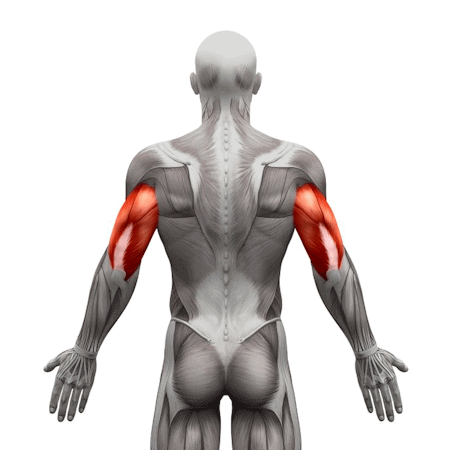
Triceps
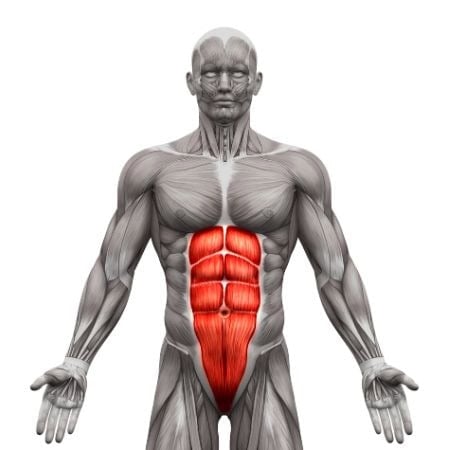
Abdominal
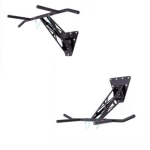
Equipment needed for Kip Swing Bar Muscle-Up
Adjust the difficulty of Kip Swing Bar Muscle-Up
Separate swing timing, transition practice and full repetitions when adjusting the difficulty. Use small beat swings to learn body shapes, foot-assisted low-bar transitions to rehearse turnover, and an appropriate assisted full muscle-up when reduced resistance is needed. Progress unassisted singles into short linked sets only when the return remains controlled. Reducing the kip toward a motionless start leads to the separate strict Bar Muscle-Up standard.
How to make Kip Swing Bar Muscle-Up harder?
How to make Kip Swing Bar Muscle-Up easier?
How to make Kip Swing Bar Muscle-Up harder?
To make Kip Swing Bar Muscle-Up harder:
-
Link two or three clean repetitions by controlling the return into the next swing. Keep the turnover symmetrical and finish every dip; reduce the set if repeated swings become larger or less controlled.
-
After a well-controlled turnover, briefly pause in the bottom dip before pressing to lockout. Use this only when you can hold that position without resting heavily on the bar or losing shoulder control.
-
Add a deliberately slower return through the dip and turnover, then reset before the next single. This increases the lowering-control demand; it is not the same descent used to maintain a flowing linked set.
-
Gradually reduce the swing contribution while preserving height and a smooth turnover. Once the repetition begins from a motionless hang without deliberate hip or leg drive, record it as the separate strict Bar Muscle-Up.
How to make Kip Swing Bar Muscle-Up easier?
To make Kip Swing Bar Muscle-Up easier:
-
Practise small arch-to-hollow beat swings with straight arms, then settle the swing deliberately. This develops the timing and hanging control without attempting the turnover; count it as a swing drill, not a muscle-up.
-
Use a low bar with foot assistance to rehearse the pull-to-support transition and press. Adjust the leg help so both elbows can turn over together. This is a separate feet-assisted drill rather than an unassisted kipping repetition.
-
Use an appropriate Band-Assisted Bar Muscle-Up setup to reduce resistance through the complete movement. Keep the path controlled and follow the assisted exercise's setup guidance instead of adding an aggressive kip to a strong band.